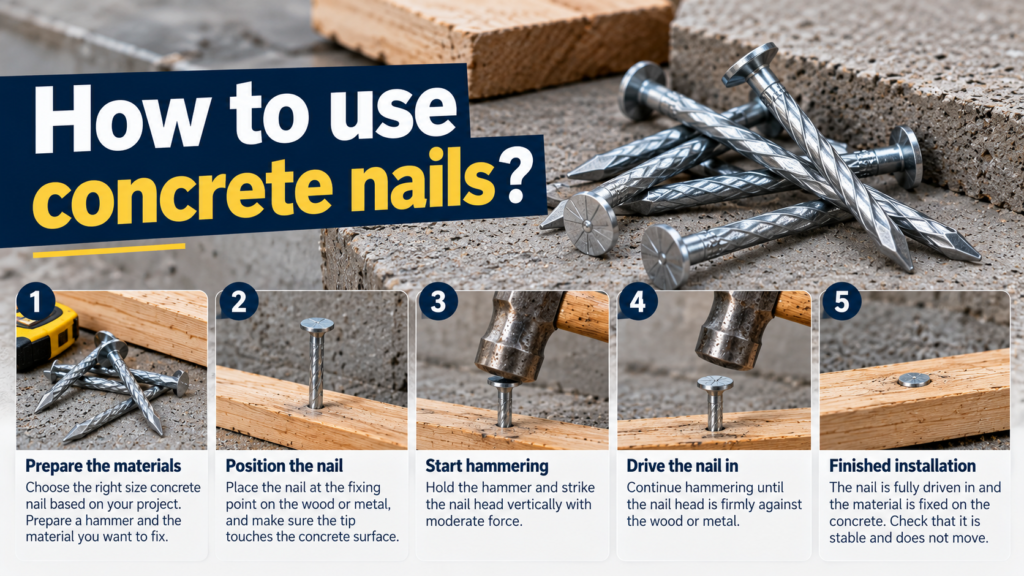
Masonry and concrete nails can confuse buyers because the names sound similar, but local markets often use them differently. That confusion can lead to wrong stock, weak customer explanations, and avoidable complaints. I prefer to solve the problem by matching the nail name to the wall material, application, specification, and resale habit.
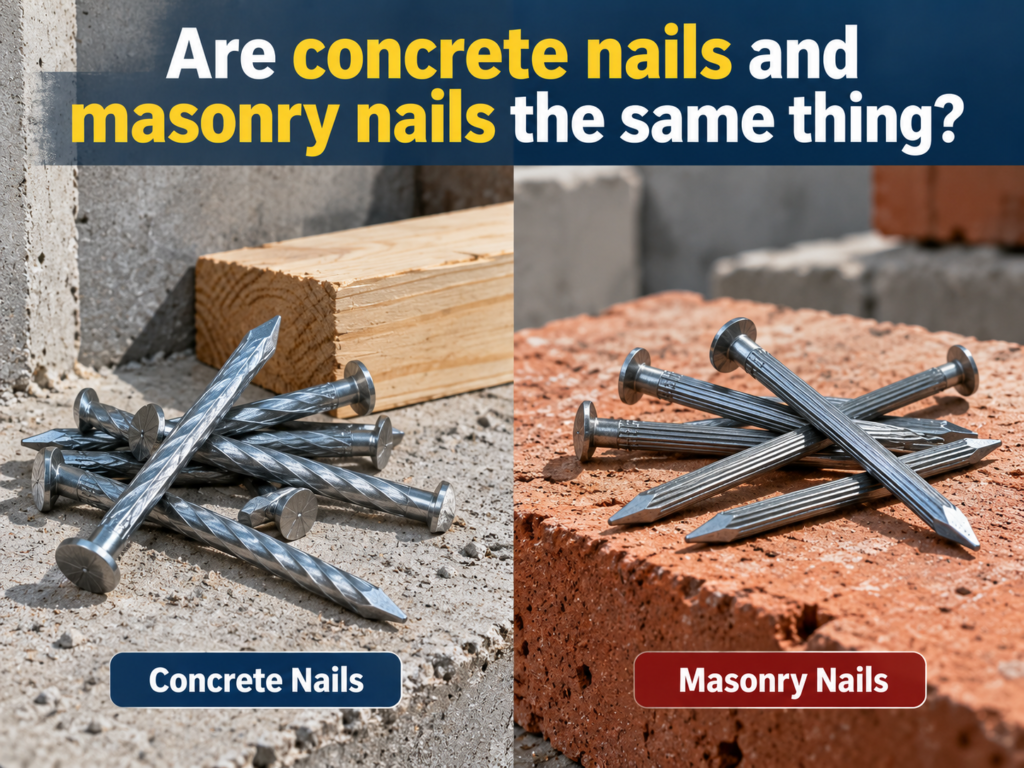
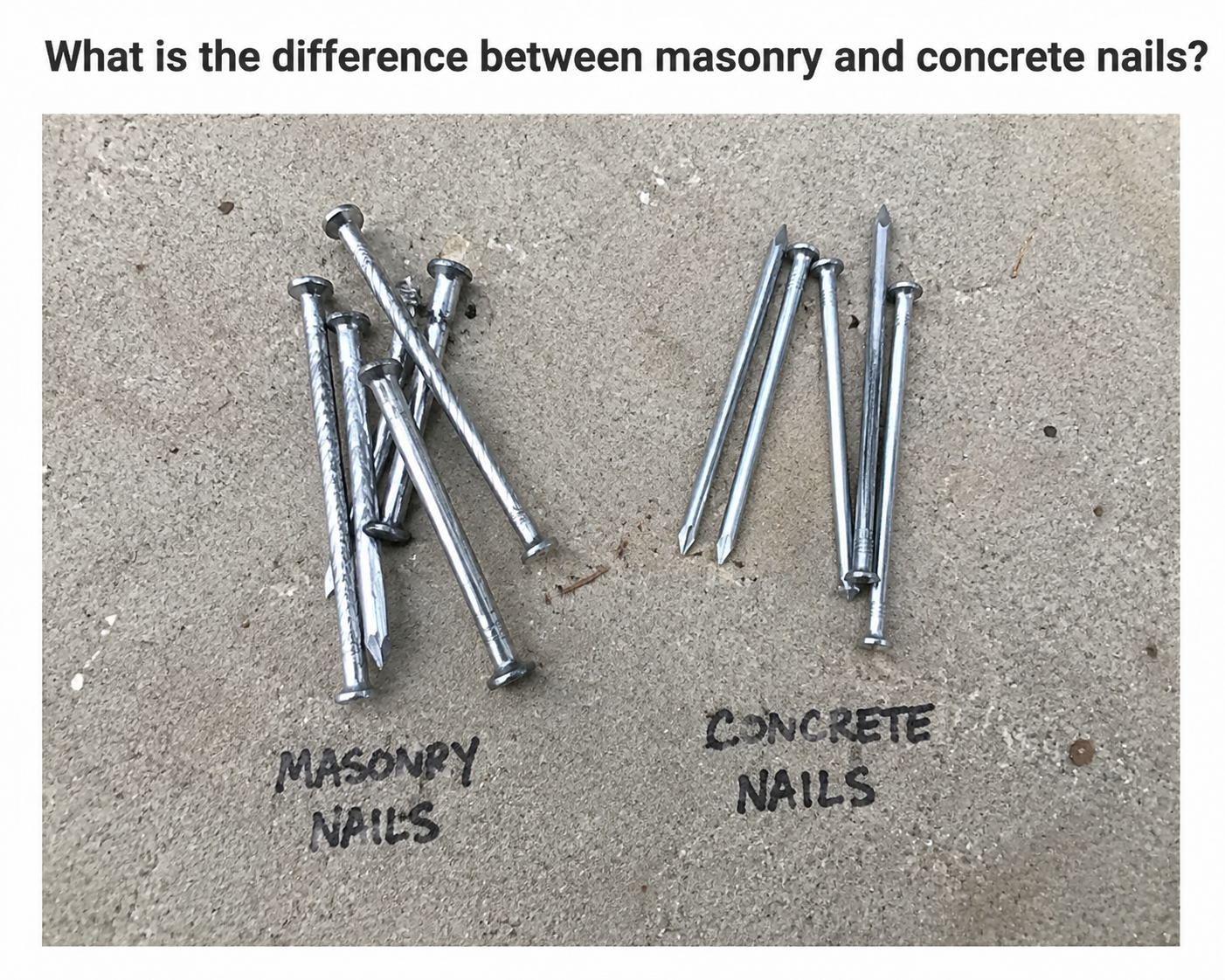
The difference between masonry and concrete nails is that “masonry nails” is often a broader market term for nails used in brick, block, mortar, or masonry materials, while “concrete nails” usually refers more specifically to hardened nails made for concrete or harder substrates. The best choice depends on the surface, use case, and local product naming.
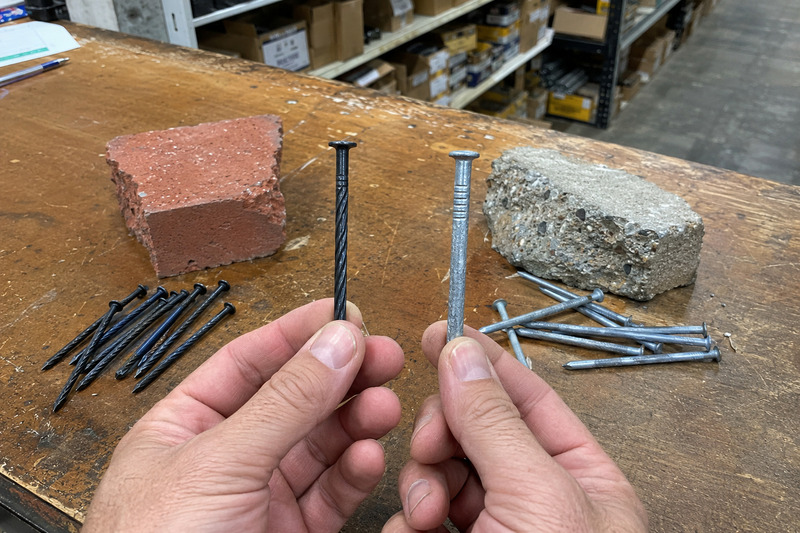
When I help dealers and wholesale buyers interpret nail specifications, I often find that the product name matters less than whether the nail matches the wall material and the customer’s expectation. So I would not ask only, “Which name is correct?” I would ask, “Where will the nail be used, and what risk must I avoid?”
Why do masonry and concrete nails mean different things in different markets?
Masonry and concrete nails create a naming problem because hardware terms are not always global1. A buyer may import one product name, while local retailers sell it under another name. This can cause mixed inventory, unclear quotations, and customer complaints if the product does not match local usage.
The terms masonry nails and concrete nails are not fixed in every country. In many markets, masonry nails means a wider group for brick, block, and similar materials2. Concrete nails usually means hardened steel nails for concrete or harder walls3. Buyers should confirm the substrate, nail style, size, and local selling name before ordering.
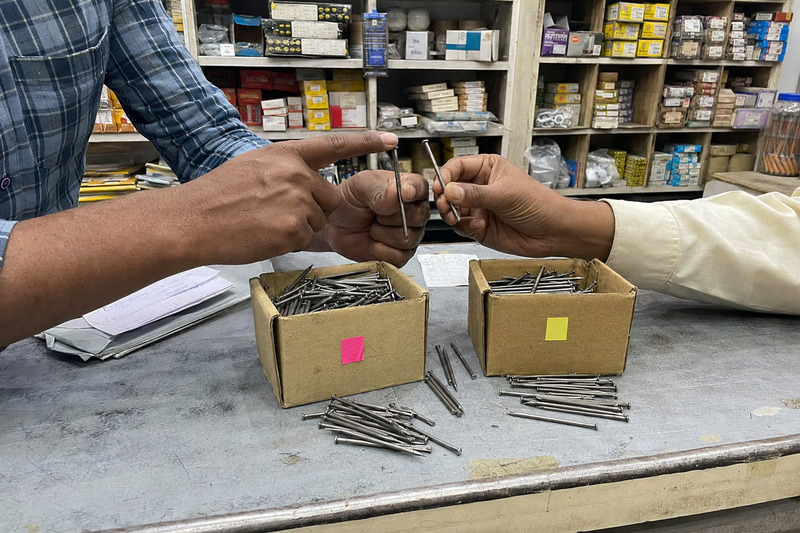
The same nail may be sold under different names
I have seen buyers focus heavily on the English product name in a proforma invoice. That is useful, but it is not enough. In many wholesale markets, the retail name depends on the local language, sales habit, and the way shop staff explain the product.
For example, a dealer may call a hardened nail a concrete nail because customers use it for hard walls. Another dealer may call a similar item a masonry nail because customers use it for brick, block, plastered wall, or general construction work. Neither seller is always “wrong.” The problem is that the product name alone does not tell me enough about the actual application.
A better way to interpret the names
I usually separate the issue into three layers:
-
Market name
This is the name customers recognize in the shop. -
Technical description
This includes material, hardness, shank type, head type, length, diameter, and finish. -
Use-case description
This explains whether the nail is intended for brick, block, mortar, concrete, timber-to-wall fixing, light fastening, or general masonry work.
This method is useful for wholesalers because they sell through staff, agents, and local shops. If the carton says one thing, the invoice says another thing, and the salesperson explains a third thing, repeat orders become harder.
Common naming pattern by market
The table below shows how I normally help buyers think about the names. This is not a universal rule. It is a procurement communication guide.
| Term Used by Buyer or Market | Common Meaning in Many Markets | Procurement Risk | What I Would Confirm |
|---|---|---|---|
| Masonry nails | Broader nail category for brick, block, mortar, or masonry surfaces | Too general for accurate quotation | Wall material, nail hardness, shank, length |
| Concrete nails | Hardened nails for concrete or harder substrates | May be assumed “stronger” for every use | Concrete type, use case, finish, packaging |
| Steel nails | Broad term, may include black steel nails or hardened nails | Too vague for production | Exact product type and specification |
| Wall nails | Retail selling name in some local markets | May not match export product name | Local sample, photo, and actual usage |
| Hardened nails | Focuses on material treatment | Does not define head, shank, or application | Full dimensions and finish |
Why this matters for wholesalers
For a wholesaler, the risk is not only product failure. The risk is also inventory confusion. If a customer asks for masonry nails and the shop gives a concrete nail that is too hard, too short, or not suitable for the surface, the customer may blame the dealer. If staff cannot explain the difference clearly, sales become price-driven instead of value-driven.
I suggest that importers prepare a simple internal naming sheet. It can include:
- Local product name
- English export name
- Wall material
- Common sizes
- Packing style
- Brand or OEM label
- Customer warning notes
- Supplier item code
This small step can reduce wrong sales and weak repeat orders. It also helps when requesting FOB quotations because the supplier can quote based on product + specification + quantity + packing method, not just a general name.
How should I choose between masonry and concrete nails by wall material?
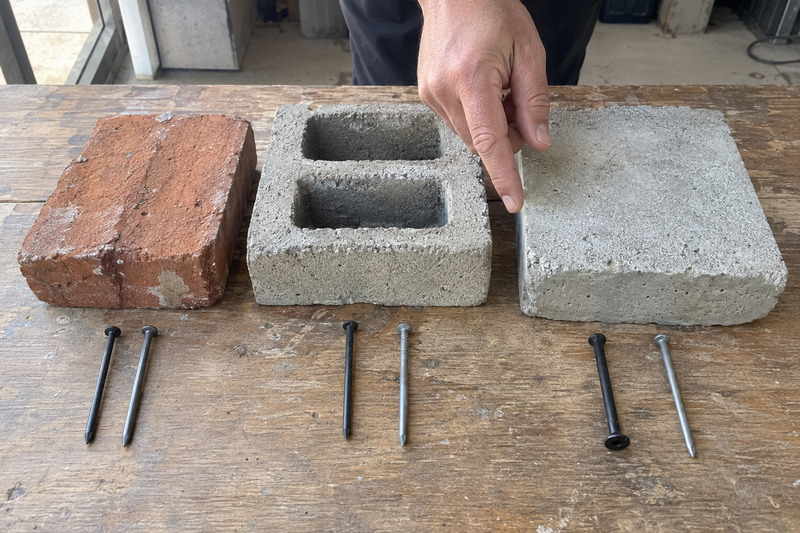
Masonry and concrete nails should be chosen by substrate first, not by name first. If the wall is brick, block, mortar, or a softer masonry surface, a broader masonry nail description may fit. If the surface is hard concrete, a hardened concrete nail is usually the more relevant product category to evaluate.
The best choice between masonry and concrete nails depends on the material being fastened into. For brick, block, or mortar, buyers should confirm a masonry-use nail by size and shank. For concrete or harder substrates, buyers should evaluate hardened concrete nails. For safety-critical work, buyers should request qualified professional advice.4
Start with the wall, not the catalogue name
I always ask buyers one simple question first: What will the nail be driven into? This question sounds basic, but it prevents many purchasing mistakes.
Different wall materials behave differently. Brick may crack. Hollow block may break around the nail. Mortar may be softer than the brick itself.5 Concrete may be much harder and may require a nail with higher hardness or a different fastening method.6 Because of this, one “wall nail” cannot solve every situation.
Practical substrate comparison
| Substrate | Buyer’s Main Concern | Product Direction | Procurement Note |
|---|---|---|---|
| Brick wall | Cracking or poor grip | Masonry-use nail or suitable hardened nail | Confirm size and shank style |
| Cement block | Breakage or weak holding | Masonry nail category, depending on density | Ask about hollow or solid block |
| Mortar joint | Soft base and low grip | Application-specific selection | Avoid assuming high load capacity |
| Concrete wall | Hard driving surface | Hardened concrete nail | Confirm hardness, shank, length |
| Plastered wall | Unknown base material | Clarify base before choosing | Plaster may hide brick or concrete |
I do not present this as an installation rule. I present it as a buying filter. The final fixing method should be evaluated by a qualified person when the application is important, structural, or safety-related.
Concrete nails are not always “better”
Many buyers think concrete nails are always better because they sound stronger. I understand why. In wholesale markets, stronger-sounding names are easier to sell. But in real product selection, “stronger” is not the same as “more suitable.”
A concrete nail may be made from hardened steel and may be designed for a harder surface. However, if the customer uses it in a brittle brick or weak block, the surface may crack or the nail may not perform as expected. In another case, if a customer uses a general masonry nail in hard concrete, the nail may bend or fail to enter properly.
So I prefer to use this rule:
A good nail is not the hardest nail. A good nail is the nail that matches the wall material, fixing task, and customer expectation.
Questions I ask before recommending a product
When a wholesaler asks me for concrete nails or masonry nails, I usually want these details:
-
What wall material is common in your market?
Brick, block, concrete, or mixed construction? -
What sizes sell fastest?
Common lengths may differ by country and customer habit. -
What packaging do shops prefer?
Bulk carton, small box, branded box, plastic bag, or mixed sizes? -
What name do your customers use locally?
The local selling name may matter more than the export catalogue name. -
Do you need OEM or ODM branding?
Dealers with their own brand should keep naming consistent across boxes and cartons. -
Is the use safety-critical?
If yes, I recommend professional evaluation instead of relying only on general product advice.
This approach helps importers avoid overstocking the wrong item. It also makes the quotation more accurate because the factory can confirm material, size, finish, head style, packing, and production lead time.
What specifications separate masonry nails from concrete nails in procurement?
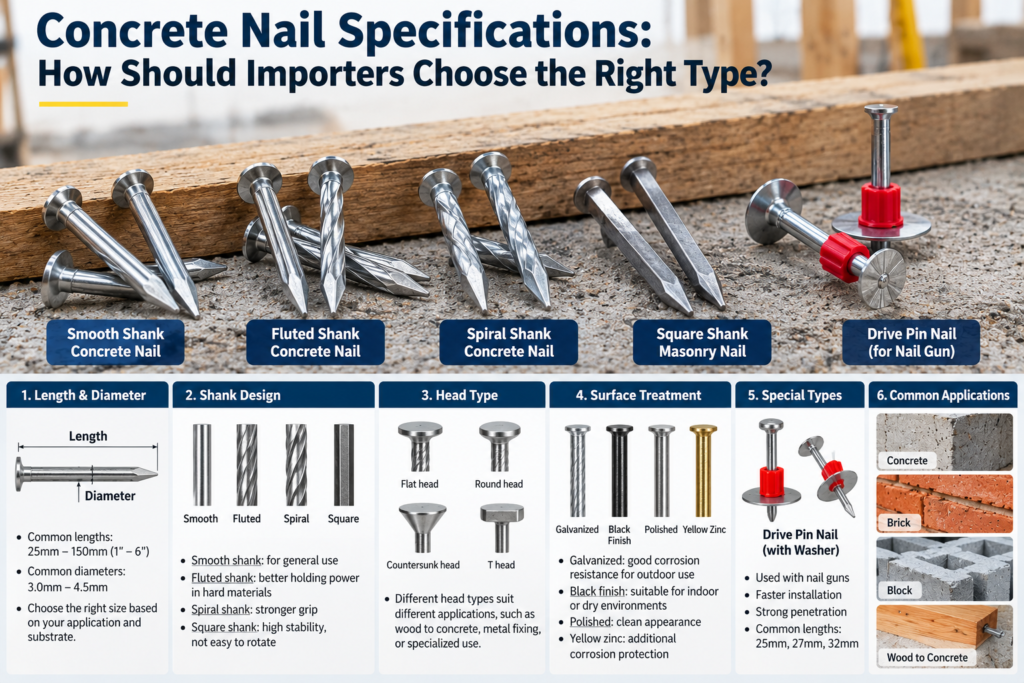
Masonry nails and concrete nails should be compared through specifications, not only through photos. Product appearance helps, but serious purchasing needs details such as steel type, hardness treatment, diameter, length, shank pattern, head style, finish, packing, and target wall material.7 Without these details, two quotations may not be comparable.
In procurement, concrete nails are often specified as hardened steel nails for concrete or hard substrates, while masonry nails may cover a wider range for brick, block, or masonry use. Buyers should compare material, hardness, shank design, point, head, size tolerance, finish, packaging, and sample quality before confirming an order.
Key specifications buyers should compare
I recommend that importers compare quotations line by line. A lower price may come from a smaller diameter, lighter packing, different finish, or different steel quality. That is why a clear specification sheet is more useful than a product name alone.
| Specification | Why It Matters | What Buyers Should Ask |
|---|---|---|
| Material | Affects hardness and driving behavior | What steel is used? |
| Hardness treatment | Important for harder substrates | Is the nail hardened? |
| [Diameter | Affects strength, cost, and carton weight](https://research.fs.usda.gov/download/treesearch/30660.pdf)[^8] | What is the exact wire diameter? |
| Length | Affects use case and selling category | What sizes are included? |
| [Shank type | Affects grip and market preference](https://research.fs.usda.gov/download/treesearch/8903.pdf)[^9] | Smooth, fluted, grooved, or twisted? |
| Head type | Affects driving and appearance | Flat head, countersunk style, or other? |
| Point | Affects penetration | Is the point consistent and sharp? |
| [Finish | Affects appearance and corrosion resistance](https://nvlpubs.nist.gov/nistpubs/Legacy/IR/nistir88-4008.pdf)[^10] | Black, bright, galvanized, or other finish? |
| Packing | Affects resale and brand positioning | Bulk, box, bag, carton, OEM label? |
Shank and finish are commercial details, not just technical details
Many buyers look at nail length first. Length is important, but the shank and finish also influence the resale story.
A fluted or grooved shank may be associated with concrete nails in some markets. A black finish may be preferred in certain regions because customers already recognize that appearance. A bright or galvanized finish may be requested for a different selling channel. The right choice depends on customer habit, climate, and price level.
I do not recommend that buyers choose finish only by appearance. If corrosion resistance matters, buyers should discuss it clearly and understand the limitations of the finish. For demanding environments, buyers may need professional guidance or project-specific testing.
Sample checking before bulk order
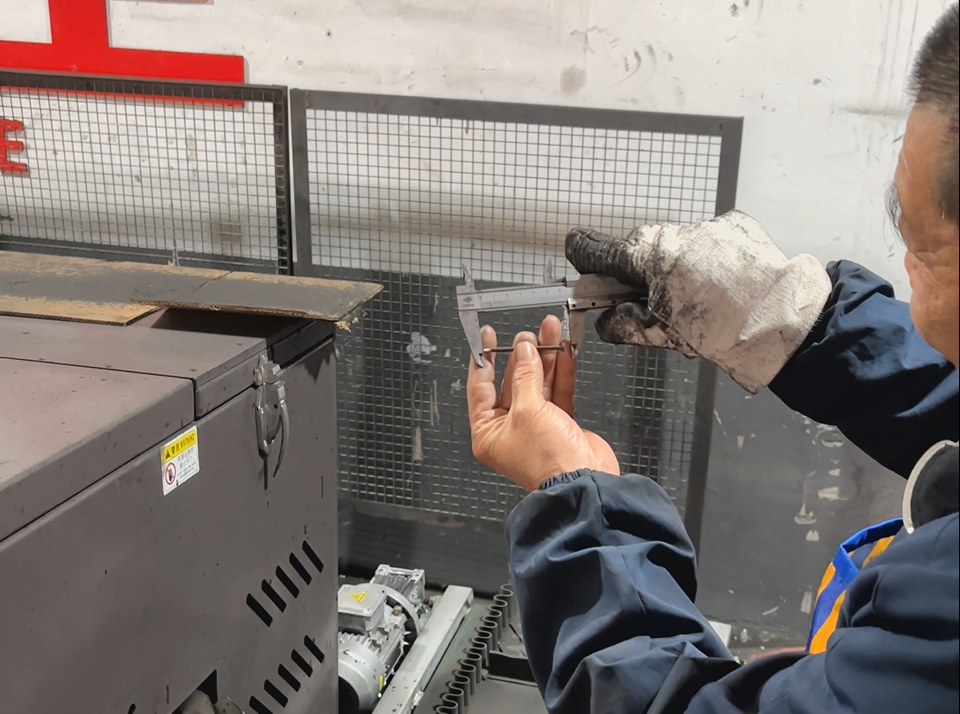
Our factory can provide samples for quality checking, and I usually encourage buyers to test samples before a larger order. Samples may carry a basic sample cost, and that cost can sometimes be discussed for return or adjustment after a formal order. This is practical for wholesalers because one container of wrong stock is far more expensive than one sample check.
For sample review, I suggest checking:
- Length and diameter consistency
- Head shape and centering
- Point sharpness
- Surface finish
- Box weight and quantity
- Packing strength
- Local customer feedback
- Comparison with current market sample
Buyers should not treat a sample as a structural safety certificate.8 A sample helps confirm appearance, size, and market fit. If the product will be used in a critical application, the buyer should arrange suitable testing or professional evaluation.
How to request a clean quotation
A clear quotation request should include:
- Product name used in your market
- Target product name for export documents
- Size list, such as length and diameter
- Quantity, with MOQ expectations
- Packing method
- Brand logo or OEM artwork, if needed
- Destination port
- Required delivery time
- Sample requirement
- Any special quality documents to verify
For our usual export business, I quote by FOB based on product, specification, quantity, and packing method. Our common minimum order quantity is 5 tons or 200 cartons, depending on product and packing. Normal lead time is usually 15–25 days, adjusted by order quantity and production schedule. Shipping is generally by sea, with both FCL and LCL options available.
How can wholesalers label masonry and concrete nails to reduce resale risk?
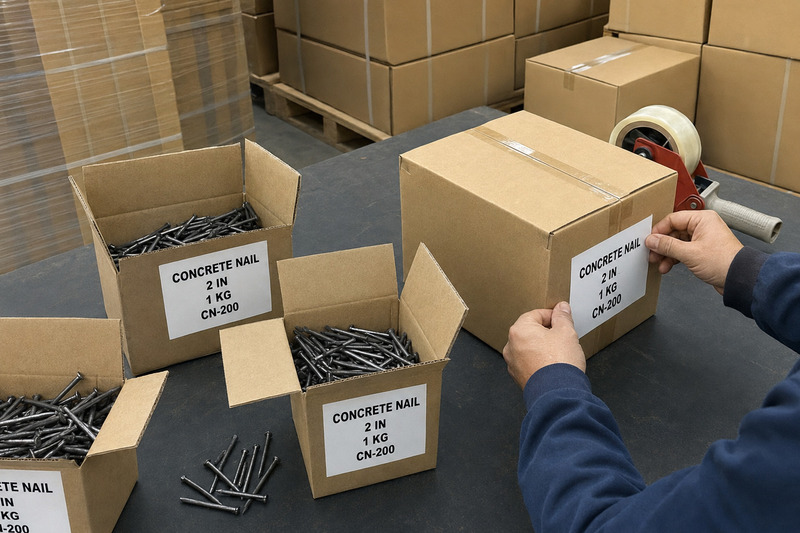
Masonry and concrete nails should be labeled in a way that helps sales staff explain use cases clearly. Poor labels create confusion, especially when one market name covers several wall materials. Good labels should include the local selling name, product specification, intended substrate, size, packing quantity, and brand information.9
Wholesalers can reduce resale risk by creating clear product labels for masonry and concrete nails. The label should connect the local market name with the technical specification and intended wall material. This helps shop staff avoid wrong recommendations, improves customer trust, and supports repeat orders for the same item code.
Inventory confusion is a real business cost
I have learned that product confusion can be just as expensive as a defective product. If a dealer sells several nail types in similar boxes, staff may mix them during delivery or retail sales. The customer may then return the product, complain about quality, or move to another shop.
This is especially common when the product category includes concrete nails, black steel nails, roofing nails, lost head nails, and other construction fasteners. Many cartons look similar from a distance. If the label is not clear, the wrong carton can move into the wrong sales channel.
What a good label should include
For wholesalers and local dealers, I suggest keeping the front label simple and the side label detailed.
Front label:
- Local product name
- Brand logo
- Size
- Main use description
- Quantity or net weight
Side label:
- Export product name
- Item code
- Length and diameter
- Finish
- Packing quantity
- Country or factory information as required
- Safety or use limitation notes, if applicable
A clear label does not need to be complicated. It only needs to help the buyer, warehouse worker, shop staff, and customer identify the same product in the same way.
Example label structure
| Label Element | Example Wording | Purpose |
|---|---|---|
| Local name | Concrete Nail / Masonry Nail | Matches customer search habit |
| Use description | For concrete and hard wall use | Reduces wrong sale |
| Size | 2 inch x specified diameter | Supports fast retail selection |
| Packing | 1 kg box / 25 kg carton | Helps warehouse and wholesale sales |
| Brand | Buyer’s OEM logo | Builds repeat order recognition |
| Item code | CN-XXX | Reduces reorder mistakes |
The wording should be adapted to the buyer’s market. For example, a dealer in Dar es Salaam may use a local selling phrase that is more important than the English catalogue name. If that phrase is what customers ask for, it should be considered in packaging design.
Why OEM and ODM packaging matters
Many of our typical customers are hardware wholesalers or local dealers with their own brands. They may sell mixed hardware categories and use local agents or import agents. For them, customized packaging is not only about looking professional. It also helps control product identity.
OEM/ODM packaging can support:
- Clear product segmentation
- Better shelf recognition
- Fewer staff mistakes
- Stronger brand recall
- Simpler repeat orders
- More consistent local pricing
I recommend that buyers prepare artwork early. If the box must show “masonry nail” in one language and “concrete nail” in another, we should confirm the wording before mass production. A small wording mistake on thousands of boxes can become a large sales problem.
Trial orders help test the name and packaging
For buyers entering a new market segment, I often suggest a trial order when possible. A trial order helps test size demand, packaging preference, and customer understanding. It also allows the buyer to compare feedback from different shops before scaling up.
Our factory supports trial orders, and we can discuss customized products, packaging, and brand logo requirements. For standard export planning, buyers should still consider MOQ, sea freight timing, and carton design lead time. A clear first order makes the second order easier and faster.
Frequently Asked Questions
Are masonry nails and concrete nails the same thing?
They are not always the same thing. In many markets, masonry nails is a broader term for nails used in brick, block, mortar, or masonry surfaces. Concrete nails usually refers more specifically to hardened nails for concrete or hard walls. Buyers should confirm specifications and local naming.
Are concrete nails always stronger than masonry nails?
Concrete nails are often hardened for harder substrates, but that does not make them always better. A nail should match the wall material and use case. A harder nail may not be suitable for every brick or block application. For important fixing work, professional evaluation is recommended.
What details should I send when asking for a quotation?
I suggest sending the product name, local market name, size, diameter, finish, shank type, quantity, packing method, brand logo needs, and destination port. For FOB pricing, the most useful formula is product + specification + quantity + packaging method.
Can I customize concrete nail or masonry nail packaging?
Yes. Our factory supports OEM/ODM customization for product, packaging, and brand logo. Clear packaging is useful for wholesalers because it helps sales staff explain the product and reduces wrong sales. Buyers should confirm artwork, language, size details, and carton marks before production.
Should I test samples before ordering in bulk?
Yes. I recommend checking samples before bulk orders, especially when comparing suppliers or changing specifications. Samples help confirm size, finish, head shape, point, packing, and local market acceptance. For safety-critical applications, buyers should arrange qualified testing or professional assessment.
Conclusion
The difference between masonry and concrete nails is not only a naming issue. I see it as a supplier selection and resale risk question. Buyers should confirm the wall material, local market terminology, nail specification, packaging, and customer explanation before ordering. Concrete nails may suit hard substrates, while masonry nails may describe a broader category for brick, block, and masonry use. If you need FOB pricing, samples, OEM packaging, or trial order support, contact us at [email protected] or WhatsApp +8618331061136.
-
"Language as a trade barrier in public procurement", https://experts.illinois.edu/en/publications/language-as-a-trade-barrier-in-public-procurement-evidence-from-g/. Terminology-management guidance from standards organizations notes that specialized terms may differ across languages and usage communities, which provides contextual support for the article’s point that hardware names can vary by market. Evidence role: general_support; source type: institution. Supports: Specialized technical terms can vary by language, locale, and usage community, creating ambiguity in international communication.. Scope note: This would support the general terminology problem, not prove the naming habits of masonry and concrete nails in every country. ↩
-
"Concrete block", https://en.wikipedia.org/wiki/Concrete_block. General reference works define masonry as construction using units such as brick, stone, or concrete block, usually with mortar, which supports the article’s broad use of masonry as a category of wall materials. Evidence role: definition; source type: encyclopedia. Supports: Masonry is commonly defined as construction using units such as brick, stone, or concrete block, often bonded with mortar.. Scope note: This supports the meaning of masonry materials, but not the exact commercial naming practice for nails in all local markets. ↩
-
"Nail (fastener)", https://en.wikipedia.org/wiki/Nail_(fastener). Fastener reference sources describe concrete or masonry nails as hardened steel nails intended for hard masonry or concrete surfaces, supporting the article’s distinction between concrete nails and broader masonry-use nails. Evidence role: definition; source type: encyclopedia. Supports: Concrete or masonry nails are described in reference sources as hardened steel nails designed for hard masonry or concrete substrates.. Scope note: Terminology may still vary commercially, so the source supports the technical description rather than every local product name. ↩
-
"OSHA Technical Manual (OTM) – Section V: Chapter 4", https://www.osha.gov/otm/section-5-construction-operations/chapter-4. Building-code and anchorage guidance treats structural fastening as a code- and design-dependent matter, supporting the article’s caution that safety-critical applications should be reviewed by qualified professionals. Evidence role: expert_consensus; source type: institution. Supports: Structural or safety-critical fastening and anchorage decisions are typically governed by codes, standards, and qualified engineering judgment.. Scope note: This supports the professional-review principle and does not determine whether a particular masonry or concrete nail is safe for a specific installation. ↩
-
"BASIC COMPONENTS OF MASONRY", https://engineering.purdue.edu/~ramirez/CE479/FALL2004/BASICCOMPONENTSOFMASONRY-Lect2.pdf. University-level masonry materials references describe brick, concrete block, and mortar as materials with differing strength, brittleness, and load-transfer behavior, supporting the article’s warning that fastening risks vary by substrate. Evidence role: mechanism; source type: education. Supports: Brick, hollow block, and mortar have different mechanical properties and may fail differently under localized loading or fastening.. Scope note: The source would explain material behavior generally, not test the specific nail products discussed in the article. ↩
-
"Concrete anchoring nails?????", https://www.finehomebuilding.com/forum/concrete-anchoring-nails. Concrete fastening guidance explains that concrete strength and hardness influence fastener penetration and anchor selection, supporting the article’s statement that hard concrete may require hardened nails or a different fastening method. Evidence role: mechanism; source type: institution. Supports: Concrete’s hardness and compressive strength affect whether nails can penetrate and whether mechanical anchors or other fastening systems are needed.. Scope note: Such guidance supports the selection principle, not the suitability of any individual nail without testing. ↩
-
"Lecture Notes", https://web.mst.edu/jthomas/classes/2211/lessons/fasteners/astm/index.html. Fastener standards and procurement guidance commonly require specification of material, dimensions, mechanical properties, coating or finish, and intended use, supporting the article’s argument that appearance alone is insufficient for serious purchasing. Evidence role: general_support; source type: institution. Supports: Fastener specifications commonly include material, dimensions, mechanical properties, finish, and intended use, and procurement specifications help compare offers consistently.. Scope note: The source would support specification practice generally, not prescribe the exact checklist for this supplier’s products. ↩
-
"IR 17-9: High Strength Structural Bolting Inspection: 2022 CBC", https://www.dgs.ca.gov/-/media/Divisions/DSA/Publications/interpretations_of_regs/IR_17-9_2022-CBC.pdf. Structural fastener and anchor evaluation programs rely on standardized testing and documented evaluation reports, supporting the article’s statement that a sample inspection should not be treated as a structural safety certificate. Evidence role: expert_consensus; source type: institution. Supports: Structural fastener acceptance typically depends on recognized testing, certification, or evaluation procedures rather than informal sample inspection.. Scope note: This supports the distinction between sample review and certification, not the compliance status of any specific nail batch. ↩
-
"The Top 3 Reasons for Label & Packaging Errors in Food …", https://scm.ncsu.edu/scm-articles/article/the-top-3-reasons-for-label-packaging-errors-in-food-manufacturing. Supply-chain labeling guidance emphasizes clear product identification, descriptive attributes, and quantity information, providing contextual support for the article’s proposed label elements for masonry and concrete nails. Evidence role: general_support; source type: institution. Supports: Supply-chain labeling guidance emphasizes product identification, description, quantity, and other attributes that help distinguish goods in handling and resale.. Scope note: This supports general labeling practice; it does not specifically validate every label element for the nail trade. ↩