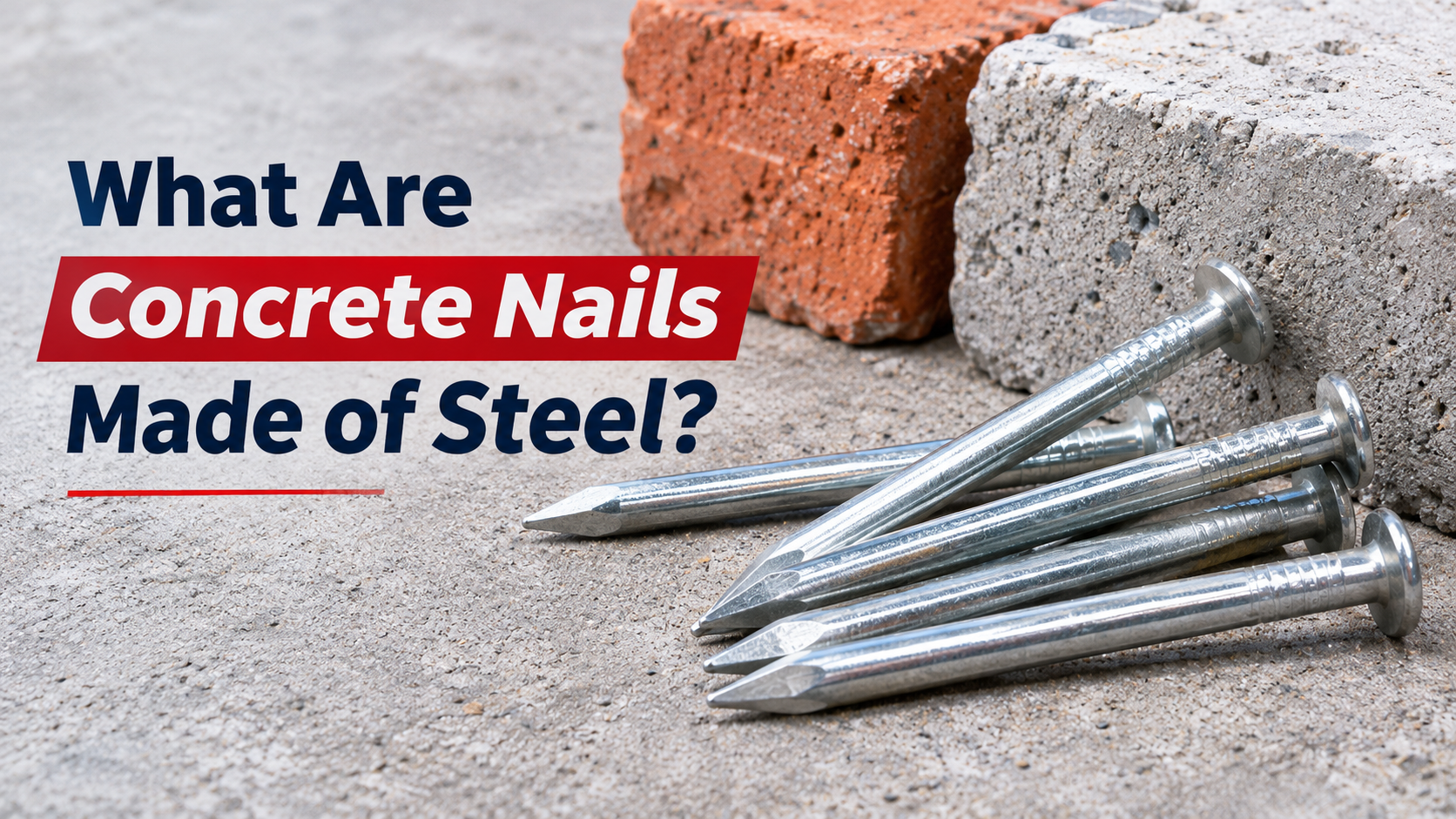
Concrete nails are often described as steel nails, but that simple answer can create buying problems. If an importer only asks “is it steel?” they may miss hardness, heat treatment, surface finish, and batch consistency. I prefer to ask whether the nail can perform in the real wall, block, or masonry application.
Concrete nails are commonly made from hardened steel1, but they are not always made from one identical steel grade2. The steel, heat treatment, shank design, point sharpness, and surface finish should match the intended base material.3 For bulk buyers, performance consistency matters more than the material name alone.
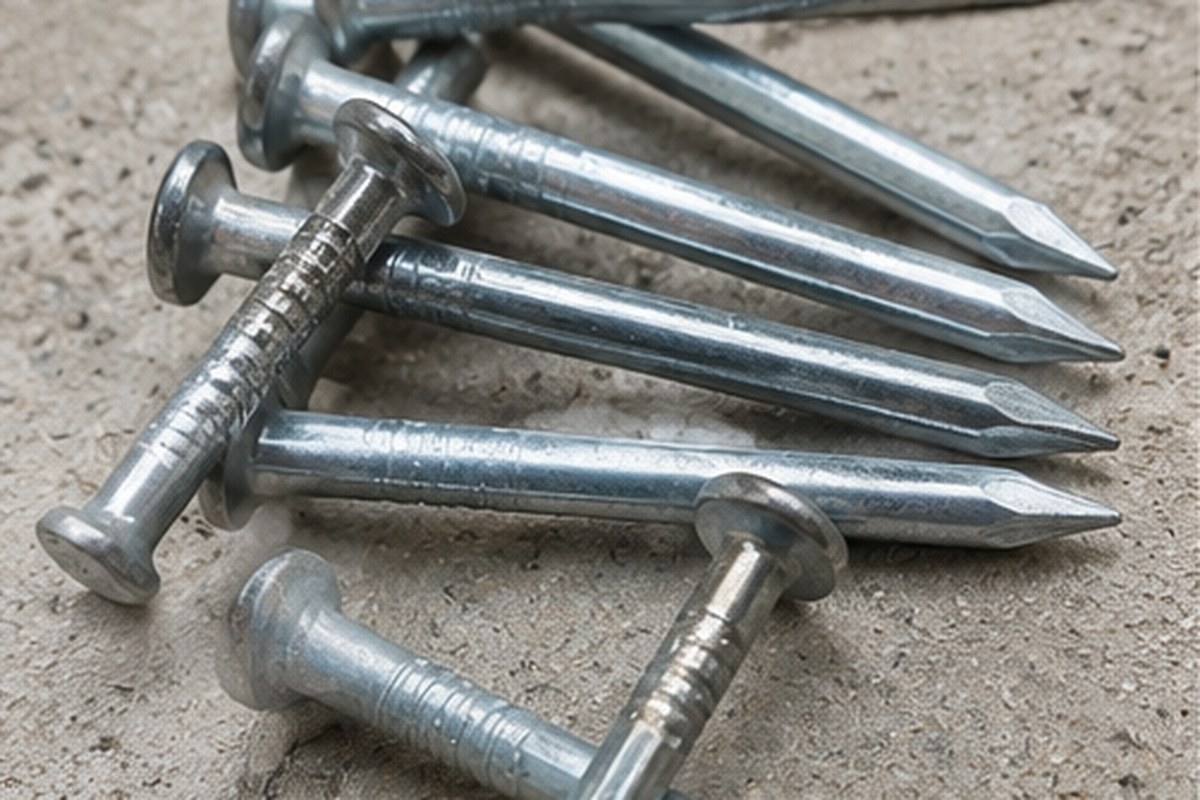
In our production and export experience, buyers get better results when they connect material choice with the final use. A nail for general masonry fixing, dense concrete, or lighter blockwork may need different hardness, packaging, and quality checks.
Are concrete nails always made from the same steel?
Many buyers ask this question because they want one clear material answer. The problem is that the word “steel” is broad. If a supplier gives only a simple material name, the buyer may still face bending, cracking, or uneven quality in the destination market.
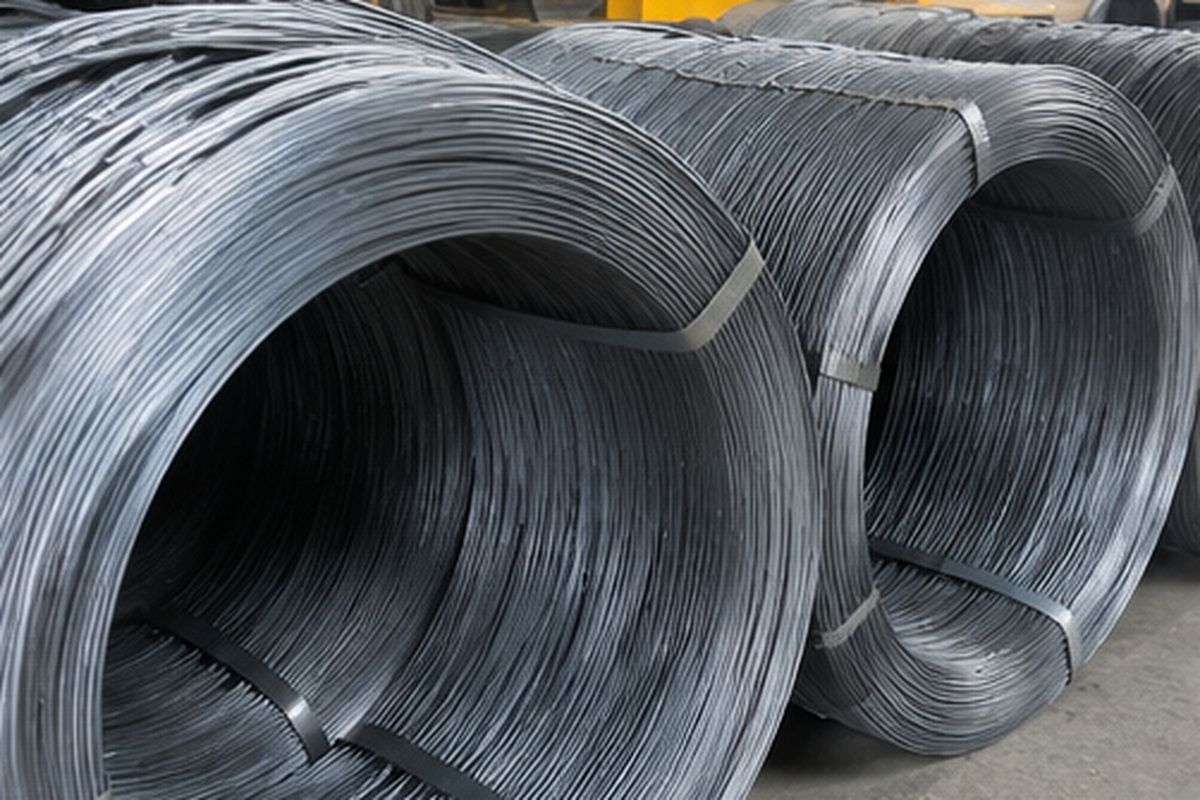
Concrete nails are generally steel nails designed for hard base materials, but they are not always made from the same steel grade. Manufacturers may choose different steel wire, hardness levels, and treatment methods depending on nail size, target market, price level, and customer specification.
Why “steel” is only the starting point
Steel is the base material in most concrete nails, but that does not mean every product performs the same way. In nail production, steel wire quality affects straightness, shank strength, point forming, and heat treatment response. A nail may look acceptable in the carton, but it may bend during use if the steel and treatment are not suitable.
From a factory-side view, I usually look at several points before I think a concrete nail is suitable for a buyer:
- Wire material consistency
- Diameter tolerance
- Shank straightness
- Point sharpness
- Heat treatment stability
- Surface finish
- Packaging strength
- Batch-to-batch uniformity
A low-cost nail may still be useful for some markets, but the buyer should understand what is being purchased. Importers and wholesalers often sell to many smaller hardware shops. If the nails bend too easily or break during installation, complaints move back through the supply chain quickly.
Common evaluation points for buyers
| Evaluation point | Why it matters | What buyers should ask |
|---|---|---|
| Steel wire quality | Affects strength and consistency | What wire material is used for this specification? |
| Hardness | Affects penetration and brittleness | What hardness range is normally controlled? |
| Heat treatment | Improves performance in hard substrates | Is the nail hardened or treated after forming? |
| Surface finish | Affects rust resistance and appearance | Is it black, polished, galvanized, or custom finished? |
| Specification tolerance | Affects packing and usability | What are the length and diameter tolerances? |
Concrete nails are not a pure material encyclopedia topic for importers. They are a purchasing decision. If the buyer only compares FOB price without confirming specification and use case, the cheapest carton can become expensive after complaints, returns, or unstable repeat orders.
In my experience, the right question is not only “what steel is used?” The better question is “will this nail work in my customer’s wall material?”
For application-specific projects, buyers should also confirm performance with qualified professionals or conduct local testing. Concrete density, installation method, and nail size can change the result.
How does steel quality affect concrete nails performance?
Steel quality matters because concrete nails must enter harder materials than normal wood nails4. If the steel is too soft, the nail may bend. If the nail is too brittle after treatment, it may break. Both problems create risk for wholesalers and downstream users.
Steel quality affects concrete nails through hardness, toughness, shank strength, and consistency during driving.5 A good product needs enough hardness to penetrate masonry or concrete, but it also needs controlled toughness so it does not snap easily under impact.
Hardness and toughness must be balanced
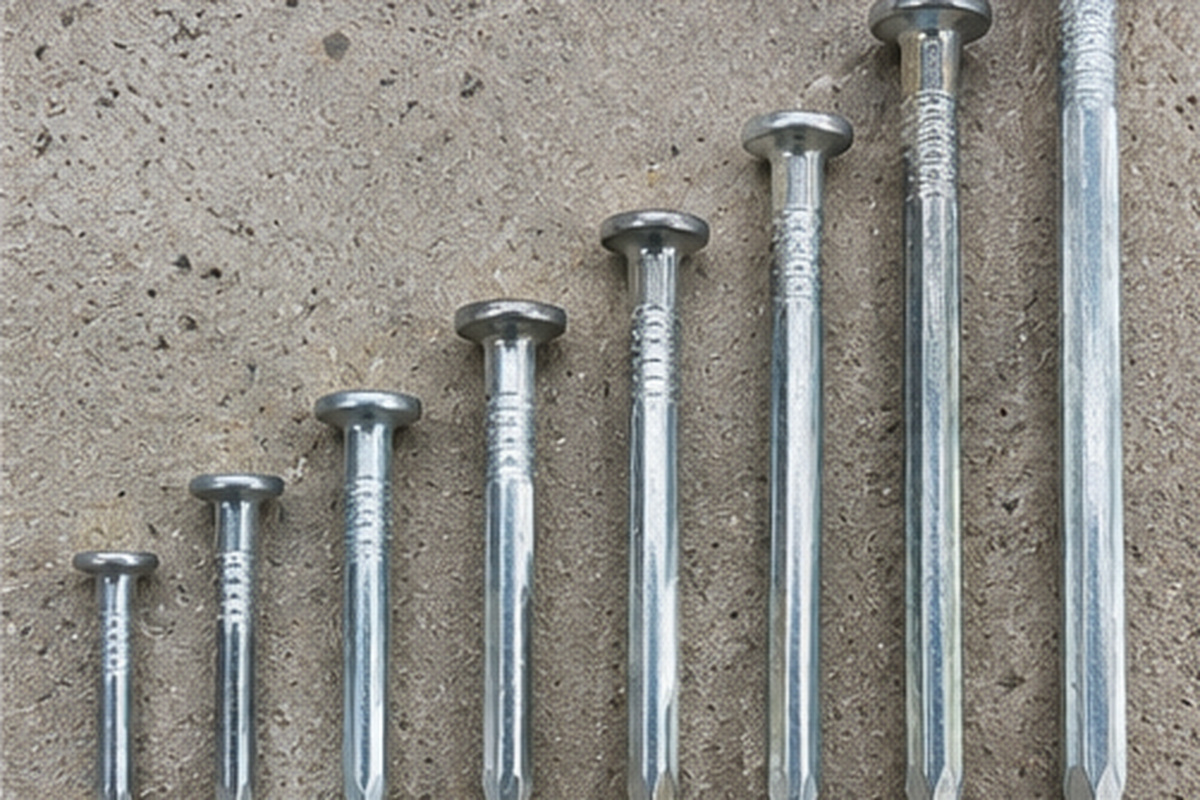
For concrete nails, hardness is important. However, higher hardness is not always better6. A nail that is very hard may penetrate better in some hard substrates, but it can also become brittle if treatment is not controlled. A nail that is too soft may bend before it enters the surface.
I often explain this to buyers with a simple balance:
- Too soft: the nail bends, mushrooms, or fails to enter.
- Too brittle: the nail breaks or chips during impact.
- Balanced: the nail penetrates properly and stays stable during use.
This balance depends on the steel wire, production process, and heat treatment. It also depends on the nail size. A short nail and a long nail do not behave the same way under hammering.
Important physical features
Concrete nails also need good forming. The material is important, but the shape matters too.
Key features include:
-
Straight shank
A bent or uneven shank increases installation failure. -
Sharp point
A sharp point helps the nail start into the surface with less slipping. -
Correct head shape
A stable head helps users strike the nail properly. -
Controlled diameter
If the diameter is not stable, weight, packing quantity, and performance may vary. -
Smooth or suitable surface treatment
A clean surface improves appearance and may help storage, depending on the finish.
Why batch consistency is important for importers
For an importer, one good sample is not enough. The real test is whether the supplier can provide stable quality across repeated orders. I have seen buyers focus heavily on one sample carton, but later they forget to confirm production standards for bulk cargo.
For bulk purchasing, buyers should check:
- Whether the sample matches mass production
- Whether the supplier can keep the same packing method
- Whether carton strength is suitable for sea shipment
- Whether the nail count or weight per carton is stable
- Whether the surface finish is consistent across batches
The risk is not only one bent nail. The bigger risk is unstable market feedback. If retailers receive mixed quality, they lose confidence. If end users complain, the importer may need to discount stock or change suppliers.
Buyers should ask for samples when possible. At Dingzhou BEST, for example, we can provide samples for quality checking, usually with a basic sample cost that can be discussed for return in a formal order. This gives buyers a practical way to test before placing a larger trial order.
Does heat treatment make concrete nails stronger?
Heat treatment is one of the most important steps, but it is sometimes overlooked in price discussions. A buyer may compare two nails with the same length, diameter, and finish. Still, the product may perform differently because the treatment process is different.
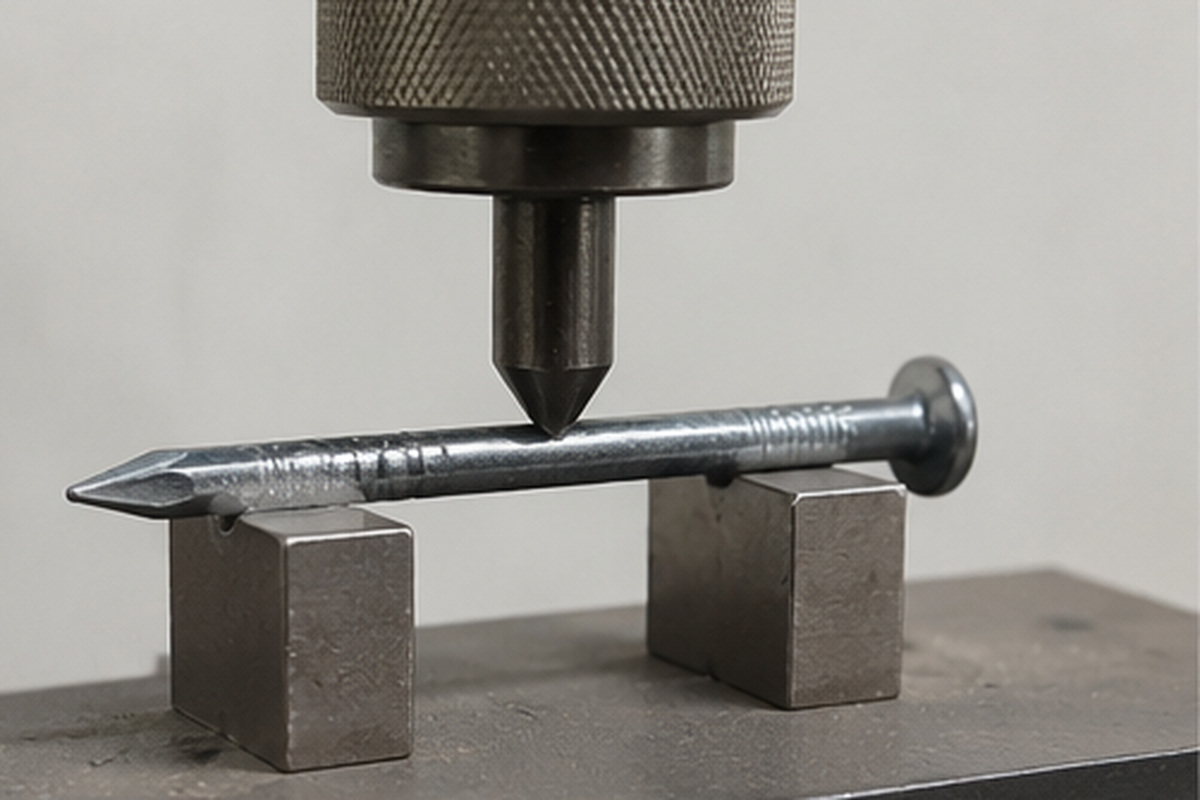
Heat treatment can improve concrete nails by increasing hardness and helping the nail penetrate hard base materials. However, treatment must be controlled carefully. Poor control may cause bending from low hardness or breakage from excessive brittleness.
What heat treatment is trying to do
The purpose of heat treatment is not simply to make the nail “hard.” The goal is to create usable performance. A concrete nail must survive impact and enter the substrate. This requires a practical mix of hardness and toughness.
In production, treatment conditions may vary by supplier, nail size, and customer requirement. Buyers do not always need to know every factory parameter, but they should understand what to confirm.
Important questions include:
- Are the nails heat treated?
- What type of base material are they designed for?
- Is the hardness controlled within a normal range?
- Has the supplier exported this specification to similar markets?
- Can samples be tested before bulk purchase?
Heat treatment and the risk of breakage
A common misunderstanding is that harder nails are always higher quality. In real use, this is not always true. If the nail becomes too brittle, it can break when hammered into dense material.7 Breakage can be dangerous and can also damage user trust.
Here is a simple comparison:
| Condition | Possible result | Buyer risk |
|---|---|---|
| Not hard enough | Nail bends during driving | Customer complaints and low repeat sales |
| Too brittle | Nail breaks or chips | Safety concerns and product rejection |
| Properly controlled | Better penetration and stability | More reliable market feedback |
The right choice depends on the customer’s substrate. Concrete, brick, block, mortar joints, and masonry surfaces are not identical.8 That is why I do not like making universal performance promises without knowing the use case.
Why buyers should share the intended use
When buyers contact a factory, they often send only size and quantity. That is useful, but it is not always enough. If they also tell me the target use, I can better understand whether the requested concrete nails are suitable.
Useful application details include:
- The material being fixed into
- The nail size commonly used in the market
- Whether users install by hammer or other method
- Whether the climate is humid or dry
- Whether the product will be stored for a long time
- Whether the buyer needs black, polished, galvanized, or custom finish
This information helps prevent mismatch. It also helps the supplier recommend packaging. For example, some buyers want small boxes for retail hardware stores. Others prefer bulk cartons for wholesale distribution. Packaging can influence product protection during sea freight9, especially for markets in the Middle East, Africa, Southeast Asia, and South America.
For industrial or engineering applications, buyers should not rely only on supplier statements. They should conduct local tests or consult qualified professionals. A concrete nail is a small product, but the application environment can be demanding.
What surface finish do concrete nails need?
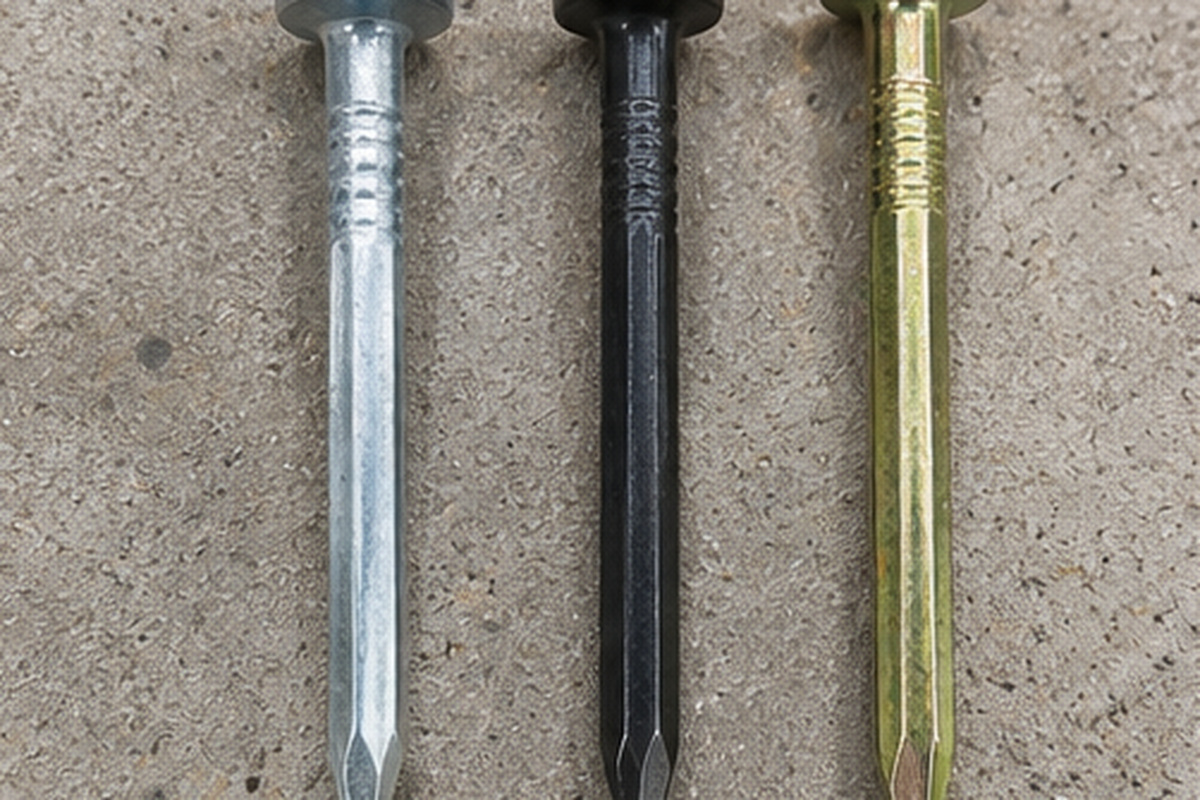
Surface finish can confuse buyers because appearance is easy to see. A black nail, polished nail, or galvanized nail may look different, but color alone does not prove higher quality. The finish should match storage conditions, market preference, and rust resistance needs.
Concrete nails may have black, polished, galvanized, or other surface treatments depending on the order requirement. The finish can affect appearance, storage performance, and corrosion resistance10, but buyers should not judge quality by color alone. Steel, hardness, treatment, and consistency remain important.
Surface appearance is not the full quality story
I have met buyers who prefer one finish because their market recognizes it. That is reasonable. Local market habits matter. However, I always remind buyers that a good-looking surface does not automatically mean the nail is suitable for hard concrete.
Surface finish mainly relates to:
- Appearance
- Rust resistance
- Storage life
- Customer preference
- Packaging presentation
- Brand positioning
It does not replace material selection or heat treatment.
Common finishes in bulk trade
| Finish type | Common purpose | Buyer note |
|---|---|---|
| Black finish | Traditional appearance and market preference | Confirm rust protection and storage conditions |
| Polished finish | Bright appearance | Check if the market accepts it for construction use |
| Galvanized finish | Better corrosion resistance than plain finish in many conditions11 | Confirm coating expectation and cost impact |
| Custom finish | Brand or market-specific requirement | Confirm MOQ, sample approval, and packing design |
Different markets have different expectations. In some African and Middle Eastern markets, buyers may ask for specific finishes and box designs because retailers are used to them. In Southeast Asia or South America, packaging size, carton strength, and price level may be just as important as appearance.
How storage and shipment affect surface choice
Concrete nails often travel by sea freight. Moisture, long transit time, and warehouse conditions can affect the surface.12 If a buyer chooses a finish only by price, rust risk may increase, especially if cartons are stored in humid locations.
Buyers should think about:
-
Transit time
Sea shipping may take weeks, depending on destination. -
Warehouse environment
Humid storage can increase corrosion risk. -
Retail display method
Small boxes may be opened and closed many times. -
Customer expectations
Some markets accept minor surface changes. Others reject them quickly. -
Packaging method
Inner boxes, plastic bags, cartons, and palletizing can all affect protection.
At Dingzhou BEST, we support OEM/ODM customization, including product, packaging, and brand logo. For buyers who serve wholesale markets, customized packaging can help build repeat sales. Still, the product specification must come first. A strong box cannot solve a weak nail.
If a buyer needs certificates, inspection reports, or specific documents, they should request them clearly and verify the documents as part of procurement evaluation. Documentation should support supplier selection, but it should not replace physical sample testing in the target market.
How should importers choose concrete nails from a supplier?
Choosing a supplier only by unit price can create hidden costs. A low FOB price may look attractive, but unstable nail quality can lead to bending, rust complaints, poor retail feedback, and difficulty building repeat orders.
Importers should choose concrete nails by confirming specification, steel and treatment suitability, surface finish, packaging, sample testing, MOQ, delivery time, and supplier stability. A practical trial order can reduce risk before larger repeat purchases.
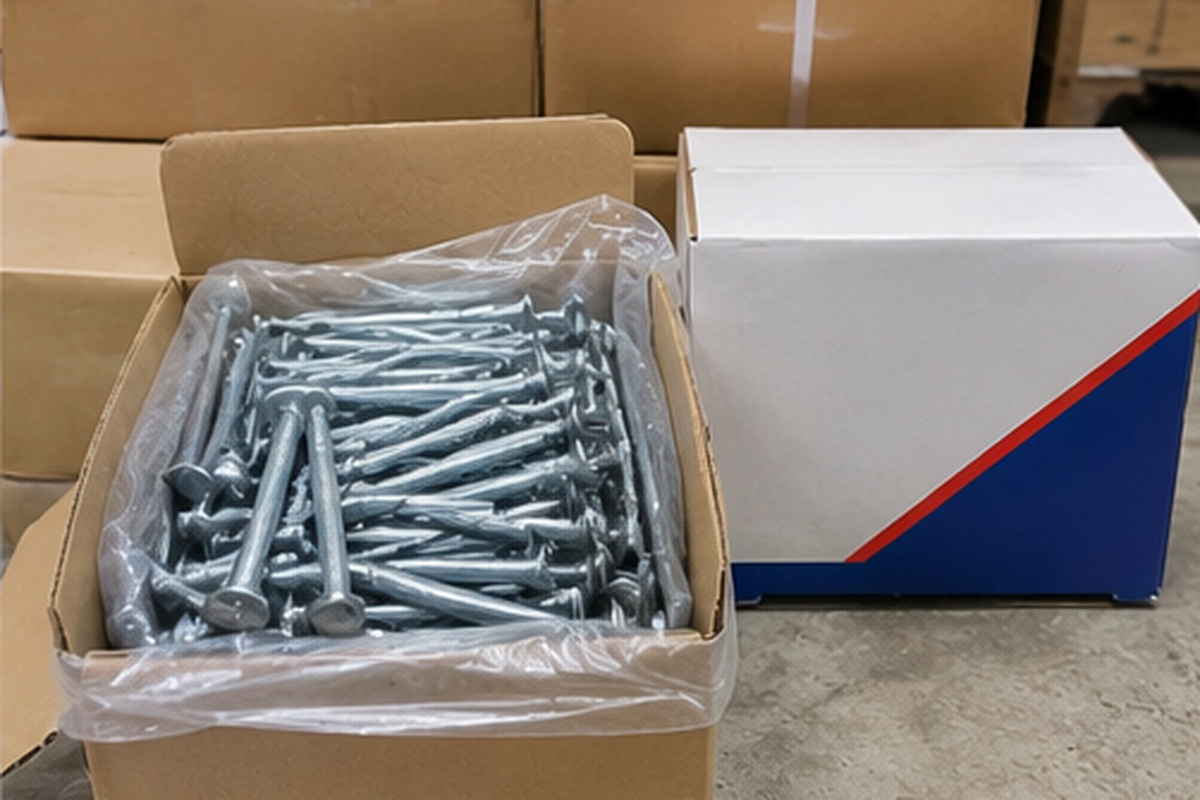
Start with a clear specification
A supplier cannot quote accurately without clear information. For our FOB quotations, I usually need:
- Product type
- Nail length
- Wire diameter
- Quantity
- Surface finish
- Packaging method
- Brand or logo requirement
- Destination or loading preference if relevant
For Dingzhou BEST, the usual minimum order quantity is 5 tons or 200 cartons, depending on the product and packaging. We support trial orders, which can help buyers test product acceptance before scaling up.
Compare more than the FOB price
FOB price is important, but it is not the only factor. A slightly lower price may not help if the nail quality is unstable. Importers should compare total purchasing risk.
| Factor | Why it matters |
|---|---|
| Material and treatment | Affects bending and breakage risk |
| Finish | Affects storage and market acceptance |
| Packaging | Affects retail sales and shipping protection |
| MOQ | Affects inventory pressure |
| Delivery time | Affects sales planning |
| Sample policy | Reduces first-order risk |
| Customization | Supports brand building |
| Export experience | Helps communication and documentation |
Our typical delivery time is 15–25 days, depending on order quantity and production schedule. Shipment is usually by sea freight, and we support both FCL and LCL depending on buyer needs.
Ask for samples and test them locally
Samples are useful because buyers can check real performance. A sample should not be treated as a full engineering guarantee, but it can reveal many practical points.
Buyers can test:
- Whether the nail bends during use
- Whether the point is sharp enough
- Whether the head holds up during hammering
- Whether the finish matches the expected appearance
- Whether the packaging fits local retail needs
- Whether the nail count or weight is acceptable
I also recommend comparing samples against current market products. This helps buyers decide whether they need a lower-cost option, a stronger nail, better packaging, or a different finish.
Review supplier capability
A good supplier should not only say “yes.” A good supplier should ask questions. If a buyer requests a concrete nail for a demanding substrate, the supplier should confirm usage before promising performance.
Useful supplier questions include:
- What market will this product serve?
- What base material will customers use it on?
- What size is popular in your market?
- What packing style do your retailers prefer?
- Do you need OEM brand packaging?
- Do you want samples before placing an order?
These questions protect both sides. They reduce misunderstanding and help the buyer receive goods that match the market.
As a factory, we focus on practical production and supply. We are not asking buyers to accept vague claims. We encourage buyers to provide details, test samples, and confirm the right product before repeat orders.
Frequently Asked Questions
Are concrete nails the same as ordinary steel nails?
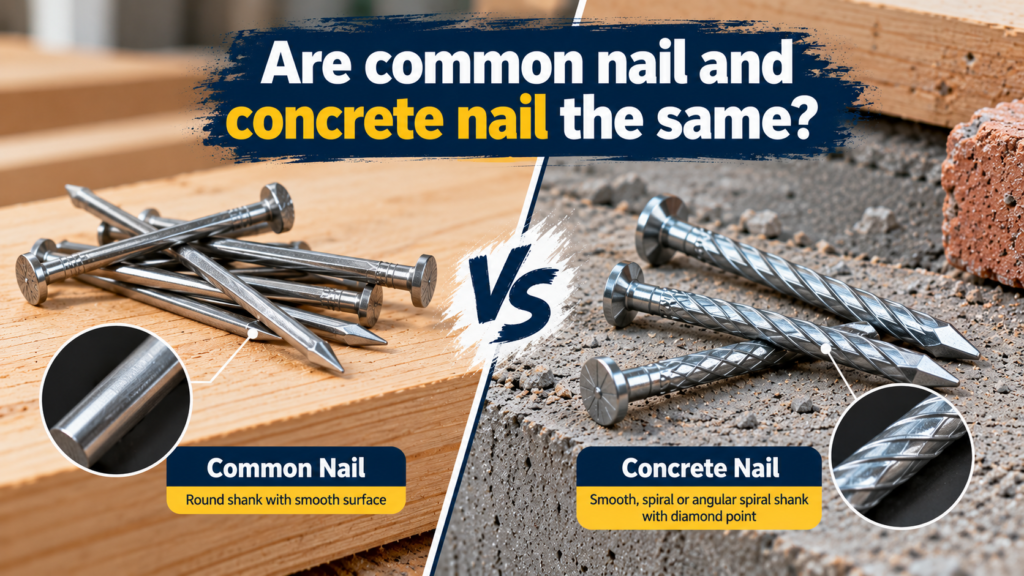
No. Concrete nails are steel nails designed for harder base materials such as concrete, masonry, brick, or similar surfaces. They usually need better hardness, stronger shank performance, and suitable heat treatment compared with ordinary nails for wood.
Do black concrete nails mean better quality?
No. Black color alone does not prove better quality. A black finish may match market preference or provide a certain surface condition, but buyers should also check steel quality, heat treatment, point sharpness, hardness, and batch consistency.
Can concrete nails rust during shipping?
Yes. Concrete nails can rust if the finish, packaging, transit time, or storage conditions are not suitable. Buyers should choose the surface treatment and packaging based on climate, warehouse conditions, shipment time, and market expectations.
Should I request samples before buying concrete nails in bulk?
Yes. Samples help buyers check appearance, finish, size, packaging, and basic performance before a trial or bulk order. Samples are especially useful when changing suppliers, entering a new market, or customizing brand packaging.
What information should I send for a concrete nail quotation?
You should send the nail size, quantity, surface finish, packaging method, target use, destination market, and any OEM/ODM requirements. This information helps the factory provide a more accurate FOB quotation and recommend suitable production options.
Conclusion
Concrete nails are commonly made of steel, but smart buyers look beyond that simple answer. The real purchasing question is whether the steel, hardness, heat treatment, shank strength, point sharpness, finish, and packaging fit the intended market. If you are importing in bulk, I recommend starting with clear specifications and sample checking. For an accurate FOB quotation, please send your nail specification, quantity, packaging method, target use, and whether you need samples for quality inspection. Contact Dingzhou BEST at [email protected] or WhatsApp +8618331061136.
-
"Nail (fastener)", https://en.wikipedia.org/wiki/Nail_(fastener). A neutral reference on nail types identifies concrete or masonry nails as hardened steel fasteners intended for hard materials such as concrete or masonry. Evidence role: definition; source type: encyclopedia. Supports: A neutral reference should confirm that concrete or masonry nails are typically made of hardened steel for use in hard substrates.. ↩
-
"Withdrawal Strength and Bending Yield Strength of Stainless …", https://www.fpl.fs.usda.gov/documnts/pdf2015/fpl_2015_rammer001.pdf. Fastener standards and technical references describe steel fasteners as being specified by material grade and mechanical requirements, supporting the point that one product category need not use a single steel grade. Evidence role: general_support; source type: institution. Supports: A standards or technical institution source should show that steel fasteners are specified by material, mechanical properties, and application rather than by a single universal steel grade.. Scope note: This supports the general fastener-material principle; it may not list every steel grade used specifically for concrete nails. ↩
-
"Fastener Design Manual", https://ntrs.nasa.gov/api/citations/19900009424/downloads/19900009424.pdf. Engineering guidance on fastener selection treats substrate material, installation method, geometry, and environmental exposure as relevant factors in choosing a suitable fastener. Evidence role: expert_consensus; source type: education. Supports: An engineering or construction source should support that fastener selection depends on substrate characteristics, installation method, and service environment.. Scope note: The source would support the selection principle generally, not prove that every listed feature is equally important for every concrete nail application. ↩
-
"A Comparison of Common Structural Materials", https://ideaexchange.uakron.edu/cgi/viewcontent.cgi?article=2815&context=honors_research_projects. Construction-material references report that concrete and masonry have mechanical properties and fastening behavior distinct from wood, supporting the need for specialized nails in hard substrates. Evidence role: general_support; source type: education. Supports: A construction-materials source should show that concrete and masonry are hard, high-compressive-strength substrates compared with typical wood fastening applications.. Scope note: The comparison is contextual because hardness and fastening resistance vary by wood species, concrete mix, and masonry type. ↩
-
"Impact and Fracture Toughness Properties of Structural …", https://rosap.ntl.bts.gov/view/dot/87575/dot_87575_DS1.pdf. Materials-science references describe hardness, toughness, and strength as distinct steel properties that affect resistance to deformation and fracture under mechanical loading. Evidence role: mechanism; source type: research. Supports: A materials-science source should explain that hardness, toughness, and strength influence how steel components resist deformation and fracture under load.. Scope note: This supports the underlying material mechanism; it does not provide performance test data for the specific nails discussed in the article. ↩
-
"Does Higher Hardness Mean More Brittle?", https://www.tevema.com/does-higher-hardness-mean-more-brittle/. Metallurgical literature describes a tradeoff in many steels in which heat treatment can increase hardness while reducing toughness if processing is not controlled. Evidence role: mechanism; source type: paper. Supports: A peer-reviewed or technical materials source should support that hardness and toughness must be balanced in heat-treated steel.. Scope note: The source would explain the general material behavior rather than establish an optimal hardness range for this article’s concrete nails. ↩
-
"Impact Fracture Surfaces as the Indicators of Structural Steel …", https://pmc.ncbi.nlm.nih.gov/articles/PMC10146829/. Failure-analysis and materials references explain that brittle steel components are more susceptible to fracture under sudden impact loading than tougher components. Evidence role: mechanism; source type: research. Supports: A materials or failure-analysis source should support that brittle steel components can fracture under impact loads.. Scope note: This supports the fracture mechanism generally and does not quantify breakage probability for a particular nail or substrate. ↩
-
"The Difference Between Mortar and Cement", https://www.sakrete.com/blog/post/the-difference-between-mortar-and-cement/. Masonry technical references distinguish concrete, brick, concrete masonry units, and mortar by composition and mechanical properties, supporting the article’s caution that fastening performance varies by substrate. Evidence role: general_support; source type: institution. Supports: A masonry technical source should show that concrete, brick, concrete block, and mortar have different material properties relevant to fastening.. ↩
-
"How to Prevent Moisture in Sea Containers", https://unitload.vt.edu/education/white-papers/3-wp-moisture-in-sea-containers.html. Export-packaging guidance notes that packaging design helps protect goods from handling stress, moisture, and environmental exposure during international transport. Evidence role: general_support; source type: government. Supports: A government export or logistics source should support that appropriate packaging helps protect goods from moisture, handling, and transport damage during shipping.. Scope note: This is contextual support for packaging importance and does not evaluate the specific cartons, bags, or pallets used by any supplier. ↩
-
"Coatings for corrosion protection", https://www.govinfo.gov/content/pkg/GOVPUB-C13-14327283e491f213d199e8c784e520bc/pdf/GOVPUB-C13-14327283e491f213d199e8c784e520bc.pdf. Corrosion references describe steel surface coatings and finishes as factors that influence appearance retention and resistance to oxidation during storage and use. Evidence role: mechanism; source type: research. Supports: A corrosion or coatings source should explain that surface treatments influence corrosion behavior and storage durability of steel products.. Scope note: The source supports the mechanism generally; actual storage performance depends on coating thickness, packaging, humidity, and handling. ↩
-
"Galvanization", https://en.wikipedia.org/wiki/Galvanization. Technical references on galvanizing explain that zinc coatings protect underlying steel through barrier and sacrificial mechanisms, commonly improving corrosion resistance compared with uncoated steel. Evidence role: mechanism; source type: institution. Supports: An authoritative galvanizing or corrosion source should support that zinc coatings protect steel from corrosion compared with uncoated steel.. Scope note: The degree of improvement depends on coating thickness, environment, abrasion, and exposure conditions. ↩
-
"Effect of Relative Humidity on Corrosion of Steel under …", https://www.osti.gov/servlets/purl/1367735. Corrosion literature identifies moisture and relative humidity as important drivers of atmospheric corrosion of steel, supporting the relevance of transit and warehouse conditions to nail surface condition. Evidence role: mechanism; source type: research. Supports: A corrosion-science source should support that moisture and humidity accelerate corrosion of steel during storage or transport.. Scope note: The source supports the environmental mechanism, not the frequency of rust claims in any particular export market. ↩