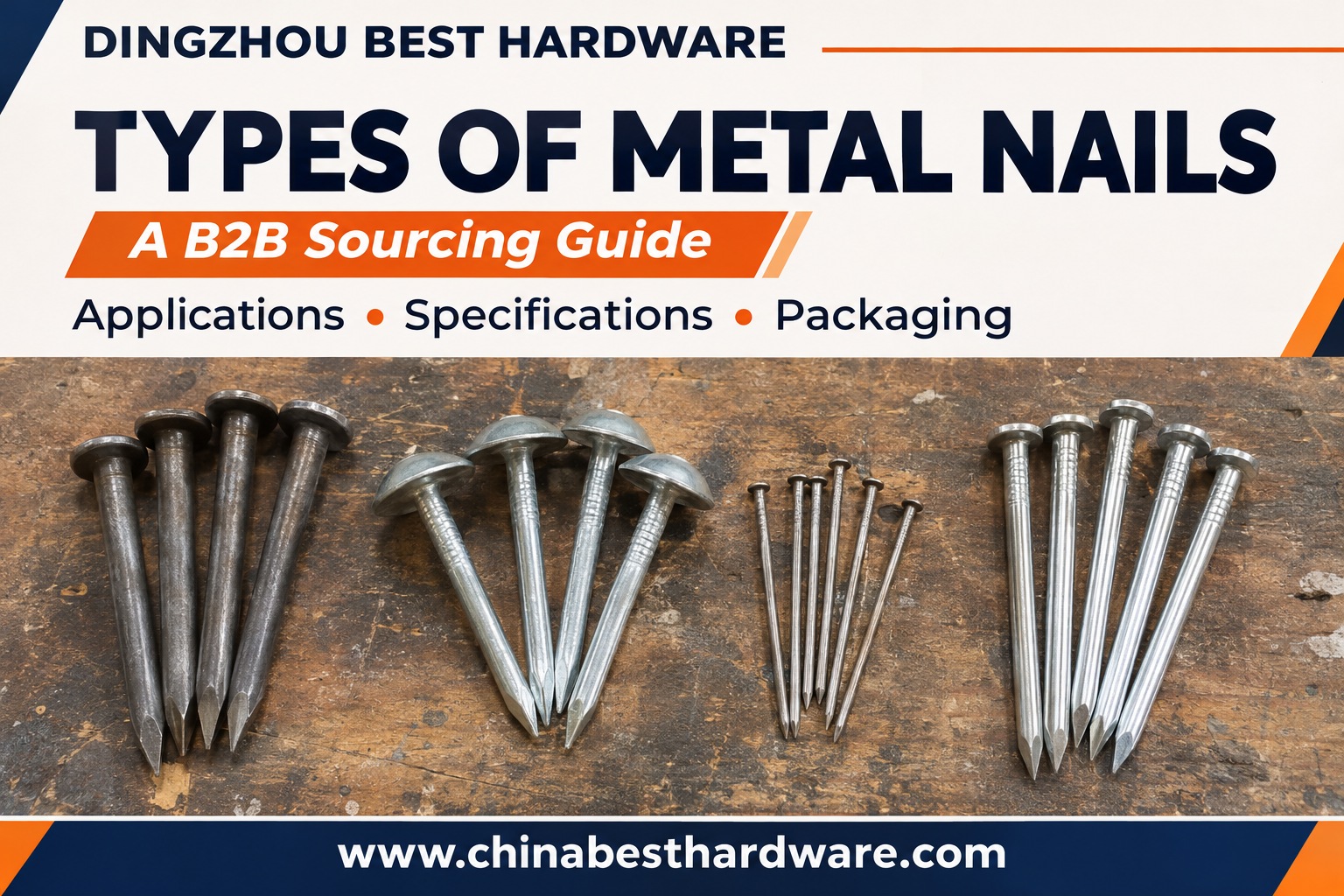
Types of metal nails can confuse buyers because many products look similar at first glance. A wrong choice can cause poor fastening, slow resale, packaging complaints, or project delays. I find it easier to treat nail selection as a matching process: application, specification, finish, packaging, and market habit must fit together.
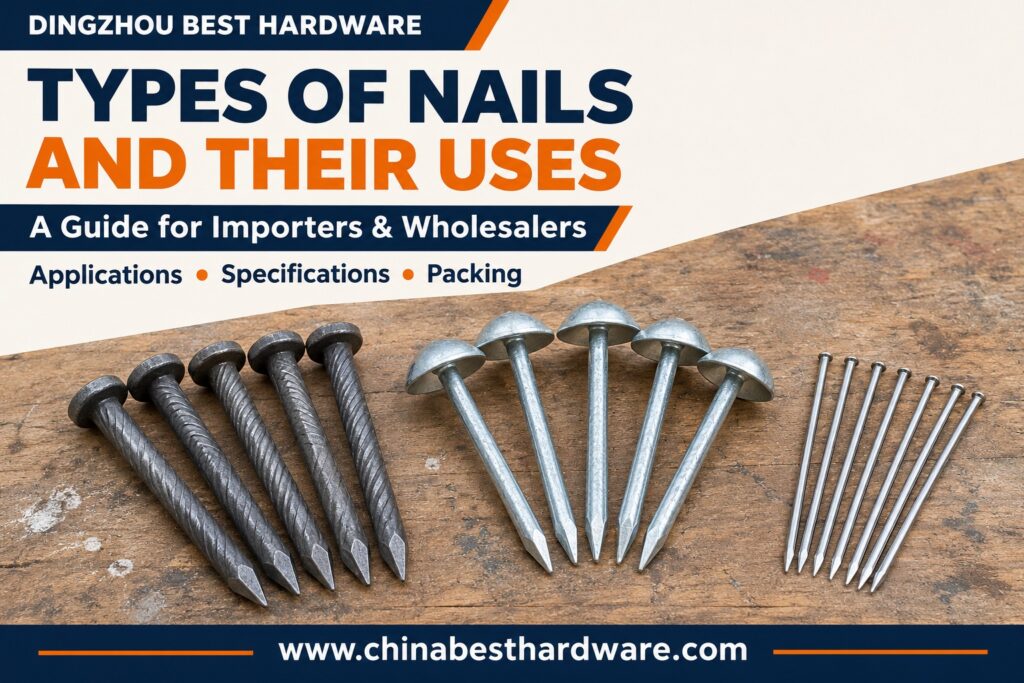
Types of metal nails include concrete nails, roofing nails, lost head nails, common construction nails, black steel nails, and other specialized steel nails. Buyers should not choose by name alone. They should match the nail type to the base material, job requirement, head shape, shank style, finish, package, and local resale channel.
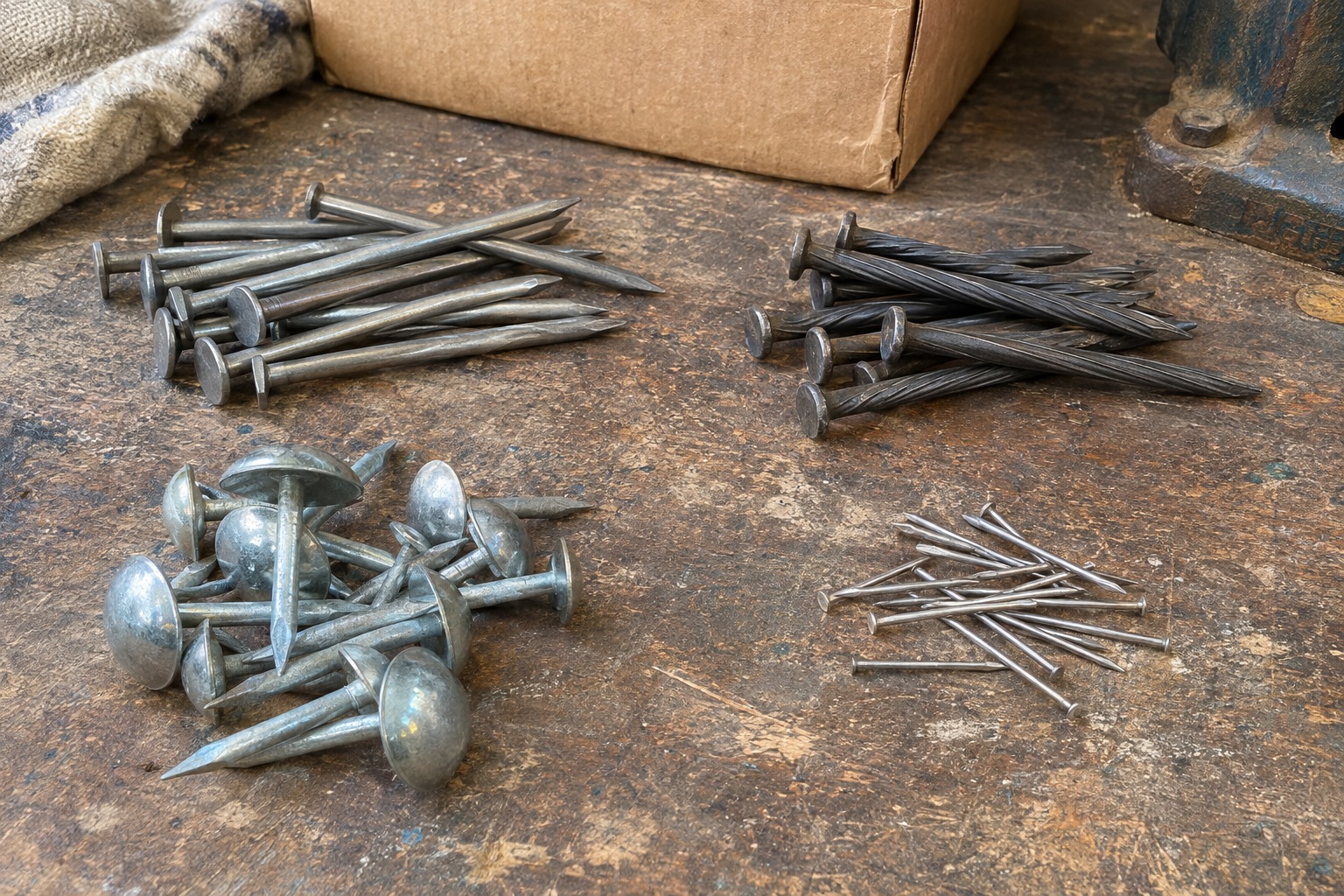
A nail is a small product, but a nail order is not always simple. In export trade, I often see that the product name is only the starting point. The real buying decision begins when the buyer confirms where the nail will be used and how it will be sold.
What are the main types of metal nails for B2B sourcing?
Buyers often ask for “nails” as one broad product. That creates risk because each nail type solves a different fastening problem. If I quote the wrong item from an unclear request, the buyer may receive a product that looks acceptable but does not match the end use.
The main types of metal nails for B2B sourcing are concrete nails, roofing nails, lost head nails, common nails, black steel nails, and other steel nails for construction or distribution use. Each type should be selected by application, material, size, head style, surface finish, and packaging requirements.
Concrete nails
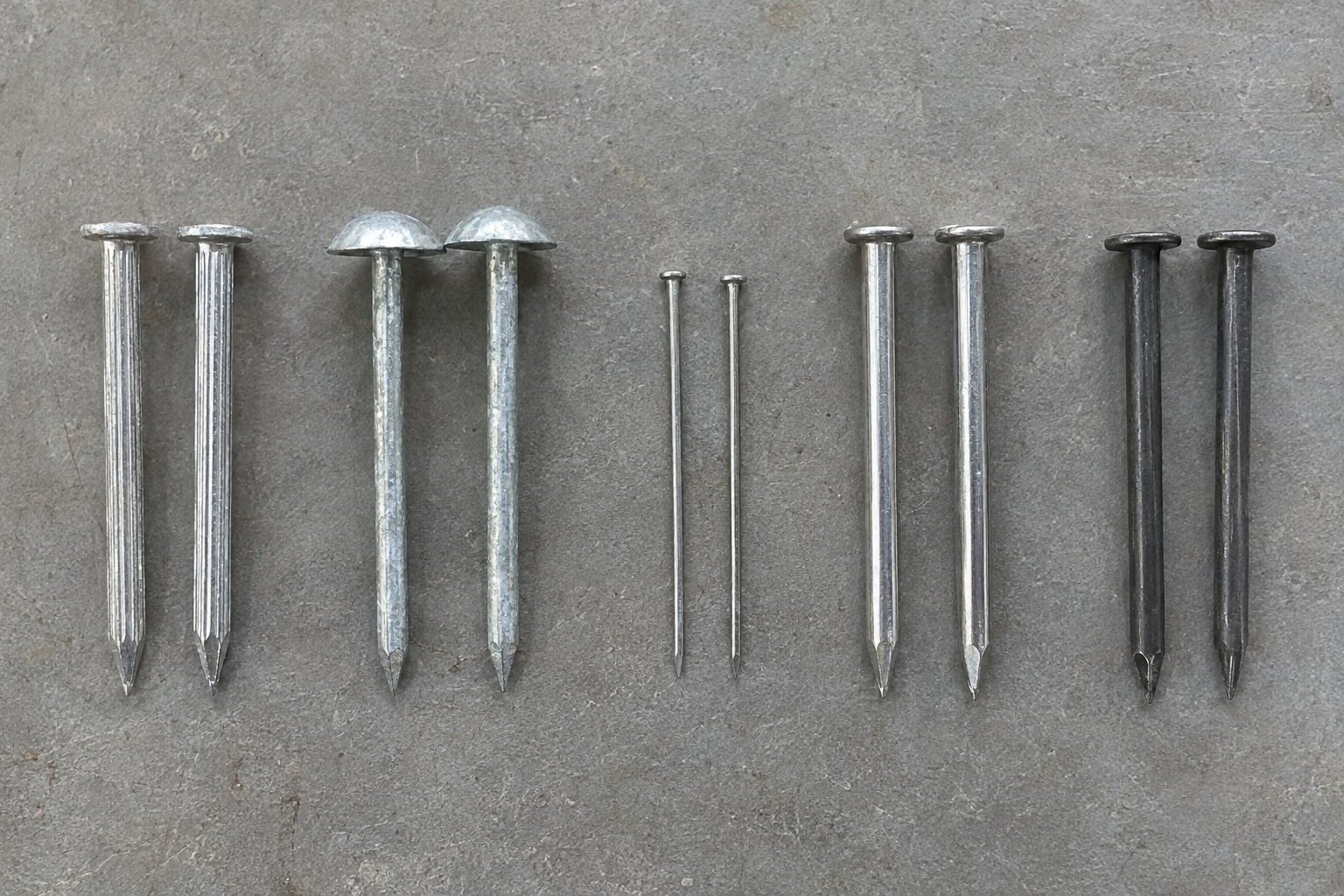
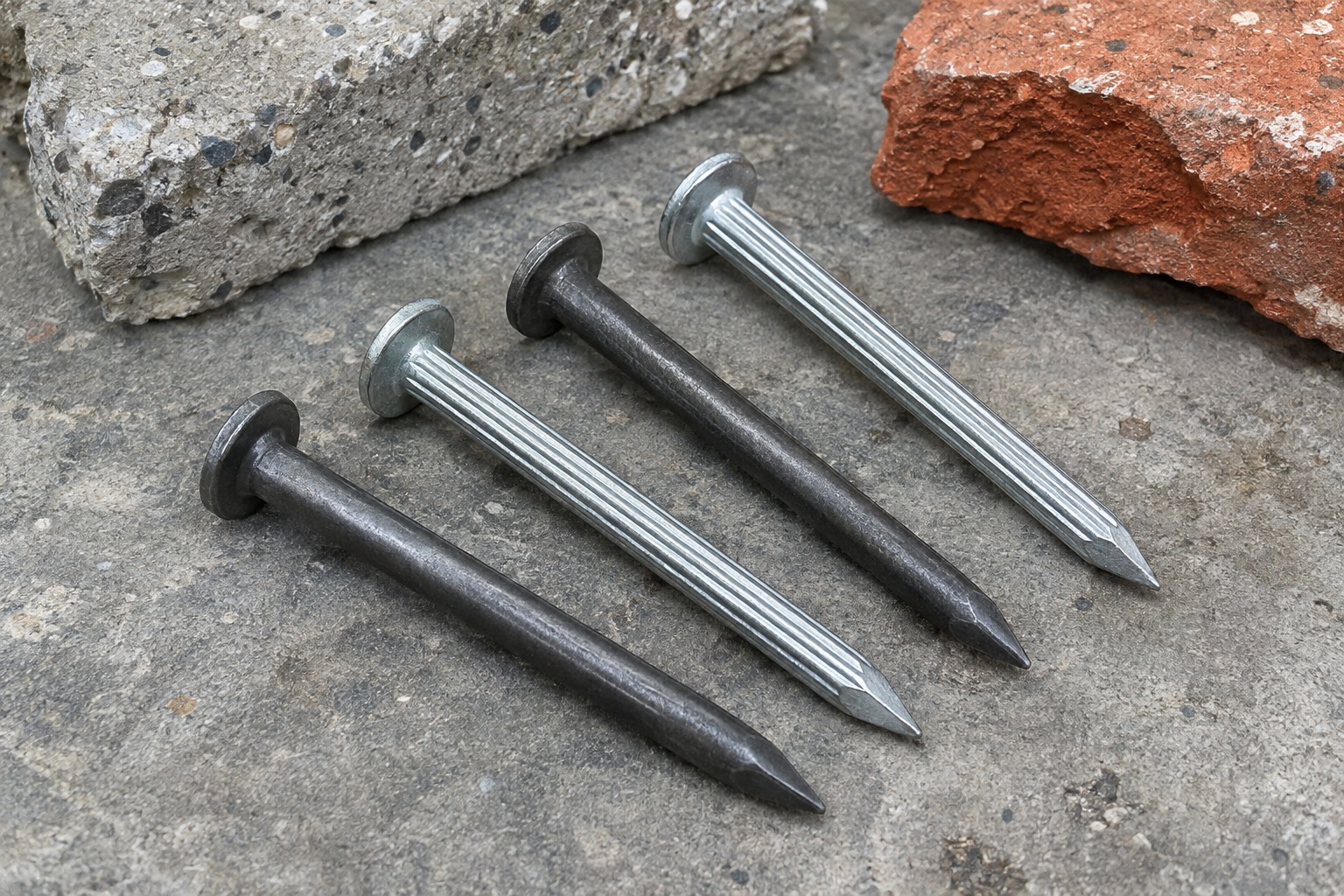
Concrete nails are usually used where the fastener must enter harder materials such as concrete, masonry, or brickwork. In common trade practice, buyers focus on hardness, shank design, length, and point sharpness. These nails are not the same as general wood nails.
A concrete nail may be supplied in different finishes, such as black, bright, or other requested surface treatments. Buyers should confirm the exact use case before ordering because wall material and installation method can affect performance.
Roofing nails
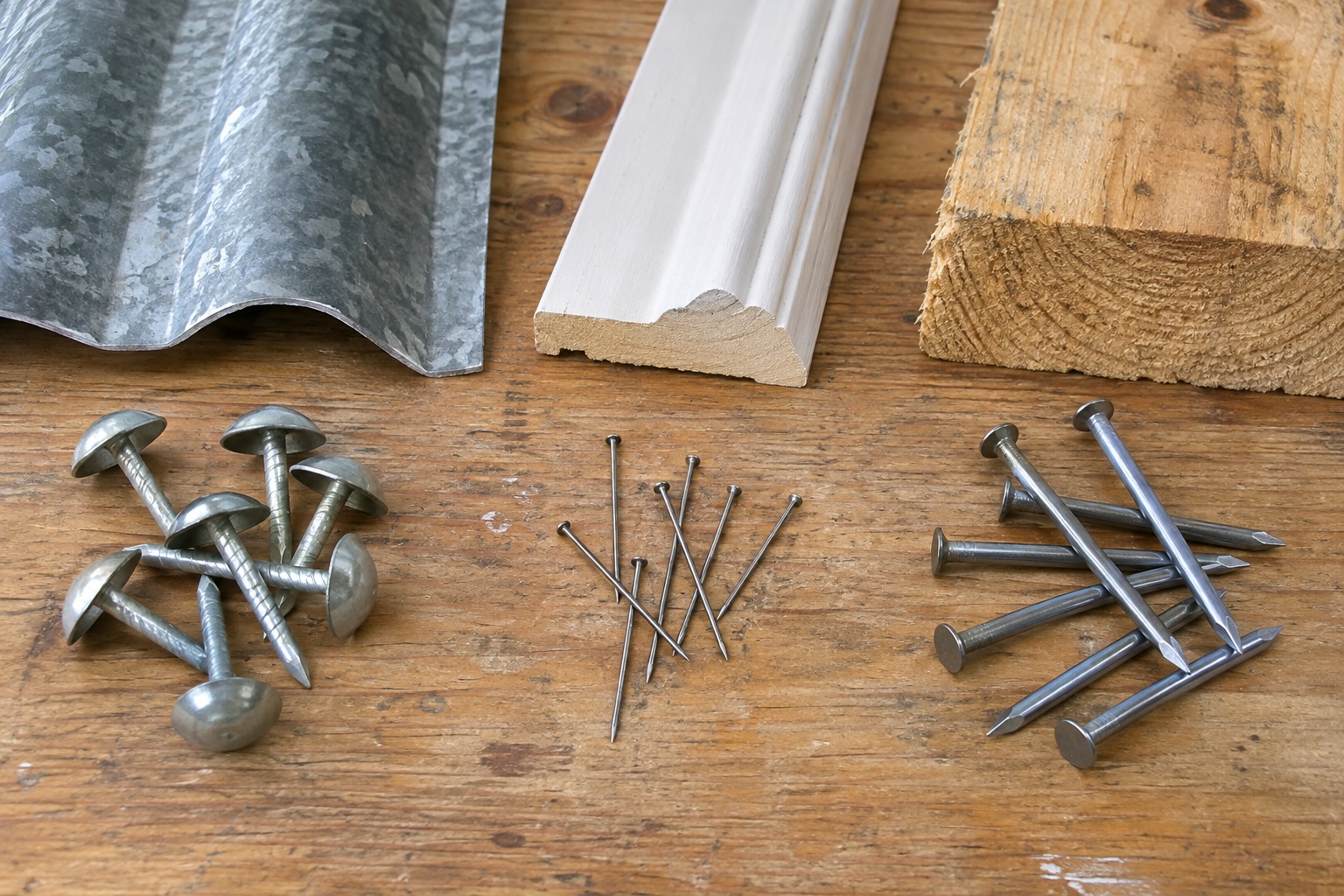
Roofing nails are designed for roofing sheets, roofing felt, asphalt materials, or related building cover applications. They usually have a larger head than common nails because the head helps hold roofing material in place.
For many construction or distribution uses, roofing nails may need specific packaging that suits contractor purchasing habits. In some markets, small boxes move faster through hardware shops. In other markets, bulk cartons may be preferred for project use.
Lost head nails
Lost head nails are also called finishing nails in many markets. They have a small head that can sit below or nearly flush with the surface. Buyers often use them for furniture, interior trim, decorative woodwork, or other finishing work.
The main benefit is a cleaner appearance. However, I always remind buyers that a lost head nail is not a substitute for a nail that needs a wide head or high holding area.
Common nails and general construction nails
Common nails are used in many wood and general construction applications. They are often chosen by length, diameter, head style, and finish. These nails are familiar to many importers and wholesalers because they sell into broad hardware channels.
Still, “common” does not mean “universal.” A common nail for wood should not automatically be used for concrete, roofing, or fine finishing.
Black steel nails
Black steel nails are often requested in markets where buyers want a dark finish, a specific appearance, or a familiar local product style. They may be used in construction, packaging, or general fastening depending on the specification.
For export procurement, buyers should confirm whether “black steel nail” refers mainly to the finish, the steel type, or a specific local product name. Different markets may use similar names in different ways.
| Nail type | Common use | Main buying focus | Common buyer risk |
|---|---|---|---|
| Concrete nail | Concrete, masonry, harder base materials | Hardness, shank, point, length | Ordering wood nails by mistake |
| Roofing nail | Roofing sheets, felt, roof covering | Head size, shank, finish, packing | Choosing a head that is too small |
| Lost head nail | Finishing, trim, furniture | Small head, clean appearance, size | Using it where high holding area is needed |
| Common nail | Wood, general construction | Length, diameter, finish, packing | Treating it as suitable for every job |
| Black steel nail | General trade uses depending on spec | Finish, size, local naming habit | Confusing finish with application |
In our own product communication, we try to move the conversation from “What is the name?” to “Where will it be used?” This small change prevents many sourcing mistakes.
How should buyers compare types of metal nails by application?
A buyer may see two nails with the same length and assume they can replace each other. That assumption can be expensive. Similar-looking nails may have different heads, shanks, finishes, and intended uses, so the wrong product can fail in the job or fail in resale.
Buyers should compare types of metal nails by checking the base material, load expectation, exposure condition, appearance requirement, installation method, and resale channel. The correct nail is the one that fits the job and the local market, not simply the cheapest nail with a similar size.
Start with the base material
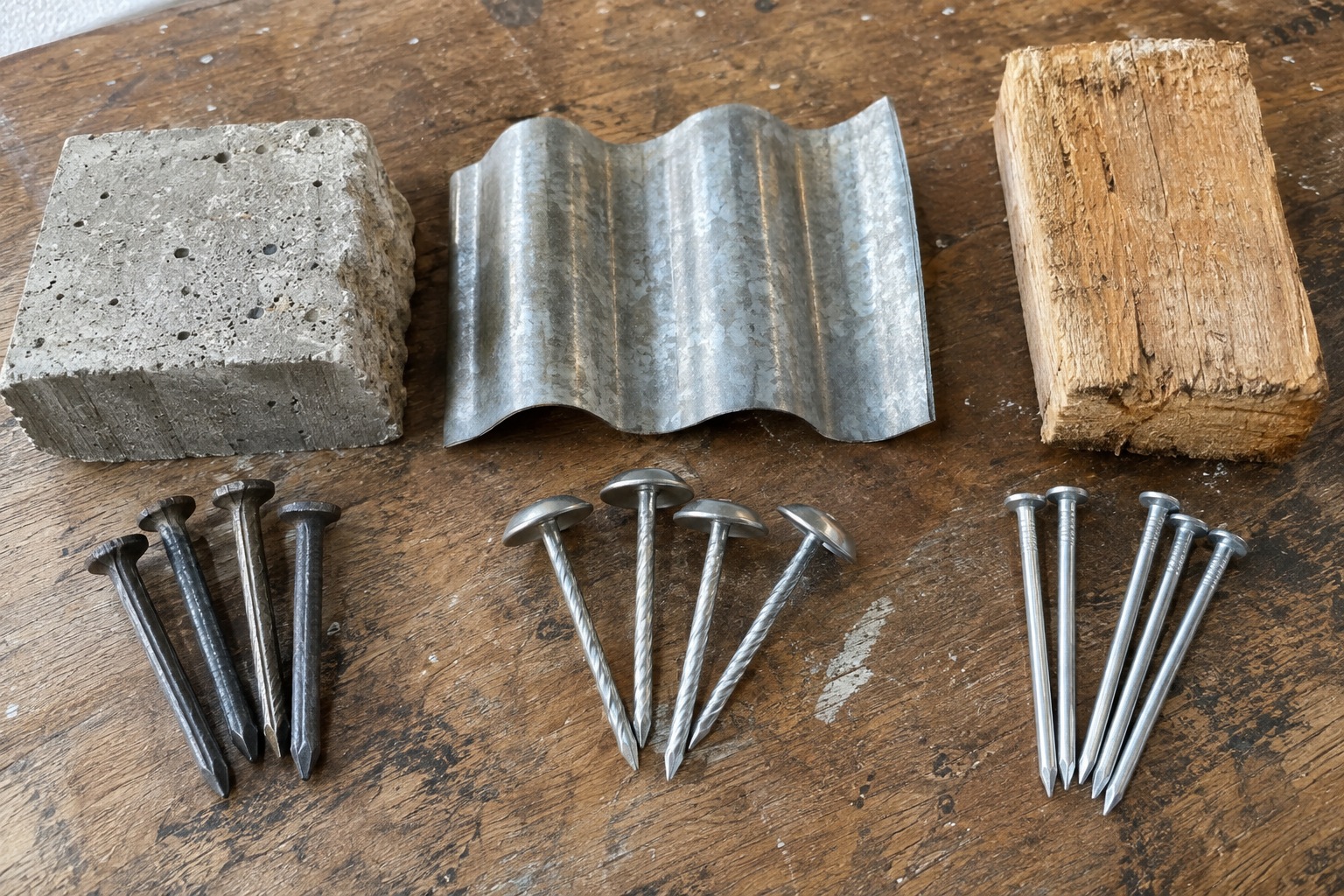
The first question should be simple: What will the nail go into?
A nail used for wood does not need the same properties as a nail used for concrete. A nail used under a roof sheet does not need the same head design as a finishing nail used in visible trim.
Common base materials include:
- Softwood or timber
- Hardwood
- Concrete
- Brick or masonry
- Roofing sheet or roofing felt
- Packaging wood
- Furniture or decorative trim
I recommend that importers ask their end buyers this question before confirming an order. It may feel basic, but it changes the quotation.
Compare the head shape
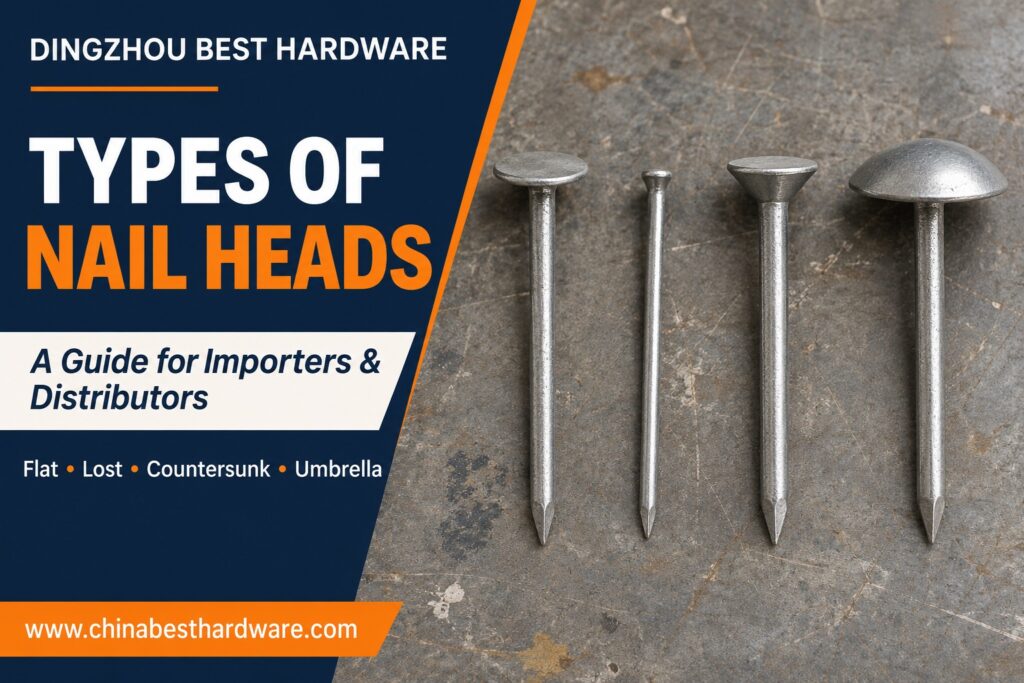
The nail head affects holding area and appearance. A large head can hold thin material better. A small head can reduce visual impact. A lost head can disappear into trim more easily.
Common head considerations include:
- Flat head for general holding.
- Large head for roofing or sheet-like materials.
- Lost head for finishing work.
- Special head style if the market has a local preference.
If a distributor sells into mixed channels, the head style should match the most common buyer habit in that market.
Compare the shank style
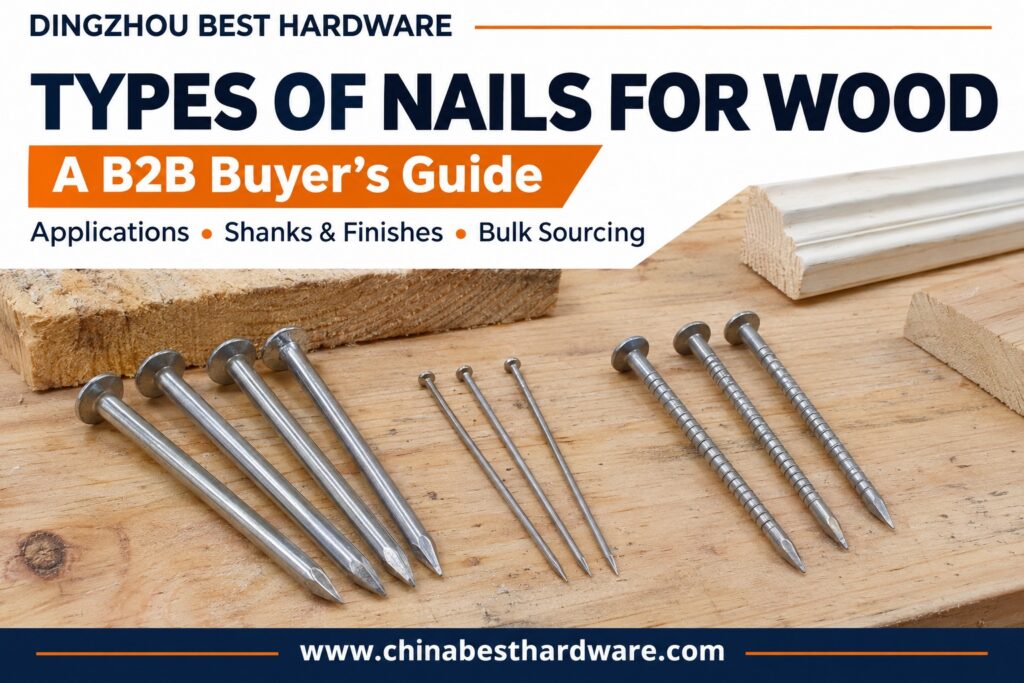
The shank is the body of the nail. It affects how the nail enters and holds in the material. Buyers usually compare smooth shank, ring shank, twisted shank, or fluted styles depending on product type and market demand.
A smooth shank may be suitable for many general applications. A ring or twisted shank may be requested when buyers want stronger grip in certain materials. However, the final choice should be confirmed by the application requirement and local practice.
Compare the finish
Surface finish matters for appearance, corrosion resistance expectations, handling, and market preference. Buyers may request:
- Bright finish
- Black finish
- Galvanized finish
- Polished finish
- Other finish by agreement
I avoid saying one finish is always better. A finish must match the environment and buyer expectation. For outdoor exposure, buyers often ask about galvanized options. For certain general trade uses, black steel nails may be more familiar.
Compare packaging and resale habits
For B2B sourcing, packaging is not decoration. It affects transport, storage, retail display, and customer acceptance. A good product in the wrong package can be difficult to sell.
Common packaging choices include:
| Packaging style | Typical use | Buyer consideration |
|---|---|---|
| Small box | Retail hardware shops | Easy resale, higher packaging cost |
| Bulk carton | Contractors, wholesalers | Efficient handling, lower unit packaging |
| Bag packing | Certain local markets | Must match local buying habit |
| OEM carton | Brand distributors | Requires artwork and confirmation |
| Palletized cargo | Larger import orders | Better loading control |
In our export discussions, I usually ask for product + specification + quantity + packaging method before quoting FOB. That format helps both sides avoid unclear pricing.
Which types of metal nails are used for concrete and hard masonry?
Concrete fastening creates more risk than general wood fastening because the base material is hard and less forgiving. A buyer who orders ordinary nails for concrete use may face bending, breakage, or complaints from contractors. That makes specification control very important.
The types of metal nails used for concrete and hard masonry are usually concrete nails or hardened steel nails designed for hard base materials. Buyers should confirm nail hardness, length, diameter, shank style, point shape, finish, and installation conditions before placing bulk orders.
What makes concrete nails different?
Concrete nails are usually made to enter harder materials than timber. In trade discussions, buyers often focus on the steel, heat treatment, shank shape, and sharpness. I keep the language practical because exact performance depends on verified standards, base material, and installation method.
A concrete nail must resist bending better than a standard soft nail. It also needs a point and body suitable for penetrating harder surfaces. This does not mean every concrete nail works in every concrete condition. Buyers should test samples when the project requirement is strict.
Common concrete nail variables
When a buyer sends an inquiry for concrete nails, I prefer to confirm these points:
- Length: Commonly selected based on required penetration and material thickness.
- Diameter: Affects strength, holding, and installation difficulty.
- Head type: Usually chosen for the required holding area.
- Shank style: Smooth, fluted, or other styles depending on product design.
- Finish: Black, bright, or other requested finish.
- Packaging: Small boxes, cartons, or customized brand packaging.
- Quantity: Required for MOQ planning and production arrangement.
Concrete nail selection table
| Selection factor | Why it matters | Buyer question to ask |
|---|---|---|
| Base material | Concrete hardness varies | Is it concrete, brick, block, or masonry? |
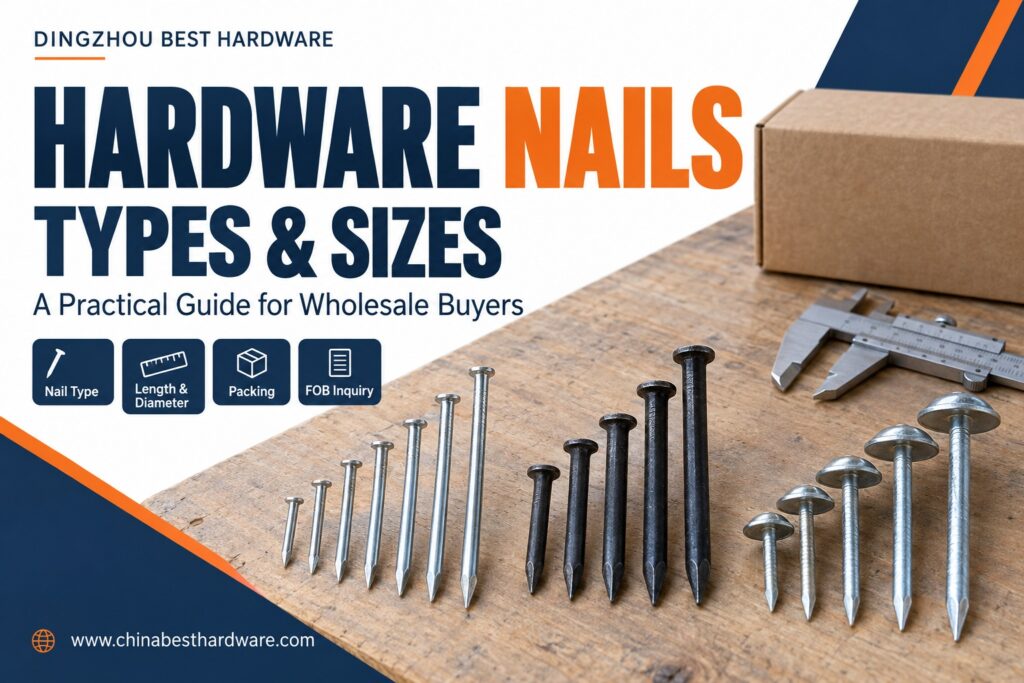
| Nail length | Controls penetration depth | What material thickness must be fixed? |
| Nail diameter | Affects strength and driving force | What size is common in the local market? |
| Shank style | Affects grip and installation | Does the end user request smooth or fluted? |
| Finish | Affects appearance and exposure expectation | Is the nail used indoors or outdoors? |
| Packing | Affects resale and site handling | Is it for retail, wholesale, or project use? |
Why similar nails are not interchangeable
A concrete nail and a common nail may look close in a catalog photo. They are not the same in use. If a buyer selects only by length, the result may be wrong.
For example, a 2-inch nail for wood and a 2-inch concrete nail may serve completely different markets. The wood nail may be easier to drive into timber but unsuitable for hard surfaces. The concrete nail may be harder and more suitable for masonry, but it may not be the most economical choice for simple wood packing.
This is why I prefer to quote after understanding the buyer’s target channel. A contractor buyer may care about jobsite performance. A wholesaler may care about sizes that move quickly in local shops. An importer may care about container loading, carton strength, and label language.
Sample confirmation matters
For many construction or distribution uses, I recommend sample checking before large orders. Samples can help buyers review:
- Nail appearance.
- Size tolerance by practical measurement.
- Point sharpness.
- Head shape.
- Finish consistency.
- Packaging layout.
- Local buyer acceptance.
At Dingzhou Best, we can provide samples for quality checking. Samples usually carry a basic charge, and this cost can be discussed for return or adjustment in a formal order. I see samples as a practical step, not a formality.
Which types of metal nails work best for roofing, finishing, and general wood use?
Roofing, finishing, and general wood fastening are often grouped together by new buyers because they all seem less demanding than concrete work. That grouping can create mistakes. A roofing nail, lost head nail, and common nail have different commercial purposes and different user expectations.
The types of metal nails used for roofing, finishing, and wood work include roofing nails, lost head nails, common nails, and other steel nails matched to local building practice. Buyers should compare head size, shank style, finish, length, and package before choosing.
Roofing nails: holding wider materials
Roofing nails usually need a wider head because roofing materials often require surface holding. If the head is too small, the fastener may not perform as expected in the application. Buyers should confirm the roofing material before confirming size and finish.
Common roofing nail buying points include:
- Head diameter
- Nail length
- Shank type
- Surface finish
- Packing quantity per box
- Carton strength for sea shipment
- Local market size preference
In some markets, buyers request galvanized roofing nails because roof applications can involve moisture exposure. However, buyers should verify the required finish based on local conditions and project expectations.
Lost head nails: appearance matters
Lost head nails are used when the final appearance matters. The smaller head helps reduce visible marks. This makes them suitable for finishing, furniture, trim, panel work, or similar applications.
A buyer should not choose lost head nails for every wood use. The smaller head may not provide the same holding area as a flat head nail. The choice should depend on whether the end user values appearance, holding area, or both.
Common nails: flexible but not universal
Common nails are widely used because they fit many basic construction and wood fastening needs. They may be simple, economical, and easy for distributors to sell. However, the buyer still needs to define the specification.
A common nail inquiry should include:
- Length
- Diameter or wire gauge
- Head style
- Shank style
- Finish
- Packing
- Order quantity
- Destination market
If a buyer says, “Give me common nails,” I usually ask follow-up questions. I do this because the same name may mean different sizes or packing in different countries.
Roofing vs finishing vs common nails
| Product | Main purpose | Head style | Typical buyer focus | Not ideal for |
|---|---|---|---|---|
| Roofing nail | Hold roofing material | Larger head | Head diameter, finish, packing | Fine decorative work |
| Lost head nail | Clean surface finish | Small or finishing head | Appearance, size, smooth finish | Wide holding area needs |
| Common nail | General wood/construction | Flat head | Size, price, availability | Concrete or specialized roofing |
| Black steel nail | General trade use by spec | Varies | Finish, size, local demand | Uses requiring verified corrosion protection |
Market habits matter
A nail that sells well in one country may not move in another country if the size, packing, or name is unfamiliar. In the Middle East, Africa, Southeast Asia, and South America, buyers may have different expectations for carton weight, box design, language, and size range.
For example, one market may prefer smaller boxes for retail display. Another market may prefer bulk packing because contractors buy by carton. A distributor may need OEM branding. A project purchaser may care more about fast delivery and stable specifications.
This is why I always connect nail choice with channel choice:
- Importer: Needs container planning, FOB price, stable supply, and correct documents.
- Wholesaler: Needs popular sizes, durable packing, and resale-friendly carton marks.
- Contractor: Needs product suitability, availability, and jobsite practicality.
- Hardware distributor: Needs attractive package, clear labeling, and predictable repeat demand.
A nail type is not “best” by itself. It is only best when it fits the application and the buying channel.
How should importers specify types of metal nails for quotation and packaging?
Many quotation delays happen because the inquiry is too broad. A buyer may ask for a price list, but the supplier cannot quote accurately without size, finish, packing, and quantity. This creates back-and-forth messages and sometimes leads to wrong price comparisons.
Importers should specify types of metal nails by sending the product name, length, diameter, head style, shank style, finish, quantity, packaging method, destination port, and branding requirement. For FOB quotations, buyers should also confirm carton details, MOQ, and whether OEM or ODM customization is needed.
A practical inquiry format
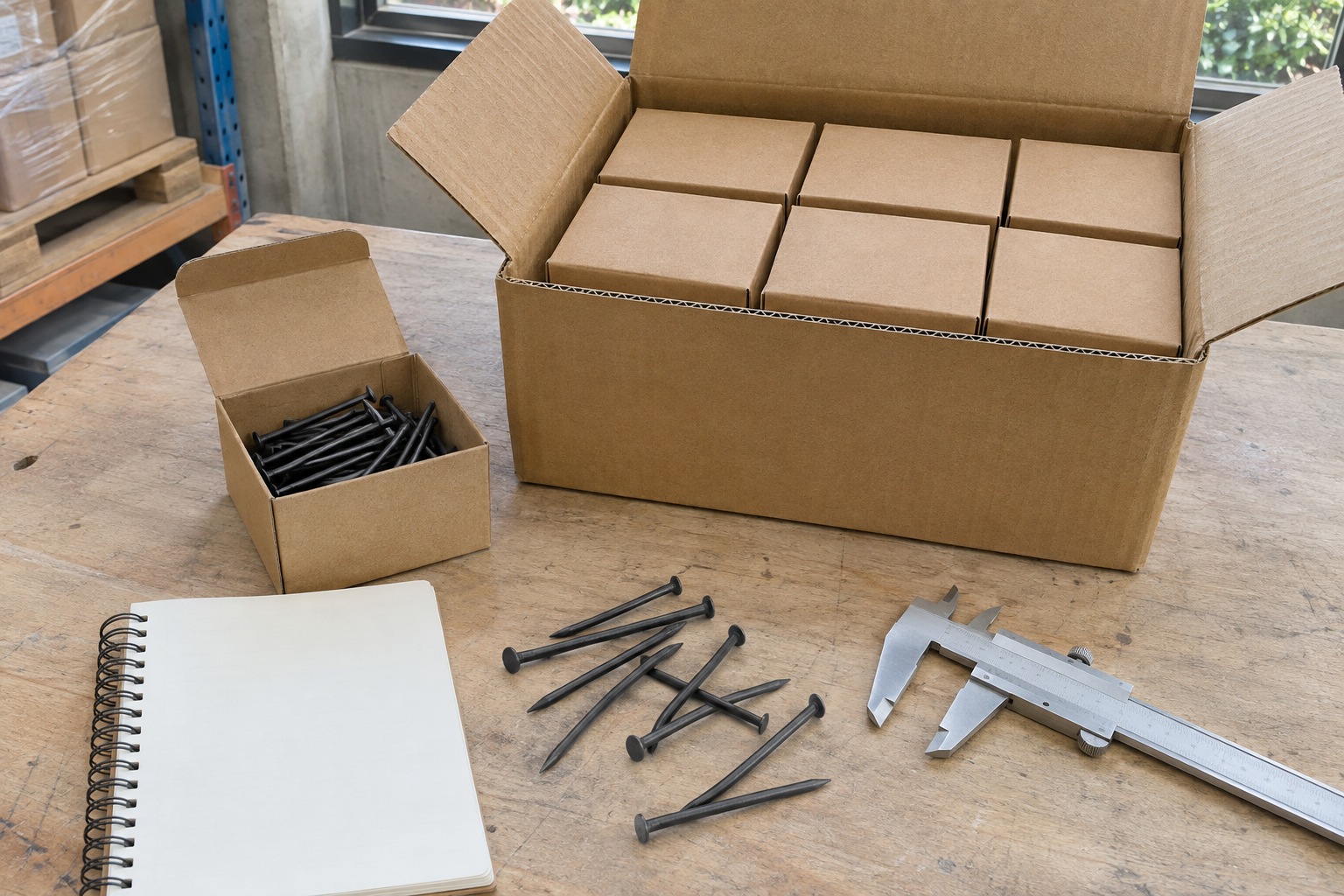
I suggest that buyers use a clear inquiry template. It saves time for both sides.
Example inquiry format:
Product: Concrete nail
Size: 2 inch x required diameter
Finish: Black or bright
Shank: Smooth or fluted
Packing: 1 kg box, 20 boxes per carton
Quantity: 5 tons
Branding: OEM carton required
Destination: FOB Tianjin or agreed port
Market: Hardware wholesale distribution
This format gives enough information for a more accurate quotation. It also helps the supplier check production feasibility and packing cost.
Key quotation variables
At Dingzhou Best, our FOB quotation usually depends on:
- Product type
- Specification
- Quantity
- Packaging method
- Customization requirement
- Raw material and production conditions
- Delivery schedule
Our common MOQ is 5 tons or 200 boxes, depending on the product and packing. We support trial orders because many importers want to test local resale before increasing volume.
Packaging decisions for B2B buyers
Packaging affects more than appearance. It affects freight, storage, handling, and customer trust. For sea shipment, carton strength is important because cargo may face stacking and long transit time.
Common packaging decisions include:
| Packaging decision | Why buyers should confirm it |
|---|---|
| Box weight | It affects retail price and handling |
| Carton quantity | It affects loading and warehouse control |
| Carton material | It affects strength during shipment |
| Label language | It affects local resale and customs clarity |
| Brand logo | It supports distributor identity |
| Pallet use | It affects unloading and destination handling |
| Inner protection | It affects appearance after long transit |
OEM and ODM considerations
We support OEM and ODM customization, including product, packaging, and brand logo. However, buyers should prepare artwork and confirm package details early. Customization can affect production time, unit cost, and minimum order planning.
For many importers, OEM packaging is useful when they already have a brand in the local hardware market. For new distributors, a neutral package or simple private label may be more practical for a first trial order.
Delivery and shipping
Our usual delivery time is 15–25 days, depending on order quantity and production arrangement. Buyers should confirm this before promising dates to their own customers.
We usually ship by sea and support:
- FCL full container load
- LCL less than container load
- Trial order shipment by suitable arrangement
For nails, sea freight planning matters because metal products are heavy. A buyer should check carton dimensions, gross weight, and loading plan before confirming the order.
Why the cheapest quote may not be the best quote
A low price may hide differences in size, finish, packing, carton strength, or loading method. Buyers should compare quotations on the same basis.
A fair comparison should check:
- Are the nail sizes exactly the same?
- Is the finish the same?
- Is the head style the same?
- Is the shank style the same?
- Is the package the same?
- Is the MOQ the same?
- Is the delivery term the same?
- Is customization included?
- Is the supplier a factory or trading company?
- Are samples available for checking?
We are a manufacturing factory, and we also have overseas factory experience. I still recommend that buyers evaluate each supplier carefully. A good supplier should answer specification questions clearly and should not push one nail type for every application.
How can buyers avoid mistakes when choosing types of metal nails?
Wrong nail selection usually starts with unclear communication. The buyer thinks the product is standard. The supplier assumes a common market specification. The end user then receives a nail that does not match the real job or local resale habit.
Buyers can avoid mistakes when choosing types of metal nails by confirming the application first, then checking size, material, finish, head, shank, packaging, quantity, and local market preference. Samples, clear drawings, photos, and written specifications reduce risk before mass production.
Mistake 1: Choosing by product name only
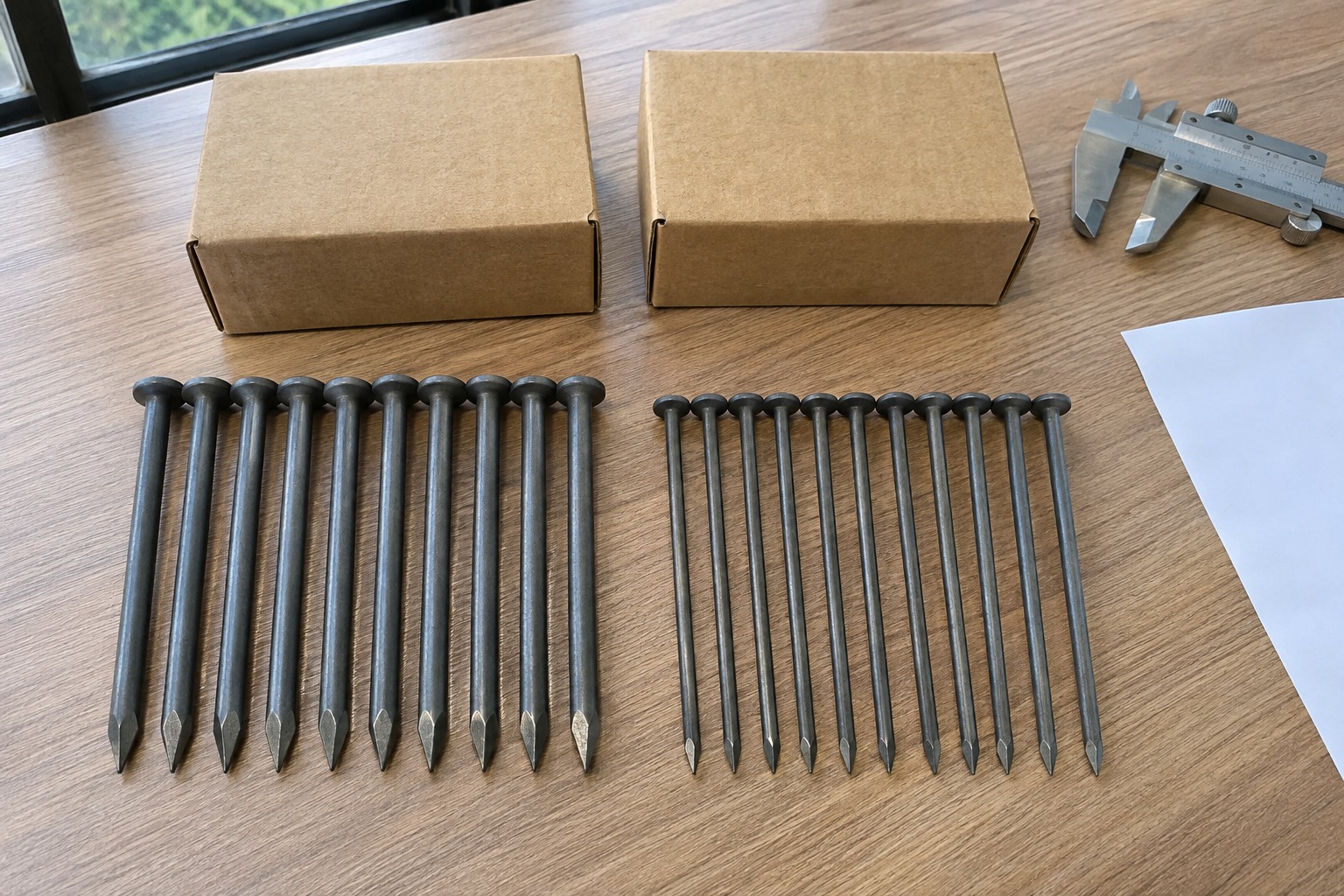
A product name is useful, but it is not enough. “Roofing nail” may mean different sizes in different markets. “Black nail” may describe a finish, not the intended application. “Concrete nail” may need more detail about length, diameter, and shank.
I prefer to ask buyers for a photo if they are unsure about the English product name. A photo, sample, or local package image can quickly clarify the requirement.
Mistake 2: Ignoring local resale habits
B2B buyers must think beyond the physical nail. They need to think about the buyer behind the buyer.
A contractor may prefer bulk packing. A hardware shop may prefer small boxes. A distributor may want bright carton printing. A project purchaser may need clear marks for warehouse control.
If the package does not match the channel, the product may become harder to sell even when the nail itself is acceptable.
Mistake 3: Comparing prices without comparing specifications
A price comparison is only useful when the specifications are the same. A lower price may reflect a smaller diameter, lighter carton, simpler finish, or different packaging.
Buyers should ask suppliers to quote with the same format. This makes comparison easier and more transparent.
| Comparison point | Quote A | Quote B | Buyer action |
|---|---|---|---|
| Nail type | Concrete nail | Concrete nail | Confirm same use |
| Length | Same? | Same? | Check measurement |
| Diameter | Same? | Same? | Check gauge or mm |
| Finish | Same? | Same? | Confirm surface treatment |
| Packing | Same? | Same? | Compare real cost |
| Quantity | Same? | Same? | Confirm MOQ |
| Delivery term | FOB? | FOB? | Compare fairly |
Mistake 4: Skipping sample review
Samples cannot replace professional engineering evaluation for critical applications, but they can help buyers check many practical details. A buyer can review the look, size, finish, package, and local buyer response.
For application-specific or safety-sensitive decisions, buyers should seek qualified professional evaluation and verify applicable standards. I keep this point clear because nails may be used in many different building conditions.
Mistake 5: Not planning repeat supply
Many importers start with a trial order, which is reasonable. However, they should also think about repeat supply if the product sells well. Stable specification records help avoid future confusion.
A buyer should keep:
- Confirmed product photos.
- Final invoice specification.
- Packing artwork.
- Carton marks.
- Sample approval notes.
- Order quantity history.
- Market feedback.
This simple record helps the next order move faster.
Frequently Asked Questions
What are the most common types of metal nails for importers?
The most common types of metal nails for importers include concrete nails, roofing nails, lost head nails, common nails, black steel nails, and other construction steel nails. The best choice depends on application, size, finish, packaging, and local market demand.
Are concrete nails and common nails interchangeable?
Concrete nails and common nails are not usually interchangeable. Concrete nails are intended for harder base materials, while common nails are mainly used for wood and general construction. Buyers should confirm the base material, size, shank, finish, and installation requirement before ordering.
What information should I send to get an accurate nail quotation?
You should send the product name, size, diameter, head type, shank type, finish, quantity, packing method, destination port, and branding requirement. For FOB pricing, suppliers also need carton details, MOQ expectations, and any OEM or ODM customization needs.
Can I order customized packaging for metal nails?
Yes, customized packaging is possible when the supplier supports OEM or ODM service. Buyers should prepare logo files, carton design, label language, box weight, and packing layout. Custom packaging may affect MOQ, cost, and delivery time, so early confirmation is important.
What is the usual MOQ for metal nails from Dingzhou Best?
Our usual MOQ is 5 tons or 200 boxes, depending on the nail type and packaging method. We also support trial orders for buyers who want to test market demand before placing a larger repeat order.
Conclusion
Types of metal nails should be selected by use, not by name alone. Concrete nails, roofing nails, lost head nails, common nails, and black steel nails each solve different buying and application problems. I recommend that importers compare specification, finish, packaging, quantity, and resale channel before confirming an order. If you are sourcing for the Middle East, Africa, Southeast Asia, or South America, you can contact Dingzhou Best at [email protected] or WhatsApp +8618331061136 for samples, FOB quotation, and OEM/ODM packaging discussion.