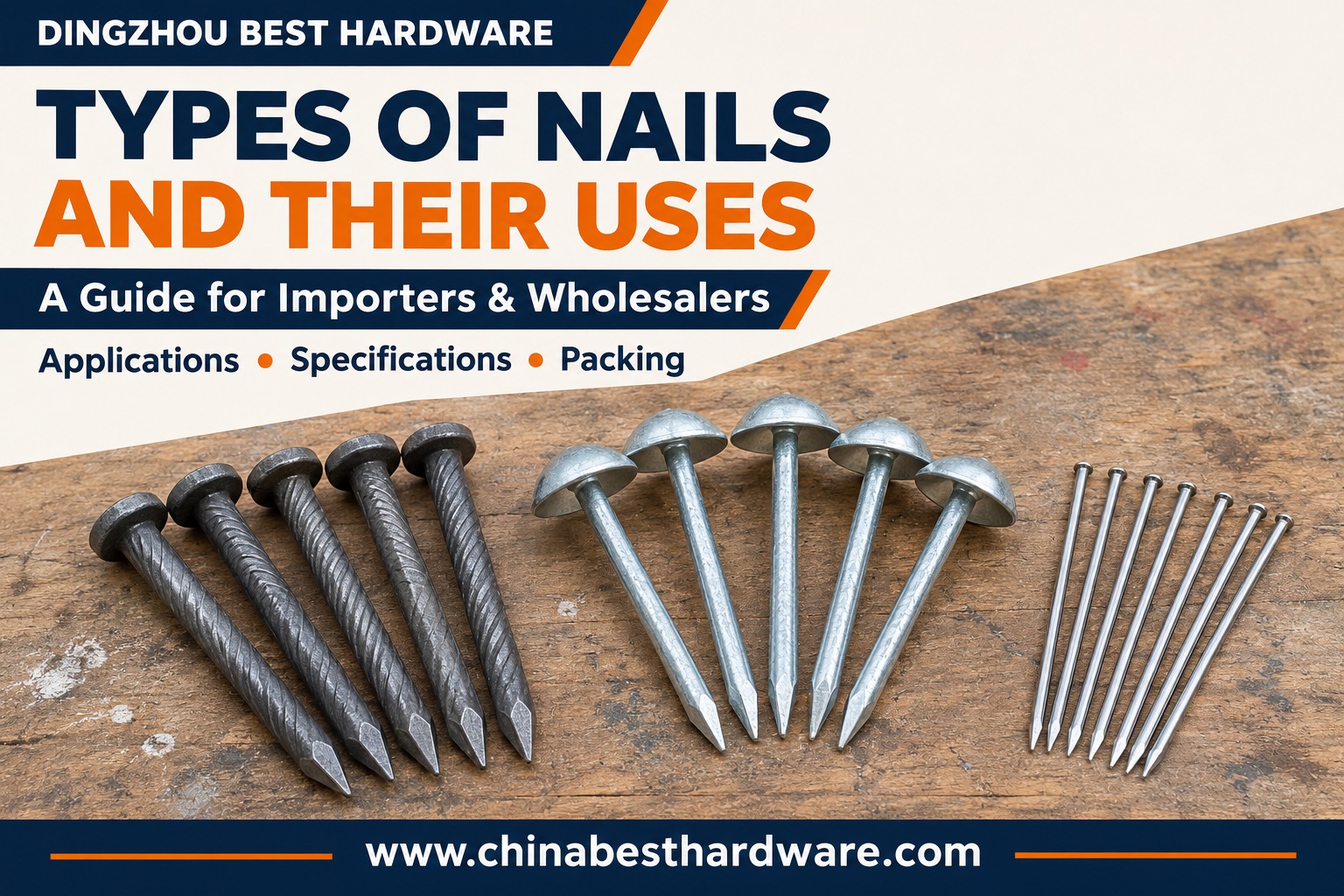
Types of nails and their uses can look simple until a buyer places a bulk order and receives stock that does not match the job, market, or resale expectation. That mismatch creates slow-moving inventory and complaints from end users. I usually start by matching the nail to the base material, application, specification, finish, and packaging.
Types of nails and their uses should be selected by application first: concrete fastening, roofing, woodworking, finishing, or general construction. Importers and wholesalers should then confirm material, shank type, head style, length, diameter, surface treatment, packaging, and target market demand before comparing prices or requesting samples.
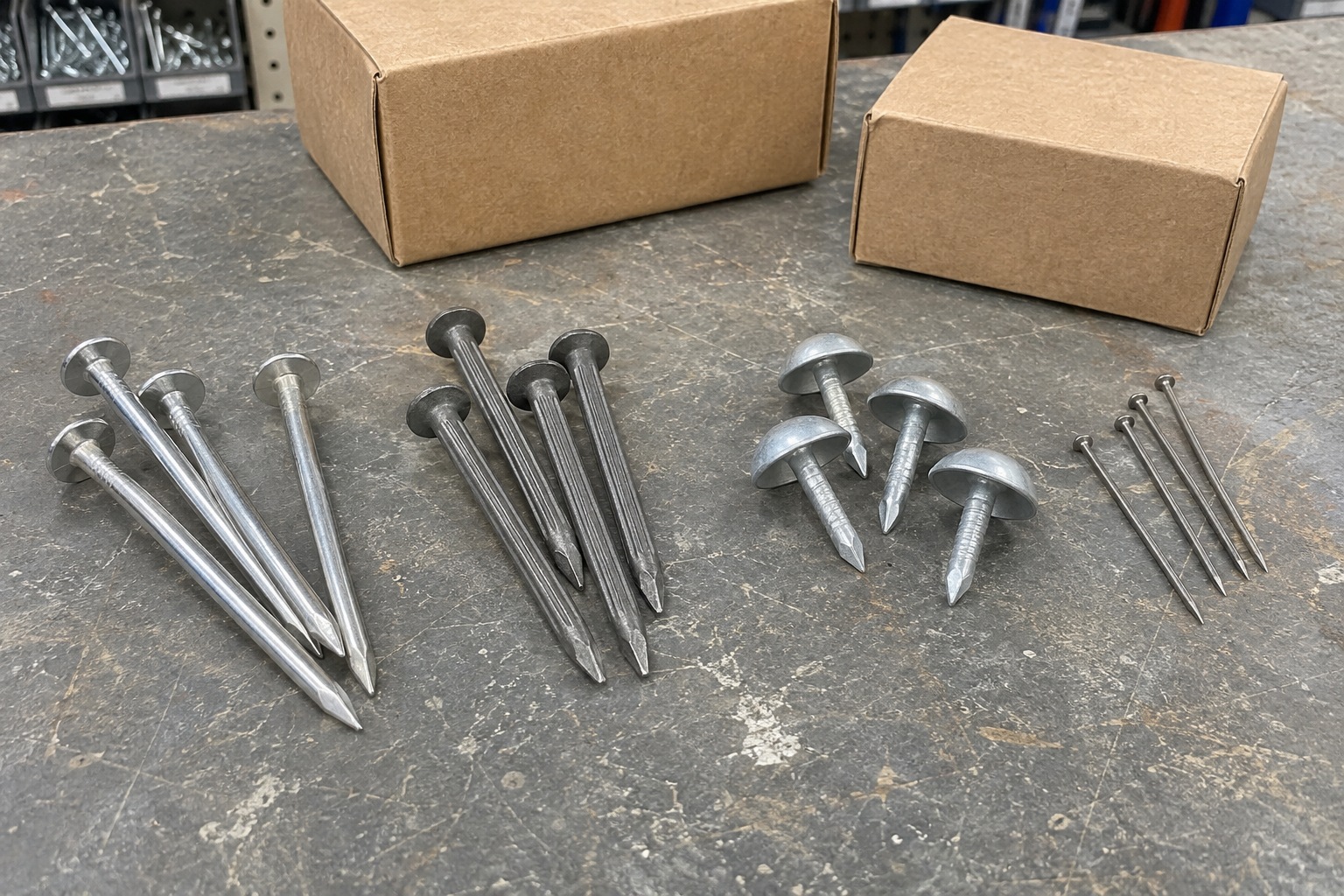
A nail name alone rarely gives enough information for a safe purchasing decision. In my daily factory-side communication, I see buyers ask for “concrete nails” or “roofing nails,” but the real quotation starts only after we confirm where the nail will be used and how it will be resold.
How should buyers understand types of nails and their uses before requesting a quote?
Many buyers begin with a product name, but that is not enough for accurate procurement. The problem is that two nails with the same name can have different wire material, hardness, coating, length, packing, and market fit. If these details are missed, the order may look cheap but fail commercially.
The best way to understand types of nails and their uses is to start with the job. Buyers should ask whether the nail is for concrete, roofing sheets, timber work, finishing, or general fixing. After that, they should confirm specification, finish, packaging, quantity, and resale channel before requesting a formal price.
Start with the material being fastened
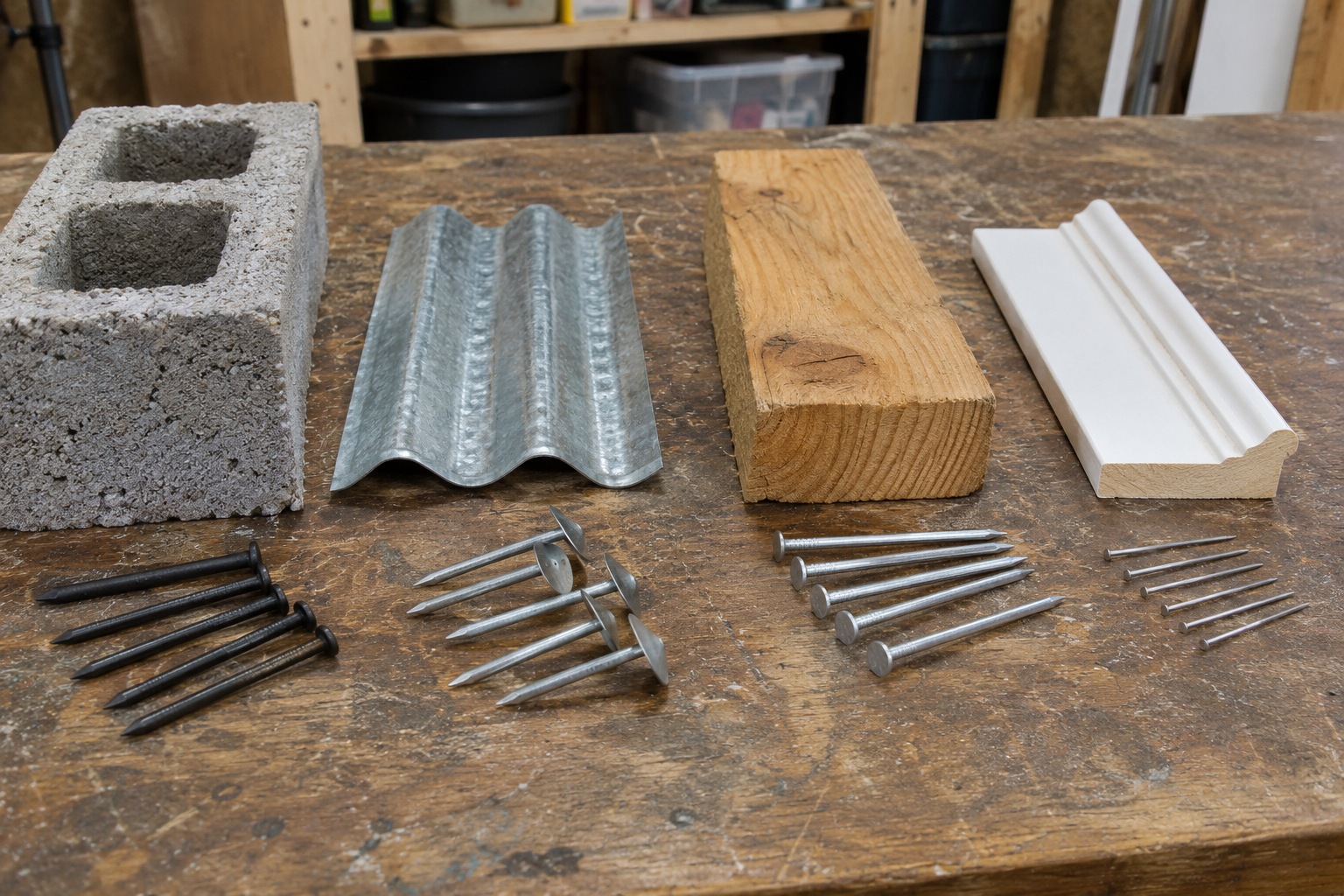
In bulk nail purchasing, I do not treat the product name as the first decision point. I treat the base material as the first decision point. A nail used for hard concrete needs a different structure and hardness from a nail used for wood trim or roofing sheets. This sounds basic, but it prevents many procurement mistakes.
A useful first question is:
“What material will the end user drive this nail into, and what result does the market expect?”
That question usually separates the order into a few practical groups:
| Application area | Common nail type | Main buyer concern | Typical resale risk |
|---|---|---|---|
| Concrete or masonry fixing | Concrete nail, black steel nail | Hardness, straightness, tip quality | Bending, breaking, poor penetration |
| Roofing work | Roofing nail | Head size, shank, washer option, coating | Leakage complaints, rust concerns |
| Woodworking and carpentry | Common nail, lost head nail | Length, head style, finish | Visible head, weak hold, wrong size |
| Finishing or decoration | Lost head nail | Small head, clean appearance | Visible marks, poor surface finish |
| General construction resale | Mixed nail range | Standard sizes, packing, local demand | Unsold stock due to wrong specification |
Why product names alone can mislead buyers
A buyer may ask for “steel nails,” but that term may refer to several products in different markets. In some regions, buyers call hardened concrete nails “steel nails.” In other regions, “black steel nail” is a specific product with a black surface and harder wire. This is why I usually ask for photos, samples, or size details before quoting.
For bulk buyers, I recommend preparing the following before contacting suppliers:
- Product name used in your market
- Target application
- Length and diameter
- Head type
- Surface treatment
- Packing method
- Estimated order quantity
- Target price level or quality expectation
- Photos of current market stock, if available
This information helps a factory quote correctly. It also helps the buyer compare suppliers fairly. A lower price may only mean the supplier quoted a thinner wire, lighter carton, simpler finish, or different packing count.
A practical procurement view
When I discuss types of nails and their uses with importers, I focus on sellable suitability, not just technical names. A nail must satisfy the person who installs it and the distributor who sells it. If the market expects 1 kg boxes but the buyer orders loose 25 kg cartons, the product may still be technically correct, but it may not move well in shops.
So the first lesson is simple: choose by use, confirm by specification, and quote by full commercial details.
Which types of nails and their uses matter most for concrete, roofing, woodworking, and finishing?
The main issue for wholesalers is not knowing every nail in the world. The issue is choosing the nail types that match local demand. If a distributor stocks the wrong type, the problem becomes slow sales, complaints, or price pressure. A short, practical range is often better than a long, confusing list.
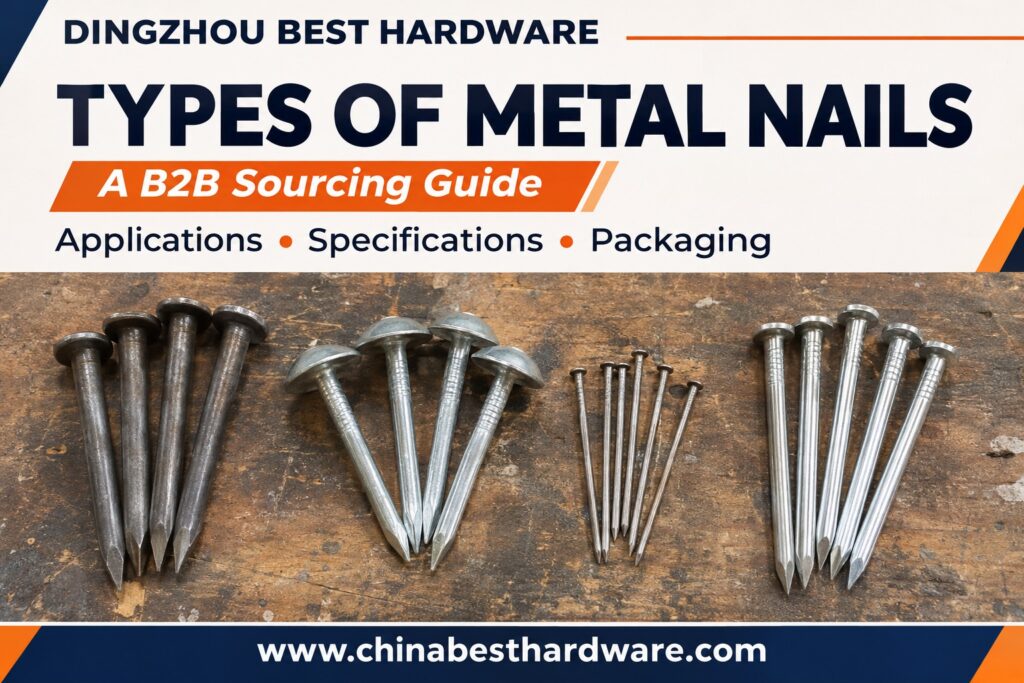
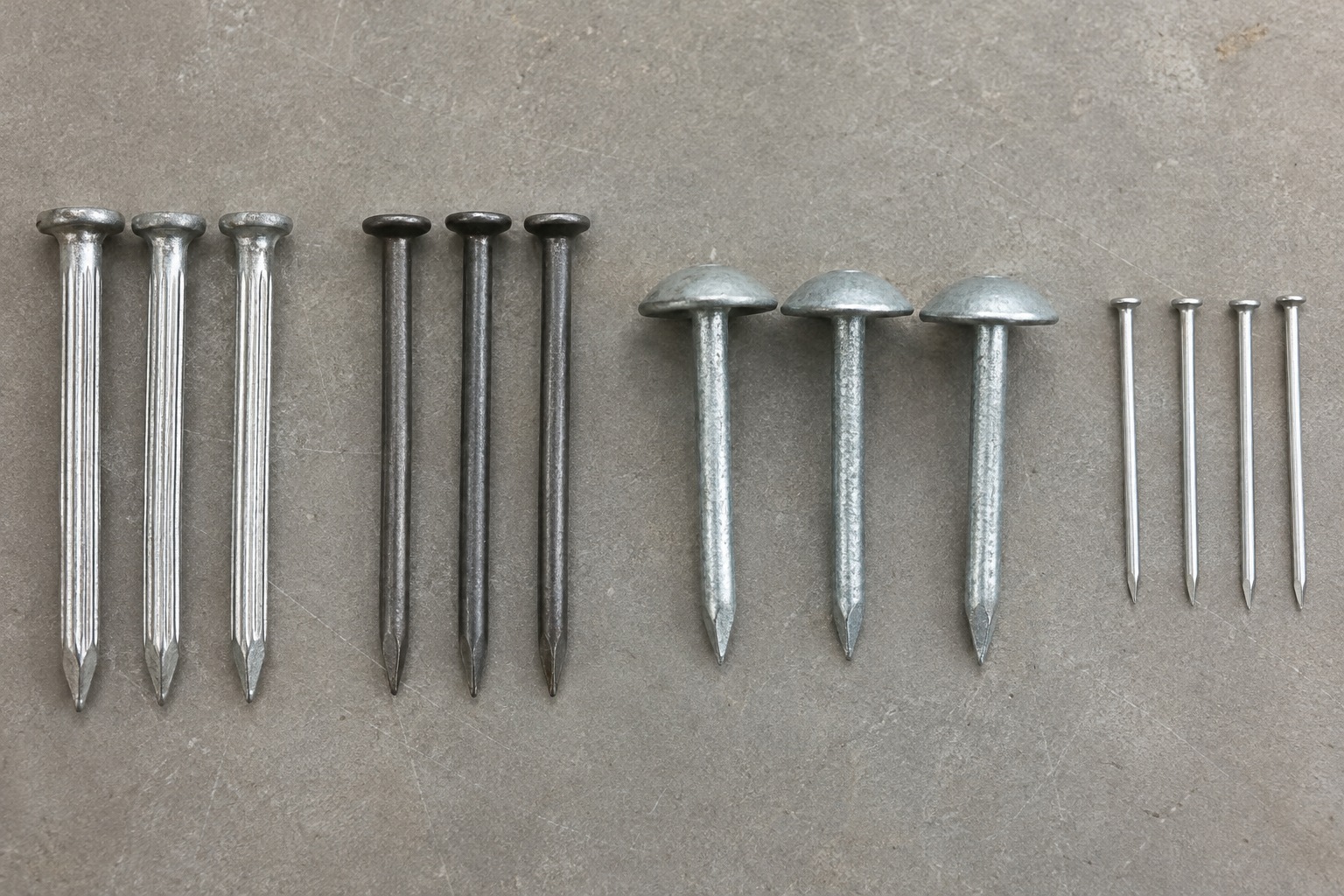
The most important types of nails and their uses for many bulk buyers include concrete nails for hard surfaces, roofing nails for roof sheets and waterproof fixing, lost head nails for finishing work, and black steel nails for harder fastening needs. Each type should be selected by application limits and market expectations.
Concrete nails: for hard base materials
Concrete nails are designed for fastening into harder materials such as concrete, masonry, or brick-related surfaces. In procurement discussions, buyers usually care about hardness, bending resistance, sharp point quality, and consistent size.
Common selection points include:
- Length: often selected by fixing depth and material thickness.
- Diameter: affects strength and driving resistance.
- Shank style: smooth, fluted, or other market-specific forms.
- Surface: bright, galvanized, black, or other finish depending on market demand.
- Packing: small boxes, cartons, or bulk packing for distribution.
Concrete nails should not be treated as ordinary wood nails. If the wire is too soft, the nail may bend during use. If the nail is too brittle, it may break. A buyer should not rely only on photos. I often suggest sample checking before a trial or container order, especially when the buyer is entering a new market segment.
Roofing nails: for roof sheets and weather-exposed use
Roofing nails are used for roof sheet fixing and related construction applications. They normally have a larger head than many other nails. Some markets require umbrella head roofing nails. Some buyers also request washers or specific coatings.
Important roofing nail details include:
| Detail | Why it matters |
|---|---|
| Head type | Affects holding area and local buyer acceptance |
| Shank type | Smooth or twisted shank may affect grip |
| Surface coating | Helps match expected corrosion resistance |
| Washer option | May be needed for certain roofing sheet applications |
| Packing | Retail-friendly packing can improve resale |
For roofing nails, the cheapest option is not always the best option. If the local market associates roofing nails with a certain head shape or washer style, a different design may be hard to sell. Buyers should also consider storage conditions and shipping time because surface appearance matters when the product reaches dealers.
Lost head nails: for finishing and cleaner appearance
Lost head nails have a small head that can be less visible after installation. They are commonly used in woodworking, trim, furniture-related work, and finishing applications where appearance matters.
From a buyer’s perspective, lost head nails need:
- Consistent head shape
- Smooth surface
- Correct length and gauge
- Clean packing
- Stable quality across cartons
The key use boundary is visibility. If the end user wants a less visible fixing point, lost head nails are often suitable. If the job needs stronger head holding power, another nail type may be better. I do not present lost head nails as a universal woodworking nail. They serve a more specific finishing role.
Black steel nails: for markets needing harder fastening stock
Black steel nails are often requested in markets where buyers need a harder nail or a black surface appearance. The term can vary by country, so specification confirmation is important. Some buyers use the name to refer to hardened nails for tougher surfaces. Others use it to describe a surface color and product category.
When quoting black steel nails, I usually confirm:
- Is the buyer referring to hardness, color, or both?
- What length and diameter are required?
- What packing is common in the local market?
- Is the nail used mainly for concrete, masonry, or general fixing?
- Does the buyer have a sample to match?
This avoids confusion. It also prevents price comparisons between different products. If one supplier quotes a true hardened product and another quotes a standard nail with black surface, the two prices cannot be compared directly.
How do specifications change types of nails and their uses in bulk orders?
A buyer may think the nail type decides everything, but specification often changes the real use. The wrong diameter, length, head, or shank can turn a good product category into a bad order. This is why I ask for exact sizes before I treat any inquiry as ready for pricing.
Specifications change types of nails and their uses by defining how the nail performs, how it is packed, and how it is accepted in the resale market. Length, wire diameter, head diameter, shank design, point shape, material, and carton weight all affect suitability and price.
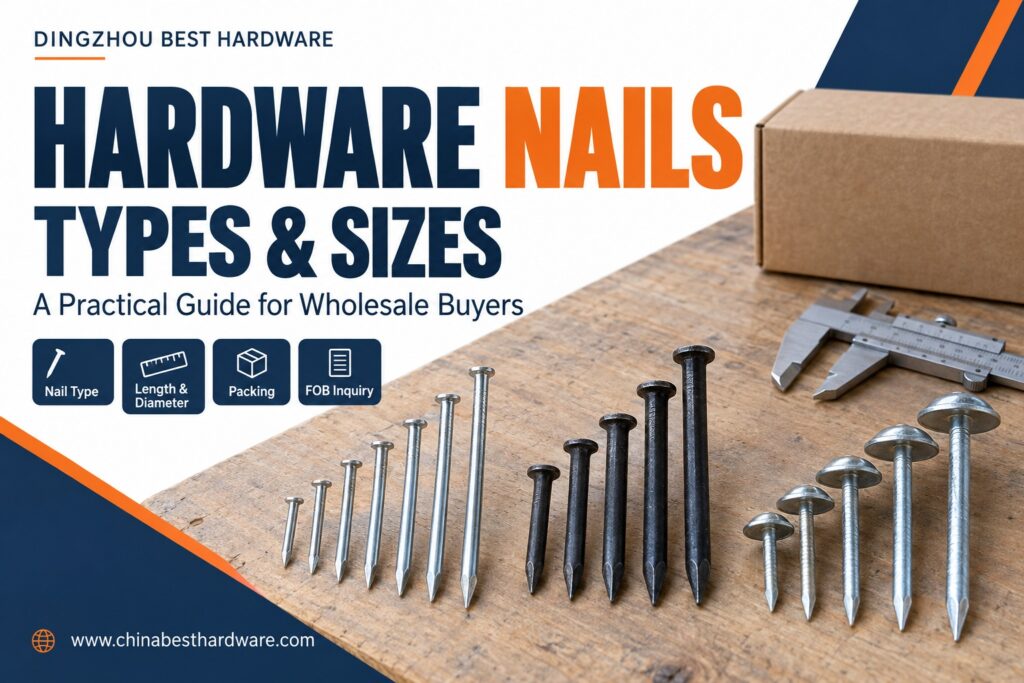
Length and diameter are not small details
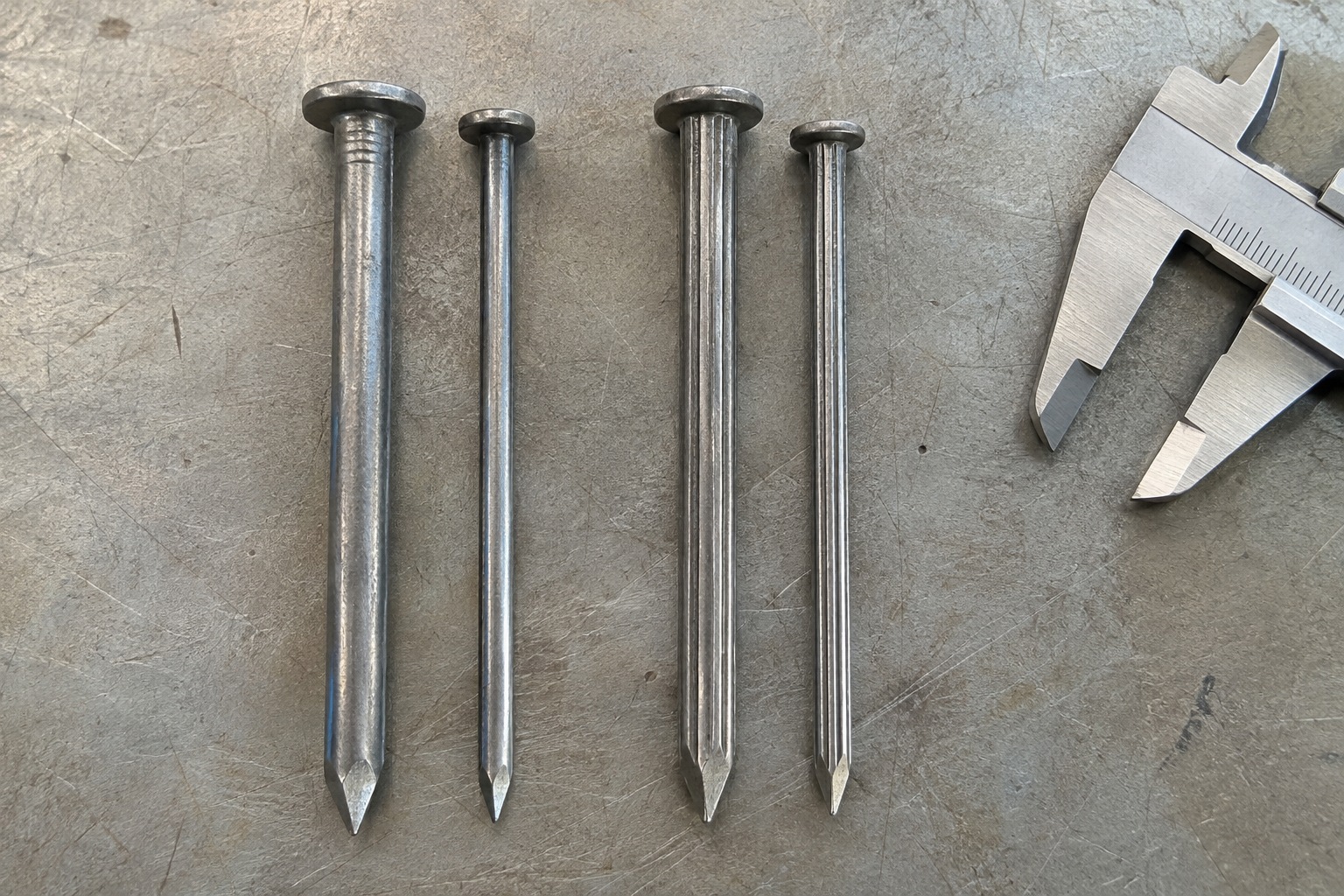
Length and diameter are two of the most important purchasing details. A small difference in wire diameter can change weight, cost, strength, and market acceptance. If a buyer compares quotations without matching diameter, the lower price may simply be a lighter nail.
For example, when two suppliers quote the “same” concrete nail length, one may use a slightly thinner wire. That product may cost less per carton, but the buyer may receive more complaints if the local market expects a heavier nail. This is why I prefer clear specification sheets or physical samples for confirmation.
A basic specification format can look like this:
| Item | Example information to confirm |
|---|---|
| Product | Concrete nail / roofing nail / lost head nail / black steel nail |
| Length | 1 inch, 2 inch, 3 inch, or metric equivalent |
| Diameter | Wire gauge or mm diameter |
| Head | Flat, umbrella, lost head, or other style |
| Shank | Smooth, twisted, fluted, ring, or market-specific |
| Surface | Bright, galvanized, black, polished, or coated |
| Packing | Box weight, carton weight, pieces per box, brand printing |
| Quantity | Minimum order, trial order, container quantity |
| Trade term | FOB quotation details |
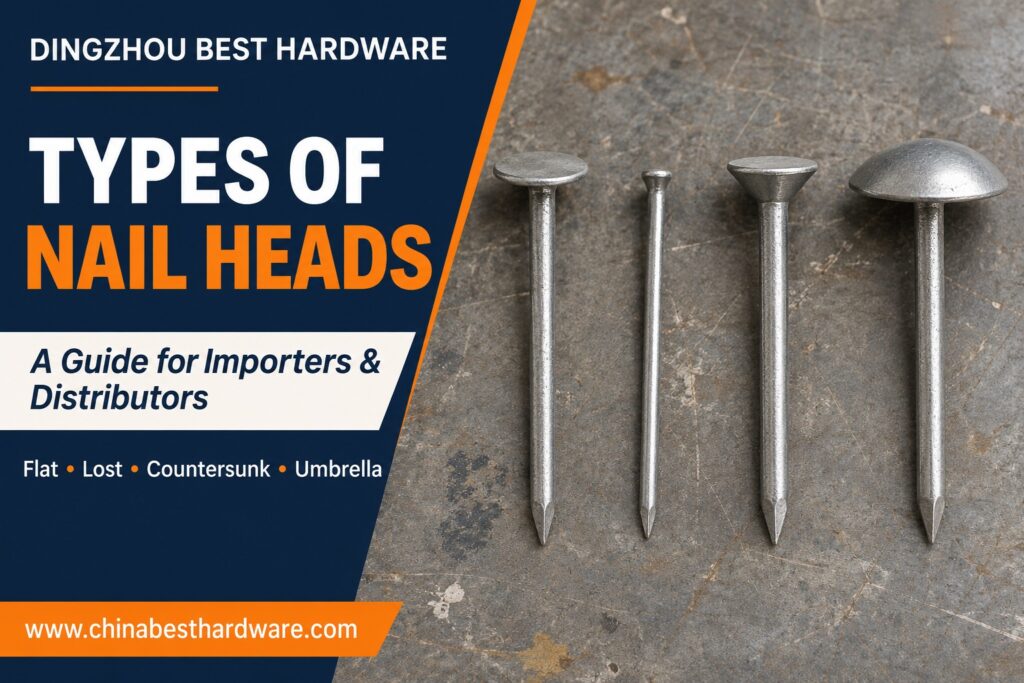
Head style affects use and resale
The nail head is not only about appearance. It affects holding power, visibility, and buyer expectations. A roofing nail usually needs a larger head area. A lost head nail needs a smaller, less visible head. A concrete nail needs a head that can handle driving force without easy deformation.
For resale, the head style must also match local habit. A distributor may understand the product technically, but the shop customer may reject a nail that looks different from the common local type. This is especially important in markets where construction workers buy by visual recognition.
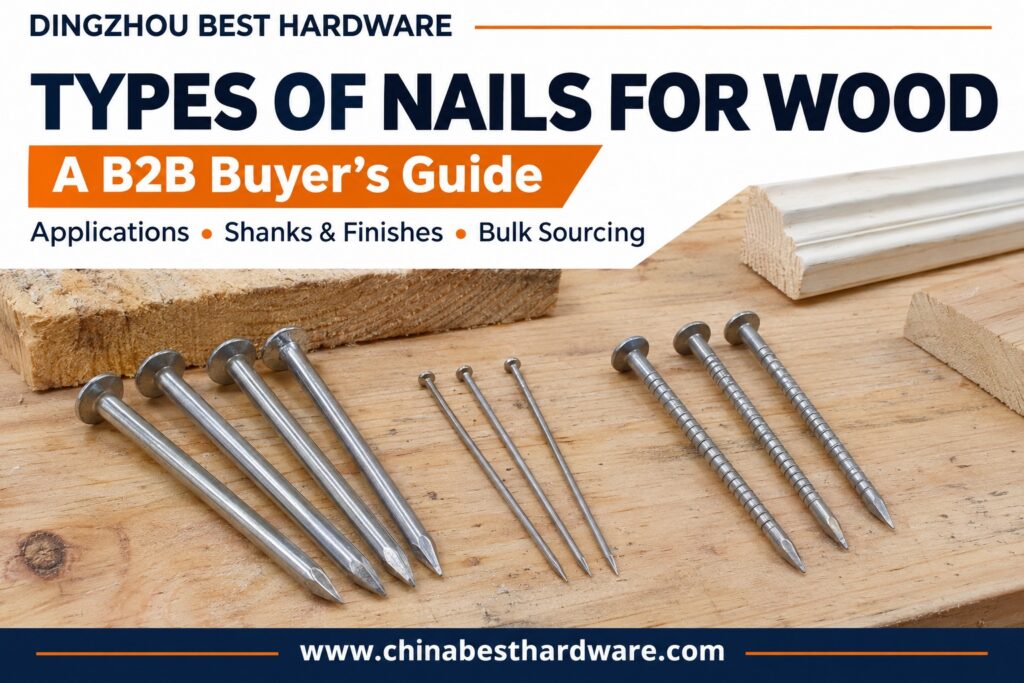
Shank design changes grip and driving behavior
The shank can be smooth, twisted, fluted, ringed, or otherwise shaped depending on the product and market. Buyers should avoid assuming that one shank is always better. The right choice depends on application, installation method, and local preference.
In my experience with bulk inquiries, many buyers use photos instead of technical drawings. Photos are useful, but they may not show wire diameter or shank depth accurately. For repeat orders, I suggest keeping a confirmed sample or specification record. This reduces disputes in later shipments.
Packaging is part of the specification
Many buyers focus on nail size but forget packing. For wholesalers, packing can decide whether the product sells smoothly.
Common packing questions include:
- Do you need bulk cartons for contractors?
- Do you need small boxes for retail stores?
- Do you need brand logo printing?
- Do you need OEM/ODM packaging?
- Do cartons need stronger material for long sea shipping?
- Do you need mixed sizes in one shipment?
At Dingzhou Best Hardware, we usually quote based on product + specification + quantity + packaging method under FOB terms. This is not just paperwork. It is the only way to keep price comparison fair.
Trial orders reduce specification risk
For a new market or new product type, a trial order can be safer than a large immediate order. Our usual minimum order is 5 tons or 200 boxes, depending on product and packing. We can also provide samples for quality checking, usually with a basic sample fee that may be discussed for return in a formal order.
Samples do not replace professional evaluation for application-specific decisions, but they help buyers check appearance, size, packing, and general market suitability before committing to larger stock.
Why do surface treatment and packaging affect types of nails and their uses?
A nail may have the right shape but the wrong finish or packing. That creates a commercial problem. Rust concerns, poor shelf appearance, weak cartons, and unsuitable box sizes can damage the buyer’s profit even when the nail itself is close to correct.
Surface treatment and packaging affect types of nails and their uses because they influence corrosion expectations, shelf life, user confidence, shipping condition, and resale format. Importers should choose finishes and packing based on local climate, storage conditions, application, and distributor or retail channel needs.
Surface treatment is both technical and commercial
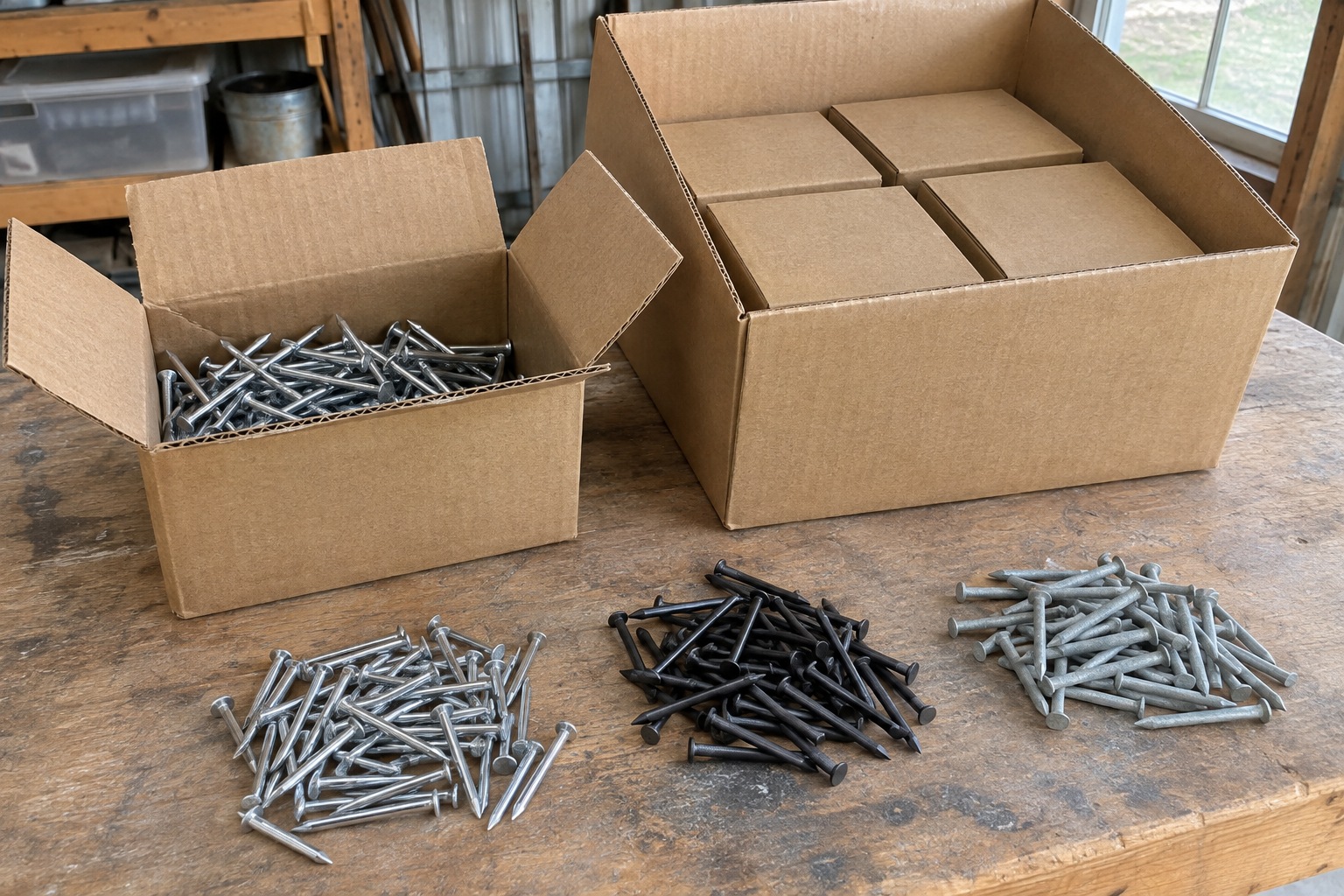
Surface treatment can include bright finish, polished finish, galvanized finish, black finish, or other buyer-specific requirements. The choice should match the product use and market expectation. For example, roofing nails are often more sensitive to corrosion concerns because they may be used in exposed or semi-exposed conditions. Concrete nails may be selected more for hardness and driving performance, but surface appearance still affects resale.
Buyers should be careful with broad terms like “anti-rust.” Different coatings and finishes have different protection levels. I recommend confirming the exact finish with the supplier and, where necessary, arranging qualified testing or local professional evaluation for demanding applications.
Common finish considerations
| Surface option | Common reason buyers choose it | Procurement note |
|---|---|---|
| Bright / polished | Clean appearance, general use | May need good storage control |
| Galvanized | Better corrosion expectation | Confirm coating type and appearance |
| Black finish | Market preference or product category | Clarify whether hardness is also required |
| Custom finish | Special market demand | Confirm cost, MOQ, and lead time |
A finish that sells well in one region may not sell well in another. Our main export markets include the Middle East, Africa, Southeast Asia, and South America, and I often see different preferences across these regions. Some buyers want low-cost bulk packing. Others need printed boxes because local retailers expect branded presentation.
Packaging protects the product and the buyer’s margin
Packaging has three jobs:
- Protect the nails during sea transport
- Support easy handling and storage
- Match the buyer’s resale channel
For sea shipping, strong cartons matter. Nails are heavy products. Weak cartons can break during loading, unloading, or warehouse handling. This creates loss, repacking labor, and poor customer impression.
For resale, packing size matters even more. A contractor supply channel may accept heavy cartons. A small hardware store may prefer smaller boxes that are easier to display. A wholesaler may need neutral packing. A brand distributor may need logo printing and consistent carton design.
OEM/ODM packaging can support market positioning
We support OEM/ODM customization, including product, packaging, and brand logo. However, I usually advise buyers to confirm local demand first. A beautiful carton does not fix a wrong nail specification. The correct sequence is:
- Confirm application.
- Confirm nail type.
- Confirm size and surface.
- Confirm market packing.
- Confirm branding.
- Request samples if needed.
- Compare FOB quotations.
This sequence keeps the purchase practical. It also prevents a buyer from spending money on customized packaging for a nail type that does not fit the market.
Do not compare prices without packaging details
A quotation for nails in 25 kg bulk cartons is not the same as a quotation for small printed boxes inside master cartons. Labor, paper material, printing, carton strength, and packing count all affect cost. If a buyer only asks, “What is your price per ton?” the answer may not be useful.
A better inquiry is:
“Please quote FOB for roofing nails, size X, galvanized finish, packed in X kg boxes with X boxes per carton, total quantity X tons.”
That question gives the supplier enough detail to quote responsibly.
How should importers compare suppliers for types of nails and their uses?
Many buyers compare suppliers by unit price first. That is understandable, but it can be risky. The cheapest quote may hide lighter specifications, weaker cartons, slower communication, or unclear quality expectations. Supplier comparison should focus on fit, consistency, and documentation, not just price.
Importers should compare suppliers for types of nails and their uses by checking specification alignment, sample quality, production capability, packing options, lead time, trade terms, and communication accuracy. Buyers should also verify any certifications, inspection documents, or compliance claims before placing a large order.
Compare like with like
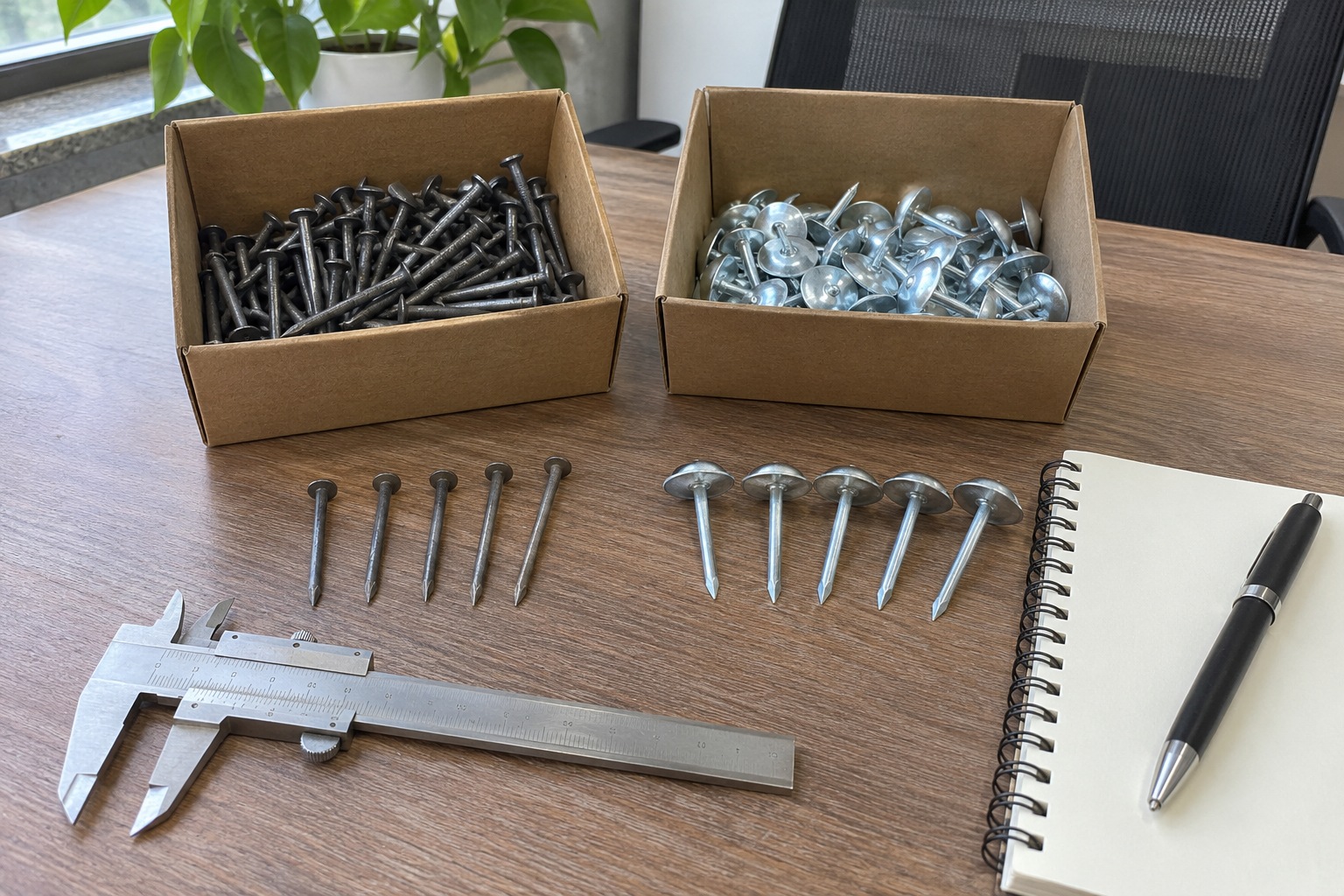
The most common price mistake is comparing different products as if they are the same. This happens when buyers ask several suppliers for “concrete nail price” without giving full details. One supplier may quote a premium hardened nail. Another may quote a lower-cost nail in a thinner diameter. A third may quote different packing.
A fair comparison should align:
- Product type
- Length
- Diameter
- Wire material expectation
- Head style
- Shank style
- Surface treatment
- Packing method
- Quantity
- Trade term
- Delivery time
- Sample condition
Only after these details match does price comparison become meaningful.
Use samples to confirm practical expectations
Samples help both sides reduce misunderstanding. A buyer can check surface, size, head, point, packing style, and general workmanship. A supplier can understand the target quality level more clearly if the buyer sends an existing market sample.
At our factory, we can provide samples for quality checking. A basic sample fee is usually charged, and it may be discussed for return in a formal order. This is a practical way to support trial cooperation without pretending that a sample can answer every engineering or regulatory question.
For application-specific performance, buyers should use qualified professional evaluation, especially where safety, structural performance, or local construction rules are involved. I can help with manufacturing and specification communication, but I do not replace local engineering judgment.
Check production and export fit
For bulk nail orders, the supplier should be able to handle volume, packing consistency, and shipment planning. We are a manufacturing factory, and we also have overseas factory experience. Our normal lead time is about 15–25 days, depending on order quantity and packing requirements. We support sea shipping, including FCL and LCL.
Buyers should ask suppliers:
- What is your MOQ?
- Can you support trial orders?
- Can you provide samples?
- Can you customize packaging?
- What is your normal production lead time?
- What trade term do you quote?
- Can you keep the same specification for repeat orders?
- What documents can you provide, and which claims should be verified?
These questions are simple, but they reveal whether a supplier understands export business.
Review documentation without assuming too much
Some buyers need packing lists, invoices, photos, inspection records, or other documents. Some markets may ask for certificates or local compliance documents. Any certification or compliance claim should be treated as a document to verify, not a slogan to trust blindly.
A good supplier should communicate clearly about what they can provide. A good buyer should also state destination requirements early. This avoids delays before shipment.
Think about resale risk, not only purchase cost
The real risk in buying nails is not only paying too much. The larger risk is ordering stock that cannot be sold, used, or trusted. This happens when the buyer chooses the wrong nail type, wrong size, wrong finish, or wrong packing for the market.
For importers and wholesalers, I suggest a simple resale-risk checklist:
| Risk question | Why it matters |
|---|---|
| Does the product match local names and habits? | Buyers often purchase by familiar appearance |
| Does the size match common local demand? | Uncommon sizes may move slowly |
| Does the finish match climate and expectations? | Rust complaints can damage reputation |
| Does packing match the sales channel? | Wrong packing reduces convenience |
| Has a sample been checked? | Reduces misunderstanding |
| Are supplier claims documented? | Helps avoid trust problems |
| Is the order quantity reasonable for first purchase? | Trial orders lower risk |
This approach keeps procurement grounded. It also helps buyers build a nail range that can sell repeatedly, not just arrive cheaply.
Frequently Asked Questions
What are the most common types of nails for importers to stock?
Many importers focus on concrete nails, roofing nails, common construction nails, lost head nails, and black steel nails. The right mix depends on local building habits, climate, packaging preference, and price level. Buyers should confirm demand before adding too many slow-moving sizes.
How should I request a nail quotation from a factory?
A good inquiry should include product type, length, diameter, head style, shank type, surface treatment, packing method, quantity, and destination or trade term. For example, an FOB quotation should clearly state product, specification, quantity, and packaging so suppliers quote the same item.
Are concrete nails and black steel nails the same?
They are not always the same. In some markets, buyers use similar names, but concrete nails usually refer to nails for hard base materials, while black steel nails may refer to a black surface, a harder nail category, or both. Samples and specifications help avoid confusion.
Why do nail prices vary so much between suppliers?
Nail prices vary because of wire diameter, material, hardness, surface treatment, packing, carton quality, order quantity, and trade terms. A lower quote may not be cheaper if the specification is lighter or the packaging is weaker. Buyers should compare only aligned specifications.
Can I customize nail packaging with my brand?
Yes, many factories can support OEM/ODM packaging, including brand logo, box design, and carton marks. Buyers should confirm MOQ, printing cost, lead time, and packing strength. It is better to finalize the nail specification before investing in custom packaging.
Conclusion
Types of nails and their uses should be evaluated as a procurement decision, not just a product name list. I recommend starting with the application, then confirming specification, surface treatment, packaging, quantity, and supplier capability. This process helps importers avoid unsellable stock and unfair price comparisons. If you are sourcing concrete nails, roofing nails, lost head nails, or black steel nails for bulk markets, contact Dingzhou Best Hardware at [email protected] or WhatsApp +8618331061136 to discuss samples, FOB quotation details, and trial order options.