You need reliable nails that won’t fail your project. Poor quality nails lead to structural problems and costly repairs.
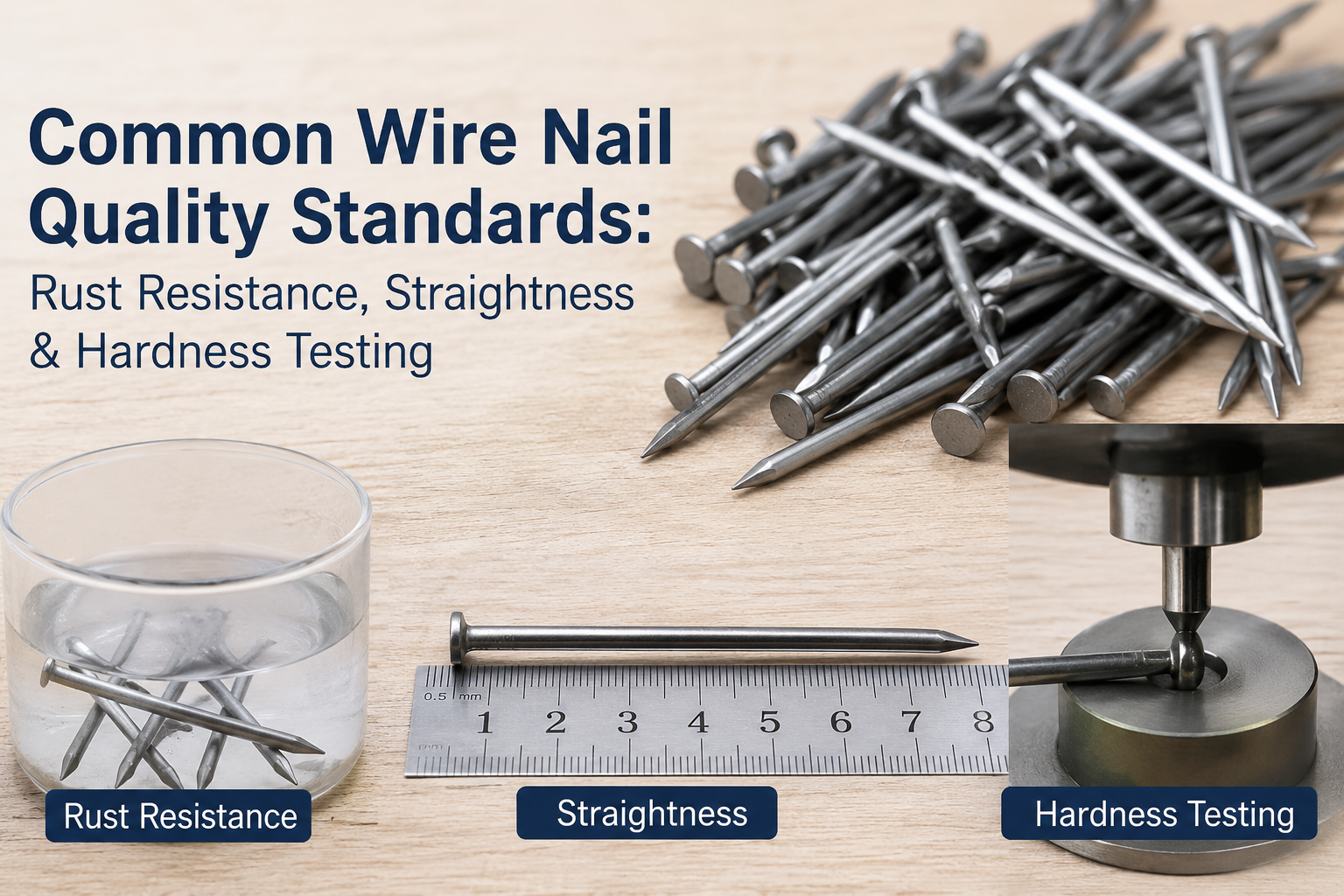
Common wire nails must meet specific quality standards for rust resistance, straightness, and hardness. These standards ensure nails provide strong holding power and durability in construction applications.
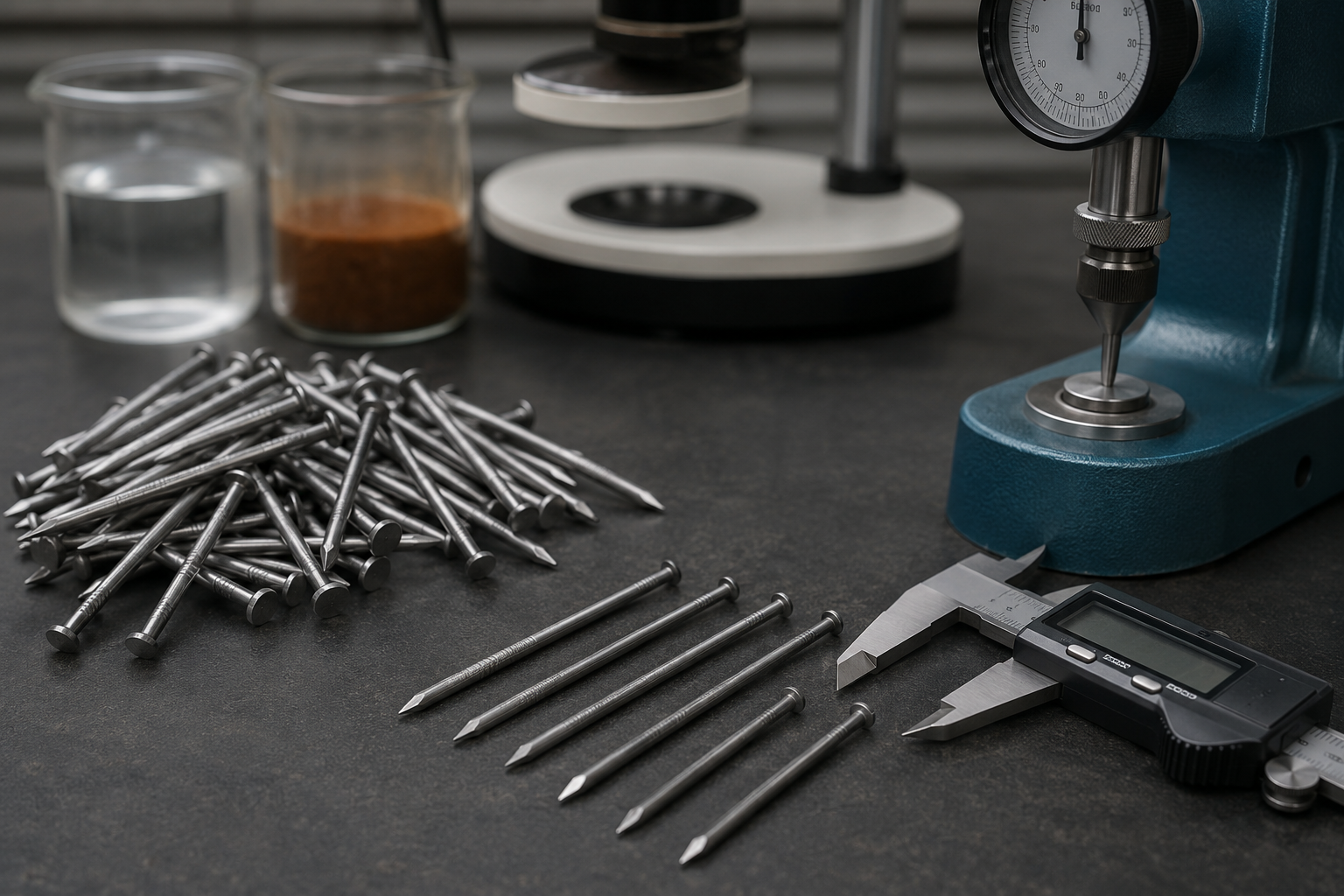
Understanding these quality standards helps you choose the right nails for your project. I’ve been manufacturing nails for years at Dingzhou Bestar, and I see how proper testing makes the difference between success and failure.
Are Common Nails Corrosion Resistant?
Most builders worry about rust destroying their hard work. Water damage from corroded nails creates expensive repairs.
Plain steel common nails are not corrosion resistant and will rust when exposed to moisture. Galvanized or specially coated nails provide better protection against corrosion in humid environments.
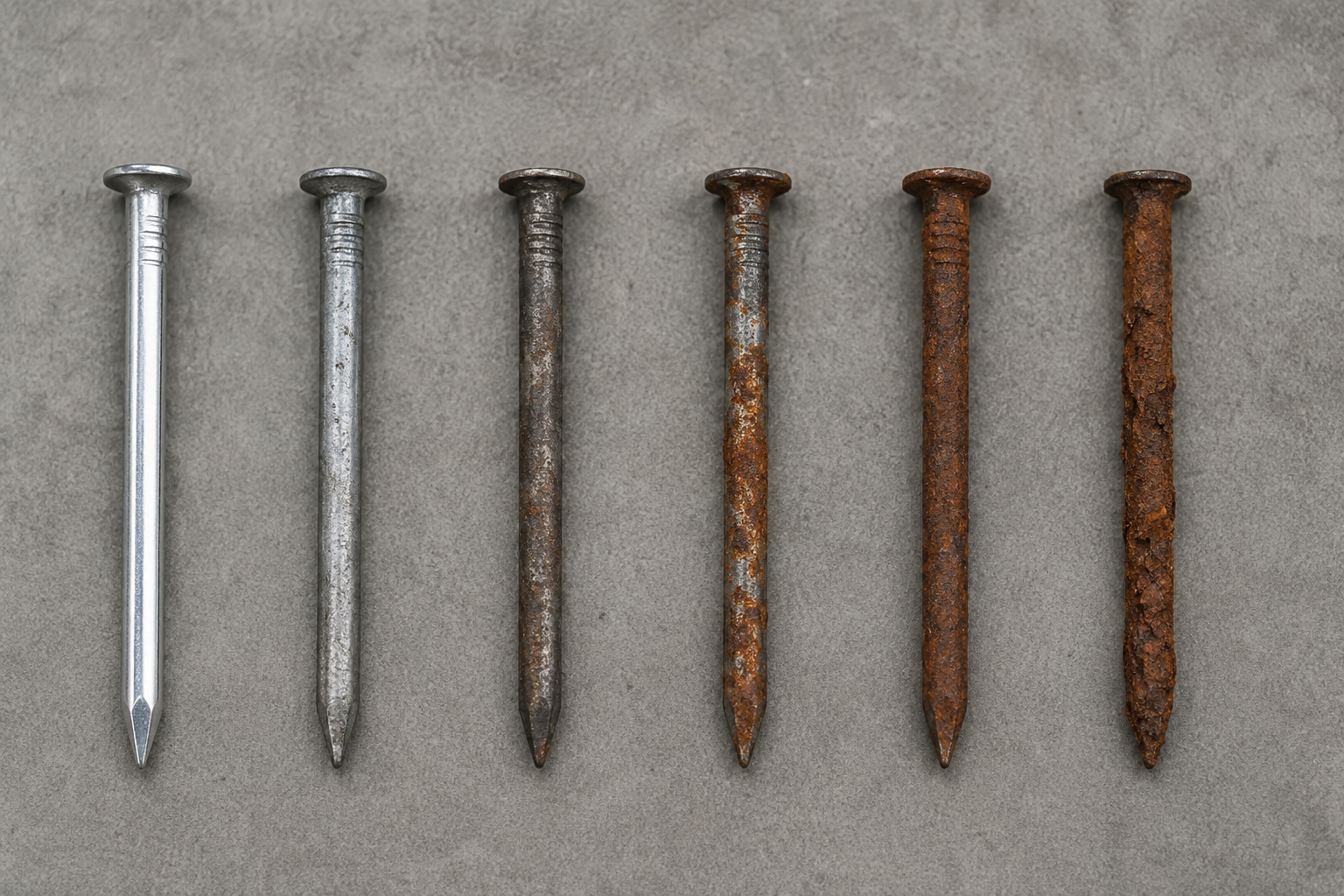
The corrosion resistance of common wire nails depends entirely on their coating and material composition. Plain carbon steel nails offer no protection against moisture and will develop rust spots within weeks of exposure to humidity. This rust weakens the nail structure and stains surrounding wood materials.
Galvanized nails receive a zinc coating that acts as a protective barrier. The zinc corrodes first, protecting the underlying steel. Hot-dip galvanized nails provide superior protection compared to electro-galvanized versions. The coating thickness directly impacts longevity.
| Nail Type | Coating Thickness | Expected Lifespan | Best Use |
|---|---|---|---|
| Plain Steel | None | 1-2 years outdoors | Interior dry conditions |
| Electro-galvanized | 5-25 microns | 5-10 years | Light exterior use |
| Hot-dip Galvanized | 45-85 microns | 15-25 years | Heavy exterior use |
| Stainless Steel | N/A | 50+ years | Marine environments |
Stainless steel nails offer the ultimate corrosion protection but cost significantly more. For most construction projects, hot-dip galvanized nails provide the best balance of protection and cost. I always recommend testing nail samples in your specific environment before placing large orders.
What Are Common Wire Nails Used For?
Construction workers need nails that hold firmly under stress. Weak connections compromise entire structures and create safety hazards.
Common wire nails are primarily used for framing, sheathing, and general construction work where strong holding power is essential. Their thick shank and large head provide superior grip strength.
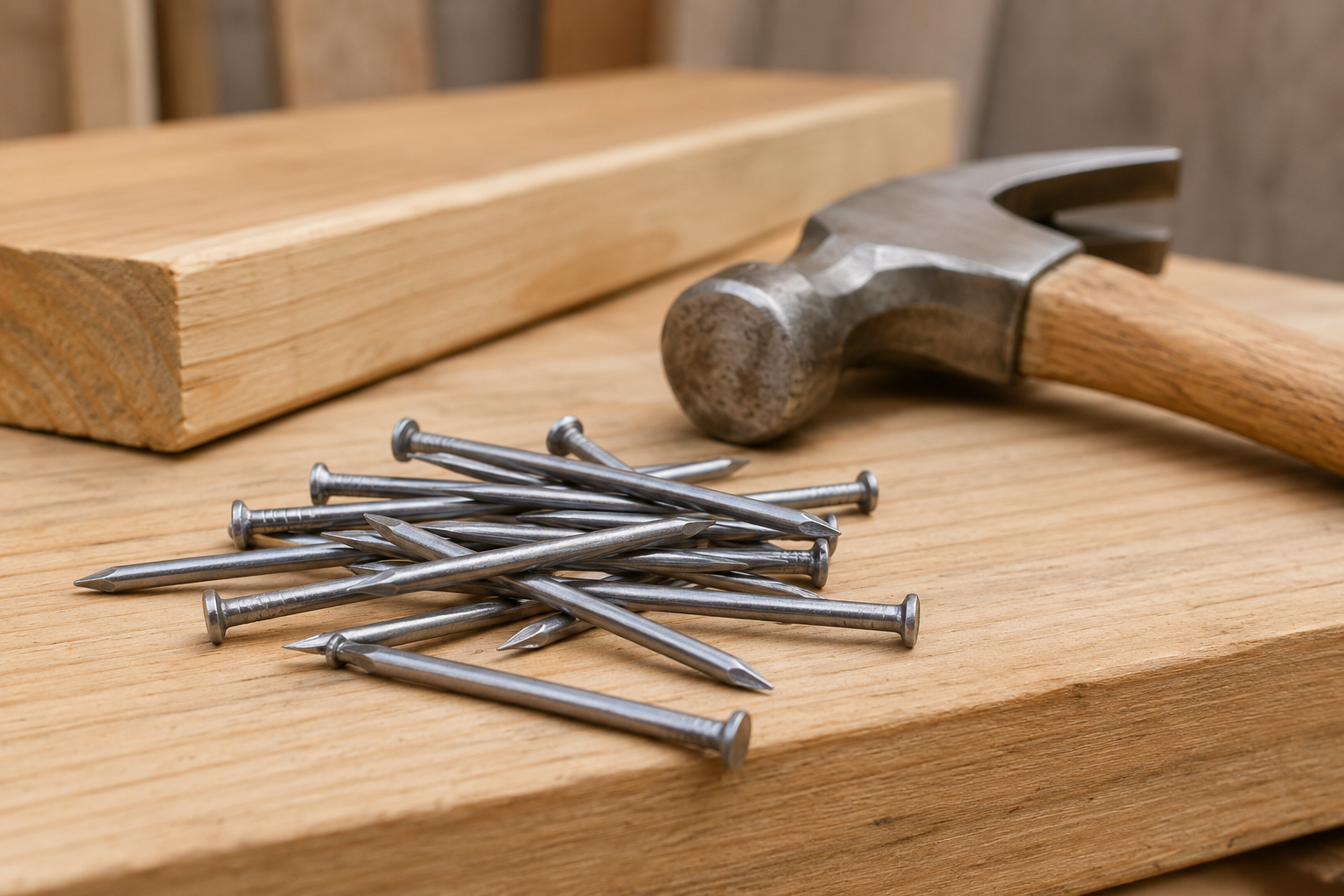
Common wire nails serve as the backbone of wood frame construction. Their design features a thick shank that resists bending and a broad flat head that distributes load across wood fibers. These characteristics make them ideal for structural applications where nail withdrawal resistance is critical.
Framing applications represent the primary use for common wire nails. Builders use them to attach floor joists, wall studs, and roof rafters. The nail’s length and diameter must match the wood thickness and load requirements. Proper nail selection prevents splitting while ensuring adequate penetration into the receiving member.
Sheathing installation relies heavily on common wire nails. Plywood and OSB panels attach to framing members using specific nail patterns. The nails must penetrate deep enough to engage the framing while avoiding over-driving that weakens the connection. Different types of nails and their uses vary based on panel thickness and spacing requirements.
| Application | Nail Size | Spacing | Penetration Required |
|---|---|---|---|
| Floor Joist | 16d common | 16" OC | 1.5" minimum |
| Wall Framing | 16d common | 16" OC | 1.5" minimum |
| Roof Sheathing | 8d common | 6" edges, 12" field | 3/4" minimum |
| Subfloor | 10d common | 6" edges, 10" field | 1" minimum |
Box nail vs common nail differences matter for specific applications. Box nails have thinner shanks that reduce splitting in hardwoods but provide less holding power. Common nails work better for softwood framing where maximum strength is needed. Understanding these differences helps you choose correctly for each situation.
What Are 12d Nails Used For?
Heavy construction demands nails that won’t bend or pull out. Inadequate fasteners lead to joint failure and structural instability.
12d common nails are used for heavy framing applications including joist hangers, beam connections, and thick lumber assembly where maximum holding strength is required.
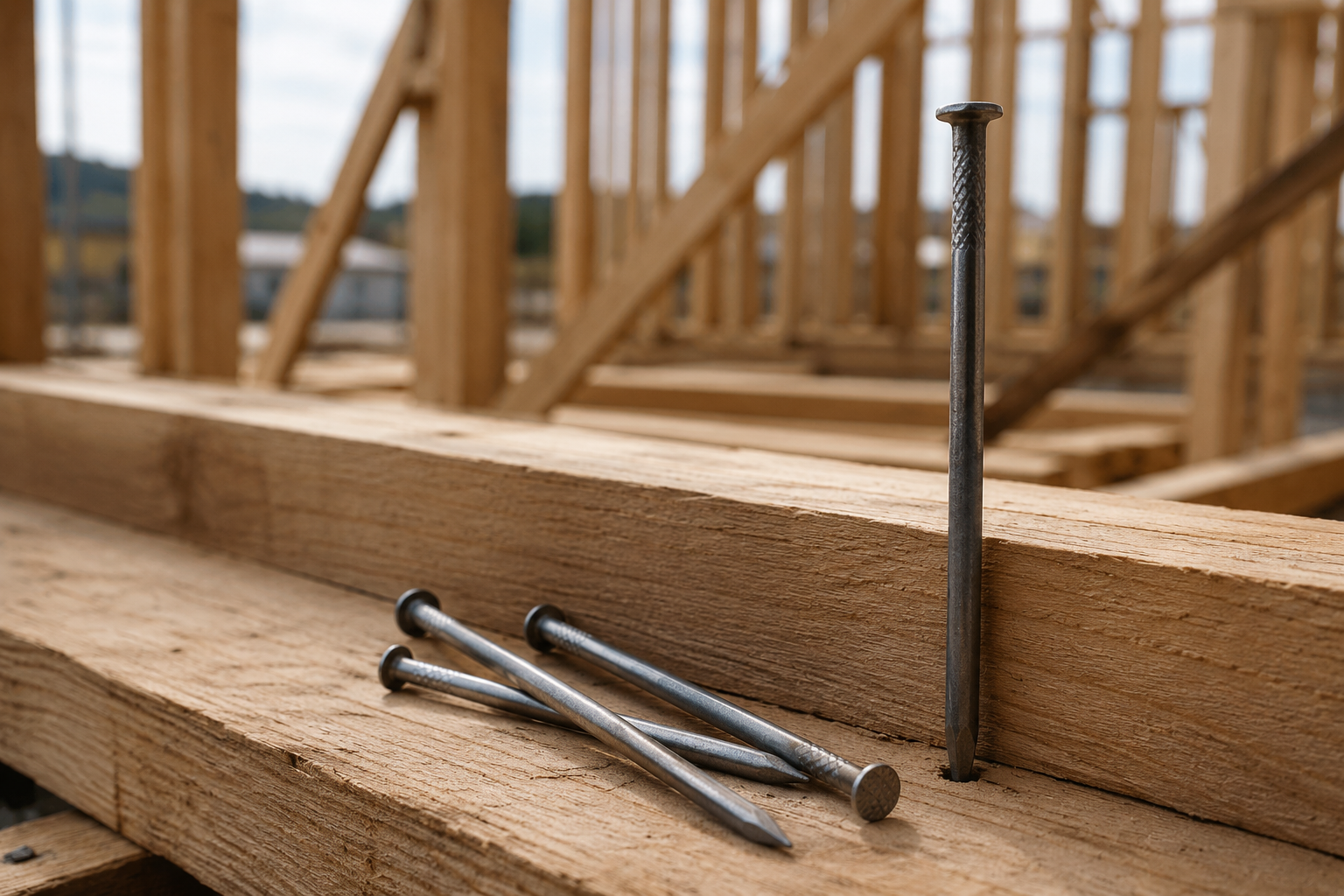
The 12d nail designation refers to the traditional penny system where "d" stands for denarius, an ancient Roman coin. A 12d nail measures 3.25 inches long with a thick 0.148-inch diameter shank. This size provides exceptional holding power for demanding construction applications.
Joist hanger installation represents a primary use for 12d nails. These metal connectors require nails that can handle high shear loads without bending. The thick shank of 12d nails resists lateral forces while the length ensures proper penetration through both the hanger and into the supporting beam. Using undersized nails in these connections creates dangerous failure points.
Beam-to-post connections often specify 12d nails for their superior withdrawal resistance. When connecting heavy timber members, the nail must penetrate deep enough to develop full holding capacity. The large diameter spreads loads across more wood fibers, reducing the risk of splitting or crushing around the fastener.
| Connection Type | Nail Quantity | Pattern | Load Capacity |
|---|---|---|---|
| Joist Hanger | 10-16 nails | Per manufacturer | 1,000+ lbs |
| Beam Splice | 12+ nails | Staggered rows | 2,000+ lbs |
| Post Connection | 8-12 nails | Diamond pattern | 1,500+ lbs |
| Ledger Attachment | 16+ nails | Double row | 3,000+ lbs |
Nail sizes in inches help determine proper selection for specific applications. The 12d nail’s 3.25-inch length works well for connecting 2x lumber to 4x posts or beams. Shorter nails lack sufficient penetration while longer nails may split the receiving member. Proper sizing ensures optimal performance without material waste.
Which Nails Are Rust Proof?
Outdoor projects face constant moisture exposure. Corroded fasteners weaken connections and create unsightly stains on finished surfaces.
Stainless steel nails offer the best rust-proof performance for marine and high-moisture environments. Galvanized nails provide excellent corrosion protection at lower cost for most applications.
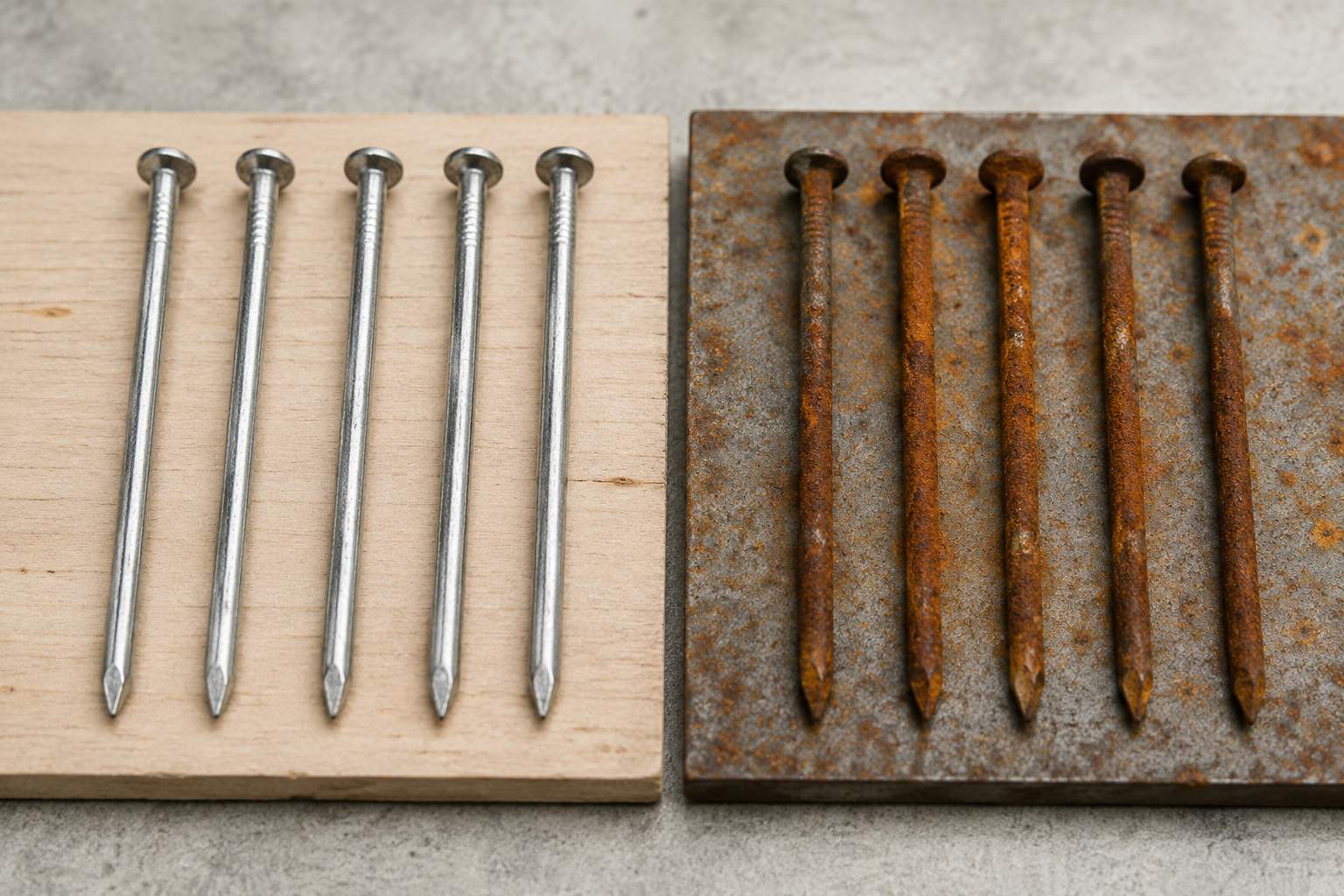
True rust-proof performance requires understanding the difference between corrosion resistance and complete immunity. No ferrous metal nail is completely immune to all forms of corrosion, but some materials and coatings provide exceptional protection under normal conditions.
Stainless steel nails contain chromium and nickel that form a protective oxide layer. This passive film regenerates when scratched, providing long-term protection. Grade 316 stainless steel offers superior performance in marine environments compared to Grade 304. The higher molybdenum content in 316 resists chloride attack from salt water.
Hot-dip galvanized nails provide excellent protection through sacrificial corrosion. The zinc coating corrodes preferentially, protecting the underlying steel. Coating thickness determines lifespan, with heavier coatings lasting decades in most environments. These nails cost significantly less than stainless steel while offering good performance.
| Nail Material | Initial Cost | Lifespan | Best Environment | Limitations |
|---|---|---|---|---|
| Plain Steel | Lowest | 1-2 years | Interior only | Rusts quickly |
| Electro-galvanized | Low | 5-10 years | Light exterior | Thin coating |
| Hot-dip Galvanized | Medium | 15-25 years | General exterior | Eventually fails |
| Stainless 304 | High | 30-50 years | Most exterior | Cost premium |
| Stainless 316 | Highest | 50+ years | Marine/chemical | Expensive |
Long skinny nails like finish nails often receive different coatings than structural nails. Their smaller diameter makes hot-dip galvanizing more challenging, so electro-galvanizing or other coatings are common. Understanding coating limitations helps set proper expectations for different nail types.
Wood nails for exterior decking and siding require careful material selection. The combination of moisture, temperature cycling, and wood preservatives creates a challenging environment. I recommend testing nail samples in actual conditions before committing to large quantities for critical applications.
Conclusion
Quality standards for wire nails ensure your construction projects remain strong and durable through proper testing and material selection.