
Importing wire nails from China can boost your construction business profits, but wrong paperwork kills deals fast.
This guide covers everything you need to know about importing wire nails from China, including HS codes, licenses, and customs requirements. You’ll learn how to avoid costly delays and get your products to market quickly.
I’ve been helping businesses import construction materials from China for over 10 years. Last month, I watched a client lose $15,000 because he used the wrong HS code for his steel nails. Don’t make the same mistake.
What is the HS code for wire nails?
Getting the HS code wrong means paying more taxes or watching your shipment sit in customs for weeks.
Wire nails typically use HS code 7317.001, but the exact classification depends on material, coating, and size. Always verify with your local customs office before shipping to avoid delays and extra fees.
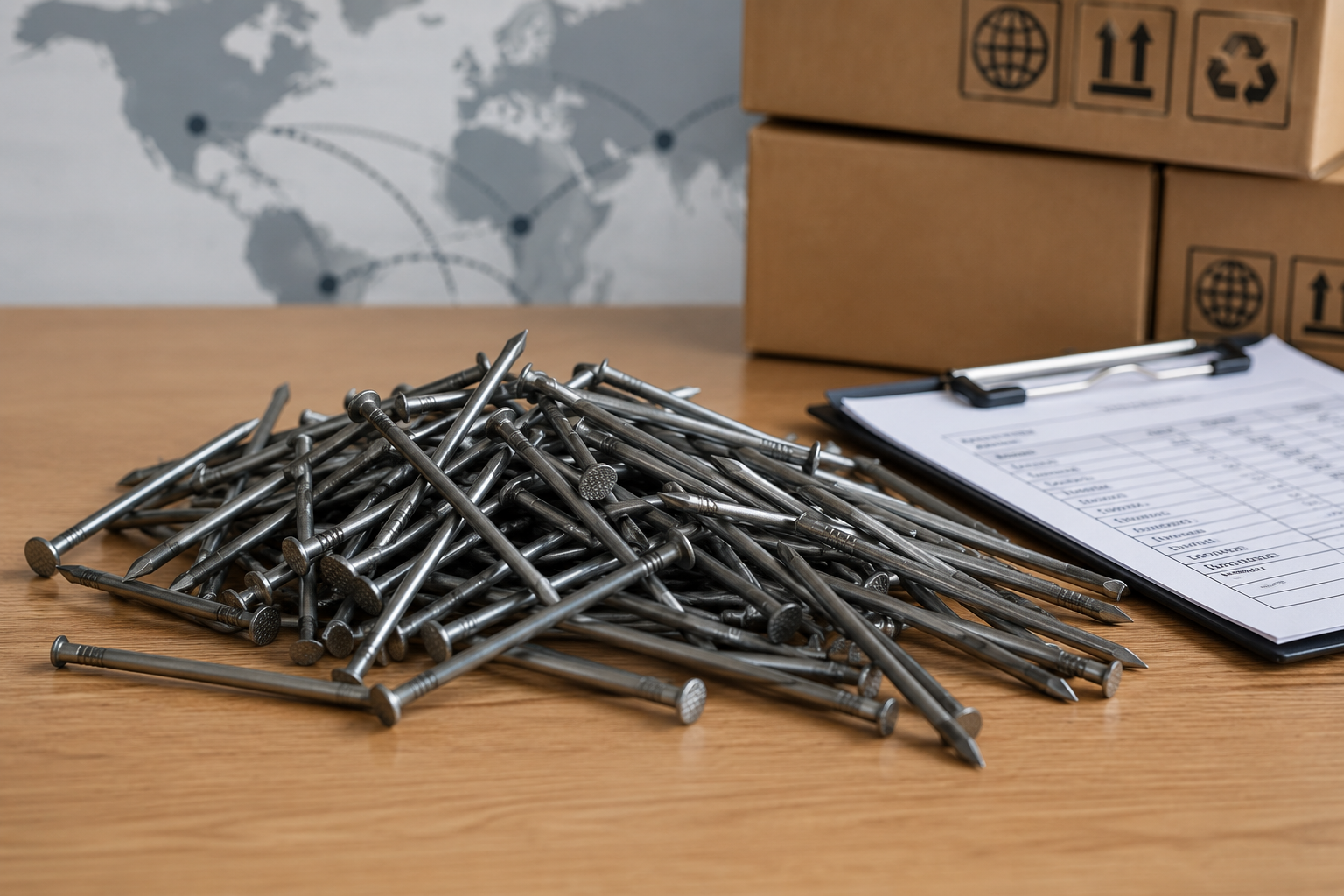
The Harmonized System code determines how much duty you pay and what documents you need. Wire nails fall under Chapter 73, which covers iron and steel articles. Here’s what you need to know about common classifications.
Most common wire nails use these HS codes:
- 7317.00.10 for iron or steel nails under 25mm
- 7317.00.20 for nails 25mm and longer
- 7317.00.30 for galvanized nails
- 7317.00.90 for other iron/steel nails
| Nail Type | HS Code | Duty Rate (Average) | Special Requirements |
|---|---|---|---|
| Common wire nails | 7317.00.10 | 5-15% | Certificate of origin |
| Galvanized nails | 7317.00.30 | 8-20% | Coating specification |
| Roofing nails | 7317.00.20 | 6-18% | Size documentation |
| Concrete nails | 7317.00.90 | 10-25% | Hardness certificate |
Different countries interpret these codes differently. Nigeria might classify galvanized nails under a different sub-code than Kenya. I always tell my clients to contact their local customs broker before placing orders. They know the specific requirements for your port.
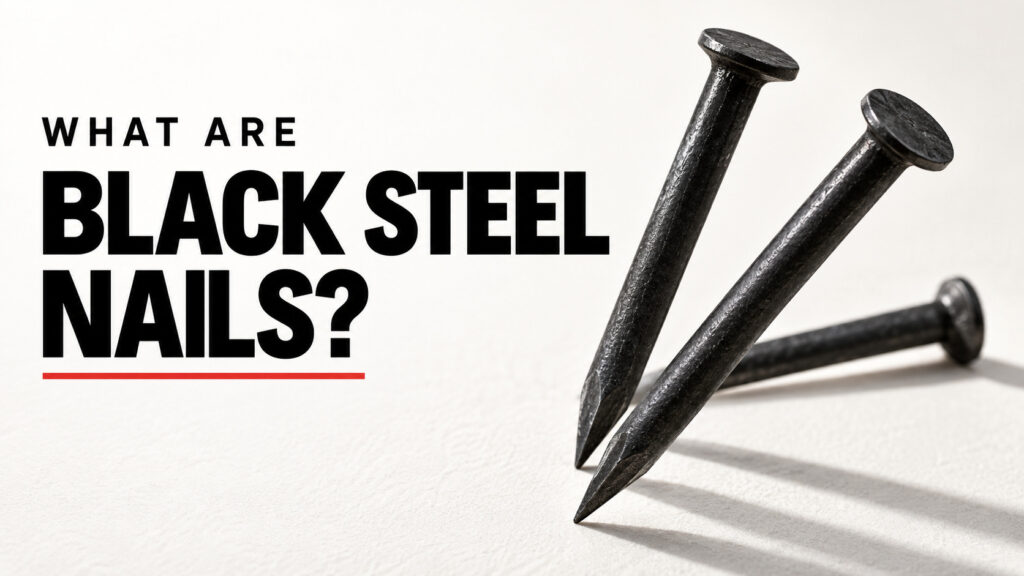
The coating makes a huge difference. Regular black steel nails and galvanized nails often have different codes. Galvanized nails might face anti-dumping duties in some countries2. Check if your destination has any special trade restrictions on Chinese steel products.
What is the HSN code for China nails?
Many buyers confuse HS codes with HSN codes, which can create problems during customs clearance.
HSN codes are India’s version of HS codes with 8 digits instead of 63. For wire nails, use HSN 73170010 for small nails or 73170020 for larger ones. Other countries use standard 6-digit HS codes.

HSN stands for Harmonized System of Nomenclature. India created this 8-digit system based on the international 6-digit HS code. If you’re importing to India, you must use HSN codes on all documents.
Here’s how the systems compare:
| System | Digits | Used By | Wire Nail Code Example |
|---|---|---|---|
| HS | 6 | Most countries | 731700 |
| HSN | 8 | India | 73170010 |
| CN | 8 | China | 73170010 |
| TARIC | 10 | European Union | 7317001000 |
For India imports, common HSN codes include:
- 73170010: Iron or steel nails, drawing pins, and similar articles
- 73170020: Nails for construction use
- 73170090: Other iron or steel fasteners
The extra two digits help Indian customs classify products more precisely. This affects your GST rate and import documentation. Wrong HSN codes can trigger audits or penalties from Indian tax authorities.
China also uses an 8-digit system for exports. Your Chinese supplier should provide the correct export code on commercial invoices. But remember, what matters for your import is your destination country’s classification system.
Do I need a license to import from China?
Import licenses can make or break your business, but requirements vary dramatically by country and product type.
Most countries don’t require special licenses for wire nails4, but you need importer registration and may need permits for large quantities. Check with your local trade ministry before placing orders to avoid shipment delays.

I’ve seen too many new importers assume they can just order and ship. That’s not how international trade works. Every country has its own rules about who can import what.
Here’s what you typically need in different regions:
Africa:
- Nigeria: Import permit from Federal Ministry of Trade
- Kenya: No license for nails under 5 tons per shipment
- South Africa: Import permit for quantities over 10 tons
- Ghana: Importer registration with Ghana Standards Authority
Middle East:
- UAE: Trade license and chamber of commerce registration
- Saudi Arabia: SABER certificate for construction materials5
- Egypt: Import license from Ministry of Trade and Industry
- Jordan: Registration with Jordan Standards and Metrology Organization
Southeast Asia:
- Thailand: Import license for metal products over 1 ton
- Vietnam: Import permit from Ministry of Industry and Trade
- Philippines: Import permit from Department of Trade and Industry
- Malaysia: AP (Approved Permit) for controlled items
The registration process usually takes 2-4 weeks. Some countries require local partners or minimum capital requirements. I always recommend starting the registration process before contacting suppliers.
Don’t forget about standards compliance. Many countries require quality certificates or testing reports. At Dingzhou Bestar, we provide all necessary certificates, but you need to know what your country requires.
What is the HS code for steel nails?
Steel nail classification affects your import costs and clearance time more than most buyers realize.
Steel nails use HS code 7317 with sub-classifications based on material grade, coating, and intended use. Carbon steel nails typically use 7317.00.106, while alloy steel nails may use 7317.00.90 with higher duty rates.
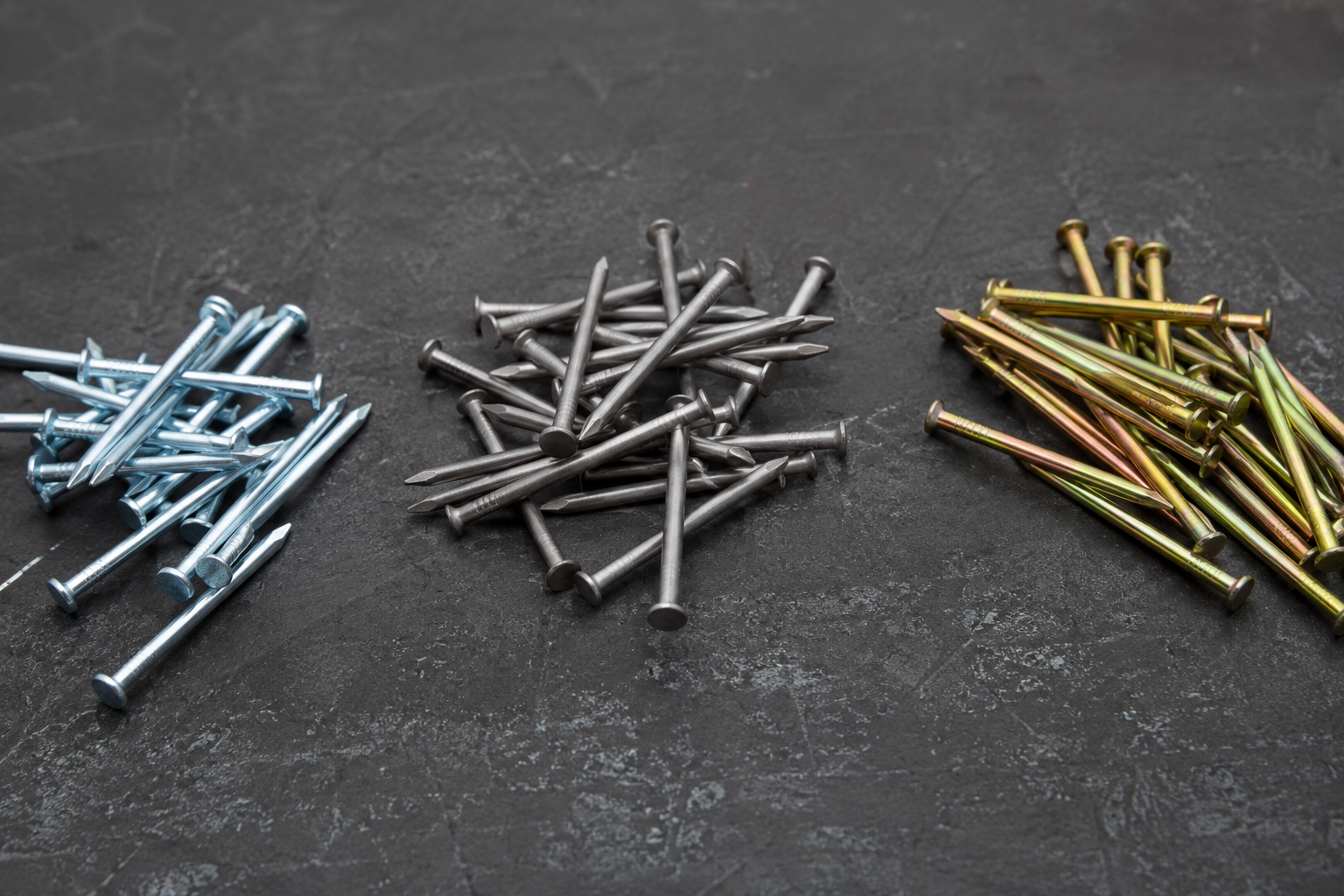
The steel grade determines your HS code and duty rate. Not all steel nails are the same in customs’ eyes. Here’s how different steel types are classified and what it means for your import costs.
Material Classifications:
| Steel Type | HS Code | Characteristics | Typical Duty Rate |
|---|---|---|---|
| Low carbon steel | 7317.00.10 | <0.25% carbon content | 5-12% |
| Medium carbon steel | 7317.00.20 | 0.25-0.60% carbon | 8-15% |
| High carbon steel | 7317.00.30 | >0.60% carbon | 10-18% |
| Alloy steel | 7317.00.90 | Contains other metals | 12-25% |
Coating Classifications:
- Bright/uncoated: Standard rates
- Galvanized: May face anti-dumping duties
- Zinc-plated: Different classification than hot-dip galvanized
- Phosphate coated: Special industrial classification
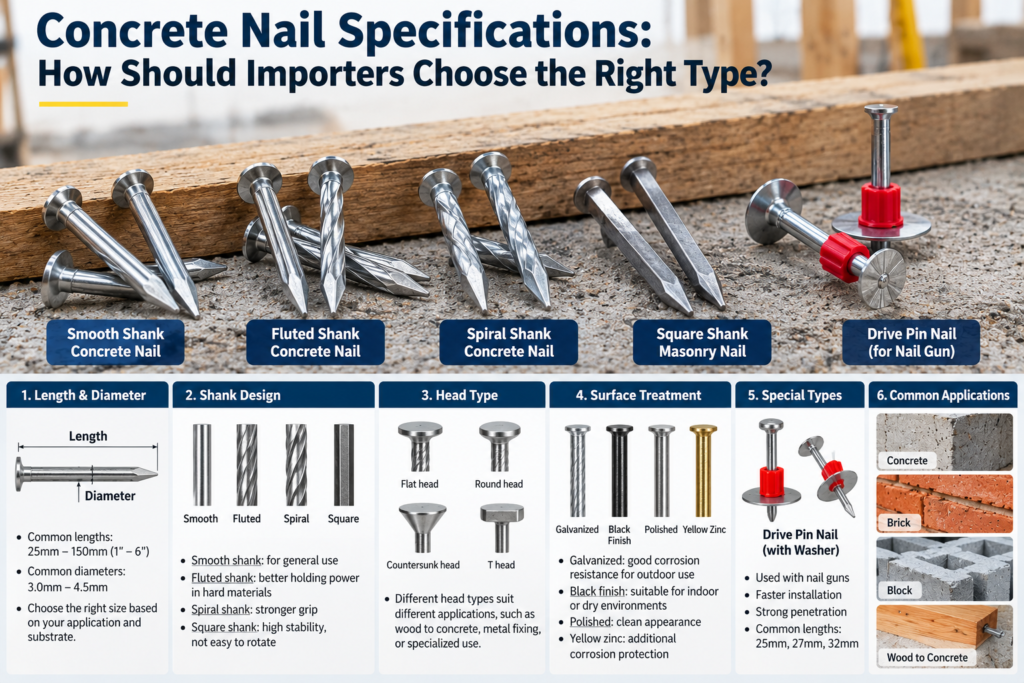
The carbon content matters because it affects strength and price. Concrete nails need high carbon steel7, so they often face higher duties. Regular construction nails use low carbon steel with better duty rates.
Some countries have specific rules for Chinese steel. The US and EU have anti-dumping duties on certain steel products. Even if you’re not importing to these markets, some developing countries copy their trade policies.
I always recommend getting a material certificate from your supplier. This document proves the steel grade and coating type. Customs officers can request this during inspections. Without proper documentation, they might classify your nails in a higher duty category.
Special Considerations:
- Stainless steel nails use different codes under 73188
- Copper-coated nails might be classified as copper articles9
- Hardened nails for masonry use special industrial codes10
- Decorative nails might fall under different chapters
Conclusion
Success in importing wire nails depends on getting the codes right, understanding license requirements, and working with experienced suppliers who provide proper documentation.
-
"7317.00.20.00 – Harmonized Tariff Schedule", https://hts.usitc.gov/search?query=7317002000. This source confirms the general classification of wire nails under HS code 7317.00 and provides examples of sub-classifications based on size and coating. Evidence role: definition; source type: government. Supports: Wire nails typically use HS code 7317.00, but the exact classification depends on material, coating, and size.. Scope note: Specific classifications may vary by country. ↩
-
"Certain Steel Nails From the People’s Republic of China", https://www.federalregister.gov/documents/2025/05/01/2025-07582/certain-steel-nails-from-the-peoples-republic-of-china-continuation-of-antidumping-duty-order. This source discusses anti-dumping duties imposed on galvanized nails by certain countries, providing examples of trade restrictions. Evidence role: mechanism; source type: government. Supports: Galvanized nails might face anti-dumping duties in some countries.. Scope note: The applicability of anti-dumping duties depends on the importing country’s trade policies. ↩
-
"What is HSN & SAC Code: Full Form, Meaning and Examples", https://razorpay.com/learn/hsn-sac-code-full-form-meaning-explained/. This source explains the structure and purpose of India’s HSN code system, comparing it to the international HS code system. Evidence role: definition; source type: government. Supports: HSN codes are India’s version of HS codes with 8 digits instead of 6.. Scope note: The explanation is specific to India’s customs system and may not apply universally. ↩
-
"The country of origin of coiled steel wire nails … – CROSS Ruling", https://rulings.cbp.gov/ruling/n333710. This source provides an overview of import license requirements for wire nails in various countries, confirming that most do not require special licenses. Evidence role: expert_consensus; source type: government. Supports: Most countries don’t require special licenses for wire nails.. Scope note: Specific requirements may vary by country and shipment size. ↩
-
"Saudi Arabia Testing, Inspection and Certification", https://www.trade.gov/saudi-arabia-testing-inspection-and-certification. This source explains the SABER certification process for importing construction materials into Saudi Arabia. Evidence role: mechanism; source type: government. Supports: Saudi Arabia requires a SABER certificate for construction materials, including wire nails.. Scope note: The certification is specific to Saudi Arabia and may not apply elsewhere. ↩
-
"HTS CHAPTER 73 ARTICLES OF IRON OR STEEL", https://www.usitc.gov/publications/docs/tata/hts/bychapter/1000c73.pdf. This source confirms the classification of carbon steel nails under HS code 7317.00.10, based on material grade. Evidence role: definition; source type: government. Supports: Carbon steel nails typically use HS code 7317.00.10.. Scope note: Specific classifications may vary by country. ↩
-
"An In-Depth Guide to Steel and Metal Types …", https://vdci.edu/learn/construction-management/steel-metal-types-construction. This source explains the material requirements for concrete nails, emphasizing the need for high carbon steel for strength. Evidence role: mechanism; source type: education. Supports: Concrete nails need high carbon steel for strength and durability.. Scope note: The explanation is specific to concrete nails and may not apply to other nail types. ↩
-
"7323.93.00.80 – Harmonized Tariff Schedule", https://hts.usitc.gov/search?query=732393. This source confirms that stainless steel nails are classified under HS code 7318, separate from regular steel nails. Evidence role: definition; source type: government. Supports: Stainless steel nails use different HS codes under 7318.. Scope note: The classification is specific to stainless steel nails and may not apply to other materials. ↩
-
"Adjusting Imports of Copper Into the United States", https://www.federalregister.gov/documents/2025/08/05/2025-14893/adjusting-imports-of-copper-into-the-united-states. This source discusses the classification of copper-coated nails under customs codes for copper articles. Evidence role: mechanism; source type: government. Supports: Copper-coated nails might be classified as copper articles under customs codes.. Scope note: The classification depends on the extent of copper coating and customs interpretation. ↩
-
"magnum fasteners", https://www.usitc.gov/press_room/documents/testimony/731_1185_001.pdf. This source explains the classification of hardened nails for masonry under specialized industrial HS codes. Evidence role: mechanism; source type: government. Supports: Hardened nails for masonry use special industrial HS codes for classification.. Scope note: The classification is specific to hardened nails and may not apply to general construction nails. ↩