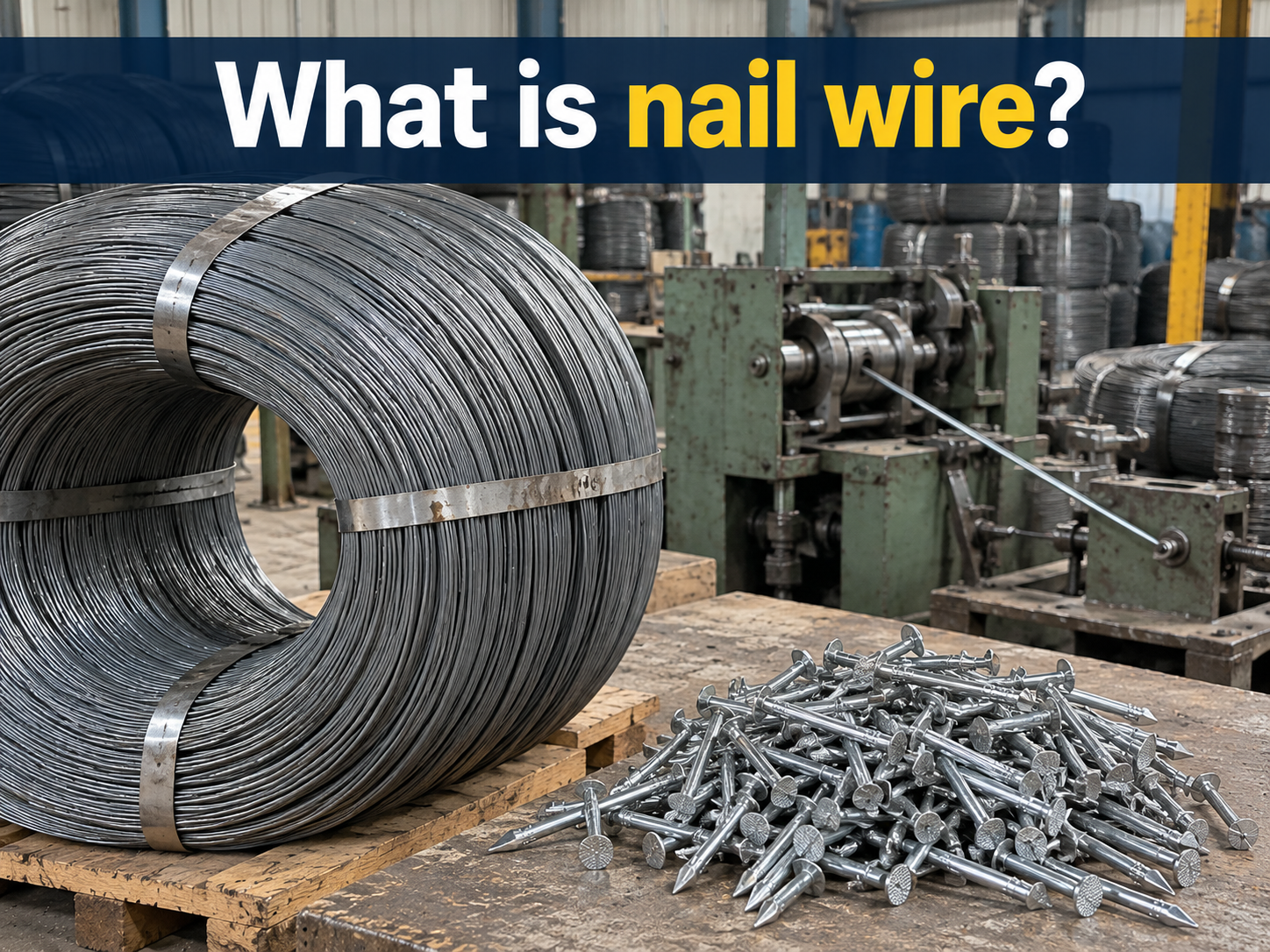
Nail wire is often misunderstood by buyers who are comparing nail prices, planning small nail production, or asking suppliers for “wire nails.” That confusion can lead to wrong quotations, poor material choices, and quality problems. I usually explain it this way: first identify the nail you need, then choose the wire that can make it.
Nail wire is steel wire used as the raw material for making nails. It is not the same as a finished wire nail, concrete nail, roofing nail, or general steel wire. Its suitability depends on nail type, wire diameter, hardness, surface condition, drawability, and the final application.
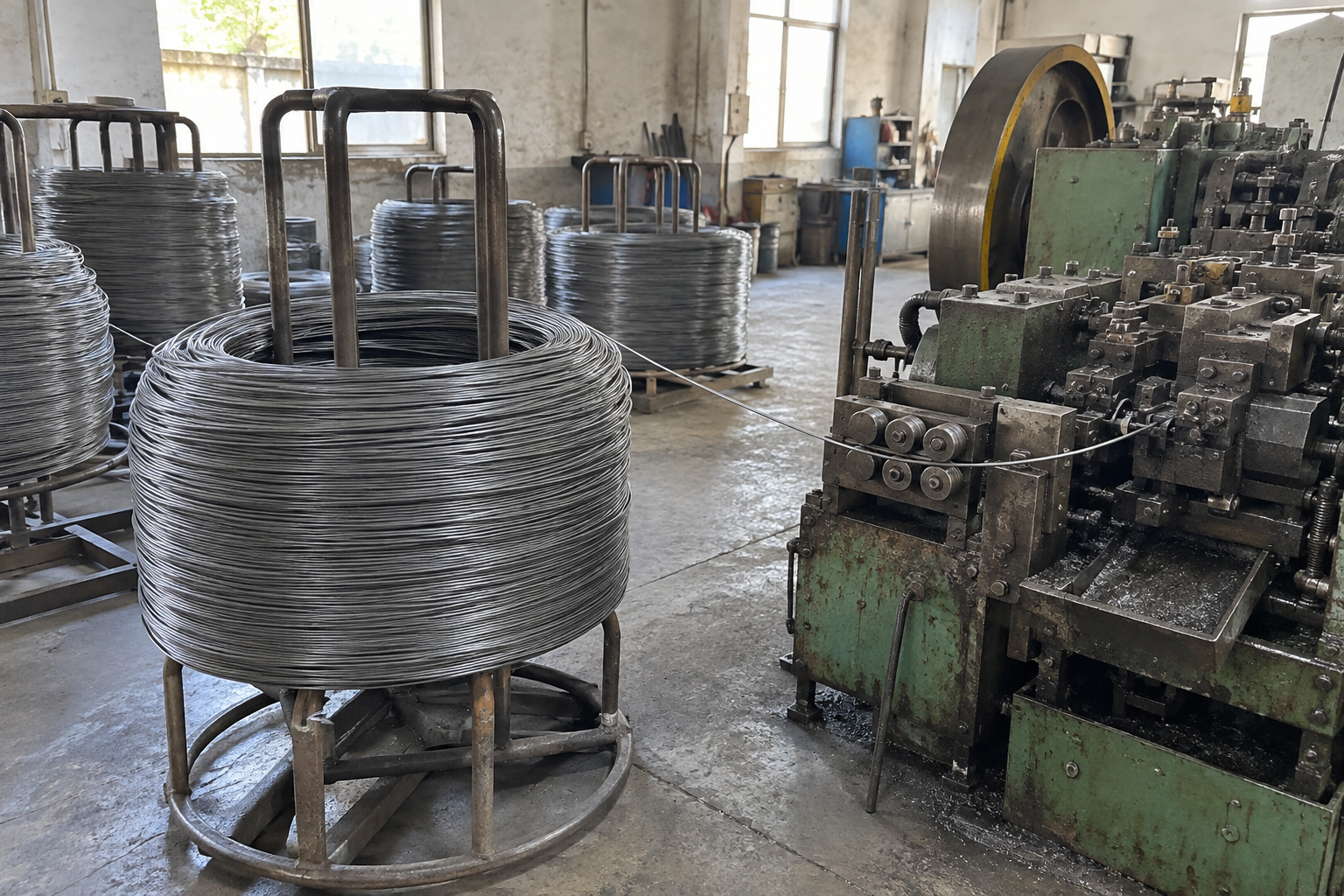
Many buyers ask, “What is nail wire?” but the better question is, “What nail do I want to produce or buy?” In my production-side experience, wire choice can affect nail forming, straightness, head shape, point quality, and stable machine running.
What does nail wire mean in nail manufacturing?
Many first-time buyers hear “nail wire” and think it means any steel wire. That is risky because a nail machine does not only need metal; it needs wire that feeds, cuts, heads, and points correctly. If the meaning is unclear, the whole purchase discussion becomes unclear.
Nail wire means wire prepared or selected for nail-making production. It is the input material used before the nail becomes a finished product. A wire nail, by contrast, is already a finished nail. Concrete nails, roofing nails, lost head nails, and black steel nails are specific nail products, not raw wire.
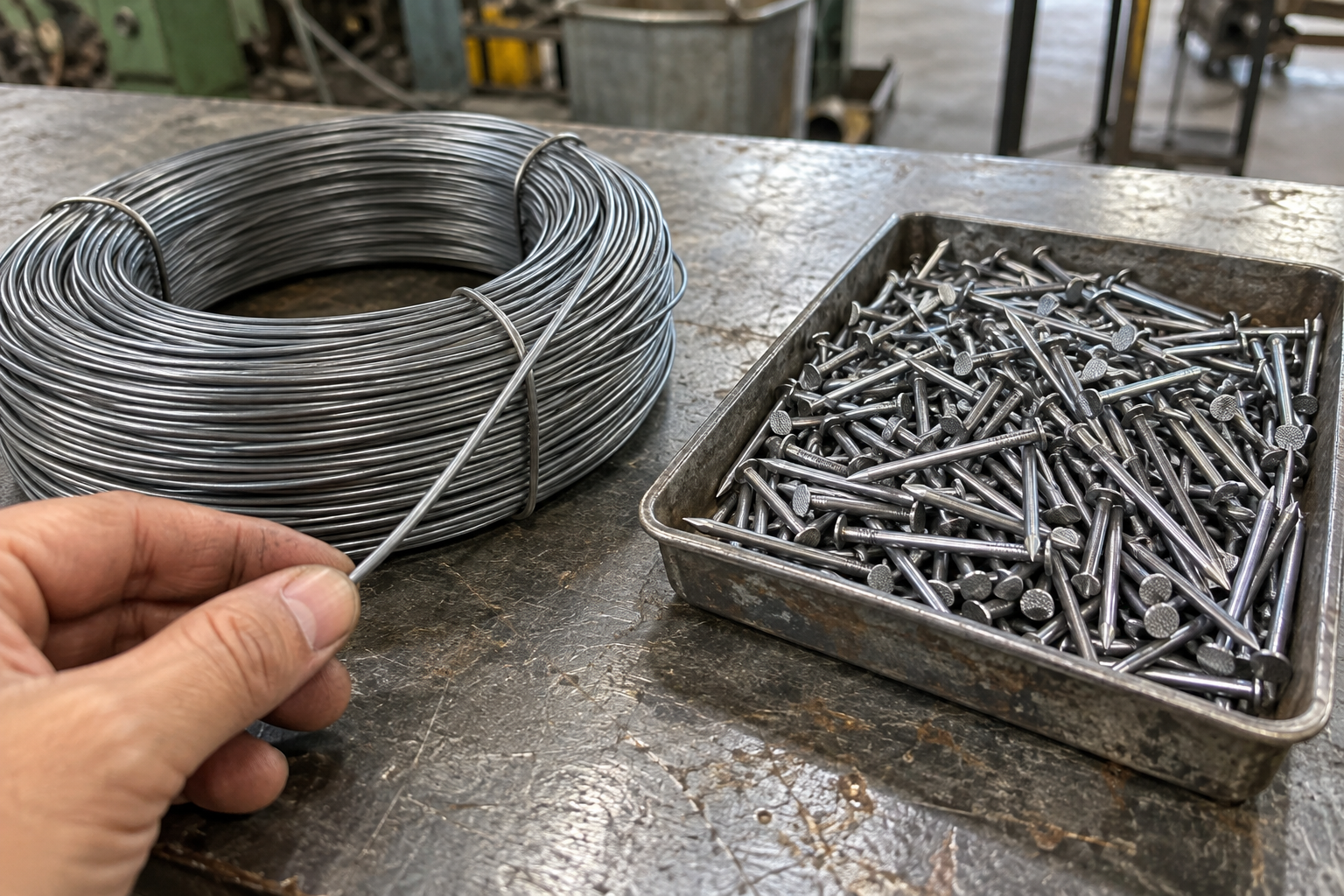
Nail wire is a production input, not the final product
In simple terms, nail wire is the material that goes into a nail-making machine1. The machine straightens the wire, cuts it to length, forms the head, and shapes the point.2 Depending on the final nail, the nail may then go through polishing, heat treatment, surface coating, painting, packing, or other steps.
I have seen inquiries where a buyer says, “I need nail wire,” but the attached photo shows finished common nails. I have also seen the opposite. A small factory owner asks for “wire nails,” but actually wants coil wire for local production. These two needs are very different.
Here is a simple comparison:
| Term | What it means | Buyer should ask for |
|---|---|---|
| Nail wire | Raw wire for making nails | Diameter, hardness, surface, coil weight, use |
| Wire nail | Finished nail made from wire | Size, shank type, head, point, packing |
| Steel wire | Broad industrial wire category | Need to specify nail-making suitability |
| Concrete nail | Finished hardened nail for concrete/masonry use | Size, hardness, coating, packing, sample testing |
| Roofing nail | Finished nail used for roofing sheets/materials | Length, head diameter, washer, coating |
Why the distinction matters
This distinction matters because suppliers quote based on different cost structures. Raw wire pricing may depend on wire rod cost, drawing process, diameter tolerance, coil form, and packaging. Finished nail pricing depends on wire, machine work, labor, surface treatment, packing, carton design, and shipping details.
For example, when I prepare an FOB quotation, I normally need:
- Product name: nail wire or finished nail type
- Specification: diameter, length, nail size, or wire gauge
- Quantity: tons, cartons, or containers
- Packing method: coil, carton, bag, box, or buyer’s brand packing
- Application: woodworking, construction, roofing, concrete, or general hardware resale
If the buyer only says “best price nail wire,” the quotation may not be useful. A low price may hide a mismatch in diameter, hardness, or surface condition. A correct quotation starts with a correct product description.
How I explain it to buyers
I usually say: nail wire is not sold by name alone; it is selected by the nail it needs to become. That approach helps buyers avoid three common mistakes:
- Buying raw wire when they need finished nails
- Buying finished wire nails when they planned local production
- Choosing cheap steel wire that does not run well on nail machines
My practical rule is simple: describe the final nail first, then confirm the wire. This keeps the discussion clear and reduces procurement risk.
For importers, the safest path is to share photos, sizes, target market use, packing requirements, and expected order quantity. If the buyer runs nail machines, then wire diameter, coil weight, and material consistency become even more important.
Why is not every steel wire suitable as nail wire?
Buyers may assume all steel wire can become nails because nails look simple. That assumption can create trouble on the production line. If wire is too hard, too soft, rusty, uneven, or poorly drawn, the nail machine may produce bent nails, weak heads, poor points, or high waste.
Not every steel wire is suitable as nail wire because nail production requires controlled diameter, workable hardness, clean surface condition, good drawability, and stable coil quality.3 These factors can affect machine feeding, cutting, heading, point forming, nail straightness, and final strength. Buyers should confirm specifications or test samples before bulk orders.
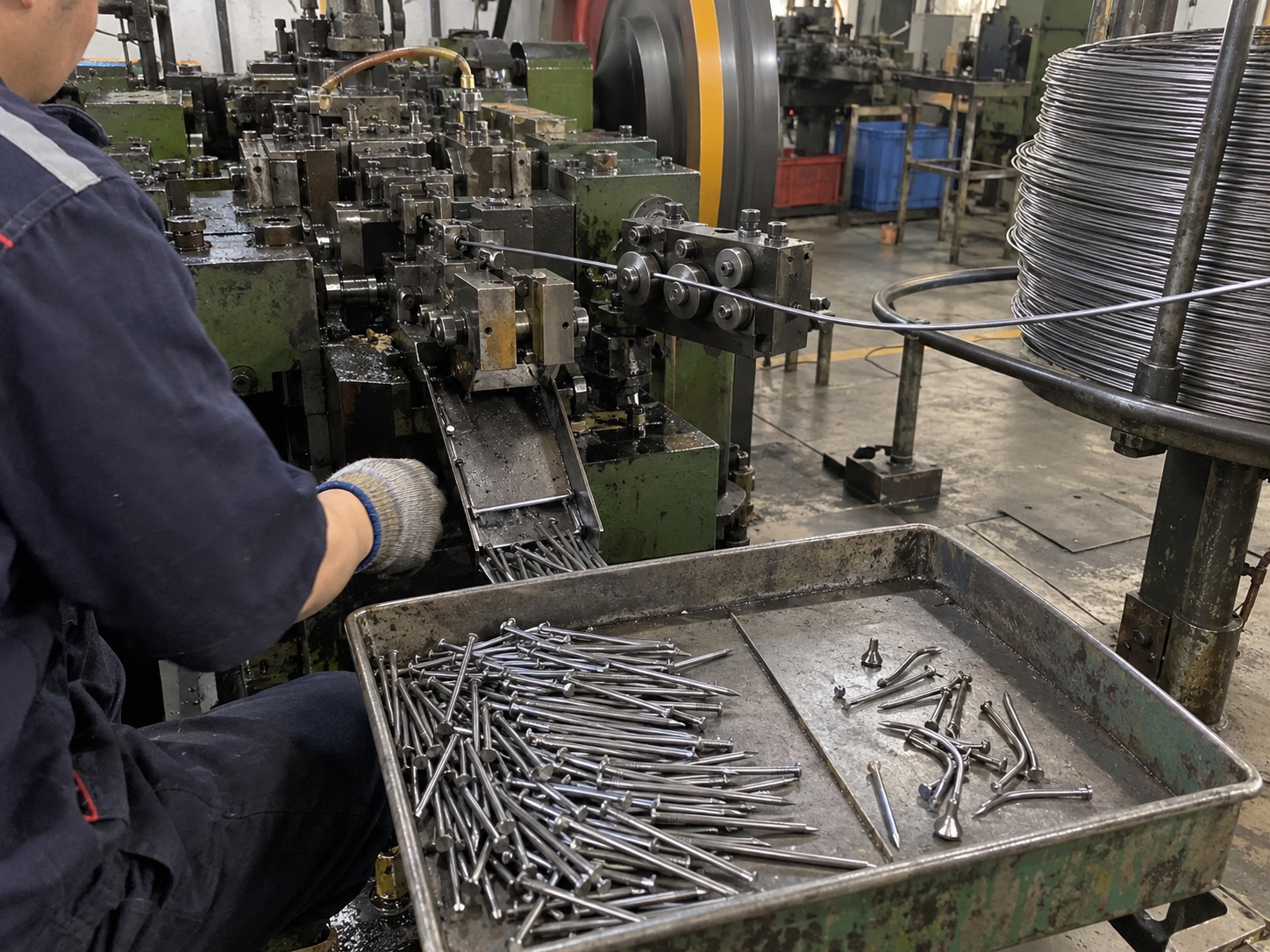
The nail machine needs consistency
A nail-making machine works fast. Many machines produce hundreds of nails per minute, depending on nail size and machine model. Even small differences in wire condition can show up quickly during production. I have handled cases where the final nail problem was not mainly the machine. The wire condition was a major factor.
Common production issues can include:
- Bent nails from poor straightness or inconsistent wire feed
- Cracked or weak heads from unsuitable hardness or poor forming behavior
- Short or uneven points from unstable cutting and point forming
- Machine stoppage from surface rust, oil problems, or coil tangling
- High scrap rate from diameter variation or poor wire consistency
These issues do not always mean the wire is “bad” in every industry. It may simply be unsuitable for nail production or unsuitable for that exact nail type.
Key wire factors buyers should understand
| Factor | Why it matters for nail production | What buyers should confirm |
|---|---|---|
| Diameter | Controls nail shank size and machine setting | Gauge or mm tolerance |
| Hardness | Affects heading, bending, and strength | Suitable range for nail type |
| Surface condition | Affects feeding, rust risk, and finish | Clean, dry, coated, or polished condition |
| Drawability | Affects forming stability | Supplier production experience |
| Coil quality | Affects machine feeding | Coil weight, winding, no tangles |
| Consistency | Affects mass production quality | Sample test or trial order |
Diameter is more than a number
Wire diameter directly affects the finished nail shank.4 If the diameter is wrong, the nail may not meet local market expectations. In some markets, buyers describe sizes by BWG or gauge. In other markets, they use millimeters.5 A small mismatch can change nail weight, carton count, and customer acceptance.6
For example, a buyer may ask for 2.5 mm wire, but the local market expects a certain nail size based on gauge. If the supplier and buyer do not align the measurement system, the finished nail may look “too thin” or “too heavy,” even if the supplier delivered what was written.
Hardness should match the nail application
Hardness is another practical factor. A wire that is too soft may produce nails that bend too easily. A wire that is too hard may crack during heading or put extra stress on the machine.7 The right balance depends on the final use.
For example:
- Common nails need general forming stability and acceptable bending resistance.
- Lost head nails need clean head forming and smooth finishing.
- Roofing nails may require wider heads or washers, plus corrosion-related considerations.
- Concrete nails are a different category because they usually require higher hardness and specific production treatment.
I avoid saying one wire specification fits all nails. It does not. The buyer should connect wire choice to the finished nail and the market requirement.
Surface condition affects real production
Surface condition is easy to overlook. A wire may look acceptable in a photo, but rust, uneven lubrication, dirt, or poor winding can cause production problems.8 For export buyers, this matters because sea transport adds time and humidity risk.9 Packaging and storage conditions should be discussed, especially for long shipping routes to the Middle East, Africa, Southeast Asia, and South America.
In my work, I prefer to confirm these details before shipment:
- Is the wire clean and dry?
- Is the coil packed to reduce moisture exposure?
- Is the coil wound evenly for machine feeding?
- Is the diameter checked during production?
- Has the buyer tested a sample or trial batch?
For technical decisions, buyers should rely on agreed specifications, sample testing, and qualified professional evaluation when the nail is used in demanding applications. This is especially important for structural, masonry, or special-use products.
How should buyers choose nail wire for different nail types?
A buyer may want a cheap material, but the final customer wants a nail that works. That gap can become expensive. If the wire does not match the nail type, the buyer may face complaints, machine waste, or slow-moving inventory in the local market.
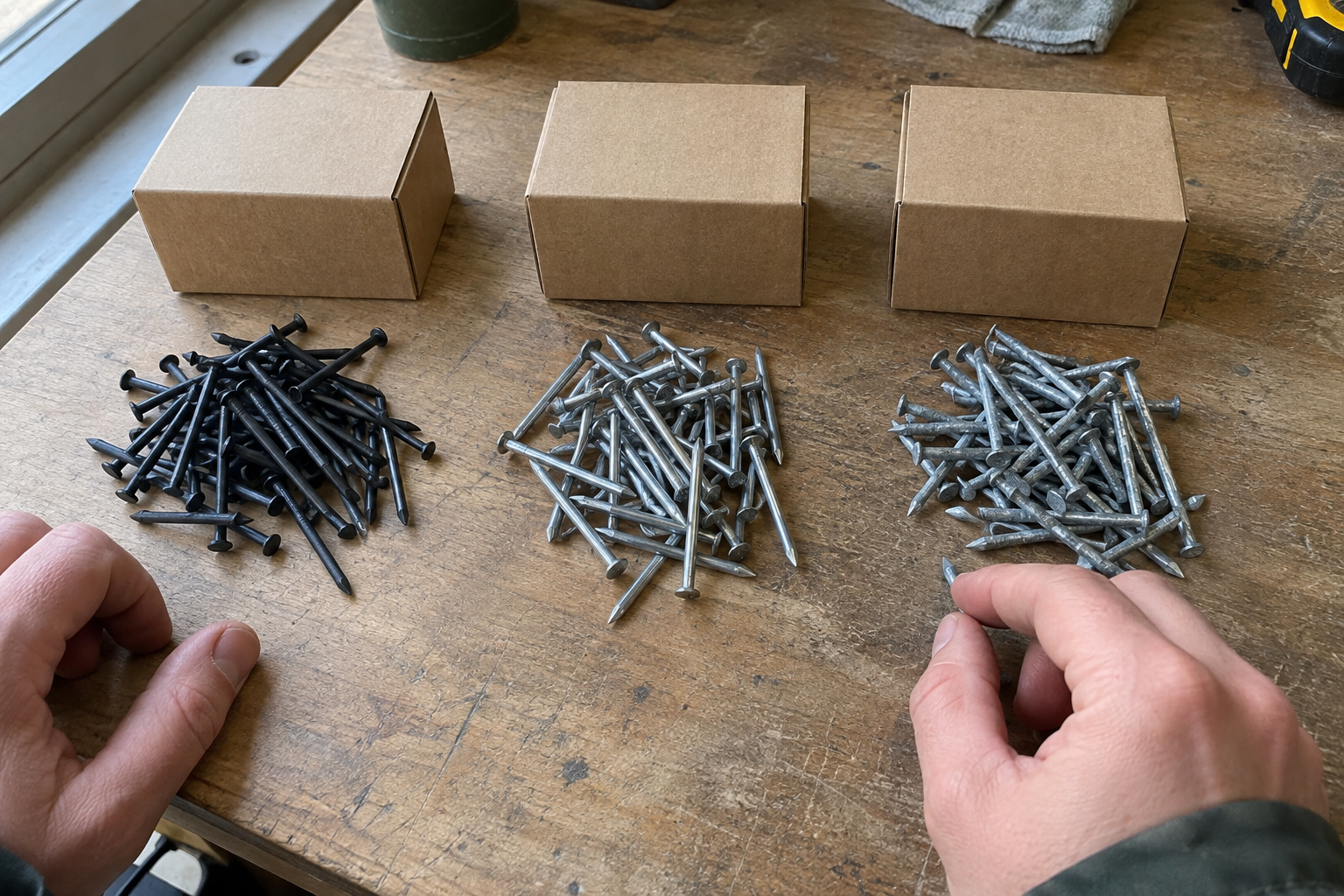
Buyers should choose nail wire by starting with the finished nail type and application. Construction nails, woodworking nails, roofing nails, black steel nails, and concrete nails may require different wire diameter, hardness, surface treatment, head design, and packing. A clear end-use description helps suppliers recommend a more suitable option.
Start with the nail, not the wire
When I receive an inquiry, I try to understand the final nail first. That is because “wire for nails” is only one part of the decision. The nail must suit the buyer’s customer, market, and application.
A hardware importer may need finished nails for resale. A small factory may need raw wire to produce local nails. A construction distributor may need concrete nails or roofing nails in branded boxes. These buyers should not use the same inquiry format.
Here is a practical selection table:
| Final product | Typical application | Main concern | Buyer should clarify |
|---|---|---|---|
| Common wire nails | General wood and construction use | Size, straightness, head strength | Length, diameter, packing |
| Lost head nails | Wood finishing and trim work | Small head, clean appearance | Head style, finish, carton details |
| Roofing nails | Roofing sheet/material fixing | Head size, coating, washer option | Length, head diameter, galvanized or not |
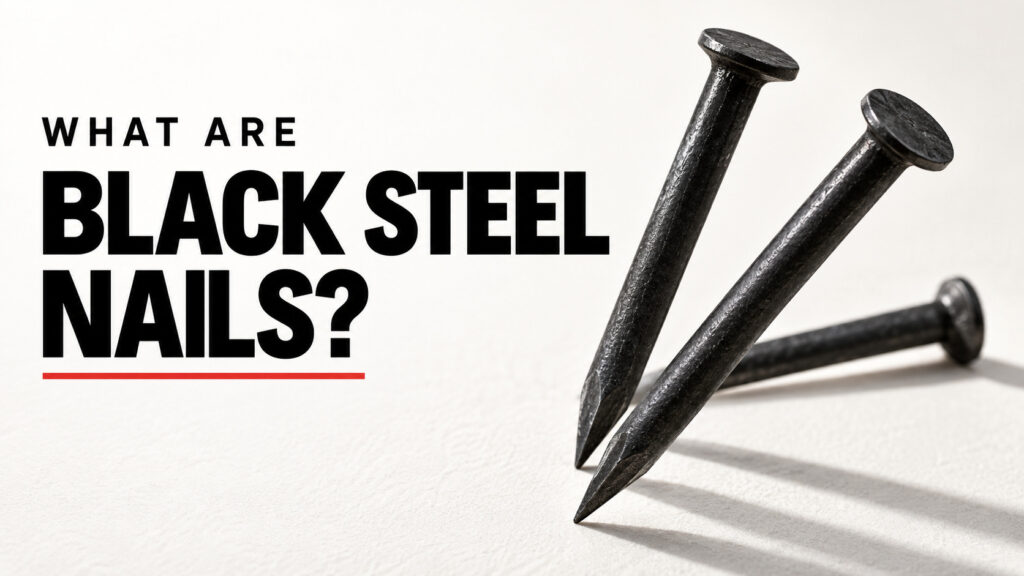
| Black steel nails | General construction markets | Cost-performance balance | Size range, surface, packing |
| Concrete nails | Concrete or masonry fixing | Hardness, strength, breakage risk | Application, sample testing, hardness expectations |
| Raw nail wire | Nail production | Machine compatibility | Diameter, hardness, coil, surface |
Construction and woodworking nails
For general construction and woodworking, the buyer usually cares about nail size, straightness, and holding performance. The wire should form a nail with a reliable head and point. If the nail bends too easily, end users complain. If it is too brittle, it may break during use.
For this category, buyers should confirm:
- Length and diameter
- Head type
- Point type
- Surface finish
- Carton weight or piece count
- Market standard size names
I often ask buyers to share photos from their market. A 2-inch nail in one market may have a slightly different expected shank diameter than in another market. Local habits matter.
Roofing nails
Roofing nails have different priorities. Buyers may need large heads, umbrella heads, smooth shanks, twisted shanks, washers, or galvanized surfaces. The raw wire still matters, but the finished nail design matters just as much.
For roofing applications, buyers should think about:
-
Corrosion resistance
Roofing products face outdoor exposure. Coating choice should match the market environment.10 -
Head diameter
A wider head can improve holding on roofing materials.11 -
Washer option
Some markets require rubber or plastic washers. -
Packing
Roofing nails are often sold in small boxes, cartons, or branded packaging.
The wire alone cannot define the product. A roofing nail is a finished system of shank, head, surface, and packing.
Concrete nails
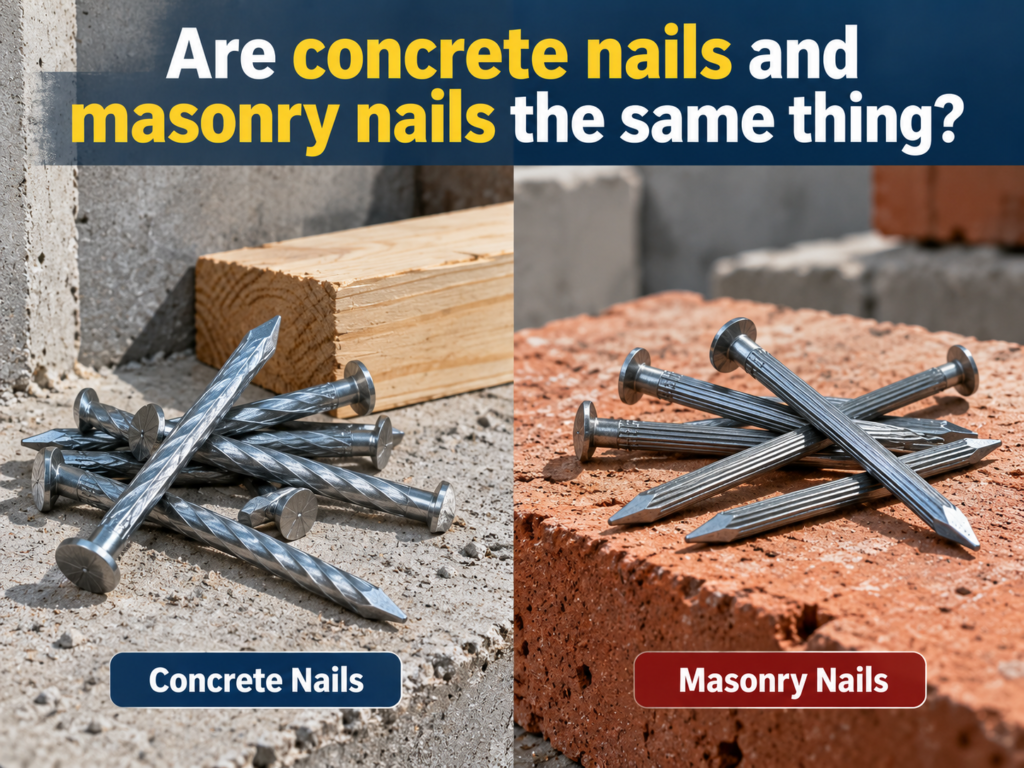
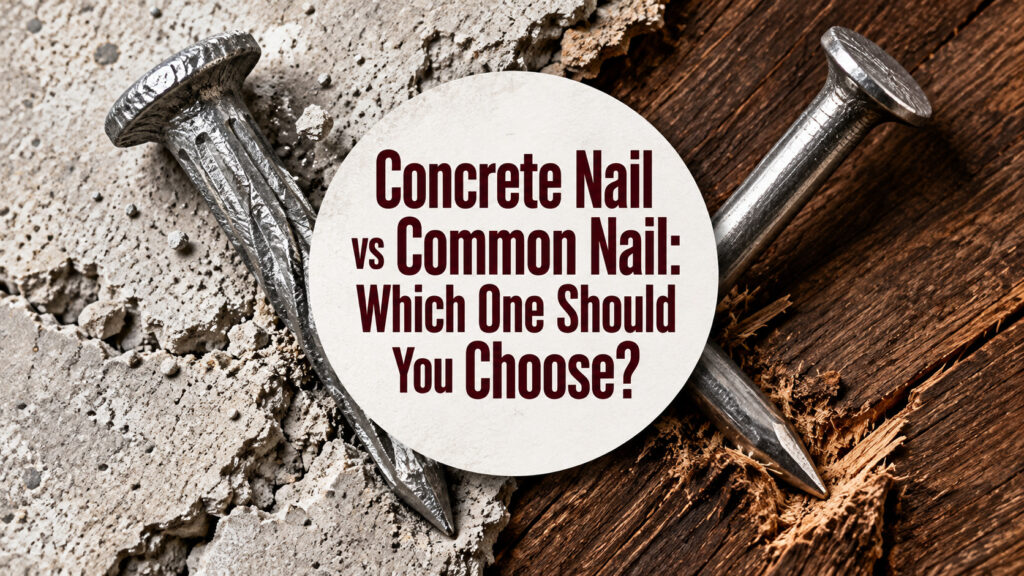
Concrete nails are often confused with ordinary nails. They should not be treated as the same product. A concrete nail is usually made for harder surfaces such as concrete or masonry. Its performance can depend on material selection, forming, heat treatment, and quality control.12
I use careful language here because exact requirements should be confirmed by specification, sample testing, or professional evaluation. However, from a procurement view, the buyer should not ask only for “nail wire” if they need concrete nails. They should ask for the finished concrete nail size and intended use.
Important details include:
- Diameter and length
- Surface color or coating
- Hardness expectation
- Breakage and bending performance
- Packing requirement
- Sample testing before bulk shipment
Raw wire for small nail-making businesses
Small nail-making businesses have another concern: production stability. They need wire that runs smoothly on their machines. A slightly cheaper coil may become expensive if it causes stoppages.
Before buying raw material, a small producer should confirm:
- Machine model and suitable diameter range
- Required nail sizes
- Coil weight that the machine can handle
- Local power and production conditions
- Expected daily output
- Sample or trial order before full container purchase
At 定州百斯特, we support trial orders because many buyers prefer to test market acceptance or machine compatibility first. Our usual MOQ is 5 tons or 200 boxes, depending on product type and packing. For larger buyers, shipment can be arranged by FCL or LCL sea freight.
What procurement details should you confirm before ordering nail wire or finished nails?
A low price can look attractive, but unclear procurement details can erase the saving quickly. If the buyer does not define whether they need raw wire or finished nails, the supplier may quote the wrong product. Then both sides lose time, and the final goods may not match the market.
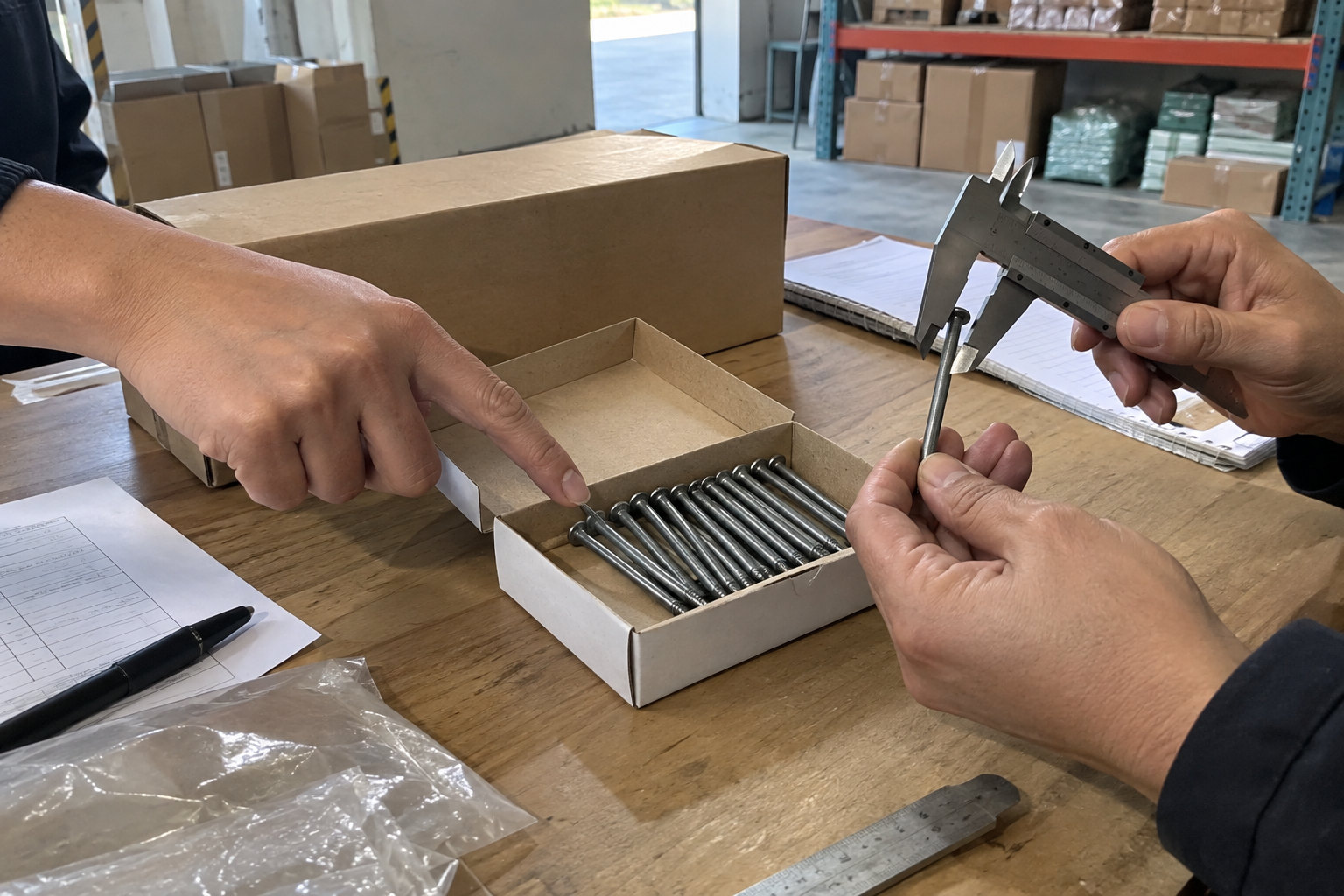
Before ordering nail wire or finished nails, buyers should confirm product type, final application, size, diameter, hardness needs, surface condition, packing, quantity, inspection method, and shipment terms. Clear specifications help suppliers quote fairly and help buyers compare offers on the same basis instead of comparing only price.
Price comparison needs equal specifications
I understand why buyers ask for the lowest price. Many of our customers sell in price-sensitive markets in the Middle East, Africa, Southeast Asia, and South America. However, a fair price comparison needs equal specifications. Otherwise, the cheaper quote may simply be a different product.
For FOB pricing, I normally base the offer on:
Product + specification + quantity + packing method
That formula helps both sides stay practical. It also avoids vague comparisons such as “your nail is expensive” when the actual difference is wire diameter, carton weight, coating, or brand packing.
A useful inquiry format
Buyers can use this simple format when contacting suppliers:
| Item | Example information to provide |
|---|---|
| Product | Raw nail wire / common nails / roofing nails / concrete nails |
| Size | Diameter and length, or market size name |
| Application | Wood, roofing, concrete, resale, production |
| Quantity | 5 tons, 10 tons, 1 container, or 200 boxes |
| Packing | Bulk carton, small box, buyer brand, OEM logo |
| Surface | Bright, black, galvanized, polished, or other |
| Sample need | Yes or no |
| Destination port | Needed for freight discussion if required |
This format is simple, but it prevents many problems.
Samples are useful, but they should be evaluated correctly
We can provide samples for quality checking. Samples usually carry a basic charge, and the cost can often be discussed for return or deduction in a formal order. I like samples because they make the discussion concrete. However, buyers should test samples in the way they will actually use the product.
For raw wire, a buyer should test it on the nail-making machine if possible. For finished nails, a buyer should compare them with local market products and check practical performance.
Sample checks may include:
- Diameter measurement
- Length measurement
- Visual surface inspection
- Head shape and point quality
- Bending or breakage behavior
- Packing appearance
- Machine feeding test for raw wire
For demanding applications, buyers should use qualified testing or professional review. A supplier’s document or claim should be verified against the buyer’s requirements.
Customization and OEM/ODM details
Some buyers do not only buy nails; they buy a market-ready product. This is where customization matters. At 定州百斯特, we support OEM/ODM for products, packaging, and brand logo. That can be useful for importers who sell through wholesalers or retail hardware shops.
Common customization points include:
-
Product specification
The buyer may need a specific nail size or head design. -
Packing design
The buyer may want small boxes, cartons, bags, or branded labels. -
Brand logo
The buyer may want a private label for local distribution. -
Market mix
The buyer may combine concrete nails, roofing nails, black steel nails, or lost head nails in one procurement plan.
The normal delivery time is often 15–25 days, but it depends on order quantity, packing complexity, and production schedule. Buyers should confirm timing before promising delivery to their own customers.
Supplier selection is about more than unit price
When I look at supplier evaluation from the buyer’s side, I would not focus only on the lowest price. I would also check whether the supplier understands nail production. A supplier who can explain the relationship between wire and finished nail quality is usually easier to work with.
Useful supplier questions include:
- Can you confirm whether this is raw wire or finished nails?
- Can you recommend specifications based on the final nail application?
- Can you provide samples for checking?
- Can you support trial orders?
- Can you customize packaging and logo?
- Can you ship by FCL or LCL?
- What is the expected production lead time?
- What inspection steps do you use before shipment?
A good supplier should answer clearly. They should also avoid promising that one material fits every nail. In real production, the correct choice usually depends on application, machine condition, market standard, and testing.
Frequently Asked Questions
Is nail wire the same as wire nail?
No. Nail wire is raw wire used to make nails. A wire nail is a finished nail product made from wire. Buyers should clarify whether they need production material or ready-to-sell nails before asking for a quotation.
Can any steel wire be used for making nails?
No. General steel wire may not be suitable for nail production. Nail-making usually needs controlled diameter, suitable hardness, clean surface condition, stable coil winding, and good forming behavior. Buyers should confirm specifications and test samples when possible.
What information should I send when asking for nail wire prices?
You should send the intended nail type, wire diameter, hardness requirement if known, coil weight, quantity, packing method, and application. If you are unsure, send photos of the nail you want to produce and describe your machine or market use.
Do concrete nails use the same wire as common nails?
Not usually. Concrete nails are finished nails designed for harder applications, and they may require different material conditions, processing, and quality checks. Buyers should not treat concrete nails as ordinary wire nails. Sample testing is recommended.
Can I order customized nails or branded packaging?
Yes. Many manufacturers, including us at 定州百斯特, can support OEM/ODM customization for product specifications, packaging, and brand logo. You should confirm MOQ, artwork details, packing method, and delivery time before placing the order.
Conclusion
Nail wire is best understood as a nail-making input, not just generic steel wire and not a finished nail. Its correct specification depends on the nail you want to make or buy, the application, the diameter, hardness, surface condition, and production requirements. If you are comparing suppliers, I recommend starting with the final nail use and then confirming samples or trial orders. For quotations, samples, or OEM/ODM nail projects, contact 定州百斯特 at [email protected] or WhatsApp +8618331061136.
-
"Nail (fastener)", https://en.wikipedia.org/wiki/Nail_(fastener). A reference on nail manufacture describes wire nails as fasteners formed from drawn wire stock, supporting the characterization of nail wire as a production input rather than a finished nail. Evidence role: definition; source type: encyclopedia. Supports: A source should define or describe wire nails as nails manufactured from drawn steel wire, supporting the distinction between wire stock and finished nails.. Scope note: The source may describe wire stock used for nails rather than the exact trade phrase “nail wire.” ↩
-
"Nail (fastener)", https://en.wikipedia.org/wiki/Nail_(fastener). An educational description of wire-nail manufacture identifies straightening, cutting, heading, and point formation as core operations in converting wire into finished nails. Evidence role: mechanism; source type: education. Supports: A source should describe the sequence of operations used to convert wire into nails.. ↩
-
"Deformation Analysis of Surface Crack in Rolling and Wire …", https://ui.adsabs.harvard.edu/abs/2005JSMEA..48..335S/abstract. Materials-engineering literature on wire drawing and cold forming reports that dimensional uniformity, hardness, ductility, and surface condition affect downstream forming performance, providing general support for treating nail wire as a specification-dependent input. Evidence role: general_support; source type: paper. Supports: A materials or manufacturing paper should show that wire-forming operations depend on properties such as dimensional uniformity, hardness, ductility/drawability, and surface quality.. Scope note: The support is contextual if the source discusses wire forming or cold heading generally rather than nail manufacture specifically. ↩
-
"Nails and Spikes – U.S. Standard Dimensions", https://www.engineeringtoolbox.com/nails-sizes-d_2047.html. Fastener dimensional references specify nails by shank diameter and length, supporting the conclusion that wire diameter is a primary determinant of the finished nail shank. Evidence role: general_support; source type: other. Supports: A fastener standard or technical reference should show that wire nails are specified by dimensions including shank diameter.. Scope note: A dimensional standard may not describe factory conversion from wire diameter to shank diameter in detail. ↩
-
"Birmingham gauge", https://en.wikipedia.org/wiki/Birmingham_gauge. Reference material on wire gauge systems explains that gauges such as Birmingham Wire Gauge correspond to particular wire diameters and are commonly converted to metric measurements. Evidence role: definition; source type: encyclopedia. Supports: A source should define BWG or wire gauge and show its relationship to wire diameter in millimeters.. ↩
-
"Wire Weight, Length and Size Calculator", https://www.stainlesswires.com/material-weights. Engineering references for wire mass calculations show that mass per unit length is proportional to cross-sectional area, so changes in diameter can materially alter nail weight and package counts. Evidence role: mechanism; source type: education. Supports: A source should show that wire mass per unit length depends on cross-sectional area, which varies with the square of diameter.. Scope note: This supports the physical weight and count mechanism, but not customer acceptance in any specific local market. ↩
-
"A Study on the Effect of Cold Forming on the Yield Strength …", https://scholarsmine.mst.edu/cgi/viewcontent.cgi?article=1586&context=isccss. Studies of cold heading and wire forming show that hardness and ductility govern formability and cracking risk, supporting the claim that wire that is too soft or too hard can impair nail performance or machine forming. Evidence role: mechanism; source type: paper. Supports: A source should explain that hardness and ductility influence cold-heading formability, cracking risk, and bending behavior.. Scope note: The source may address cold-formed steel wire components broadly rather than nails alone. ↩
-
"Review of Failure Mechanisms of Steel Wire Ropes Under …", https://pmc.ncbi.nlm.nih.gov/articles/PMC12652277/. Research on steel wire drawing and forming identifies surface defects, corrosion, lubrication condition, and handling quality as factors that can affect processing stability and finished-product defects. Evidence role: mechanism; source type: paper. Supports: A source should support that surface defects, corrosion, lubrication conditions, and coil handling affect wire processing performance.. Scope note: The support is contextual if the cited work concerns wire processing generally rather than nail-machine feeding specifically. ↩
-
"Marine Atmospheric Corrosion of Carbon Steel: A Review – PMC", https://pmc.ncbi.nlm.nih.gov/articles/PMC5506973/. Corrosion and maritime-cargo literature documents that steel products exposed to humid marine atmospheres or cargo-sweat conditions are susceptible to corrosion during transport and storage. Evidence role: mechanism; source type: paper. Supports: A source should explain that humid marine environments and cargo-sweat conditions can increase corrosion risk for steel goods during transport.. Scope note: The source supports the general corrosion mechanism and may not quantify risk for nail wire on a particular route. ↩
-
"Corrosion Protection for Metal Connectors and Fasteners …", https://www.brunswickcountync.gov/DocumentCenter/View/990/FEMA-TB-08—Corrosion-Protection-for-Metal-Connectors-in-Coastal-Areas-PDF. Government building guidance on exterior fasteners notes that roofing and other exposed fasteners should use corrosion-resistant materials or coatings selected for the service environment. Evidence role: general_support; source type: government. Supports: A government or building-science source should state that exterior or roofing fasteners require corrosion-resistant materials or coatings appropriate to the exposure environment.. ↩
-
"Withdrawal capacity of plain, annular shank and helical …", https://composites.umaine.edu/publication/withdrawal-capacity-of-plain-annular-shank-and-helical-shank-nail-fasteners-inspruce-pine-fir-lumber/. Experimental studies of nailed roof or sheathing assemblies report that nail head geometry influences pull-through resistance, supporting the statement that wider heads can improve holding in roofing materials. Evidence role: mechanism; source type: paper. Supports: A source should show that nail head geometry affects pull-through resistance or holding performance in roofing or sheathing materials.. Scope note: The measured effect may vary by roofing material, nail type, substrate, and installation method. ↩
-
"Nail (fastener)", https://en.wikipedia.org/wiki/Nail_(fastener). Technical reference material describes concrete nails as hardened fasteners intended for driving into concrete or masonry, supporting their treatment as a category distinct from ordinary wire nails. Evidence role: definition; source type: encyclopedia. Supports: A source should describe concrete nails as hardened or specialized nails intended for concrete or masonry applications.. Scope note: An encyclopedia or general reference may confirm the product category without detailing all manufacturing controls or quality tests. ↩