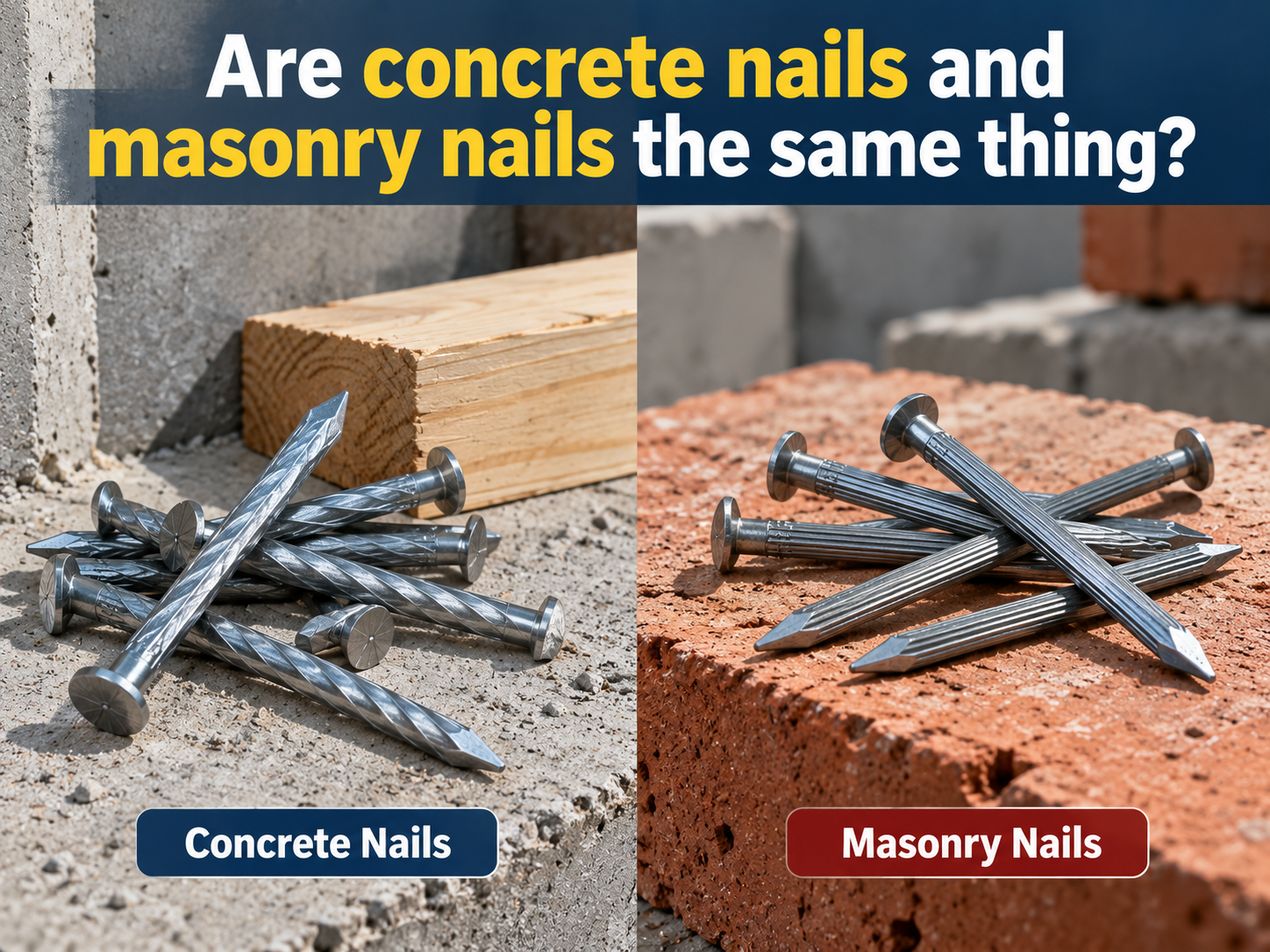
Concrete nails and masonry nails often look similar in a catalog, but treating them as the same product can create real procurement problems. A vague specification may lead to bent nails, weak holding power, surface cracking, or wasted site labor. I usually guide buyers to compare the base material, nail hardness, coating, and application before choosing.
Concrete nails and masonry nails are not always the same thing. They are related fasteners for hard building materials, but they differ in steel type, hardness, shank design, manufacturing process, and intended use. Concrete nails are usually made for dense concrete, while masonry nails may be selected for brick, block, mortar joints, or lighter masonry applications.
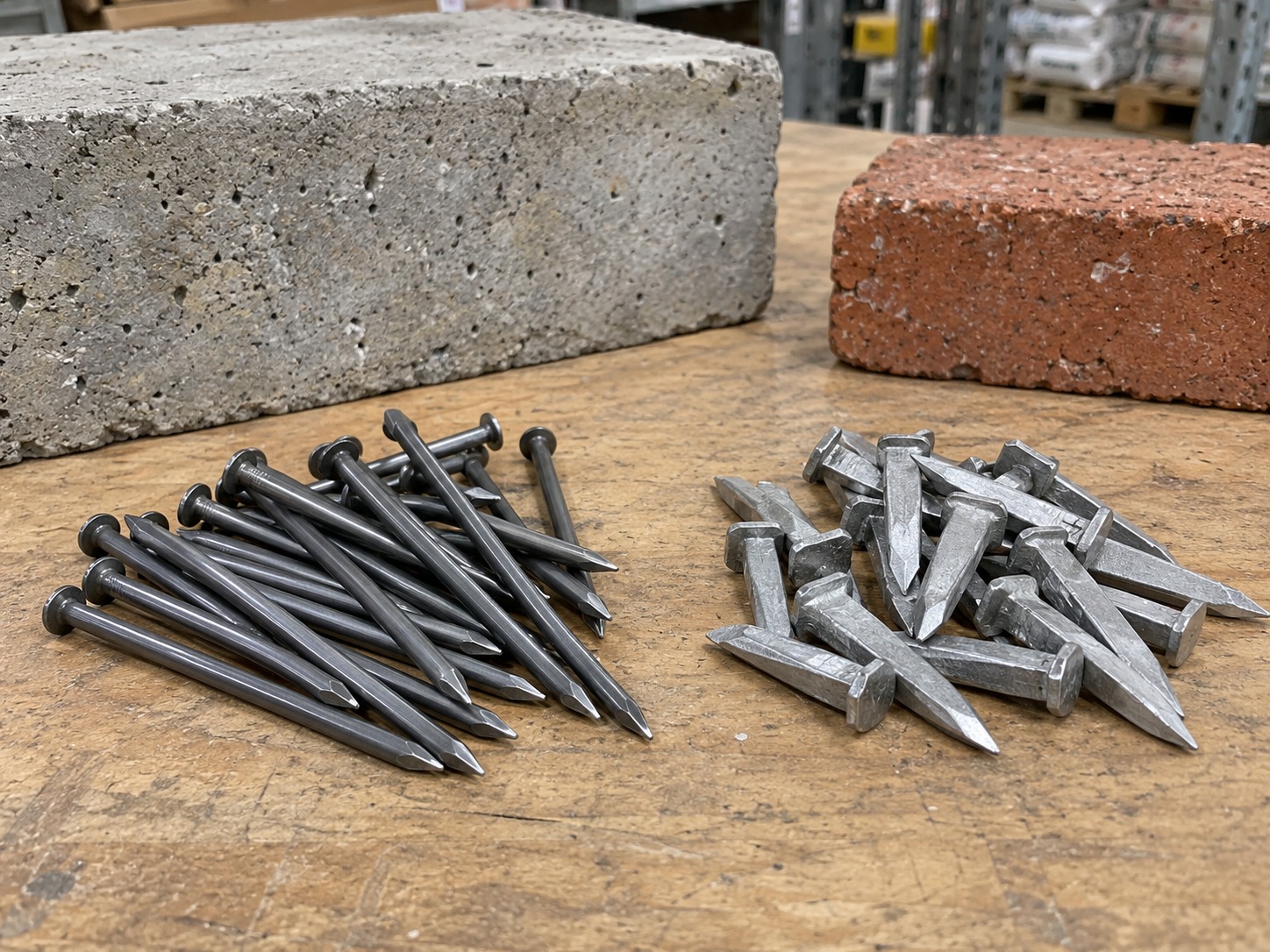
The confusing part is that different markets use these names differently. Some suppliers use “masonry nail” as a broad category. Others treat concrete nails as a specific product inside that category. So the better question is not only “Are they the same?” but “Which one reduces risk for my project?”
Why are concrete nails and masonry nails often confused?
Concrete nails and masonry nails are often confused because they share a basic purpose: fastening into hard mineral-based materials. The problem starts when a buyer sends only a short product name without details. Then every supplier may quote a slightly different nail, and the lowest price may not match the job.
Concrete nails and masonry nails are confused because market terminology is inconsistent1. In some regions, masonry nails include nails for concrete, brick, block, and mortar. In other regions, concrete nails are treated as harder, more specialized fasteners for dense concrete. Buyers should confirm material, hardness, shank type, coating, size, and application before ordering.
The name is not a full specification
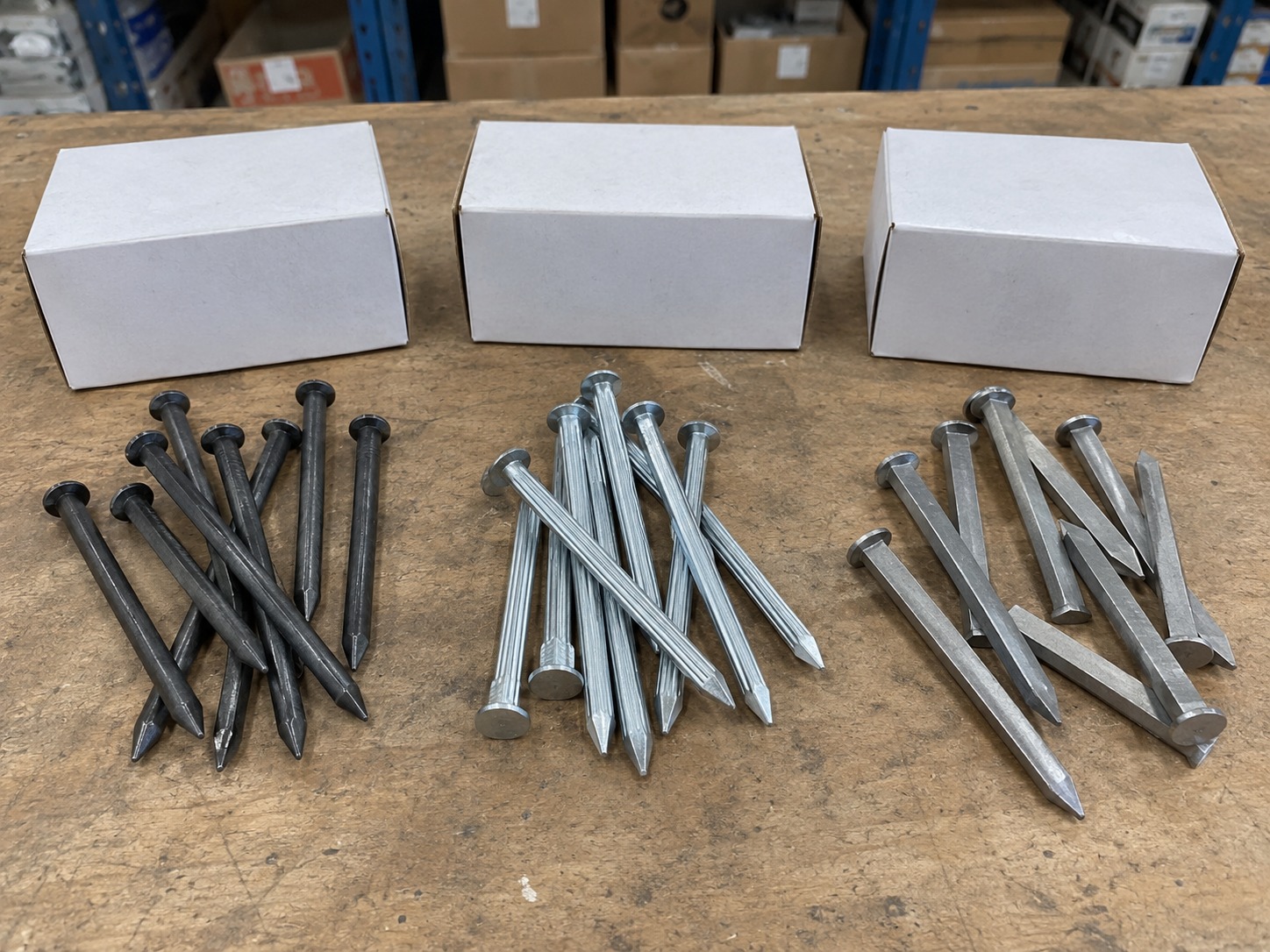
I often see inquiries that say only, “Need masonry nail, 2 inch, black.” That sounds simple, but it is not enough for a reliable quotation. The same short request can mean several products:
- Hardened concrete nail for dense concrete
- Cut masonry nail for mortar joints or block
- Fluted masonry nail for improved grip
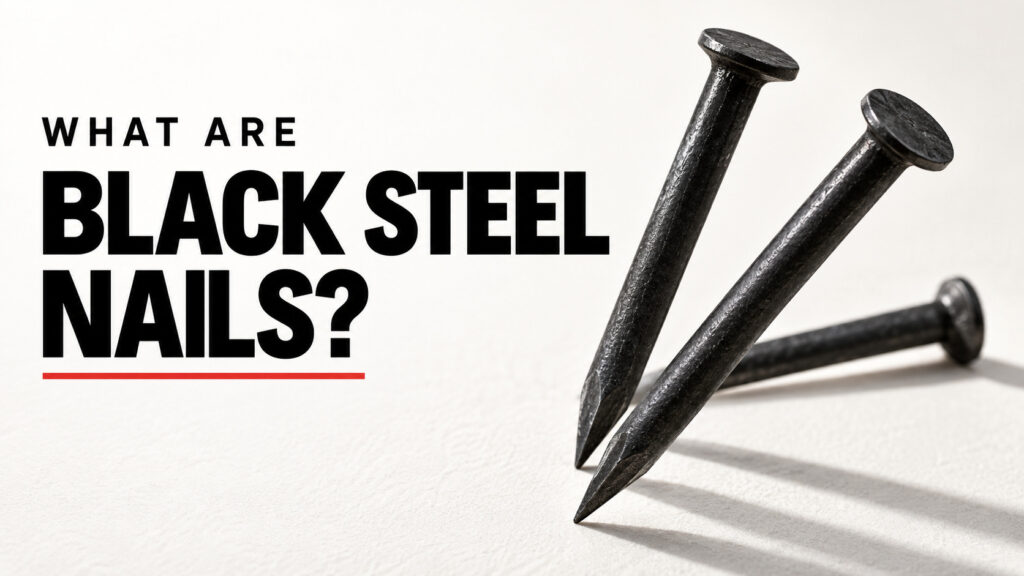
- Black steel nail for general fastening
- Galvanized nail for better corrosion resistance
- OEM packed nail for hardware distribution
Each option has a different cost, performance range, and risk profile. If I quote the wrong type, the buyer may receive a nail that looks acceptable in the box but performs poorly on site.
Why the market uses vague language
The confusion comes from three common sourcing habits.
-
Local naming differences
A contractor in one country may call all hard-wall fasteners “concrete nails.” A distributor in another market may list the same family as “masonry nails.” Translation also adds variation, especially in international trade. -
Catalog simplification
Many hardware catalogs group similar nails under one heading. This helps retail customers browse, but it does not help technical purchasing. -
Price-first purchasing
When buyers request only size and price, suppliers may quote the cheapest nail that matches the name. That can work for low-risk jobs, but it can fail when the base material is very hard or the environment is corrosive.
A practical way to understand the category
I prefer to explain the relationship like this:
| Term | Practical meaning | Common use | Buyer caution |
|---|---|---|---|
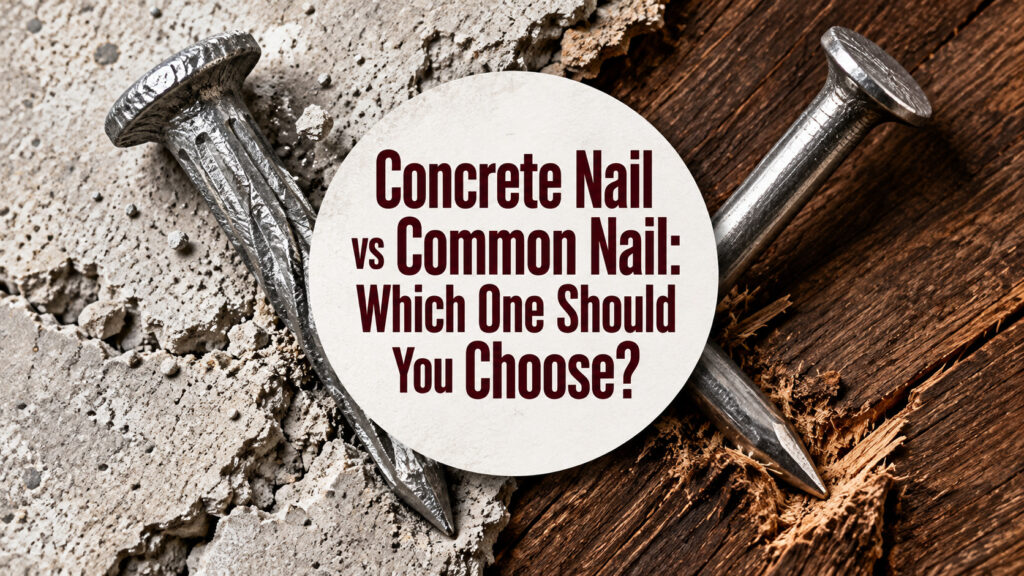
| Concrete nail | Usually a hardened nail for concrete | Dense concrete, hard surfaces | May crack weak masonry if misused |
| Masonry nail | Broad term for nails used in masonry materials | Brick, block, mortar, concrete | Definition varies by market |
| Cut masonry nail | Often rectangular or wedge-like | Mortar joints, softer masonry | Not always ideal for dense concrete |
| Fluted masonry nail | Shank has grooves or ridges | Better grip in masonry | Needs correct base material |
| Black steel nail | Finish description, not full application | General construction | Rust resistance may be limited |
The key point is simple: the product name is only the beginning. The real specification must connect the nail to the construction material and expected load.
I do not recommend choosing concrete nails and masonry nails by name alone. I recommend matching the nail to the substrate, installation method, corrosion environment, and acceptable failure risk.
For procurement teams, this matters because a wrong nail can affect more than the purchase price. It can increase labor cost, cause returns, damage customer trust, or create safety concerns. A nail that bends during installation wastes time. A nail that splits block or brick may damage finished work. A nail that rusts too fast may create staining or loosen over time.
So, when I receive a fastener inquiry, I usually ask follow-up questions before quoting. That approach is slower than sending a quick price, but it helps prevent wrong orders.
How are concrete nails and masonry nails different in material and manufacturing?
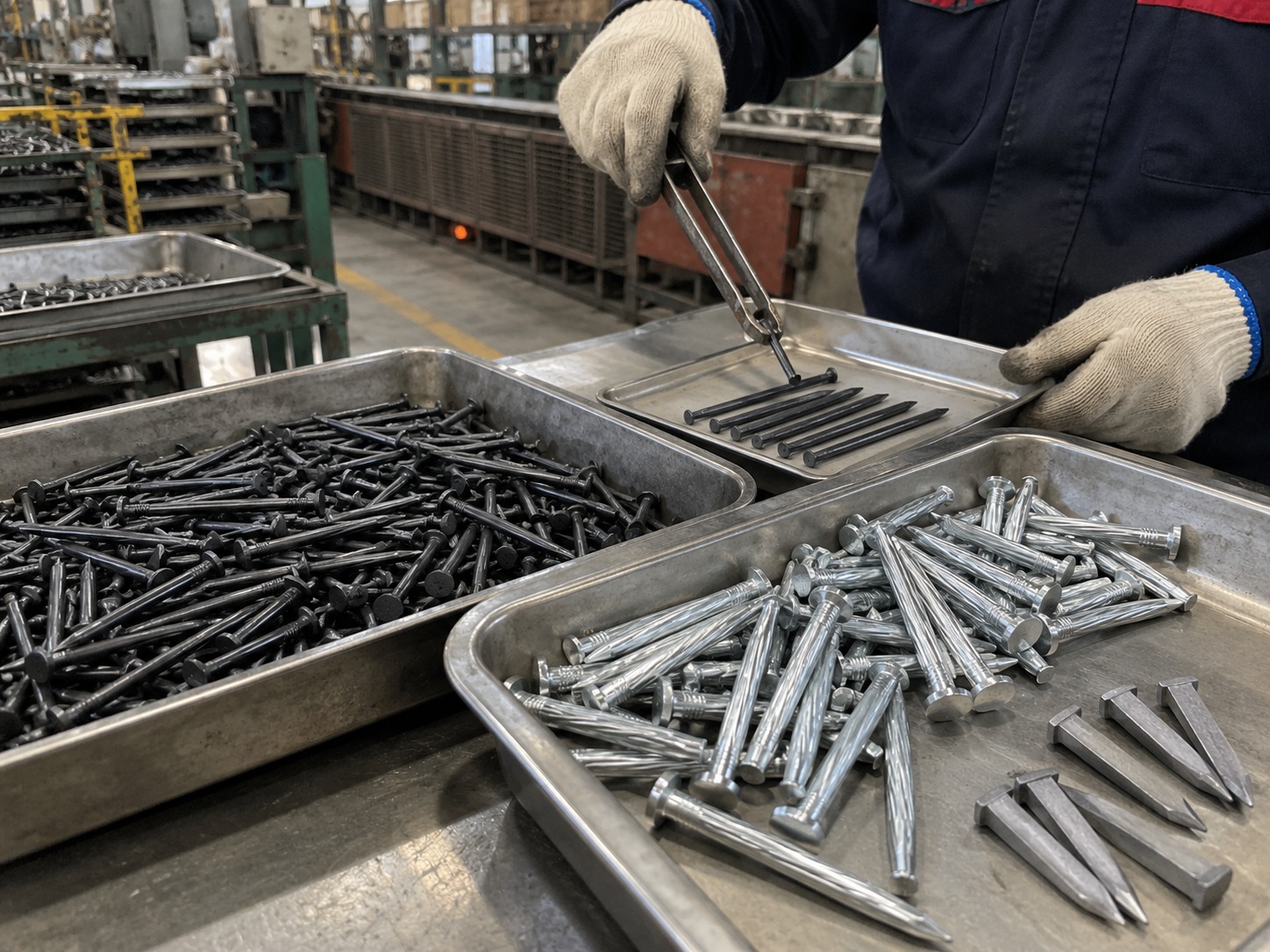
Concrete nails and masonry nails may differ in steel grade, heat treatment, shank design, point shape, and coating. These differences are not only technical details. They decide whether the nail penetrates cleanly, resists bending, holds under vibration, and survives the project environment.
Concrete nails are commonly made from hardened high-carbon steel and designed to penetrate dense concrete.2 Masonry nails may use different profiles, such as cut or fluted designs, to grip brick, block, or mortar. Manufacturing choices affect hardness, ductility, corrosion resistance, and holding power, so buyers should verify the exact product construction.
Hardness and ductility are a balance
Many buyers focus only on hardness. That is understandable because a nail must be hard enough to enter concrete. However, hardness is not the whole story.
A very hard nail may penetrate dense concrete better, but it can also become more brittle if the heat treatment is not controlled.3 A nail with more ductility may resist snapping, but it may bend when driven into very hard concrete.
This balance is important:
- Too soft: the nail bends during hammering.
- Too brittle: the nail may break or chip.
- Too smooth: the nail may not hold well.
- Too aggressive: the nail may crack softer masonry.
- Wrong coating: the nail may rust too quickly.
In factory production, the material and heat treatment must be consistent. For export buyers, I recommend checking samples before bulk orders, especially when the order involves a new size, new packaging, or a new local application.
Shank design changes the holding behavior
The shank is the body of the nail. It plays a major role in holding power.
Common shank styles include:
-
Smooth shank
A smooth shank is easier to drive, but it may provide less mechanical grip in some materials. -
Fluted shank
A fluted shank has grooves that can improve holding power in masonry.4 It may be useful where the material can compress around the nail. -
Cut body or wedge shape
A cut masonry nail can bite into softer masonry or mortar joints.5 It may not be the best choice for very dense concrete. -
Spiral or special shank designs
Some fasteners use special profiles for extra grip, but buyers should confirm whether they match the base material and installation method.
Coating and finish affect service life
Many buyers ask for black concrete nails because black finish is common in some markets. However, the finish should match the environment.
| Finish type | Typical purpose | Practical note |
|---|---|---|
| Black finish | Common market appearance, basic protection | Suitable for dry, indoor, or short-term use depending on conditions |
| Galvanized finish | Better corrosion resistance | Often preferred for humid or outdoor conditions |
| Bright finish | Basic steel appearance | Lower rust protection |
| Custom coating | Market or project requirement | Should be tested and confirmed before mass order |
Rust resistance is not just a visual issue. Rust can stain walls, weaken the fastener over time, and create complaints after installation.6 If the fastener will be used outdoors, near coastal environments, or in wet masonry, I recommend asking for coating details and evaluating samples.
Manufacturing consistency matters in bulk orders
In B2B purchasing, one good sample is not enough if mass production is inconsistent. Buyers should look at:
- Wire diameter tolerance
- Length tolerance
- Head shape consistency
- Point sharpness
- Heat treatment stability
- Surface finish
- Packing strength
- Carton labeling
- Rust prevention during sea transport
This is especially important for FCL or LCL sea shipments. Nails are heavy products. Poor packaging can break cartons, damage branding, or cause rust during shipping. From my side as a factory supplier, I consider packaging part of product quality, not only a marketing detail.
Key performance variables buyers should compare
| Variable | Why it matters | Risk if ignored |
|---|---|---|
| Hardness | Helps penetration into dense material | Bending or breaking |
| Ductility | Helps absorb impact | Snapping during driving |
| Shank design | Affects holding power | Loose fastening |
| Point geometry | Affects installation speed | Surface damage or high labor cost |
| Coating | Affects corrosion resistance | Rust, staining, complaints |
| Size tolerance | Affects consistency | Installation problems |
| Packaging | Affects transport and resale | Damage, loss, poor shelf appeal |
The main lesson is practical. Concrete nails and masonry nails may appear similar, but their performance comes from manufacturing choices that buyers cannot judge from the product name alone.
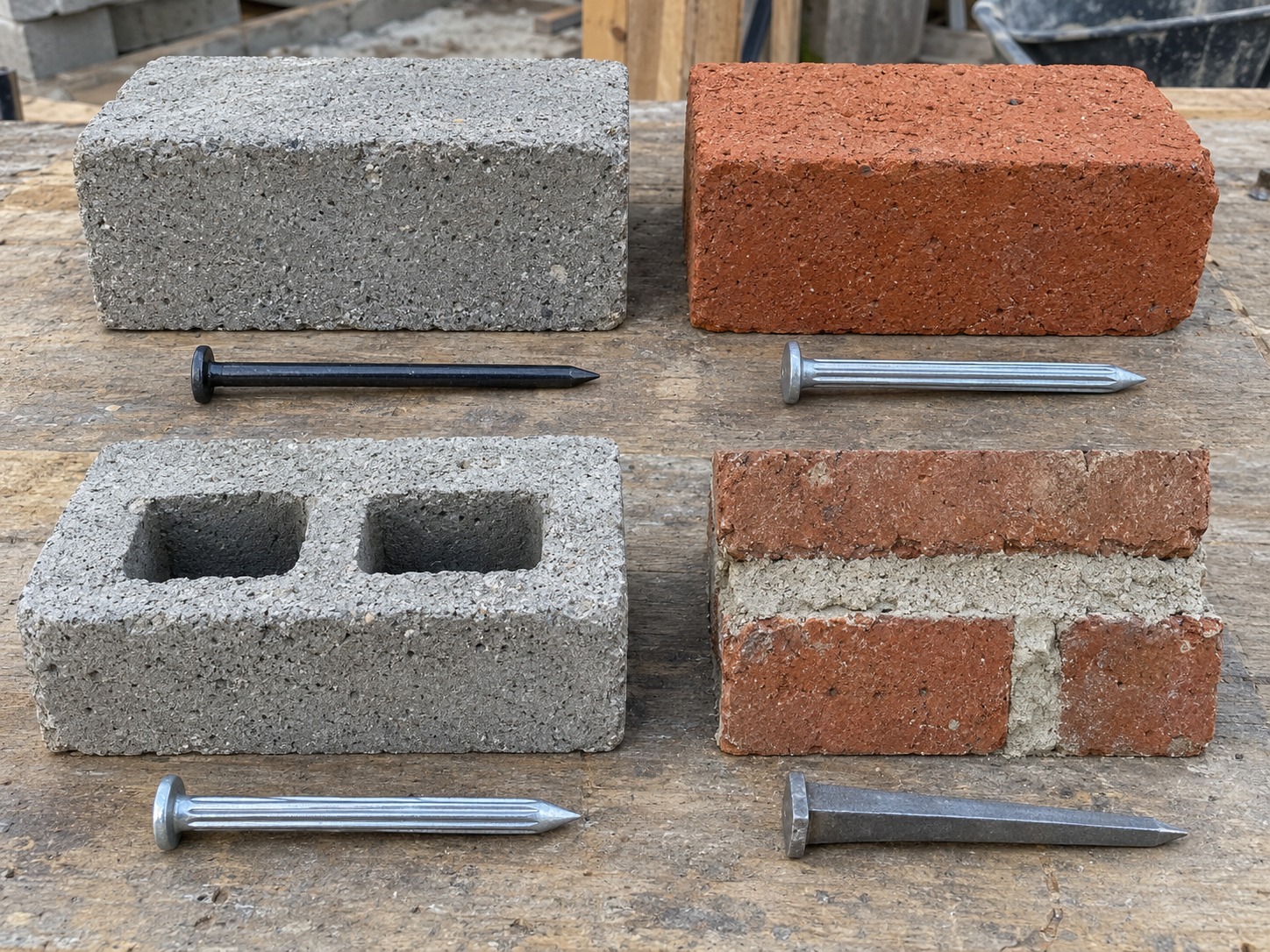
Which nail should I choose for concrete, brick, block, or mortar joints?
Concrete nails and masonry nails should be chosen according to the base material, fastening purpose, load expectation, and environment. A nail that performs well in dense concrete may be too aggressive for soft brick. A nail that works in mortar may fail in hard concrete.
Choose hardened concrete nails for dense concrete where penetration strength is the main need. Choose suitable masonry nails, such as cut or fluted types, for brick, block, or mortar joints when grip and reduced cracking matter more. For structural or safety-critical applications, buyers should request professional evaluation and verify performance with samples or site testing.
Start with the base material
The base material controls most of the decision. “Masonry” is a broad word. It can include concrete, brick, block, stone, mortar, plastered wall surfaces, and mixed materials.7 These materials do not respond the same way when struck by a nail.8
Here is a practical comparison:
| Base material | Common concern | Typical selection direction |
|---|---|---|
| Dense concrete | Nail bending, difficult penetration | Hardened concrete nail |
| Soft concrete | Surface cracking, over-driving | Controlled size and careful installation |
| Red brick | Cracking or splitting | Masonry nail with suitable profile |
| Concrete block | Hollow sections, weak grip | Correct length and shank design |
| Mortar joint | Holding consistency | Cut or fluted masonry nail |
| Stone | Very high hardness variation | Professional evaluation recommended |
| Plastered wall | Unknown hidden substrate | Sample test before bulk use |
I sometimes explain this to buyers with a simple rule: the harder the base material, the more penetration strength matters; the weaker the base material, the more crack control matters.
Match the nail to the application
Not every fastening job has the same risk. Some uses are temporary and low load. Others are permanent or exposed to vibration.
Common application questions include:
- Will the nail hold a light strip, mesh, cable clip, or wood batten?
- Will the nail be used indoors or outdoors?
- Will the wall material be dense concrete, hollow block, brick, or mortar?
- Will workers use a hammer, powder-actuated tool, or another method?
- Is the fastening decorative, temporary, or load-related?
- What failure would be acceptable or unacceptable?
For example, a nail used for temporary formwork has different requirements from a nail used to fasten a visible fixture on a finished wall. A low-cost option may be acceptable in one case and risky in another.
Do not ignore installation method
A nail does not work alone. The worker, tool, angle, and surface condition also affect performance.
Important installation factors include:
-
Driving force
Too much force can crack brittle masonry. Too little force can leave the nail loose. -
Angle of installation
An angled strike can bend even a suitable nail. -
Distance from edge
Nails installed too close to an edge may split concrete, brick, or block.9 -
Pilot hole practice
Some applications may require pre-drilling or another fastening solution. -
Surface age and condition
Old concrete, wet block, soft mortar, or damaged brick can reduce holding strength.
For application-specific decisions, especially where load, safety, or building codes matter, I recommend qualified professional evaluation. A factory supplier can explain product differences, provide samples, and support selection. However, site engineers or qualified contractors should confirm whether the fastener is suitable for the real job conditions.
A simple selection framework
Before I quote concrete nails and masonry nails, I like to ask buyers these questions:
| Question | Why I ask it |
|---|---|
| What material will the nail enter? | Concrete, brick, block, and mortar need different nail behavior |
| What size do you need? | Length and diameter affect penetration and holding |
| What finish do you require? | Coating affects corrosion resistance |
| What is the application? | Temporary, decorative, or load-related uses have different risks |
| What packing do you need? | Bulk, box, brand, and carton affect distribution |
| What market are you selling into? | Local naming and customer habits affect product choice |
| Do you need samples? | Samples reduce risk before a full order |
| What quantity do you plan? | Production planning and FOB price depend on quantity |
When another fastener may be better
A nail is not always the right solution. Sometimes a screw anchor, sleeve anchor, wedge anchor, or chemical anchor may provide better performance. This is especially true for high-load, overhead, safety-critical, or code-regulated applications.
I believe a good supplier should be honest about this. If the application is beyond the normal performance range of nails, then the buyer should not force the product to fit the job. The correct fastening method may cost more at first, but it can prevent major failure later.
What should purchasers check before ordering concrete nails and masonry nails?
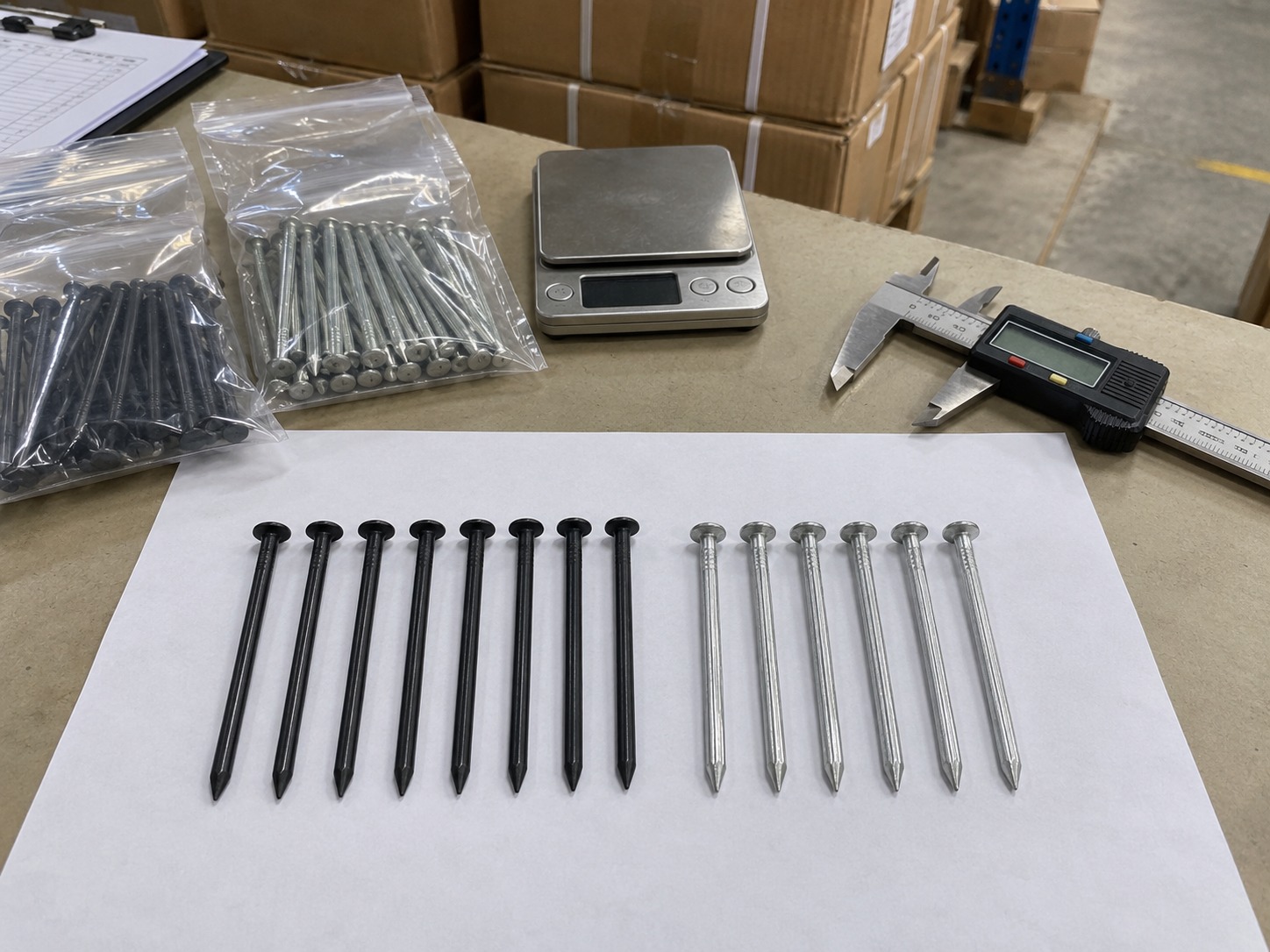
Concrete nails and masonry nails should be checked through a practical procurement process, not only by comparing unit prices. If a buyer skips sample testing, packaging review, or specification confirmation, a cheaper quote can become expensive after shipment.
Purchasers should confirm nail type, steel material, hardness range, size tolerance, shank design, finish, packing method, labeling, MOQ, delivery time, and sample availability. They should also verify supplier manufacturing capability and request samples for quality checking before placing a bulk order for concrete nails and masonry nails.
Build a complete RFQ
A strong RFQ makes supplier comparison much easier. I suggest including the following details when requesting a quotation:
- Product name used in your market
- Intended application
- Base material
- Nail length
- Nail diameter or wire gauge
- Head type
- Shank type
- Point type
- Finish or coating
- Packing style
- Quantity
- Branding or OEM requirement
- Destination port
- Preferred delivery schedule
- Sample requirement
For FOB pricing, the quotation usually depends on product + specification + quantity + packaging method. If one of these details changes, the price may change too. That is normal in nail production because steel use, labor, packaging, and production setup all affect the final cost.
Compare quotations carefully
A lower price may come from a real production advantage. It may also come from weaker material, thinner diameter, lighter packaging, or a different finish. Buyers should not assume all quotes describe the same product.
Here is a useful comparison table:
| Quote item | Supplier A | Supplier B | Why it matters |
|---|---|---|---|
| Length | 50 mm | 50 mm | Same nominal size |
| Diameter | 3.0 mm | 2.8 mm | Thinner nail may cost less but bend easier |
| Finish | Galvanized | Black | Different rust resistance |
| Shank | Fluted | Smooth | Different holding behavior |
| Packing | 1 kg box | 25 kg bulk | Different distribution use |
| Carton strength | Confirmed | Not stated | Important for sea freight |
| Sample | Available | Not available | Sample reduces risk |
I advise buyers to compare the full specification, not only the price per ton or price per box.
Check packaging for your sales channel
For hardware distributors, packaging is part of the product. A contractor may care mainly about performance, but a retail buyer also sees the box, label, and brand.
Common packaging options include:
- Bulk carton
- Small box
- Plastic bag
- OEM color box
- Private label carton
- Palletized shipment
- Customized barcode or label
Our factory can support OEM/ODM customization, including product, packaging, and brand logo. Still, I always suggest confirming artwork, carton strength, and local language requirements before mass production.
Use samples before trial orders
Samples are useful because they let buyers check:
- Appearance
- Size
- Weight
- Head quality
- Point sharpness
- Shank shape
- Coating
- Basic installation performance
- Packaging style
Samples cannot replace full engineering testing, but they help avoid obvious mismatches.10 In our business practice, samples can be provided for quality checking. They usually carry a basic cost, and that cost can sometimes be discussed for return or adjustment in a formal order.
For new buyers, I like trial orders because they reduce both sides’ risk. Our usual minimum order quantity is 5 tons or 200 boxes, depending on product and packing. We support trial orders where the specification and market plan are clear.
Confirm delivery and shipping details
Nails are heavy, so sea freight is the usual shipping method. Buyers can choose:
- FCL: full container load, suitable for larger orders
- LCL: less than container load, suitable for smaller mixed shipments
Normal lead time is often 15–25 days, depending on order quantity, packaging, and production schedule. Buyers should also consider time for sample approval, artwork confirmation, and shipping space.
Supplier capability questions
Before ordering concrete nails and masonry nails, I recommend asking the supplier:
- Are you a factory or trading company?
- Can you support consistent production for repeat orders?
- Can you provide samples before bulk production?
- Can you customize packaging and logo?
- What is your MOQ?
- What is the normal lead time?
- What quality checks are performed during production?
- Can you support FCL and LCL shipments?
- Can you provide photos or videos before shipment?
- What documents can you provide for buyer verification?
Certifications, test reports, and company documents should be treated as materials for buyer verification. They are helpful, but buyers should review them carefully and decide whether they meet local market or project requirements.
Frequently Asked Questions
Are concrete nails stronger than masonry nails?
Concrete nails are often harder because they are designed for dense concrete. However, “stronger” depends on the application. A very hard nail may not be best for softer brick or block because it can cause cracking. Buyers should compare hardness, ductility, shank design, and base material.
Can I use masonry nails in concrete?
You can use some masonry nails in concrete if they are designed for that hardness, but not all masonry nails are suitable. Some are better for brick, block, or mortar joints. I recommend testing samples in the actual base material before placing a bulk order.
What finish is best for concrete nails and masonry nails?
The best finish depends on the environment. Black finish is common for many markets and dry applications. Galvanized finish is usually better where moisture or outdoor exposure is a concern.11 Buyers should confirm coating requirements before ordering, especially for humid or coastal regions.
Why do nails bend when driven into concrete?
Nails may bend because the steel is too soft, the concrete is too dense, the nail diameter is too small, or the installation angle is poor. The wrong nail type can also cause bending. Sample testing helps confirm whether the product matches the base material.
Should I choose nails or anchors for masonry fastening?
Nails are useful for many light-duty and general fastening jobs. Anchors may be better for heavy, overhead, structural, or safety-critical applications.12 If failure could create risk, I recommend professional evaluation and proper site testing before choosing the fastener.
Conclusion
Concrete nails and masonry nails are related, but they should not be treated as automatically identical. The right choice depends on the base material, hardness, ductility, shank design, coating, packaging, and project risk. I always encourage buyers to confirm specifications and test samples before bulk orders. If you are sourcing nails for the Middle East, Africa, Southeast Asia, South America, or similar markets, contact Dingzhou Best at [email protected] or WhatsApp +8618331061136 for a practical FOB quotation.
-
"Masonry Nails for Concrete & Masonry Attachment", https://www.lowes.com/pl/fasteners/nails/specialty-nails/masonry/4294710869-3589219372. A fastener terminology or product-standard source classifies concrete and masonry nails by intended substrate and construction features, supporting the point that the product name alone may not provide a complete specification. Evidence role: definition; source type: institution. Supports: A neutral standards or terminology source should show how nail categories are defined or classified, and whether concrete nails are treated as a distinct type or within a broader masonry-fastener category.. Scope note: Such a source can document formal classification practices, but it may not prove terminology usage in every local market. ↩
-
"Amazon.com: ÖÇS – 1 inch (25mm) Length Hardened High Carbon …", https://www.amazon.com/clp/B0D2FTSSM2. A technical fastener source identifies concrete nails as hardened steel fasteners intended for penetration into concrete or masonry, supporting the article’s description of their material and intended use. Evidence role: general_support; source type: institution. Supports: A technical standard or institutional source should confirm that concrete nails are typically hardened steel fasteners intended for driving into concrete or masonry substrates.. ↩
-
"Rapid Thermal Processing to Enhance Steel Toughness – PMC", https://pmc.ncbi.nlm.nih.gov/articles/PMC5765117/. Metallurgical literature explains that steel heat treatment affects hardness, ductility, and toughness, and that higher hardness can be accompanied by reduced toughness when processing is not controlled. Evidence role: mechanism; source type: education. Supports: A metallurgy source should explain that heat treatment changes steel hardness, ductility, and toughness, and that excessive hardness or improper treatment can increase brittleness.. Scope note: This evidence supports the materials-science principle rather than testing the specific nails discussed in the article. ↩
-
"Withdrawal strength of ring-shank nails embedded in southern …", https://research.fs.usda.gov/treesearch/25675. Research on fastener geometry indicates that surface features such as grooves or ribs can increase mechanical interlock and withdrawal resistance, providing contextual support for the use of fluted shanks in masonry nails. Evidence role: mechanism; source type: research. Supports: A research or technical source should explain that grooves, ribs, or flutes on fasteners can improve mechanical interlock or withdrawal resistance in a receiving material.. Scope note: Evidence on fastener geometry may be general or based on related substrates, so it may not directly quantify performance for every masonry nail design. ↩
-
"Preservation Brief 2: Repointing Mortar Joints in Historic …", https://www.nps.gov/orgs/1739/upload/preservation-brief-02-repointing.pdf. A technical fastener reference describes cut masonry nails as wedge-like or cut-profile fasteners used in masonry applications, supporting the claim that their geometry can provide mechanical engagement in softer masonry or mortar. Evidence role: mechanism; source type: institution. Supports: A technical source should describe cut masonry nails as having a cut or wedge-like body used for fastening into masonry, mortar joints, or similar materials.. Scope note: The source may describe intended use and geometry rather than quantify holding strength in every masonry type. ↩
-
"Influence of Corrosion on Fatigue of the Fastening Bolts – PMC", https://pmc.ncbi.nlm.nih.gov/articles/PMC8003002/. Corrosion guidance explains that rust products may stain adjacent building materials and that corrosion can reduce the effective section and performance of steel components over time. Evidence role: mechanism; source type: government. Supports: A building science or corrosion source should support that rust products can discolor adjacent masonry and that steel corrosion reduces cross-section or load capacity over time.. Scope note: The source can support staining and strength-loss mechanisms, but customer complaints are a commercial consequence inferred from those mechanisms. ↩
-
"Masonry – Wikipedia", https://en.wikipedia.org/wiki/Masonry. The cited reference defines masonry as construction formed from units such as brick, stone, or concrete block, often with mortar, supporting the article’s use of masonry as a broad substrate category. Evidence role: definition; source type: encyclopedia. Supports: A general reference should define masonry as construction using units such as brick, stone, concrete block, or similar materials, commonly bonded with mortar.. Scope note: The source may not specifically address plastered wall surfaces or mixed substrates. ↩
-
"Mechanical and thermal performance of bio-brick masonry …", https://pmc.ncbi.nlm.nih.gov/articles/PMC12216284/. Engineering references report that concrete, brick, concrete block, mortar, and stone have different mechanical properties and failure modes, supporting the article’s caution that driven nails may behave differently in each substrate. Evidence role: general_support; source type: education. Supports: An engineering source should document that masonry materials vary substantially in compressive strength, brittleness, porosity, and unit structure.. Scope note: The source supports material variability generally and may not test nail driving directly. ↩
-
"5.51 ANCHORAGE TO CONCRETE: CAST-IN ANCHORS", https://dot.ca.gov/-/media/dot-media/programs/engineering/documents/bridgedesignmemos/05/202108-bdm0551-anchoragetoconcrete-castinanchors-a11y.pdf. Anchorage design guidance identifies edge distance as a factor in concrete or masonry breakout and splitting, supporting the article’s warning that fasteners placed too near an edge can crack the substrate. Evidence role: mechanism; source type: institution. Supports: An engineering code or anchorage design source should explain that insufficient edge distance can lead to concrete breakout, splitting, or cracking around fasteners.. Scope note: Most formal design guidance addresses anchors rather than hand-driven nails, so the support is contextual for masonry nails. ↩
-
"480 Minimum Requirement ss forr Quality Assurance a", https://www.loudoun.gov/DocumentCenter/View/123464/Part-4—Exhbit-217—-Min-Requirements-QA-QC?bidId=. Quality-assurance and fastener-testing standards distinguish routine sample inspection from standardized mechanical testing, supporting the article’s statement that samples can screen for obvious mismatches but cannot replace engineering verification. Evidence role: general_support; source type: institution. Supports: A testing or quality-assurance source should distinguish visual or sample inspection from standardized mechanical performance testing.. Scope note: The source supports the general quality-control principle rather than the supplier’s specific sampling practice. ↩
-
"Best Practices for Corrosion Control and Mitigation", https://highways.dot.gov/media/51611. Government materials guidance describes zinc galvanizing as a protective coating that slows corrosion of steel in atmospheric exposure, supporting the article’s preference for galvanized finishes in moist or outdoor conditions. Evidence role: mechanism; source type: government. Supports: A government or institutional materials source should explain that zinc galvanizing protects steel against corrosion, particularly in atmospheric or moisture-exposed conditions.. ↩
-
"Selection Guide Anchors for Concrete Applications", https://www.itwredhead.com/Portals/0/Documents/Catalog/61-101_Mechanical_Anchoring_Systems_Section.pdf. Building-code and anchorage guidance treats structural and safety-critical attachments to concrete or masonry as engineered anchor applications, supporting the article’s distinction between light-duty nails and anchors for higher-risk uses. Evidence role: expert_consensus; source type: institution. Supports: A building-code or engineering source should show that structural and safety-critical attachments to concrete or masonry are typically designed using evaluated anchorage systems rather than ordinary nails.. Scope note: The source may not compare every nail type directly with every anchor type. ↩