Choosing between sinker nails and common nails sounds simple — until a bulk order arrives on-site and the wrong nail creates rework costs nobody budgeted for. The difference between these two nail types is subtle in a catalog but significant in application. Understanding that distinction before you place a large order can save real money.
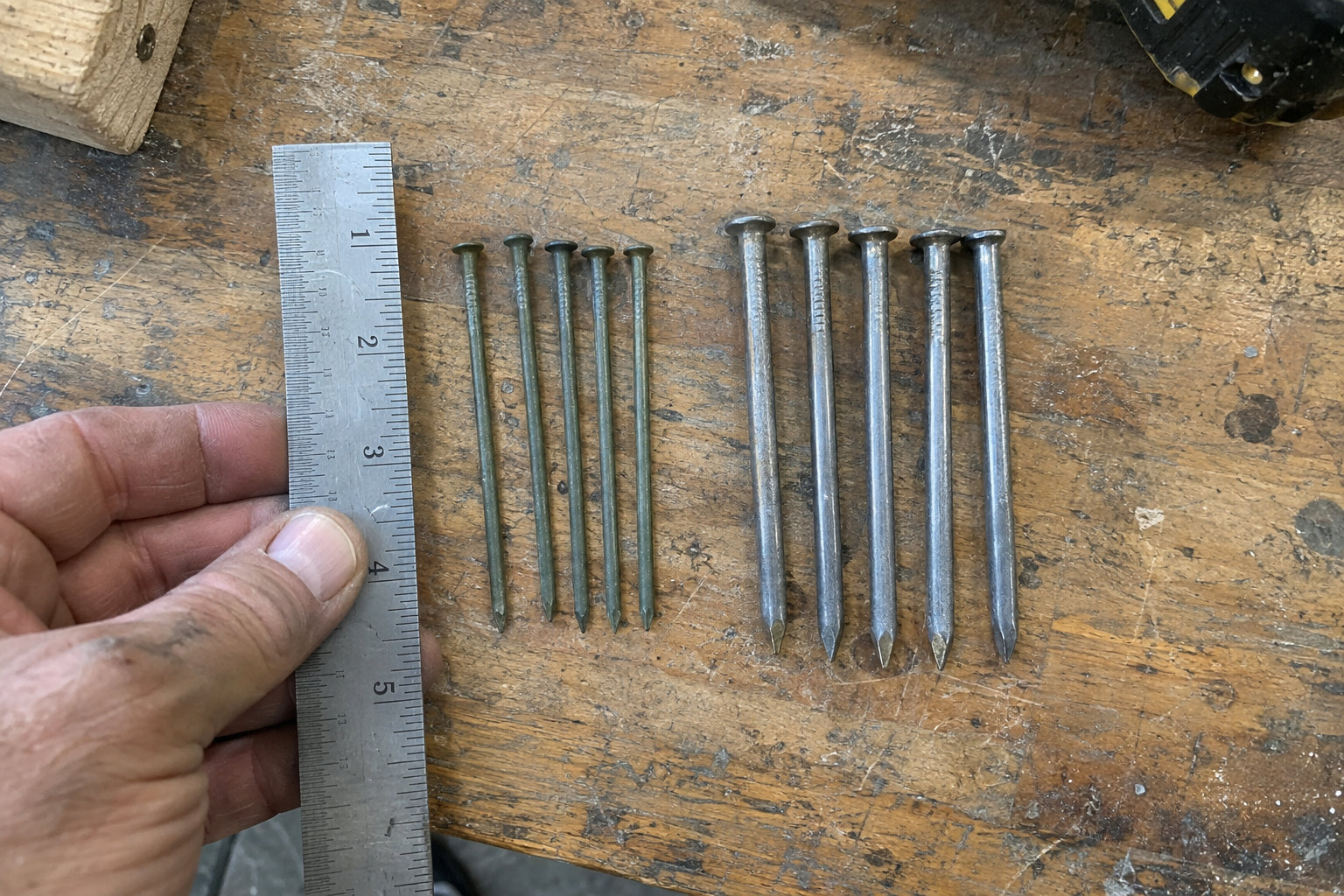
Sinker nails and common nails serve different construction tasks. Sinker nails feature a thinner shank and a vinyl or cement coating1 designed for flush, clean installation in finish carpentry and framing work where surface appearance matters. Common nails have a thicker, uncoated shank built for maximum holding power2 in structural framing where grip strength is the only priority. Swapping one for the other risks poor results in both cases.
The specs look close on paper. The outcomes on-site can be far apart. Based on customer project feedback we’ve seen here at Dinzhou Best Hardware, mismatched nail selection is one of the most common — and most preventable — causes of post-delivery disputes in bulk construction orders. Let’s break down exactly what separates these two nail types, and how to choose the right one for your buyers.
What Are Sinker Nails and How Do They Differ From Common Nails?
Many buyers receive a sinker nail and a common nail in the same shipment and assume they’re interchangeable. They’re not. The physical differences are small but deliberate — and each one affects performance in a specific application.
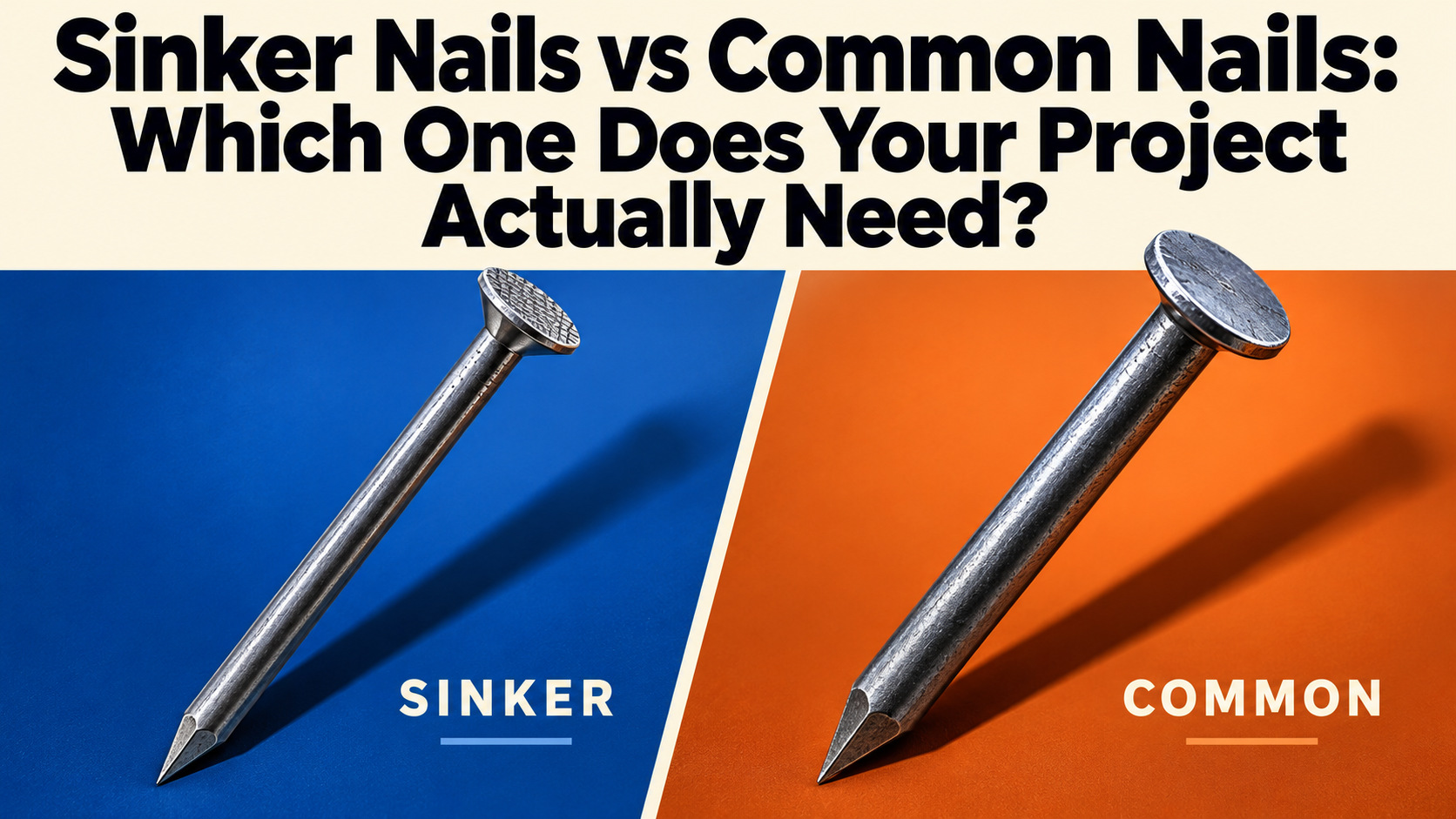
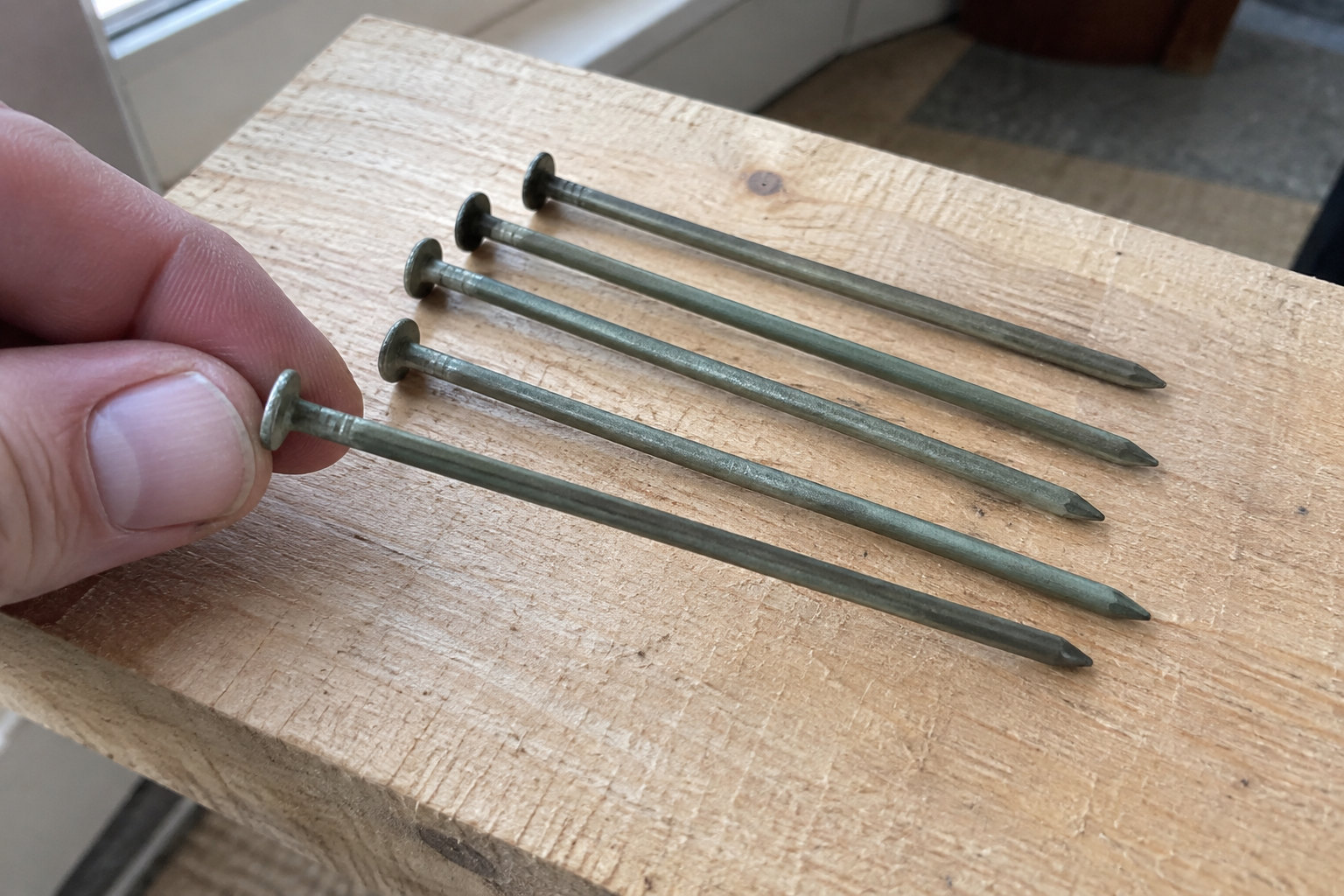
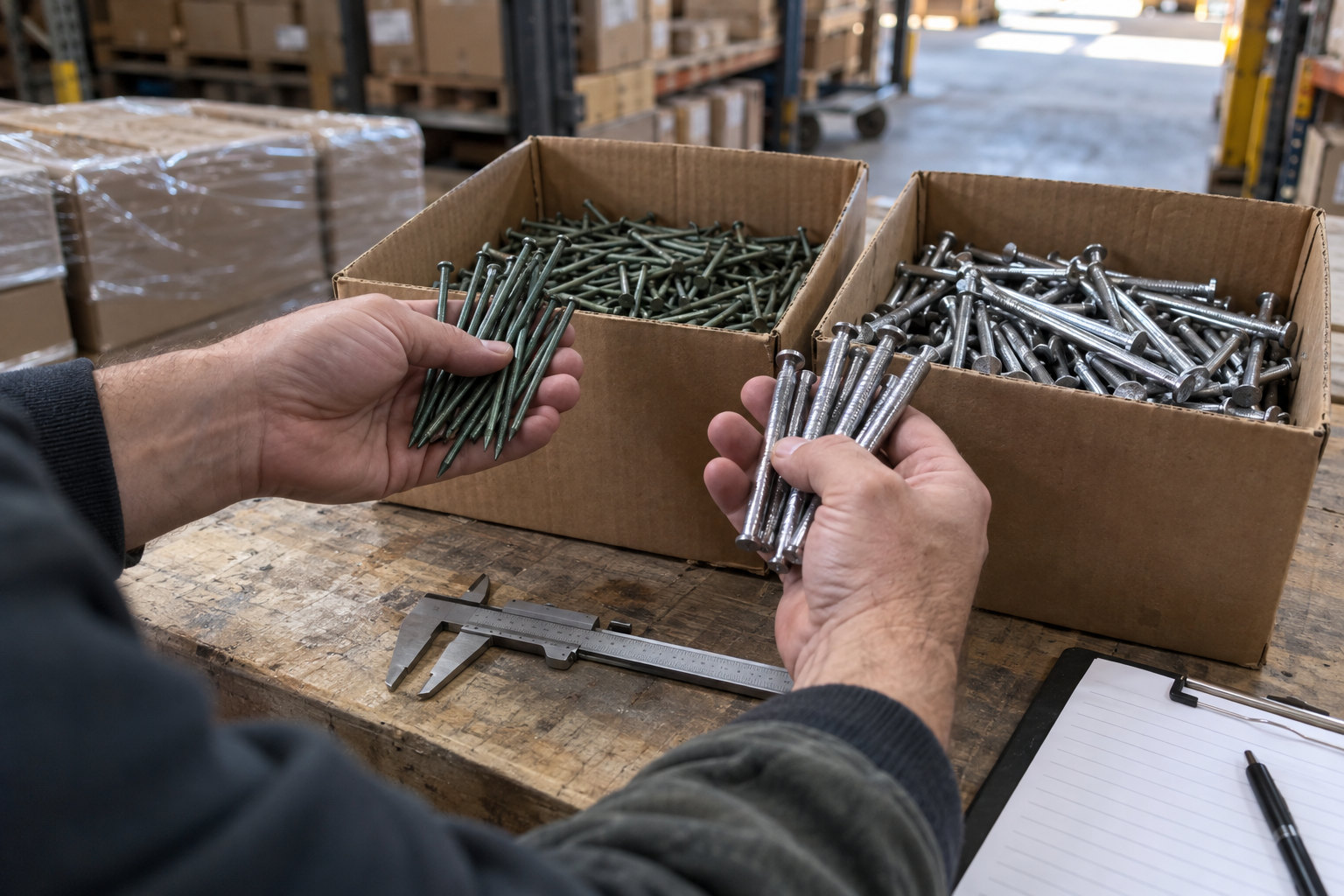
Sinker nails have a thinner shank diameter, a textured or coated surface (typically vinyl or cement-coated), and a slightly smaller head than a common nail of the same nominal length. Common nails are heavier, with a thicker shank, a wider flat head, and no coating. These aren’t arbitrary design choices.
The Physical Spec Differences That Actually Matter
Here’s a quick comparison that reflects what our production specs show across standard sizes:
| Feature | Sinker Nail | Common Nail |
|---|---|---|
| Shank diameter | Thinner (reduced gauge) | Thicker (full gauge) |
| Head size | Smaller, slightly countersunk | Wider, flat |
| Surface coating | Vinyl or cement-coated | Bare / bright steel or galvanized |
| Primary application | Finish framing, interior work | Structural framing, rough carpentry |
| Drive behavior | Easier to sink flush | Requires more force to drive |
That coating on a sinker nail isn’t decoration. Vinyl coating reduces friction during driving3, which is exactly why sinker nails are easier to set flush with the wood surface. The smaller head creates less visible surface disturbance4 — important when appearance matters.
The common nail’s wider head resists pull-through.5 The thicker shank resists shear force.6 In rough structural framing, both properties matter more than surface finish.
Why Buyers Confuse the Two
The confusion happens because sinker nails and common nails are often listed at the same nominal length — 16d, 10d, 8d, and so on. A buyer comparing a 3.5" sinker nail to a 3.5" common nail by length alone misses the shank gauge difference. That gauge difference changes the nail’s displacement in wood fiber and directly affects holding strength.7
I’ve seen this mistake happen repeatedly in bulk orders from distributors who source for multiple contractors. They see similar dimensions and similar unit prices, then split a shipment across framing and finishing crews without checking the specs. The framing crew notices the nail feels "lighter." The finishing crew finds the common nail leaves raised heads everywhere. Both crews call back to their supplier.
When Should You Choose Sinker Nails?
The default assumption in many markets is that a heavier nail is always a better nail. That assumption creates real problems when sinker nails are dismissed for being "light" or "cheap."
Sinker nails are not lighter-duty products. They are optimized for a different priority: controlled, clean installation in applications where the wood surface quality is visible and matters.
Based on customer project feedback we’ve seen, sinker nails perform well in the following scenarios:
- Interior wall framing and stud work where a pneumatic nail gun is used and flush-driving is essential
- Subfloor and sheathing applications where driving speed and surface consistency matter
- Finish carpentry framing where nails will be close to finished surfaces and a raised head causes problems
- Softwood framing materials where the thinner shank still achieves adequate holding
The Coating Is a Feature, Not a Shortcut
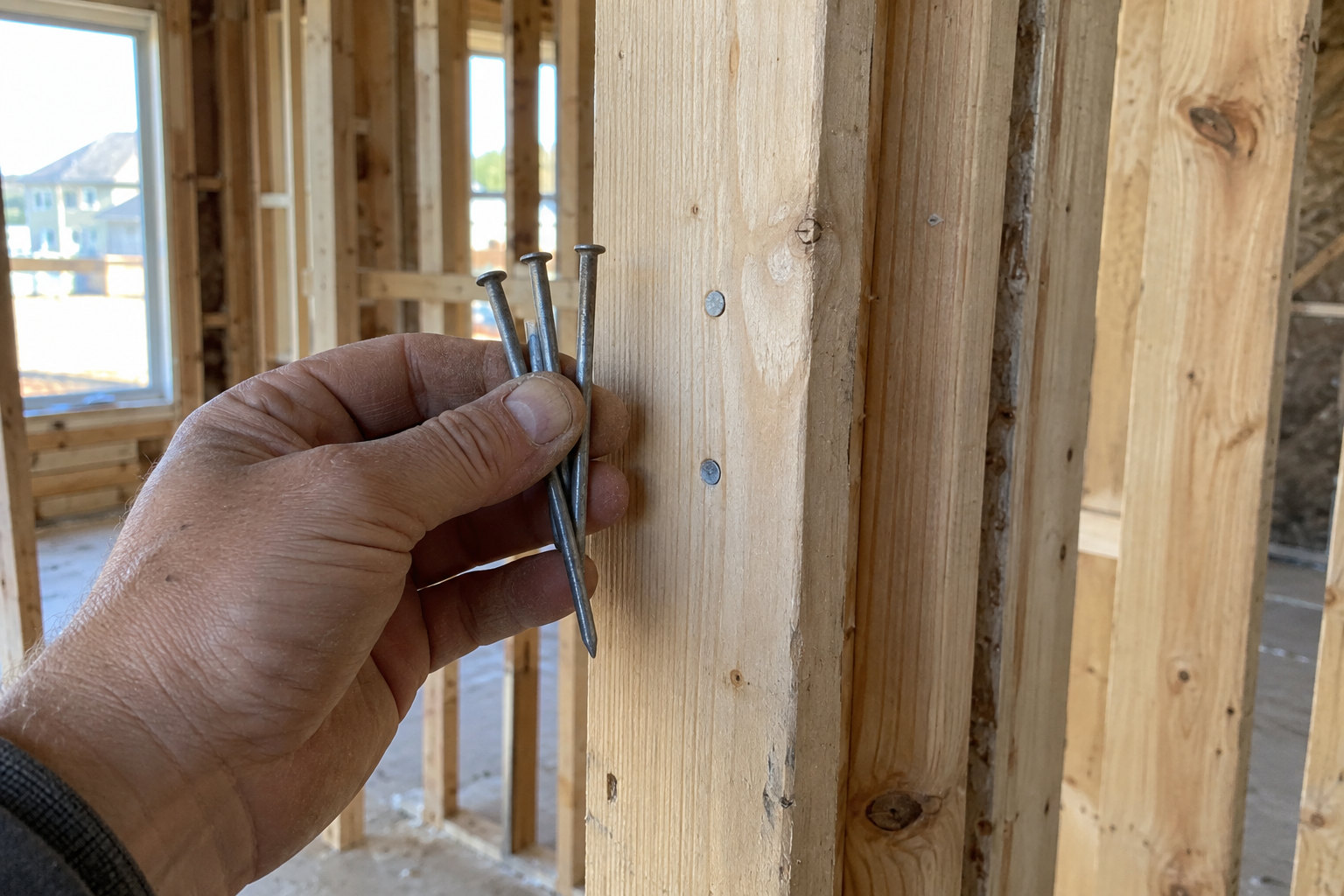
One objection I hear from buyers in our key markets — particularly in the Middle East and Southeast Asia — is that the vinyl coating on a sinker nail seems "unnecessary" and therefore looks like a cost-cutting measure. This is a misread.
The coating serves two distinct purposes:
- Reduced friction during driving. Less friction means the nail sinks more cleanly, with less surface damage to the wood face. This is especially valuable in power-nailing operations where speed and consistency matter.
- Initial grip enhancement. Some coatings create slight friction after installation, which increases short-term withdrawal resistance before the nail fully sets.
Neither of these benefits matters in rough structural framing. That’s why common nails don’t need the coating. But in finish framing, dismissing the coating means dismissing the application logic behind the product.
Wood Density Matters Here
Sinker nails are generally best suited to softwoods and medium-density construction lumber. Our production specs show that thinner-shank nails can split denser hardwood when driven with high force8. If your buyers are working with harder local timber species common in parts of Southeast Asia or Sub-Saharan Africa, this is worth flagging. A qualified local professional should evaluate the wood density before specifying either nail type in bulk.
When Should You Choose Common Nails?
Common nails are the workhorses of structural framing. Their design prioritizes grip, shear resistance, and pull-through resistance above all else — with no concern for how the finished surface looks.
For structural applications, maximum holding strength isn’t a preference. It’s a safety requirement. Using a lighter, thinner nail in load-bearing framing creates a risk9 that won’t show up immediately but can appear when loads are applied over time.
Based on feedback from contractors who’ve ordered through us, common nails are the right choice for:
- Heavy structural framing — floor joists, roof rafters, load-bearing wall plates
- Rough carpentry where the wood will be concealed behind cladding, drywall, or concrete
- High-density timber where a thicker shank is needed to achieve proper penetration
- Applications requiring maximum withdrawal resistance over the life of the structure
The Shank Thickness Difference and Why It’s Not Small
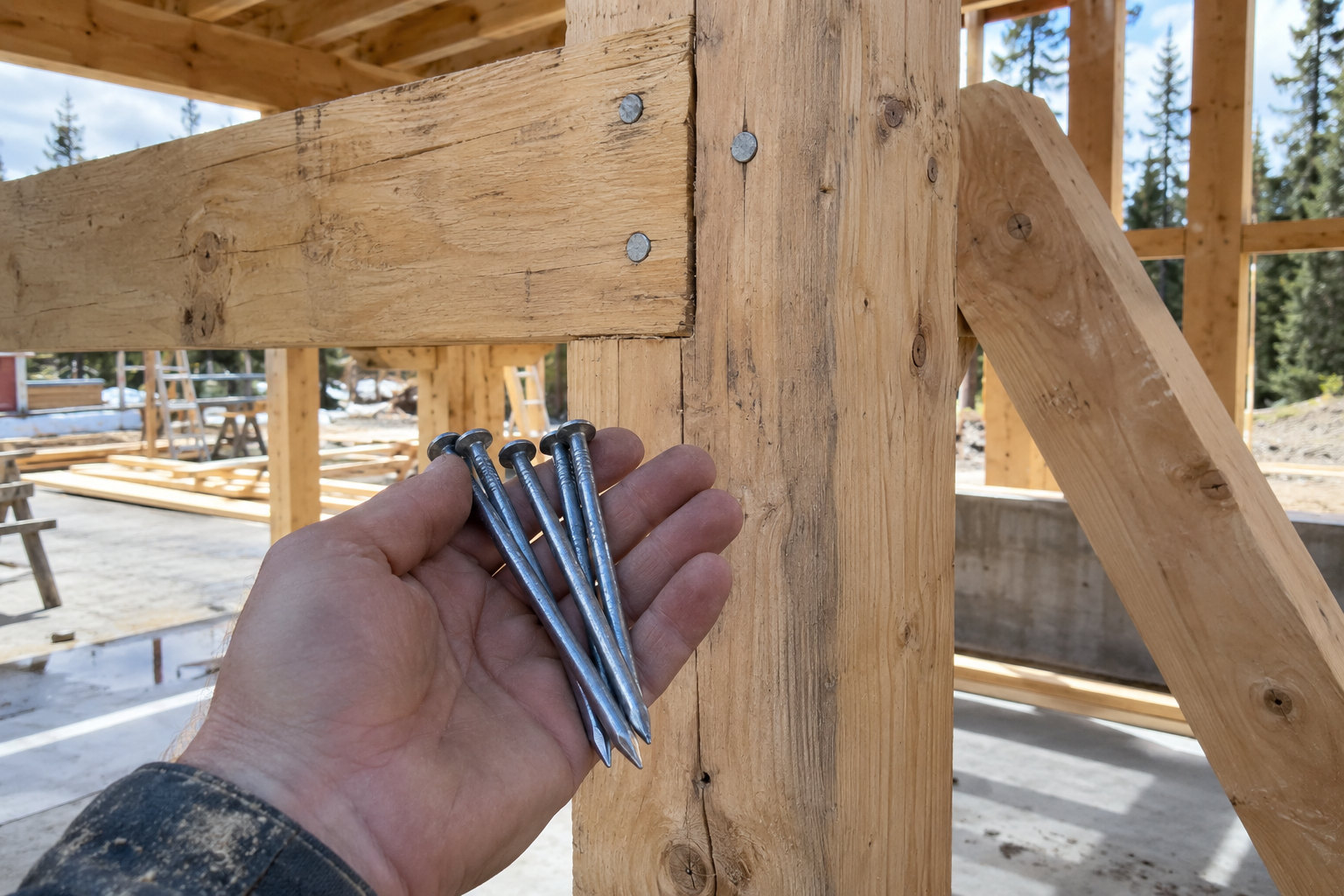
Our production specs show a measurable difference in shank diameter between sinker nails and common nails at the same nominal length. Even a fraction of a millimeter difference in gauge changes how much wood fiber the nail displaces — and displaced wood fiber is what creates holding friction.
A thicker shank in a common nail means:
- More wood fiber contact along the full shank length
- Greater resistance to lateral (shear) force when structural members shift or settle
- Better performance in green or wet lumber that may shrink as it dries, reducing nail grip over time
This is why substituting sinker nails in structural framing is not just a minor quality downgrade. In load-bearing applications, it changes the nail’s functional behavior in ways that may not be visible until the structure is under load.
The Real Cost of Getting This Wrong
I’ll be direct here, because I’ve seen it happen from the factory side. A distributor in a high-volume emerging market decides to standardize on sinker nails across all product categories to simplify their SKU list and reduce per-unit cost. The first few shipments go out without complaints. Then a contractor runs sinker nails through a structural framing job. Months later, there are callbacks.
The rework cost — re-nailing, potential structural remediation, contractor disputes — far exceeds whatever unit-price saving the distributor made on the original order. The post-delivery dispute arrives back at the distributor’s door, and occasionally at ours when buyers want to return stock.
Standardizing on one nail type to save on procurement complexity is understandable. But the downstream cost when it’s the wrong type is not proportional to the upstream saving.
How Should Distributors and OEM Buyers Evaluate Their Order Needs?
The question distributors in our markets ask most often is: "Can I just stock one type and cover everything?" The honest answer is no — not without risk.
The more practical question is: "What split ratio makes sense for my customers’ project mix?"
A Framework for Assessing Your Customer Base
Before placing a bulk order, distributors and OEM clients should ask their downstream buyers these clarifying questions:
- What type of construction is the majority of your work? Structural framing, interior finishing, or both?
- What wood types are you working with? Softwood lumber, local hardwoods, or engineered wood products?
- Are you using pneumatic tools or hand-driving? Sinker nails are better suited to pneumatic use; common nails work with both.10
- Does the finished surface need to be nail-free or concealed? If yes, sinker nail flush-drive matters. If no, common nail grip matters more.
A framing-heavy contractor base skews toward common nails. A contractor base doing mixed residential interior work will need both types. Getting this breakdown before ordering prevents the over-stocking problem that leads to product sitting in a warehouse — or worse, being used incorrectly.
MOQ and Custom Packaging Considerations
At Dinzhou Best Hardware, our minimum order is 5 metric tons or 200 cartons. For distributors who want to carry both sinker nails and common nails, splitting an order across two product lines is entirely workable within those MOQ thresholds. We also support OEM packaging with custom branding, which matters for distributors who want to present specification-accurate product information to their own customers under their own label.
If your downstream buyers need clear product identification at the point of purchase — especially in markets where construction buyers may not have deep specification knowledge — custom-labeled packaging that clearly states the nail type and application can reduce misuse significantly.
Frequently Asked Questions
Can sinker nails and common nails be used interchangeably on the same project?
Not reliably. Sinker nails are optimized for flush installation and finish applications. Common nails are built for maximum holding power in structural framing. Using one where the other is specified changes the functional outcome. For mixed projects, the nail type should match the specific application within the project, not be standardized across all uses.
Do sinker nails have lower holding strength than common nails?
Sinker nails have a thinner shank, which generally means lower shear resistance and withdrawal resistance compared to a common nail of the same length. This is not a quality defect — it’s a design trade-off that prioritizes flush installation over maximum grip. For structural applications, that trade-off is unacceptable. For finish framing, it’s the correct choice.
What is the vinyl coating on sinker nails actually for?
The vinyl or cement coating on sinker nails reduces driving friction, which allows the nail to be set flush more cleanly, especially with pneumatic tools. Some coatings also create initial withdrawal resistance after installation. The coating is a functional feature for finish applications, not a cost-reduction measure.
How do I specify the right nail type in a bulk purchase order?
A complete specification should include: nail type (sinker or common), size/gauge, surface treatment (coated, bright, galvanized), and packaging format. Ordering by length alone — for example, "3.5 inch nails" — is not sufficient to guarantee the right product for the application. Our FOB quotes are structured around product type, full specification, quantity, and packaging requirements.
Can Dinzhou Best Hardware supply both sinker nails and common nails in the same order?
Yes. We produce both nail types and support split orders across product lines within our standard MOQ thresholds. We also support OEM customization for packaging and branding. Contact us at [email protected] or via WhatsApp at +8618331061136 to discuss your specific order requirements.
Conclusion
Sinker nails and common nails are not interchangeable, and treating them as such is one of the most avoidable causes of post-delivery disputes in bulk construction hardware orders. Sinker nails are purpose-built for flush, clean installation where surface quality matters. Common nails provide the shank thickness and head width needed for structural grip where appearance is irrelevant. The real decision variable is project type and wood density — not unit price or a general sense of which nail "seems stronger."
For distributors and OEM buyers in emerging markets, getting this selection right upstream protects your customers downstream and keeps costly returns off your books. If you’re evaluating a bulk order and want to confirm the right specification for your customer base, reach out to the team at Dinzhou Best Hardware. We’re happy to walk through your project mix and help you structure an order that reduces downstream risk.
📧 [email protected] | 🌐 chinabesthardware.com | 📱 WhatsApp: +8618331061136
-
"Sinker Nails | Hand Drive Nails", https://grip-rite.com/product/fasteners/hand-drive/nails/framing-nails/sinker/. A technical standard or construction fastener reference identifies sinker nails as a distinct nail type commonly associated with reduced shank dimensions and coated surfaces; this supports the product-definition distinction, although exact dimensions vary by size and standard. Evidence role: definition; source type: institution. Supports: A standards or technical reference should confirm that sinker nails are commonly specified with a smaller shank and coating compared with common nails.. Scope note: Support is definitional and may not verify every manufacturer-specific specification. ↩
-
"Withdrawal capacity of plain, annular shank and helical …", https://composites.umaine.edu/publication/withdrawal-capacity-of-plain-annular-shank-and-helical-shank-nail-fasteners-inspruce-pine-fir-lumber/. The USDA Forest Products Laboratory’s wood construction references describe nail diameter and penetration as factors in withdrawal and lateral resistance, providing general support for the use of larger-shank common nails where holding capacity is important. Evidence role: general_support; source type: government. Supports: A government wood construction reference should support that nail diameter is a relevant factor in nail holding capacity and that common nails are a standard structural fastener type.. Scope note: The source may support the mechanical principle rather than directly comparing every sinker and common nail product. ↩
-
"HOW SURFACE CONDITION OF NAILS AFFECTS THEIR …", https://ir.library.oregonstate.edu/downloads/1n79h8376. Wood-fastener literature describes certain nail coatings as reducing driving resistance by lowering friction between the fastener and wood fibers, supporting the stated installation function of vinyl-coated sinker nails. Evidence role: mechanism; source type: research. Supports: A construction fastener or wood mechanics source should explain that coatings can act as lubricants during driving and reduce driving resistance.. Scope note: The source may discuss coated nails generally rather than the exact coating formulation used by a specific supplier. ↩
-
"Types of Nails", https://www.homedepot.com/c/ab/types-of-nails/9ba683603be9fa5395fab909c451e98. Carpentry education materials commonly distinguish smaller-headed nails for applications where the fastener mark should be less visible, supporting the claim that reduced head size limits visible surface disturbance. Evidence role: mechanism; source type: education. Supports: An educational carpentry source should support that smaller nail heads are selected when visible surface appearance matters.. Scope note: This provides contextual support for the appearance principle rather than quantitative testing of sinker nail head marks. ↩
-
"Wood Handbook, Chapter 08: Fastenings", https://research.fs.usda.gov/download/treesearch/37424.pdf. Wood-fastener design research treats head-bearing area as a factor in pull-through resistance, supporting the statement that a wider common-nail head better resists pull-through. Evidence role: mechanism; source type: paper. Supports: A wood engineering paper or design reference should support that fastener head size affects pull-through resistance.. Scope note: The source may address fastener head mechanics generally rather than common nails alone. ↩
-
"Properties of wood shear walls connected by wood nails", https://bioresources.cnr.ncsu.edu/resources/properties-of-wood-shear-walls-connected-by-wood-nails/. The National Design Specification for Wood Construction incorporates fastener diameter into lateral design values for nailed connections, supporting the claim that thicker shanks contribute to greater resistance to shear-type loading. Evidence role: mechanism; source type: institution. Supports: A wood design standard should show that nail diameter is used in calculating lateral resistance of nailed wood connections.. Scope note: The standard supports the engineering relationship, while actual capacity also depends on wood species, penetration, spacing, and loading conditions. ↩
-
"Fastenings | US Forest Service Research and Development", https://research.fs.usda.gov/treesearch/7144. The USDA Wood Handbook describes nail withdrawal resistance as dependent on factors including nail diameter, penetration, and wood properties, supporting the claim that gauge differences can affect holding strength. Evidence role: mechanism; source type: government. Supports: A government wood handbook should explain how nail diameter influences withdrawal or lateral resistance in wood.. Scope note: The source supports the general mechanics of nailed wood connections rather than a specific sinker-versus-common product test. ↩
-
"Wood Handbook, Wood as an Engineering Material", https://research.fs.usda.gov/download/treesearch/37440.pdf. Wood construction references note that hard or dense woods are more susceptible to splitting during nailing and may require precautions such as pilot holes, supporting the article’s warning about nail-driving in dense timber. Evidence role: mechanism; source type: government. Supports: A wood science reference should explain that denser or harder woods are more prone to splitting during nailing and may require pilot holes or adjusted fastening methods.. Scope note: The support concerns splitting risk in dense wood generally and may not isolate thinner-shank sinker nails as the sole cause. ↩
-
"Fasteners | Blaine, MN", https://www.blainemn.gov/4205/Fasteners. Residential building-code fastening schedules prescribe nail sizes and fastening patterns for structural framing members, supporting the claim that substituting a lighter fastener can affect structural compliance and performance. Evidence role: expert_consensus; source type: government. Supports: A building code or official fastening schedule should show that structural framing requires specified nail sizes and types for load-bearing assemblies.. Scope note: The source establishes code-based requirements and risk context, not a failure prediction for any single substitution. ↩
-
"Nail Gun Safety", https://stacks.cdc.gov/view/cdc/6013/cdc_6013_DS1.pdf. Occupational and construction guidance on pneumatic nailers emphasizes matching fasteners to the tool and framing application, providing contextual support for distinguishing pneumatic-friendly sinker nails from general-purpose common nails. Evidence role: general_support; source type: government. Supports: A neutral occupational safety or construction reference should support the general use of pneumatic nailers in framing and the need to match nail type to tool and application.. Scope note: The source may not state that all sinker nails are preferable for pneumatic use or that all common nails work equally well in every tool. ↩