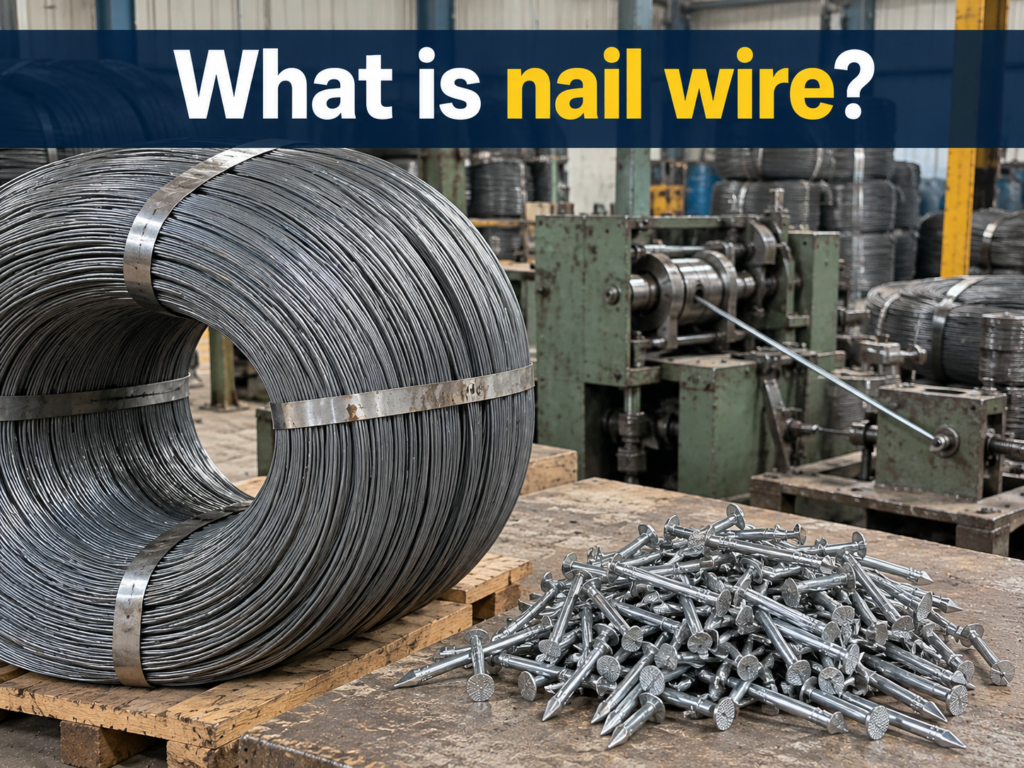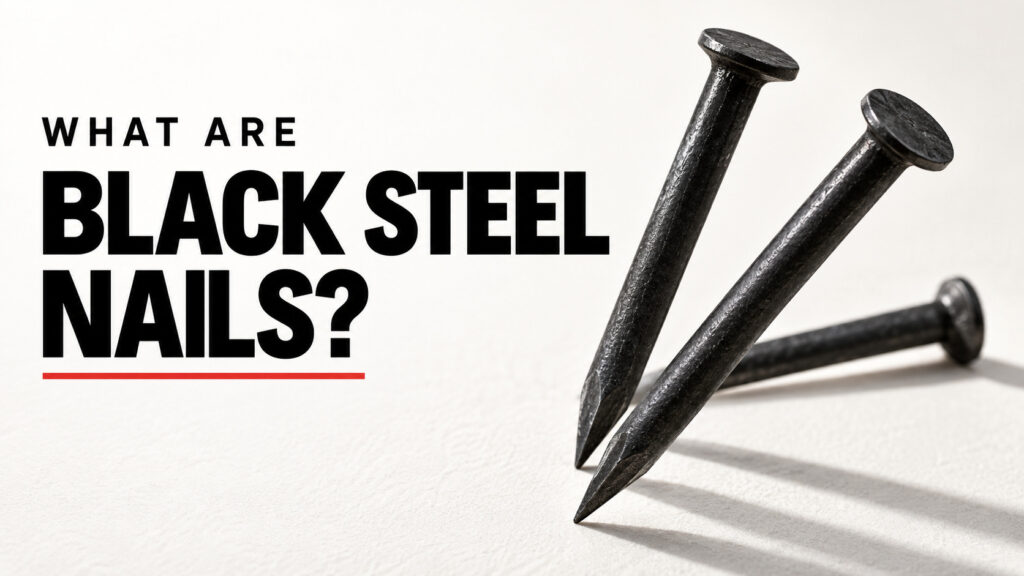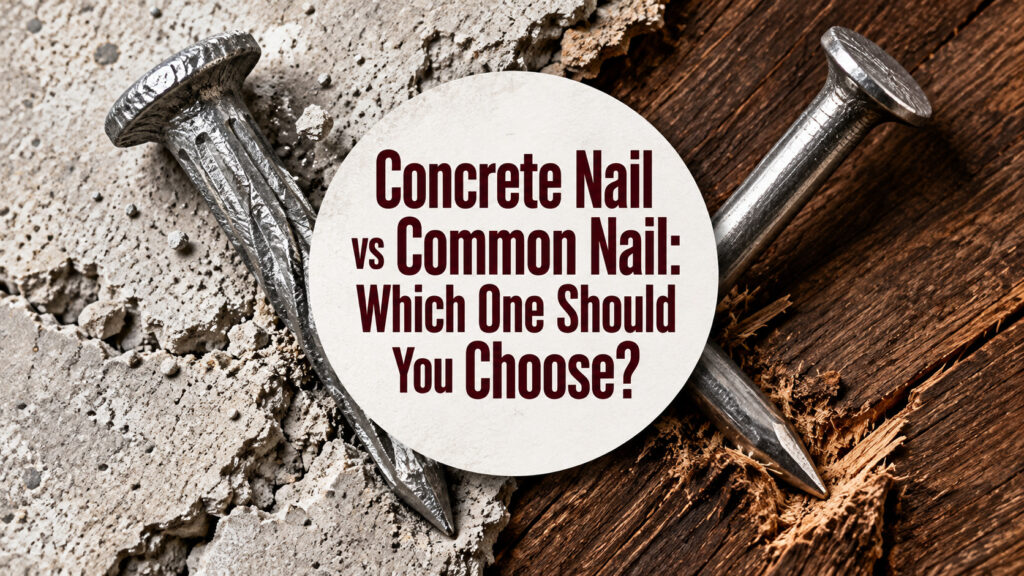

Concrete pins can look like a simple hardware item, but buying them without clear specifications often creates wrong quotations, weak packaging, and customer complaints later. I have seen many inquiries start with only “send price,” which slows everything down. A better approach is to confirm the product, size, packing, quantity, and supplier capability before comparing prices.
Concrete pins should be sourced by matching the correct product name, specification, hardness needs, packaging method, order quantity, and supplier export capability. Importers should not choose only by the lowest unit price, because poor material, unsuitable surface treatment, weak cartons, or unclear branding can create bigger losses in the local market.
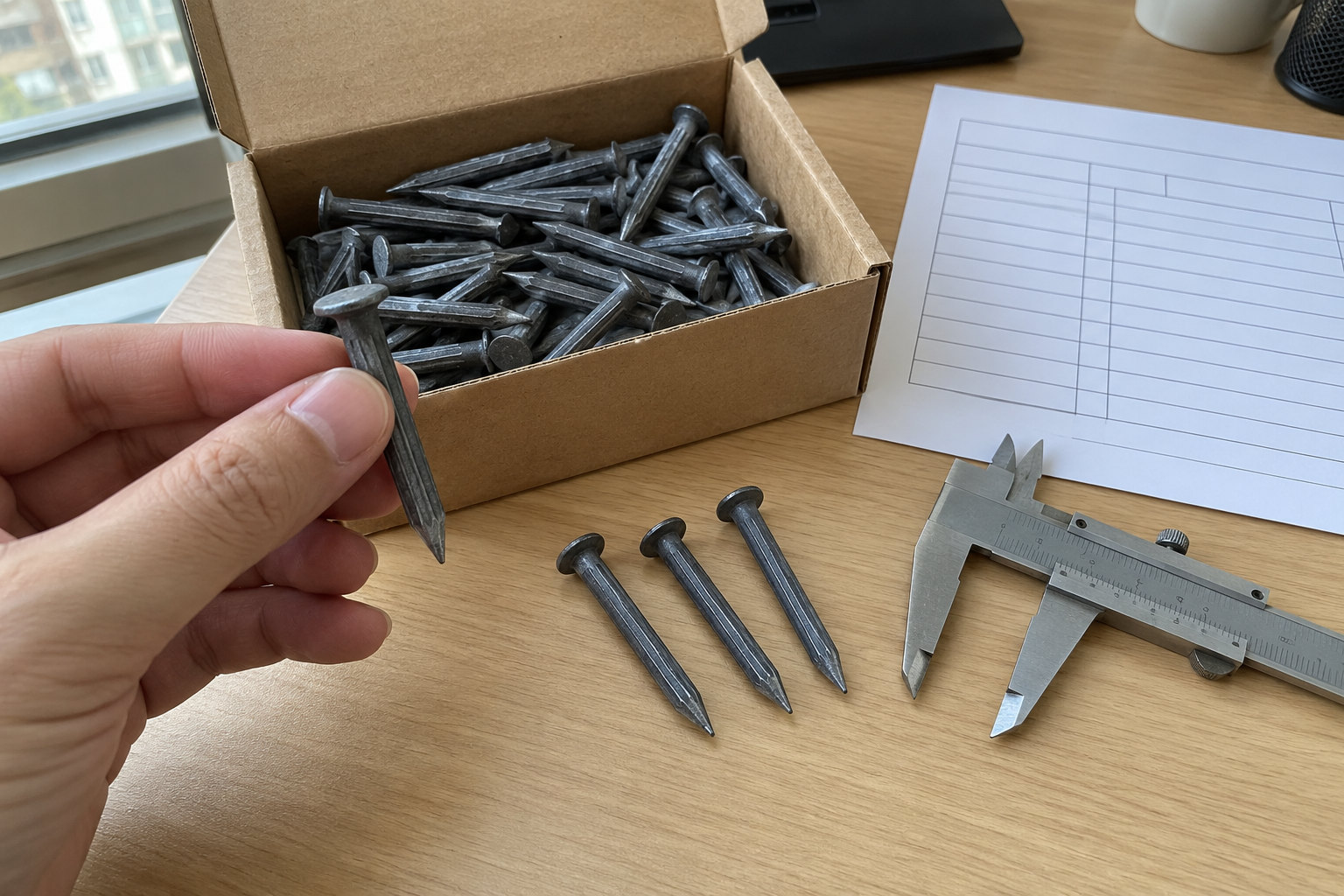
I write from the factory and export side, not as a construction engineer. My goal is to help importers, wholesalers, and building-material distributors ask better questions, reduce back-and-forth communication, and receive quotations that are actually useful for procurement decisions.
What Are Concrete Pins, and Why Do Buyers Confuse Them With Concrete Nails?
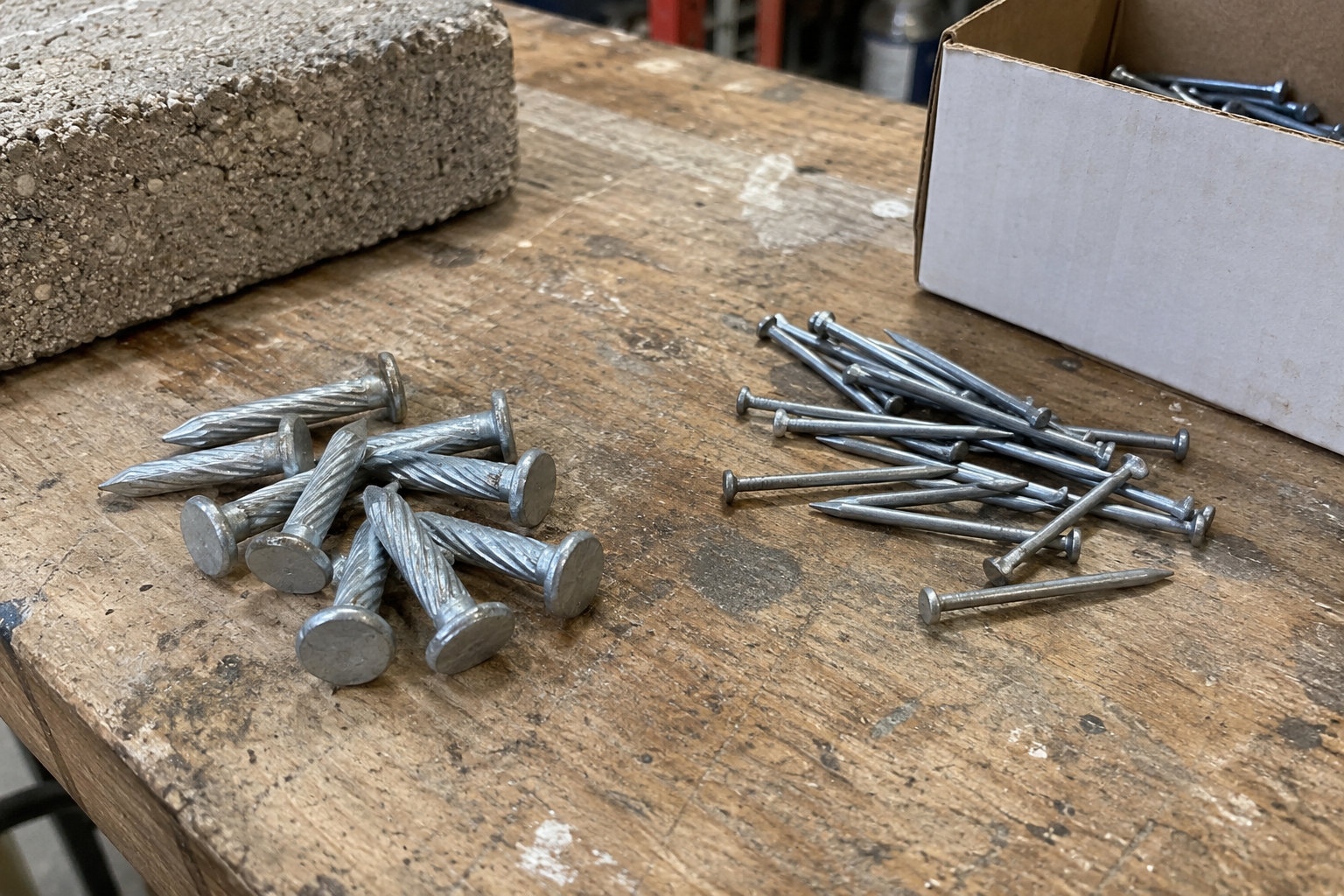
Many buyers ask for concrete pins, but they may actually mean concrete nails, black steel nails, or another hardened fastener. This small naming problem can create a big procurement problem. If the product name is unclear, the supplier may quote the wrong item, and the buyer may compare prices that do not match.
Concrete pins are hardened fasteners used for fixing into hard materials such as concrete or masonry1, but the term is often used differently across markets. Importers should confirm the exact product by photo, sample, size, head type, shank style, finish, and packaging before requesting a final price.
Why the product name matters in real quotations
In daily export communication, I often receive short messages like:
“Need concrete pins, best price, 1 container.”
That looks simple, but it is not enough for a correct quotation. The word “concrete pins” can mean different products in different countries. In some markets, buyers use it for hardened steel nails. In other markets, they may mean pins for nail guns or fixing systems. Some buyers call all hard steel nails “concrete pins,” while other buyers separate them by head type, color, or packaging.
This is why I usually ask for a photo, sample, or detailed specification before quoting. A small misunderstanding can change:
- Raw material requirements
- Wire diameter
- Length
- Head design
- Point type
- Surface treatment
- Packing method
- Carton weight
- Production process
- Final FOB price
Common name confusion in export markets
The table below shows how buyers may describe similar products during inquiry.
| Buyer’s Term | Possible Meaning | What I Ask to Confirm |
|---|---|---|
| Concrete pins | Hardened nail, fixing pin, steel pin | Photo, size, head type, usage channel |
| Concrete nails | Hardened steel nails for concrete/masonry | Diameter, length, finish, packaging |
| Steel nails | General steel nails or hardened nails | Material, hardness expectation, application |
| Black nails | Black steel nails or black concrete nails | Surface color, coating, market preference |
| Masonry nails | Nails for hard wall or masonry fixing | Length, shank type, head type |
What buyers should send first
For importers and hardware wholesalers, I suggest sending the following information at the first contact:
- Product photo or sample photo
- Length and wire diameter
- Head type
- Surface finish, such as black, bright, or galvanized if applicable
- Packing requirement, such as small box, carton, bag, or bulk
- Quantity, such as 5 tons, 200 boxes, or one container
- Target market, such as Middle East, Africa, Southeast Asia, or South America
- Branding needs, such as OEM logo, printed box, or neutral packing
- Sales channel, such as wholesale, retail shop, or construction supply distribution
When buyers provide these details, I can quote faster and more accurately. When they do not, the quotation becomes only a rough reference. In my experience, the best importers do not start by asking only “how much per ton?” They first make sure both sides are discussing the same product.
How Should Importers Specify Concrete Pins Before Asking for Price?
Concrete pins are difficult to quote accurately when the buyer provides only a product name. Price depends on size, material, finish, packing, quantity, and customization. If these details are missing, the supplier may offer a price that looks attractive but does not match the buyer’s real market requirement.
Importers should specify concrete pins by confirming the length, diameter, head type, surface treatment, packing style, quantity, target market, and OEM requirements. A clear inquiry helps suppliers calculate raw material use, carton cost, production plan, and FOB quotation more accurately.
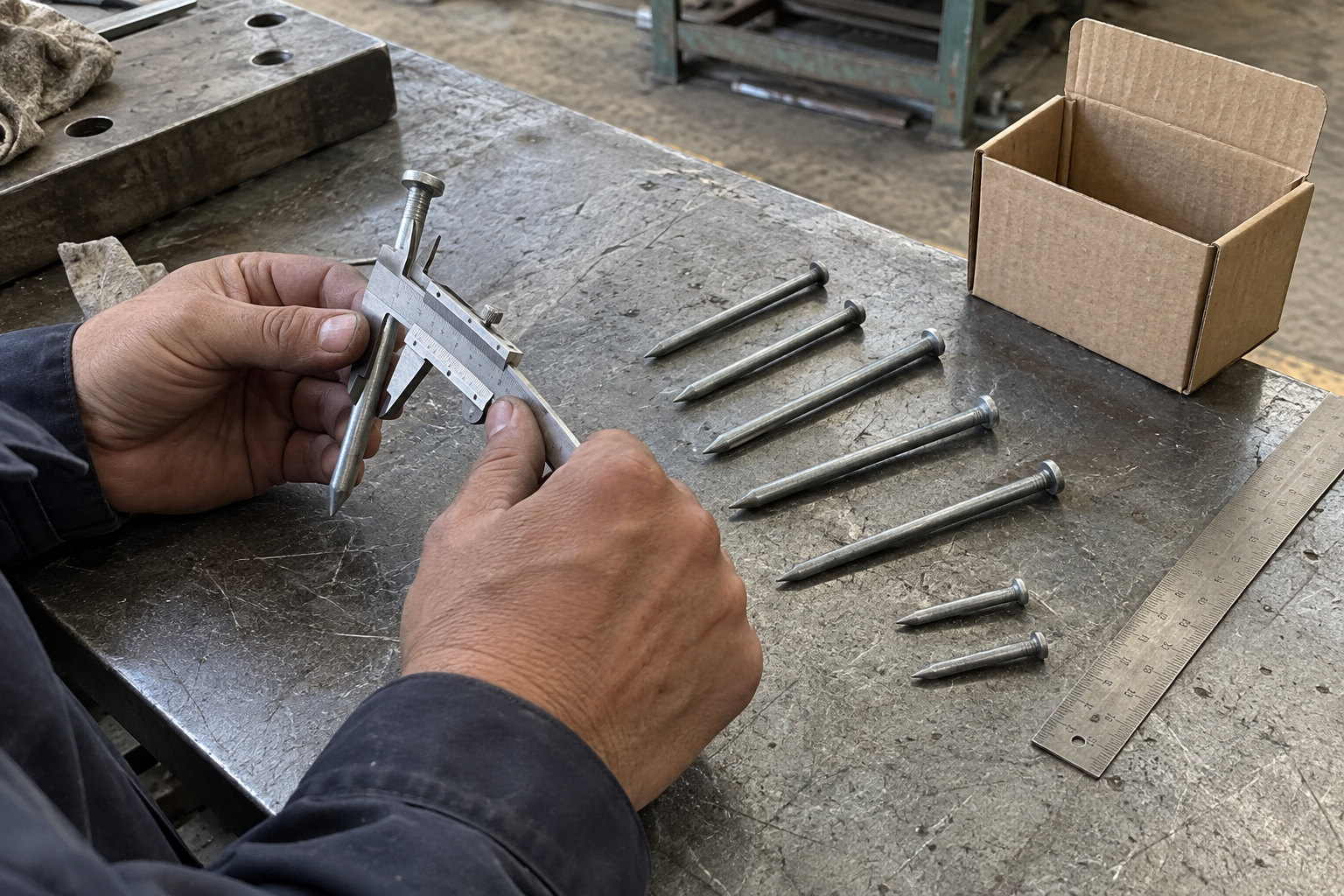
The quotation logic is practical, not mysterious
From the supplier side, I usually calculate an FOB quotation based on several basic inputs. For our business, a normal quotation is built around:
Product + specification + quantity + packaging method
This sounds simple, but every part changes cost. For example, a longer pin uses more steel. A heavier carton needs stronger packaging. A printed box requires design confirmation and printing cost. A small trial order may have a different unit cost than a full container.
At 定州百斯特, our common MOQ is 5 tons or 200 boxes, depending on the product and packing. We also support trial orders, but I still need enough specification detail to avoid wrong production planning.
Key specification points to confirm
Buyers should not treat all concrete pins as the same. The following points affect price and suitability.
| Specification Item | Why It Matters | Buyer Action |
|---|---|---|
| Length | Affects weight, usage, and cost | Provide exact mm or inch size |
| Diameter | Affects strength, material use, and weight | Confirm wire gauge or mm |
| Head type | Affects fixing style and market habit | Send photo or drawing |
| [Point type | Affects penetration behavior](https://pmc.ncbi.nlm.nih.gov/articles/PMC4043432/)[^2] | Confirm with sample if needed |
| [Surface finish | Affects appearance and rust resistance expectations](https://pmc.ncbi.nlm.nih.gov/articles/PMC11923840/)[^3] | State black, bright, galvanized, etc. |
| Packing | Affects retail value and shipping protection | Confirm box/carton/bulk |
| Quantity | Affects production and FOB price | Give tons, cartons, or container plan |
| Brand/logo | Affects lead time and packaging cost | Send artwork or brand details |
Why a photo is often better than a long description
I like technical details, but a clear photo often solves problems faster than a paragraph. Many buyers translate product names from Arabic, French, Spanish, Portuguese, or local market terms. The translation may not match our factory term.
A photo helps confirm:
- Product shape
- Head design
- Surface color
- Shank style
- Packing format
- Label information
- Competitor product benchmark
If the buyer already sells similar goods, I suggest sending a picture of the current product and box. If the buyer wants to improve quality or reduce complaints, they can also explain what problem they face now. For example:
- “The nail bends too often.”
- “The carton breaks during unloading.”
- “Local shops prefer 1 kg small boxes.”
- “We need our logo printed.”
- “Distributors complain about rust spots.”
- “The old supplier delays shipment.”
These details allow the supplier to give a more meaningful option.
Sample checking before bulk order
Samples are useful for quality checking before placing a larger order.2 Our factory can provide samples for inspection, and samples usually carry a basic charge. In many cases, this sample cost can be discussed for return or adjustment in the formal order.
However, I always remind buyers that sample approval should be practical. A sample check can confirm appearance, size, packing idea, and basic comparison with existing goods. For application-specific performance or engineering decisions, buyers should arrange qualified professional evaluation or local testing. A supplier should not replace the buyer’s own quality control process.
Why Is the Lowest Price Risky When Buying Concrete Pins?
Concrete pins are often compared by unit price, but the lowest price may hide quality and packing risks. Importers may save a small amount during purchase but lose more through bending, breakage, surface complaints, carton damage, or distributor returns. Price matters, but it should not stand alone.
The cheapest concrete pins are not always the best choice for importers.3 Buyers should compare material, hardness consistency, surface finish, packaging strength, supplier communication, sample quality, and delivery stability before making a decision. A low FOB price has little value if the product creates after-sales problems.
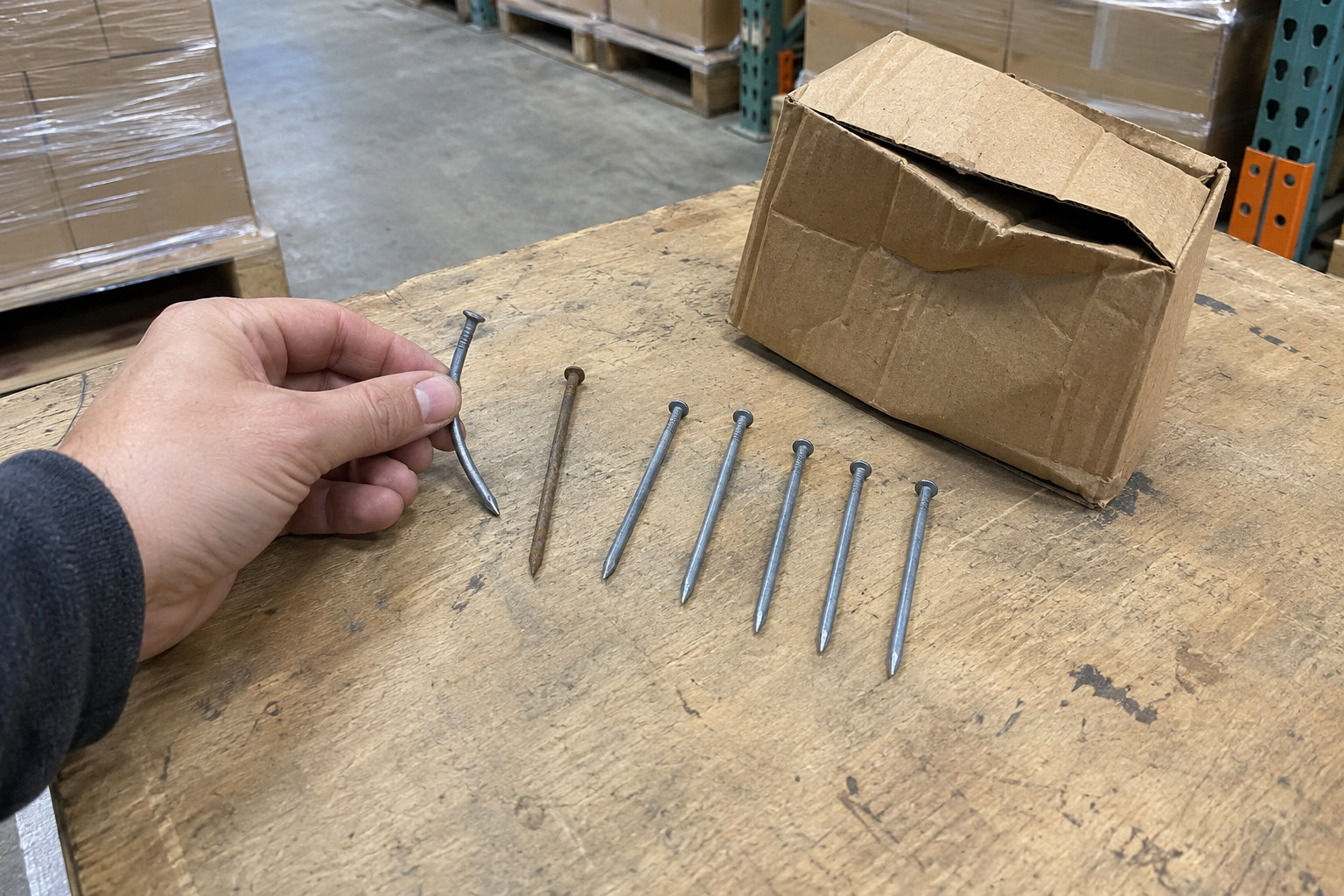
What a low price may hide
I understand why buyers ask for the best price. Import markets are competitive, and wholesalers must protect their margins. However, I have also seen buyers focus only on the lowest number and ignore the cost behind the product.
A very low quote may involve compromises in areas such as:
- Material consistency
- Hardness control
- Wire diameter tolerance
- Surface treatment
- Head forming quality
- Point sharpness
- Carton strength
- Inner box thickness
- Packing weight accuracy
- Delivery reliability
Not every low price is bad. Some suppliers may have production advantages or lower packaging costs. But when one quotation is far below the others, buyers should ask why.
Practical quality risks for importers
For hardware distributors, quality problems do not end at the port. They continue into the wholesale market, retail shops, and job sites. When local customers complain, the importer’s brand reputation suffers.
Common risks include:
-
Bending during use
If the product is not suitable for the expected application, users may complain that it bends too easily. -
Breakage
Overly brittle products may break.4 This can lead to serious dissatisfaction, even if the product looks good in the box. -
Surface issues
Poor surface treatment can create appearance problems. In humid markets, buyers may pay more attention to rust spots or dirty finishing.5 -
Weak packaging
Cartons may break during sea shipment, unloading, or warehouse handling.6 This is common when suppliers reduce carton quality to lower price. -
Inconsistent packing weight
If box weight or quantity is inconsistent, distributors may dispute delivery value. -
Poor printing or branding
Weak packaging design can reduce retail appeal, especially for buyers selling through hardware shops.
How to compare quotations more fairly
A fair comparison should use the same specification and same packing. I suggest buyers create a simple comparison sheet.
| Comparison Point | Supplier A | Supplier B | Supplier C |
|---|---|---|---|
| Size | Same? | Same? | Same? |
| Finish | Same? | Same? | Same? |
| Packing | Same? | Same? | Same? |
| Carton strength | Confirmed? | Confirmed? | Confirmed? |
| MOQ | Confirmed? | Confirmed? | Confirmed? |
| Sample available | Yes/No | Yes/No | Yes/No |
| OEM logo support | Yes/No | Yes/No | Yes/No |
| Lead time | Days | Days | Days |
| Shipment support | FCL/LCL | FCL/LCL | FCL/LCL |
This approach prevents the common mistake of comparing one supplier’s bulk packing with another supplier’s printed small-box packing. The cheaper quote may simply include weaker or less marketable packaging.
A supplier-side lesson I see often
I once handled an inquiry where the buyer asked only for a low price and said the packing was “normal.” Later, after we asked more questions, we learned that their market needed strong small boxes with local brand printing. The first price they expected was not realistic for that packing method.
This is common. Buyers may think packing is a small detail, but in export orders, packing can strongly affect total cost, container loading, and local sales value. That is why I always ask about packaging early, not at the end.
What Packaging and Customization Options Matter for Concrete Pins?
Concrete pins must arrive safely and sell well in the buyer’s market. Good packaging protects the product during sea transport and also supports local wholesale or retail sales. If buyers ignore packaging at the quotation stage, they may face broken cartons, weak shelf appeal, or branding problems later.
Packaging for concrete pins should be selected according to market channel, shipment method, carton strength, box size, branding needs, and handling conditions. Importers should confirm whether they need bulk packing, small boxes, OEM logo printing, neutral cartons, or customized packaging before finalizing price.
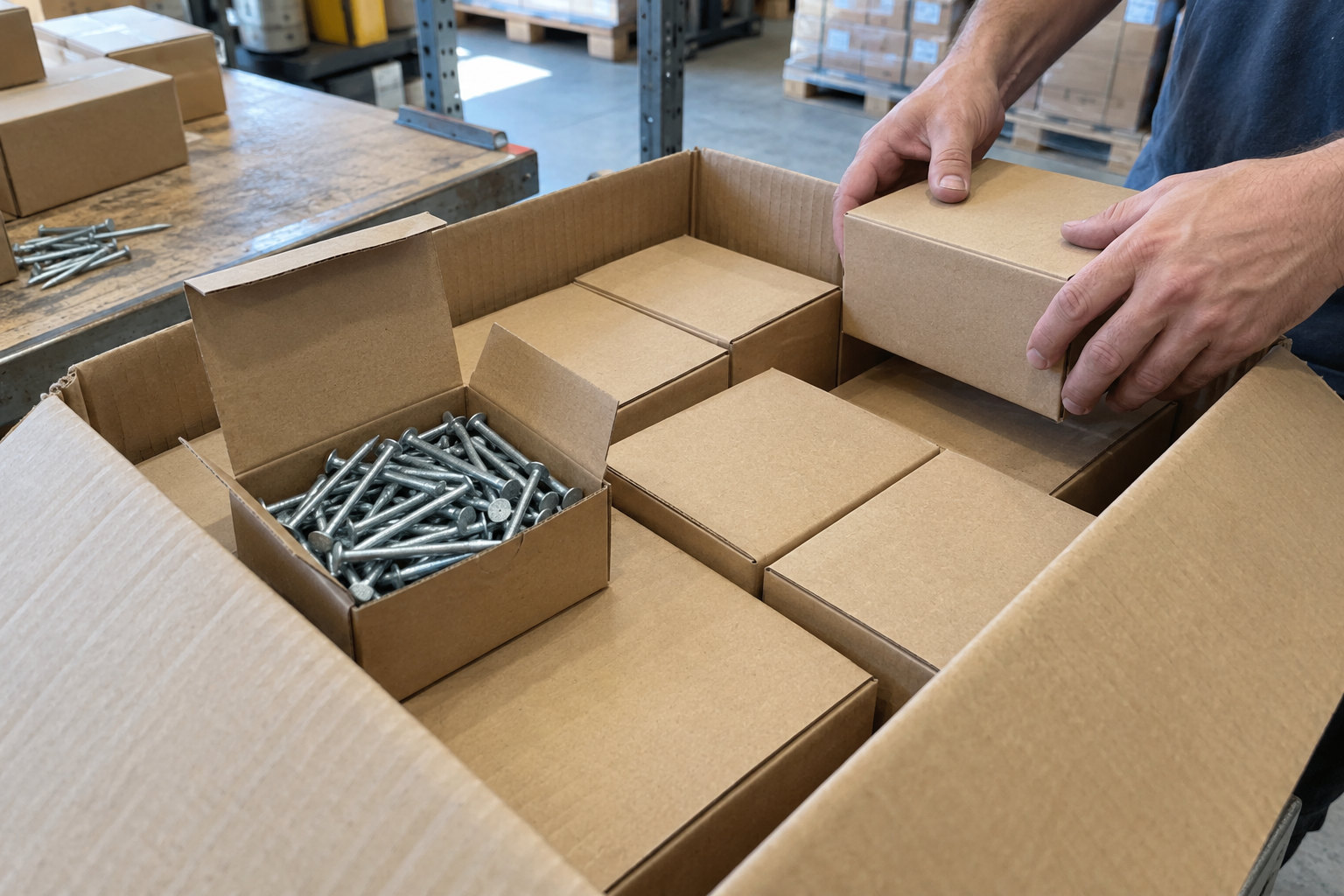
Packaging is both protection and marketing
For export hardware, packaging has two jobs. First, it protects the goods during loading, sea shipment, unloading, and warehouse movement. Second, it helps the importer sell the product in the local market.7
A distributor selling to large contractors may prefer economical bulk packing. A wholesaler supplying hardware shops may prefer small boxes with a clear label. A brand owner may need OEM packaging with a logo, local language, barcode, or color design.
At our factory, we support OEM/ODM customization, including product, packaging, and brand logo. But customized packaging needs clear confirmation before production. If artwork, carton marks, and box material are not confirmed, production may be delayed.
Common packaging options
| Packaging Type | Best For | Main Benefit | Main Concern |
|---|---|---|---|
| Bulk carton | Large wholesale orders | Lower packing cost | Less retail appeal |
| Small box + master carton | Hardware shops and retail | Easy resale | Higher packing cost |
| Neutral packing | Buyers testing a market | Flexible and simple | Weak brand recognition |
| OEM printed box | Brand distributors | Strong market identity | Needs artwork confirmation |
| Heavy-duty carton | Long-distance handling | Better protection | Higher cost |
Details buyers should confirm
Packaging discussions should be specific. “Good packing” means different things to different people. I usually ask buyers to confirm:
- Inner box weight or quantity
- Number of boxes per carton
- Carton dimensions if required
- Gross weight and net weight preference
- Carton mark content
- Logo position
- Language on label
- Barcode requirement
- Color design
- Pallet requirement, if any
- Container loading expectation
For markets in the Middle East, Africa, Southeast Asia, and South America, handling conditions can vary. Some ports and warehouses have rough unloading processes. A weak carton can become a real loss, even if the product inside is acceptable.
Branding should match the sales channel
If the buyer sells through local distributors, packaging design can affect trust. A clear brand name, specification, and product image can help shop owners sell faster. If the buyer sells mainly to large project suppliers, simple strong packing may be enough.
I suggest buyers think about three questions:
-
Who will open the carton first?
A wholesaler, shop owner, contractor, or final user? -
Does the buyer need brand visibility?
If yes, OEM printing may be worth the cost. -
Will the packing survive local handling?
If not, stronger cartons should be considered.
Customization needs lead time
Customized concrete pins and packaging usually require more communication. Artwork must be checked. Logos must be confirmed. Box material must be selected. If the buyer needs a special specification, the factory may also need time to arrange production.
Our usual delivery time is 15–25 days, depending on order quantity and production schedule. If the order includes special packaging or brand design, I recommend confirming artwork early. This helps avoid last-minute changes that can delay shipment.
How Should Buyers Evaluate a Concrete Pins Supplier for Export Orders?
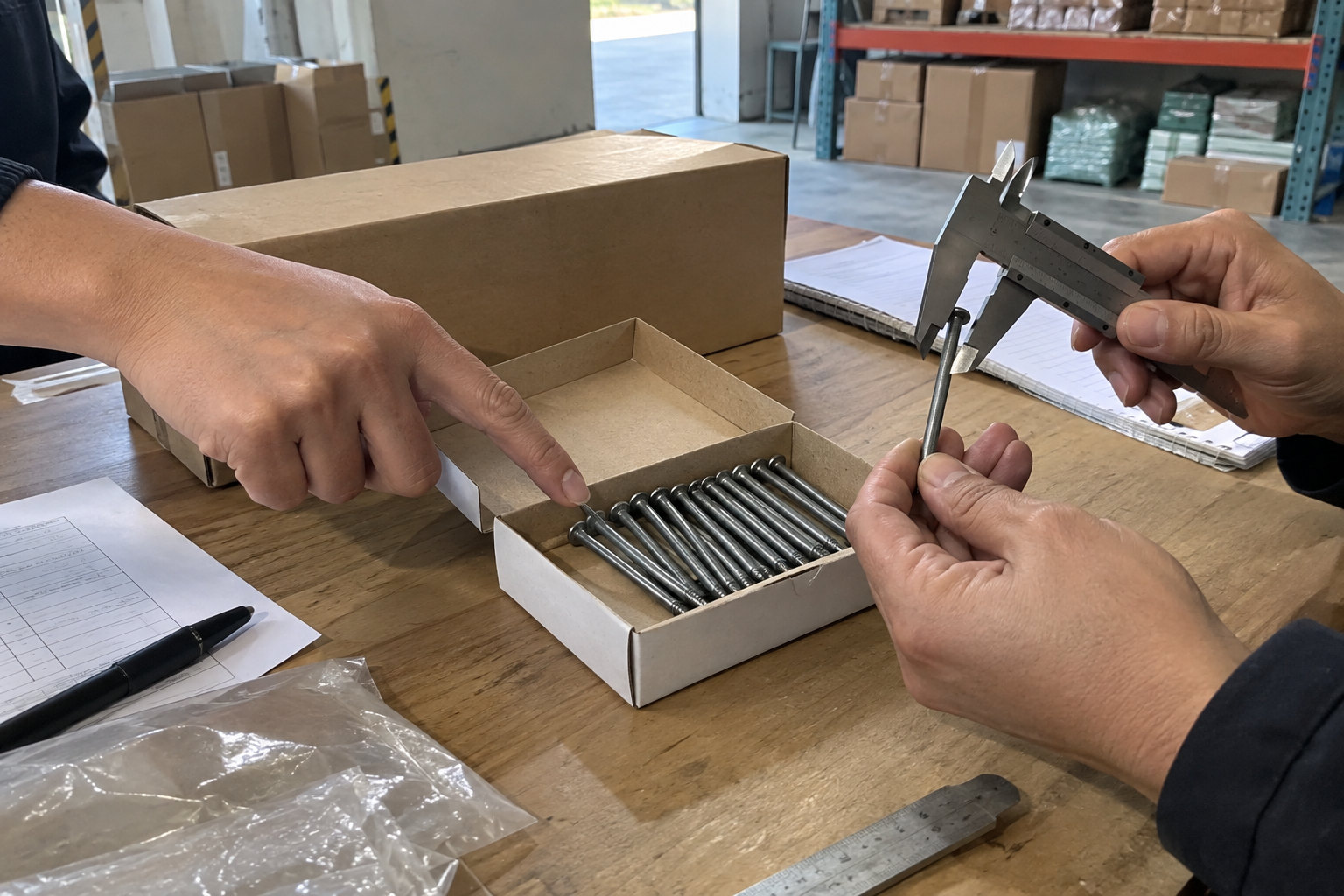
Choosing a supplier is not only about product price. Importers need a supplier who can understand specifications, support samples, manage packaging, provide stable production, and arrange sea shipment. A good supplier reduces communication mistakes and helps buyers protect their local market reputation.
Buyers should evaluate a concrete pins supplier by checking factory capability, MOQ, sample policy, packaging options, OEM support, delivery time, export experience, shipment methods, and communication quality. Importers should also verify any certificates, documents, or claims before relying on them for procurement decisions.
Supplier evaluation should be practical
From my side, a serious buyer usually asks practical questions. They do not only ask for the lowest price. They ask about MOQ, packing, samples, delivery, shipping, and customization. These questions show that the buyer understands export purchasing.
For 定州百斯特, we are a manufacturing factory and also have overseas factory capability. We mainly supply markets such as the Middle East, Africa, Southeast Asia, and South America. We usually work with sea shipment and support both FCL and LCL8. These details matter because many buyers in our target markets need flexible import planning.
Supplier checklist for importers
Here is a simple checklist that buyers can use before placing an order.
| Evaluation Area | What to Check | Why It Matters |
|---|---|---|
| Product confirmation | Photo, size, sample, finish | Prevents wrong quotation |
| MOQ | 5 tons, 200 boxes, or agreed trial order | Helps purchase planning |
| Sample policy | Sample cost and inspection process | Reduces quality uncertainty |
| Packing ability | Bulk, box, OEM, carton strength | Protects goods and market sales |
| Customization | OEM/ODM, logo, brand packing | Supports distributor strategy |
| Lead time | Usually 15–25 days depending on quantity | Helps shipment planning |
| Shipping support | FCL and LCL sea shipment | Fits different order sizes |
| Communication | Fast, clear, specification-focused | Reduces mistakes |
| Documents | Invoice, packing list, other needed docs | Supports import clearance |
| Claims handling | Clear communication after shipment | Reduces dispute risk |
Why trial orders can be useful
A trial order helps buyers check the real product before scaling up. This is especially useful when the buyer is entering a new market or changing suppliers. A trial order can confirm:
- Product acceptance by local distributors
- Packing strength during shipment
- Label and logo accuracy
- Carton handling performance
- Customer feedback
- Supplier communication speed
- Delivery reliability
We support trial orders, and this can be a practical step before a larger container order. However, buyers should still provide complete specifications for the trial. A trial order based on unclear details does not solve the core problem.
Documents and certifications should be verified
Buyers sometimes ask whether a supplier has certain certificates or documents. My advice is simple: treat certifications and documents as items to verify, not as marketing slogans. If a document is important for your import process or local sales channel, ask for a copy and check whether it applies to the exact product and order.
For technical decisions, especially where product performance affects safety or compliance, buyers should arrange professional evaluation. A factory can provide product information, samples, and production details, but local market compliance is the importer’s responsibility.
Communication quality predicts order quality
I believe communication is part of quality control. If the supplier does not ask about size, packing, quantity, or branding, the quotation may be incomplete. If the buyer does not answer these questions, the supplier may produce based on assumptions.
Good communication should confirm:
- What product is needed
- What specification is required
- What packing will be used
- What quantity will be ordered
- What market the product will enter
- Whether branding is needed
- Whether samples must be checked
- When shipment is expected
A strong supplier does not only say “yes” to everything. A strong supplier asks questions that protect both sides.
Frequently Asked Questions
Are concrete pins the same as concrete nails?
Concrete pins and concrete nails are often mixed in buyer inquiries, but they may not always mean the same product. The correct meaning depends on the market term, product shape, head type, and application. I recommend sending a photo, sample, size, and packing details before asking for a final quotation.
What information should I provide to get an accurate concrete pins quotation?
You should provide product photo, length, diameter, head type, surface finish, packing method, quantity, target market, and OEM logo needs. A complete inquiry helps the supplier calculate material cost, packaging cost, production time, and FOB price more accurately.
Why is concrete pins packaging important for importers?
Packaging protects the goods during sea shipment and supports resale in the local market. Weak cartons can break during unloading or warehouse handling. Poor box design can also reduce retail appeal. Buyers should confirm inner packing, master carton strength, logo printing, and carton marks before production.
Can I order customized concrete pins with my own brand?
Yes, many factories, including ours, can support OEM/ODM customization for product, packaging, and brand logo. Buyers should send artwork, logo files, packing requirements, and market preferences early. Custom packaging may affect cost and delivery time, so it should be confirmed before final quotation.
What is a reasonable MOQ for concrete pins?
MOQ depends on the supplier, specification, and packaging. For our factory, the usual MOQ is 5 tons or 200 boxes. Trial orders can be discussed, especially for new cooperation. Buyers should confirm MOQ together with packing style, because small-box packing and bulk packing may affect production planning.
Conclusion
Concrete pins sourcing should start with clear product confirmation, not only a low-price request. Importers should compare suppliers by specification accuracy, sample support, packaging strength, OEM ability, MOQ, delivery time, and sea shipment experience. From my factory-side experience, the best orders happen when buyers share photos, sizes, packing needs, quantity, and target market early. If you are preparing a concrete pins inquiry, contact 定州百斯特 at [email protected] or WhatsApp +8618331061136 with your specifications for an FOB quotation.
-
"1915.135 – Powder actuated fastening tools.", http://www.osha.gov/laws-regs/regulations/standardnumber/1915/1915.135. Reference sources describe concrete or masonry nails and related fastening pins as hardened fasteners intended for use in concrete, masonry, or similarly hard materials. Evidence role: definition; source type: encyclopedia. Supports: A neutral reference source should support that concrete or masonry nails/pins are hardened fasteners used for fastening into concrete, masonry, or similar hard substrates.. Scope note: The support is contextual because naming conventions for “concrete pins” vary across markets and product systems. ↩
-
"Should I inspect product samples personally or hire a team …", https://www.facebook.com/groups/enablersbysaqibazhar/posts/4171540319839457/. Quality-management guidance treats product samples and inspection records as practical evidence for checking whether supplied goods conform to agreed specifications before larger-scale procurement. Evidence role: general_support; source type: institution. Supports: A quality-management or trade institution source should support that samples and inspections are common controls before full production or large orders.. Scope note: The source supports sample checking as a general quality-control practice rather than proving outcomes for concrete pin orders. ↩
-
"Analyzing Costs Using Total Cost of Ownership", https://psep.smeal.psu.edu/short-courses/supply-chain-accelerator/advanced-procurement-analyzing-costs-using-total-cost-of-ownership. Procurement research on total cost of ownership shows that purchase price is only one component of sourcing decisions, alongside quality, logistics, supplier performance, and downstream failure costs. Evidence role: expert_consensus; source type: paper. Supports: Procurement research should support that supplier selection should consider total cost, quality, delivery, and risk rather than unit price alone.. Scope note: The source supports procurement decision-making generally rather than the concrete pin market specifically. ↩
-
"Alloy and composition dependence of hydrogen embrittlement …", https://pmc.ncbi.nlm.nih.gov/articles/PMC5468724/. Metallurgical literature explains that brittle steel components have reduced capacity for plastic deformation and are more prone to fracture under impact or applied stress. Evidence role: mechanism; source type: paper. Supports: A metallurgy or fastener-failure source should support that higher brittleness or insufficient toughness increases fracture risk in hardened steel components.. Scope note: The source may discuss hardened steel components broadly rather than concrete pins specifically. ↩
-
"Effect of Relative Humidity on Mechanical Degradation … – PMC", https://pmc.ncbi.nlm.nih.gov/articles/PMC7142943/. Atmospheric corrosion research identifies moisture and relative humidity as important factors in the rusting of exposed steel surfaces. Evidence role: mechanism; source type: research. Supports: A corrosion science source should support that atmospheric humidity is a factor in corrosion and rusting of steel.. Scope note: The source supports the environmental mechanism and does not measure customer complaint rates in hardware markets. ↩
-
"A Comparative study of the compression strength of …", https://repository.rit.edu/theses/285/. Distribution-packaging standards and test protocols identify compression, vibration, drops, and handling stresses as common hazards that can damage cartons during transport and warehousing. Evidence role: general_support; source type: institution. Supports: A packaging-testing or logistics institution should support that distribution packaging must withstand compression, vibration, handling, and transport hazards.. Scope note: The source supports general distribution hazards rather than documenting failures in concrete pin shipments. ↩
-
"Package design as a branding tool in the cosmetic industry", https://pmc.ncbi.nlm.nih.gov/articles/PMC9123395/. Packaging research commonly distinguishes protective distribution functions from communication and marketing functions, including product identification, information display, and brand presentation. Evidence role: expert_consensus; source type: paper. Supports: Packaging literature should support that packaging protects products in distribution and also communicates information or marketing value at the point of sale.. Scope note: The source supports packaging functions generally, not the sales performance of any specific concrete pin package. ↩
-
"FCL vs LCL shipping: How to choose the right one", https://www.maersk.com/logistics-explained/transportation-and-freight/2023/12/15/understanding-ocean-freight. International freight terminology distinguishes full container load shipment, in which a container is used for one consignee’s cargo, from less-than-container-load shipment, in which cargo is consolidated with other consignments. Evidence role: definition; source type: institution. Supports: A logistics or international trade source should define FCL as full container load and LCL as less-than-container-load shipping.. ↩