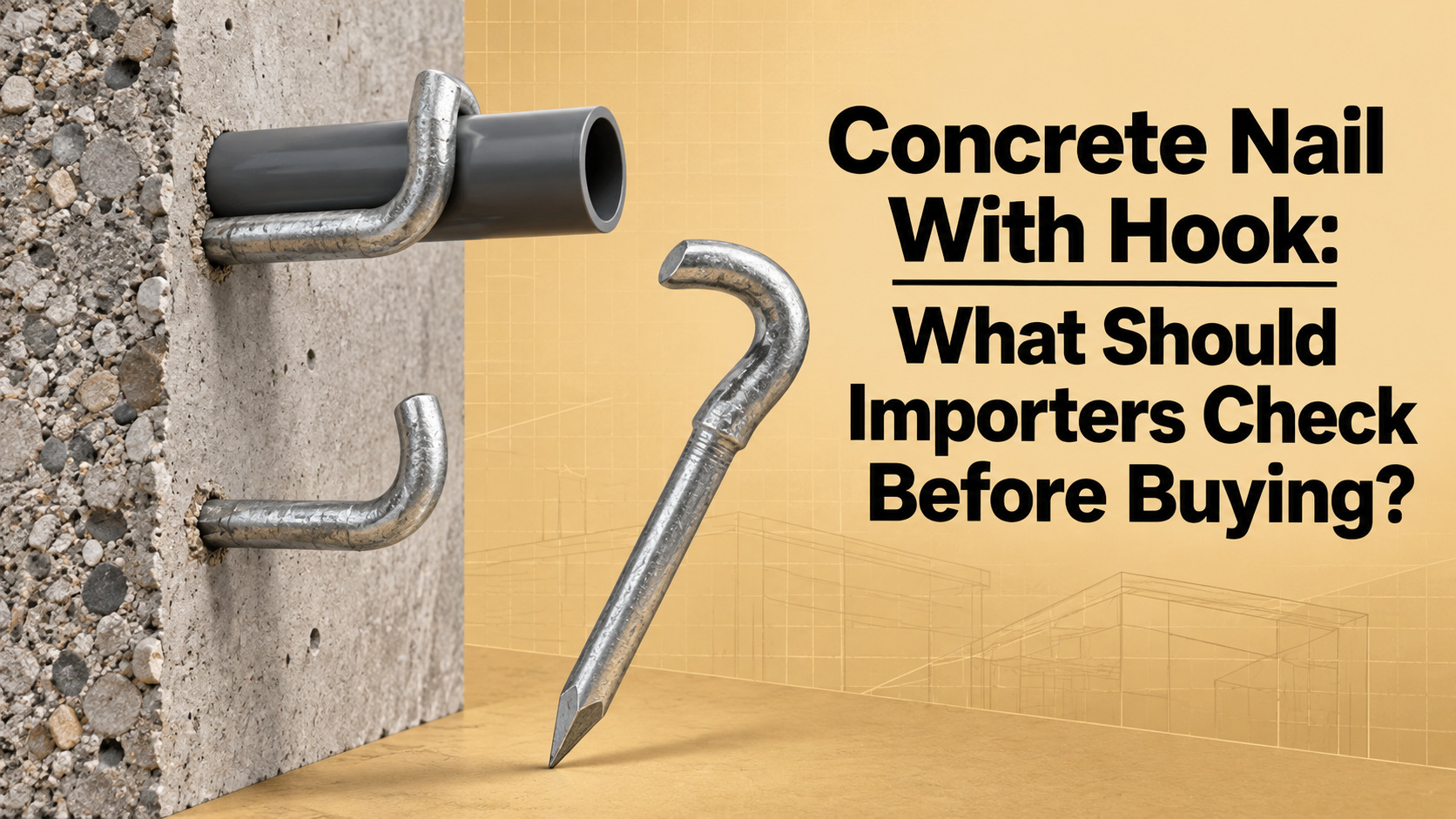
A concrete nail with hook can look simple at first, but the wrong choice can create real buying problems. Importers may receive complaints about bending nails, unsuitable hooks, or poor market fit. I prefer to treat this product as a light-duty fixing and hanging item, not just another concrete nail.
A concrete nail with hook is a hardened nail designed for fixing or hanging lightweight items on hard bases such as concrete, brick, or masonry walls.1 Importers should evaluate the hook shape, nail hardness, size, packaging, and intended use before ordering, because it is not a replacement for expansion screws or heavy-duty anchors2.
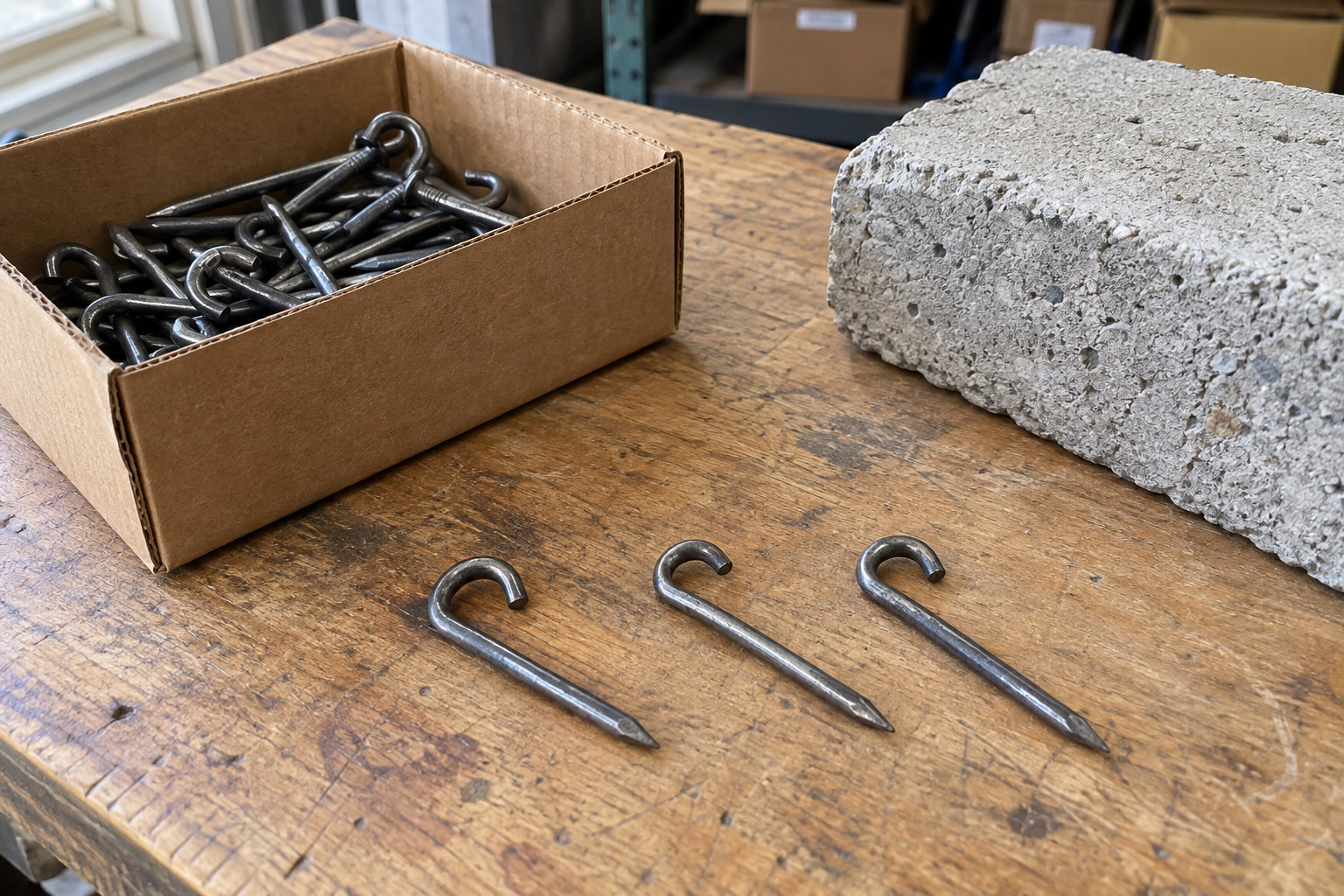
I have handled many concrete nail inquiries where buyers ask only for the lowest price. In my experience, that approach often misses the real issue. The better question is whether the product structure, material, size, and packaging fit the buyer’s local sales channel.
What Is a Concrete Nail With Hook Used For?
A concrete nail with hook solves a specific problem. Buyers need a simple way to fix or hang lightweight items on hard walls. However, confusion starts when this product is treated like a general structural fastener. That misunderstanding can lead to unsuitable orders and unhappy end users.
A concrete nail with hook is mainly used for light-duty hanging or holding on concrete, brick, or masonry surfaces. The hook changes the function from simple fastening to holding an object, such as a small wire, decoration, light fixture accessory, or household item, depending on local usage and verified suitability.
The Hook Changes the Buying Logic
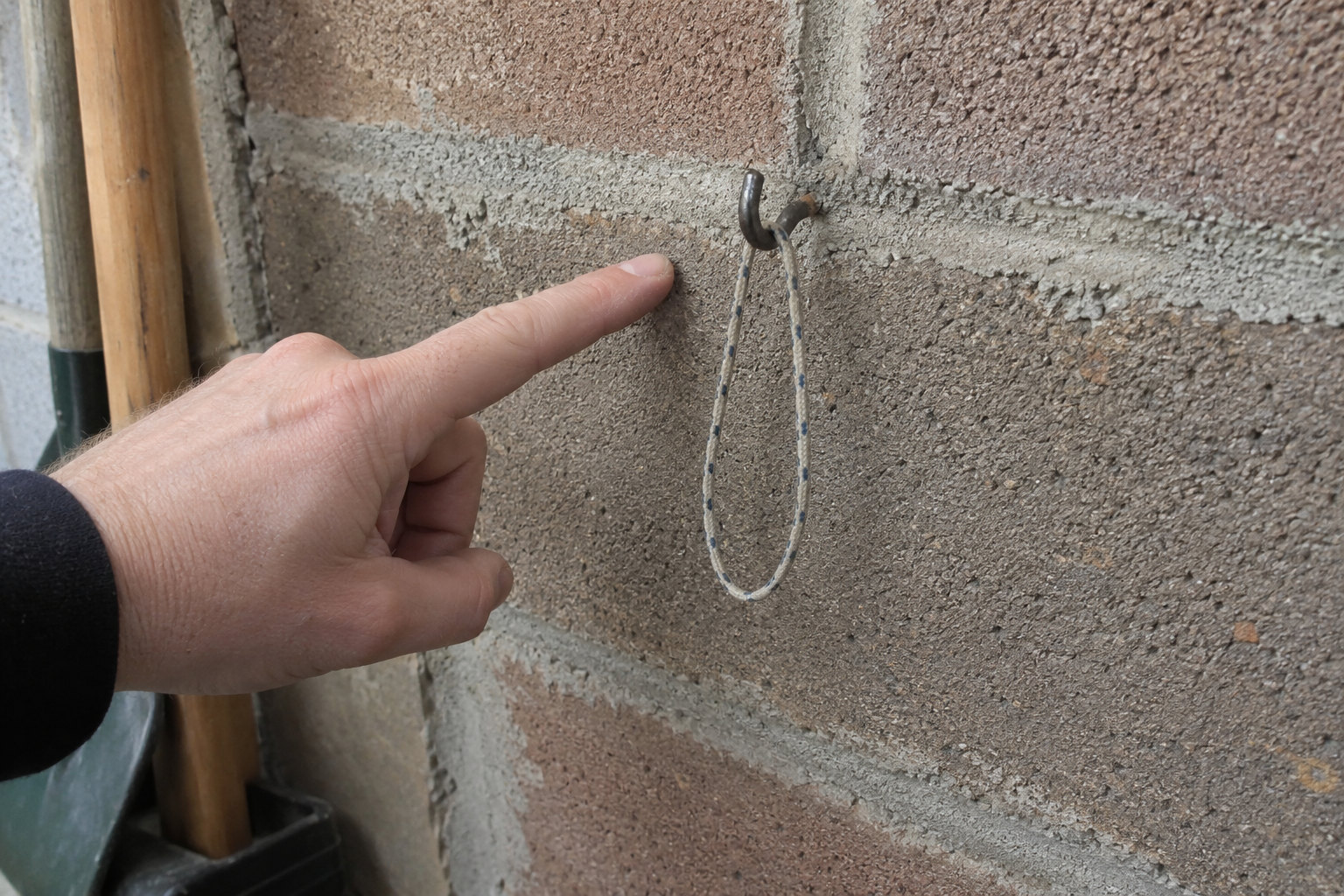
I always remind buyers that the “hook” is not a small decoration. It changes the whole product purpose. An ordinary concrete nail is usually driven into a hard base to fix something flat or direct.3 A hooked concrete nail has an added holding point. That makes it more useful for hanging or retaining light items.
This is why I ask importers about the intended application before I quote. If a buyer only says “send me concrete nail price,” I cannot know whether the buyer needs:
- A straight concrete nail
- A concrete nail with hook
- A concrete nail with washer
- A roofing nail
- A wall plug and screw system
- A heavy-duty anchor
These products may all appear in hardware stores, but they do not serve the same job.
Common Light-Duty Uses
In many developing markets, hardware wholesalers sell hooked concrete nails for simple wall fixing and hanging jobs. Typical light-duty applications may include:
- Hanging lightweight household items
- Holding small wire or cable in place
- Supporting light decorative objects
- Temporary or semi-permanent fixing on masonry
- General hardware retail use
However, I avoid saying that one specification fits all of these applications. Wall hardness, installation method, nail size, hook form, and load conditions all affect performance.4
I do not recommend treating a concrete nail with hook as a universal load-bearing fastener. Buyers should verify application-specific requirements before selling it for demanding use.
Why Importers Should Define the Use First
Before asking for price, I suggest that importers answer a simple question: What will the end customer hang or fix?
That answer affects the whole order. It can influence the nail length, shank diameter, steel material, hardness, hook shape, surface finish, box weight, and retail packaging. A product for small hardware shops may need attractive small boxes. A product for wholesale building material channels may need bulk cartons with clear specifications.
Here is a simple way to compare buying purposes:
| Buying Purpose | Main Concern | Procurement Risk |
|---|---|---|
| Hardware retail sales | Appearance, packaging, popular sizes | Slow sales if size is unfamiliar |
| Contractor supply | Consistency, hardness, installation feel | Complaints if nails bend or break |
| General wholesale | Price, carton quantity, stock turnover | Poor fit if specifications are unclear |
| Light household hanging | Hook usability, simple installation | Misuse if sold as heavy-duty fixing |
A good order starts with the real task. If the task is light hanging on concrete or brick, then a concrete nail with hook may be suitable. If the task is structural fixing, machinery installation, or heavy loading, then buyers should consult qualified professionals and consider tested anchor systems.
How Is a Concrete Nail With Hook Different From an Ordinary Concrete Nail?
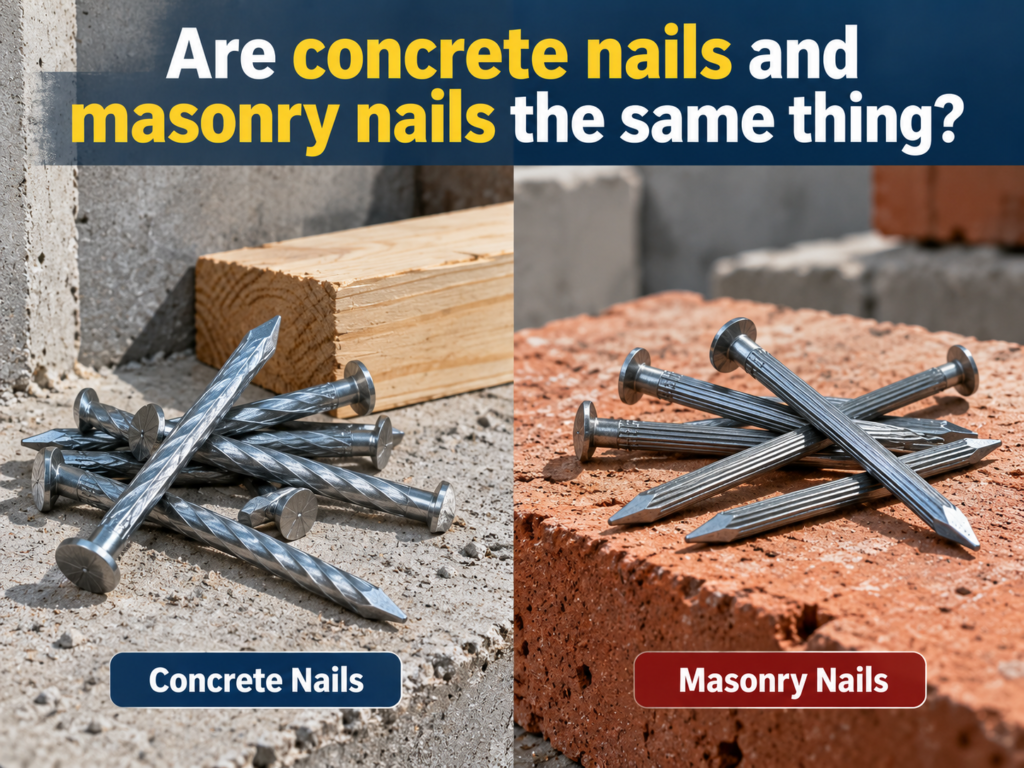
A concrete nail with hook is different because the hook creates a hanging or holding function. An ordinary concrete nail mainly penetrates and fastens. The hooked version must be judged by both the nail body and the hook structure, so importers need to check more than diameter and length.
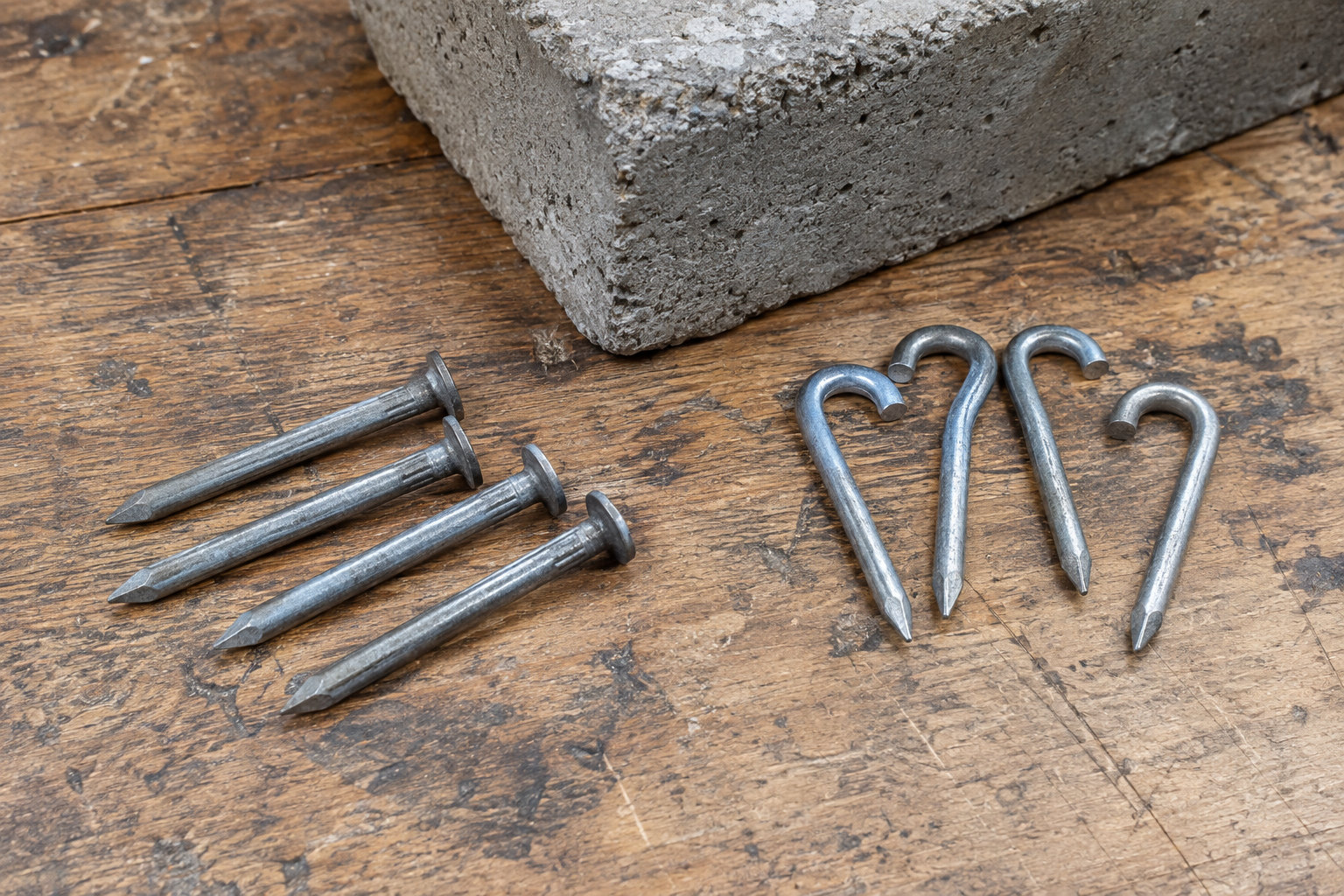
A concrete nail with hook combines a hardened nail body with a formed hook section. The nail body must install smoothly into hard bases, while the hook must match the intended hanging use. This makes product evaluation more specific than ordinary concrete nail procurement.
Nail Body and Hook Must Work Together
When I check this product from a supplier point of view, I do not separate the nail from the hook. The nail body needs enough hardness to enter hard material without bending easily. The hook needs a practical shape so the end user can hang or hold the intended item.
If the nail is too soft, it may bend during installation. If it is too brittle, it may break under impact.5 If the hook shape is poorly made, it may not hold the item well even if the nail body is acceptable.
This balance matters more than many buyers expect.
Main Differences Buyers Should Notice
Here is a practical comparison:
| Feature | Ordinary Concrete Nail | Concrete Nail With Hook |
|---|---|---|
| Main function | Direct fastening | Light hanging or holding |
| Key structure | Straight nail body | Nail body plus hook |
| Buying focus | Length, diameter, hardness | Hook shape, nail hardness, use case |
| Common risk | Bending or breaking | Bending, breaking, or unsuitable hook |
| Best inquiry detail | Size and quantity | Size, quantity, packaging, intended use |
The hook adds convenience, but it also adds responsibility for the buyer. An importer should not assume that every hook shape is accepted in every market. Some markets prefer a more open hook. Some channels may prefer a tighter bend. Some wholesalers may care more about packing count than small visual differences.
Material and Hardness Still Matter
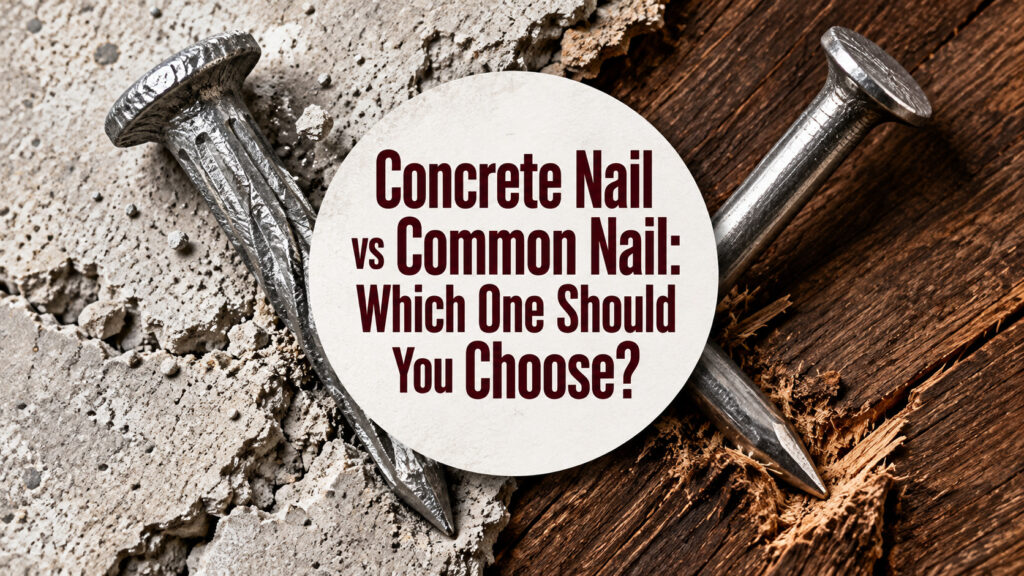
A hooked structure does not reduce the importance of steel quality. Concrete nails are commonly made with higher carbon steel compared with many soft common nails.6 The hardening process helps the nail resist bending when driven into concrete or brick.7
However, I avoid giving universal hardness promises without the specific order, specification, and agreed quality standard. Buyers should understand the principle:
- Too soft: the nail may bend during installation.
- Too brittle: the nail may snap or chip under hammer impact.
- Inconsistent hardness: one batch may install well while another batch causes complaints.
- Poor forming: the hook may look uneven or may not fit the target use.
For bulk orders, I suggest buyers request samples and inspect them before confirming a container or large shipment. Samples do not replace professional testing, but they help buyers check appearance, dimensions, packaging, and basic installation feel.
Why “Same Size” Does Not Always Mean “Same Product”
Two suppliers may quote the same nominal size, but the final product can still differ.8 The steel wire source, hardening control, shank finish, point sharpness, head shape, and hook forming can all change the end-user experience.
I have seen inquiries where buyers compare only the unit price. That is understandable because importers need margin. Still, a low price can hide differences in:
- Wire diameter tolerance
- Nail length accuracy
- Hook consistency
- Surface finish
- Carton strength
- Box quantity
- Factory quality control
A low-cost item can become expensive if the local market rejects it. For importers, the goal should be fit-for-market quality, not the cheapest nail on paper.
How Should Importers Choose the Right Concrete Nail With Hook?
Choosing the right concrete nail with hook starts with the market, not the factory price list. Importers need to know the wall materials, common retail sizes, packaging habits, and customer expectations in their country. Without this information, even a well-made product may not sell well.9
Importers should choose a concrete nail with hook by confirming the intended use, nail size, hook shape, steel hardness, finish, packaging, and order quantity. A clear inquiry helps the supplier quote accurately and reduces the risk of receiving a product that does not match the local market.
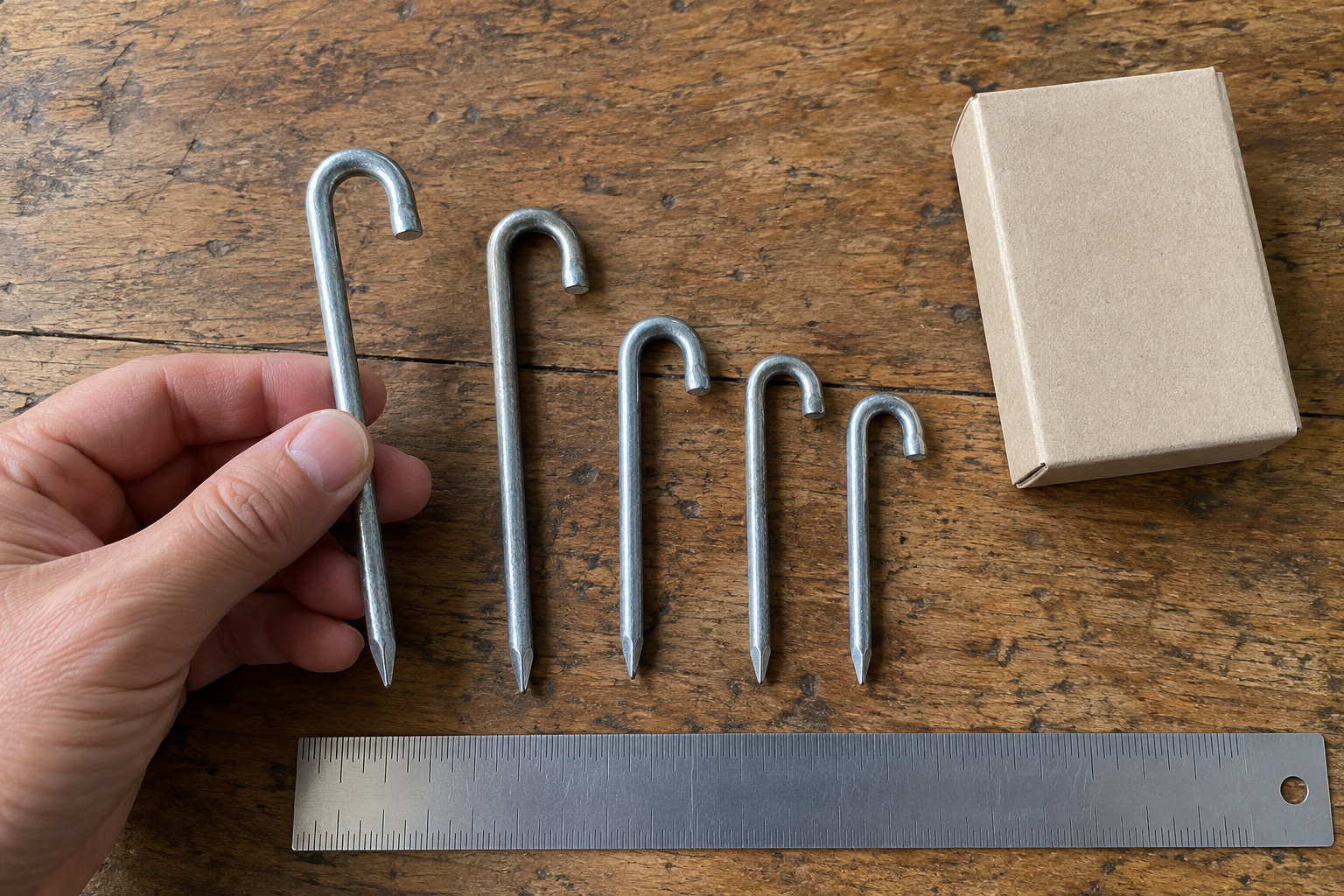
Start With the Application Boundary
I always ask buyers to define the application boundary. This means the buyer should know what the product is supposed to do and what it is not supposed to do.
A concrete nail with hook may be suitable for light-duty hanging or holding tasks. It should not be promoted as a substitute for expansion bolts, heavy-duty anchors, or engineered fixing systems unless the buyer has verified testing and professional approval for that use.
This distinction protects both the importer and the end customer.
Key Specifications to Confirm
A useful inquiry should include more than a product name. I recommend that importers prepare these details:
- Product type: concrete nail with hook
- Size: nail length, diameter, and hook dimensions if available
- Quantity: total tons, cartons, or boxes
- Packaging: small box, bulk carton, bag, private label, or OEM design
- Surface finish: black, bright, galvanized, or other required finish
- Intended use: light hanging, retail hardware sales, contractor supply, etc.
- Destination market: country or region, especially if local preferences matter
- Trial order plan: sample order, mixed sizes, or first shipment quantity
At 定州百斯特, our usual MOQ is 5 tons or 200 boxes, depending on the product and packaging plan. We can support trial orders, but the details matter because packaging and specifications directly affect the FOB quotation.
Size and Packaging Affect the Real Cost
Many buyers focus on unit price, but the total cost depends on packaging and loading efficiency. A nail packed in small branded boxes may cost more than bulk packaging. A stronger export carton may add cost, but it can reduce damage during sea freight.
Here is a simple procurement view:
| Decision Point | Lower-Cost Option | Higher-Control Option | Buyer Consideration |
|---|---|---|---|
| Packaging | Bulk carton | Small boxes with brand logo | Retail sales may need branded packaging |
| Finish | Basic black finish | Galvanized or customized finish | Market preference and storage condition matter |
| Order mix | One size | Multiple sizes | Mixed sizes may serve more channels |
| Branding | Neutral package | OEM/ODM package | Brand building needs design time |
| Shipment | LCL | FCL | FCL may reduce per-unit logistics cost |
For FOB quotations, I usually need the formula: product + specification + quantity + packaging method. Without these details, the price may only be a rough estimate.
Check Samples Before Bulk Order
I strongly suggest sample checking before bulk purchase. Our factory can provide samples for quality inspection. Samples usually require a basic charge, and the cost may be discussed for return or deduction in a formal order.
When buyers check samples, I suggest they inspect:
- Nail straightness
- Hook shape consistency
- Point sharpness
- Head condition
- Surface finish
- Box printing and carton strength
- Basic installation feel on the intended base material
This kind of checking is not the same as certified load testing.10 If the product is used in a regulated or safety-critical application, the buyer should arrange qualified professional evaluation. I can support manufacturing and supplier-level discussion, but I do not position myself as a laboratory or engineering approval body.
Think Like a Local Wholesaler
Importers in the Middle East, Africa, Southeast Asia, and South America often serve very practical markets. Buyers want a product that installers understand, retailers can sell, and wholesalers can reorder.
So I suggest asking:
- Do local shops already sell this product?
- What sizes are common?
- Do customers ask for black or galvanized finish?
- Do they prefer small boxes or bulk packaging?
- Does the hook shape match local use?
- Is the price level suitable for the channel?
A product that looks good in a catalog may fail if it does not match local buying habits. That is why I prefer to discuss the market first, then quote.
What Quality Problems Should Buyers Avoid in a Concrete Nail With Hook?
A concrete nail with hook can create complaints when the nail bends, breaks, rusts too quickly11, or does not match the intended hanging use. Importers should avoid buying only by price because small differences in material, hardness, forming, and packing can affect installation and resale.
The main quality risks for a concrete nail with hook are unstable hardness, poor hook forming, weak surface finish, inaccurate size, and unsuitable packaging. Buyers can reduce these risks by confirming samples, specifications, packing details, and application limits before placing a bulk order.
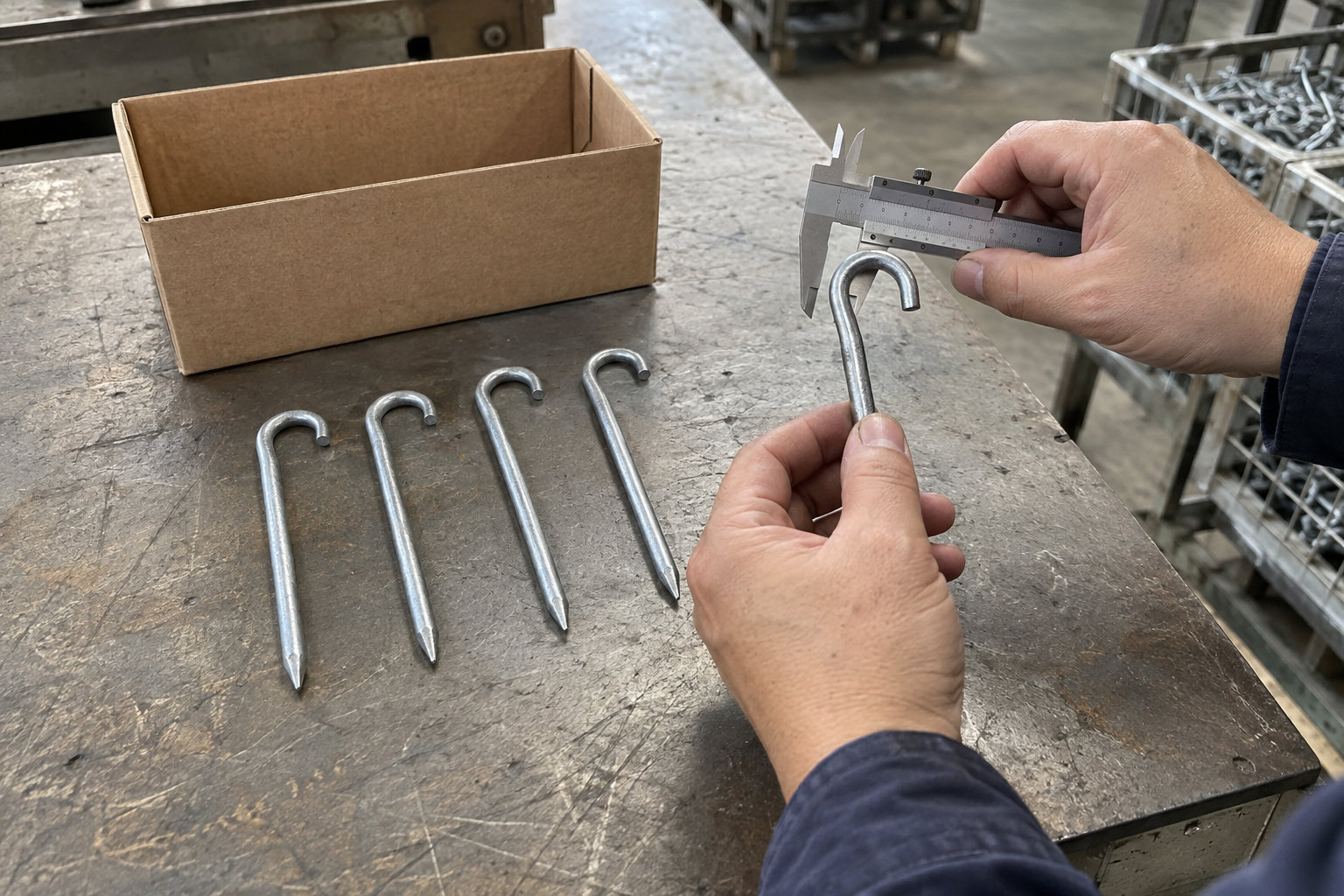
Problem 1: Nail Bending During Installation
Bending is one of the most common concerns with concrete nails. When a nail bends too easily, end users may blame the product immediately. Sometimes the base material is too hard. Sometimes the installation angle is poor. Sometimes the nail material or hardness is not suitable.
From a procurement view, buyers should control what they can control:
- Confirm the intended wall material.
- Request samples before large orders.
- Compare installation feel with existing market products.
- Avoid unrealistic price pressure that forces quality reduction.
- Clarify the size and hardness expectations with the supplier.
Problem 2: Nail Breaking or Chipping
A nail that is too brittle may break under hammer impact. This can be more serious than bending because it may create safety concerns during use. A good factory needs stable heat treatment and inspection habits, but buyers should still avoid making assumptions.
I recommend that buyers ask suppliers how they control consistency. The supplier may describe production checking, sample inspection, dimensional control, and packing inspection. Buyers should also verify any certificates or documents they require. Documentation should be treated as something to check, not something to accept blindly.
Problem 3: Hook Shape Does Not Fit the Market
The hook is the central feature of the product. If the hook is too open, too tight, too short, or poorly formed, the product may not satisfy local users. This is especially important for importers who sell through hardware shops.
A buyer may need to confirm:
| Hook Detail | Why It Matters |
|---|---|
| Hook opening | Determines what can be hung or held |
| Hook bend consistency | Affects product appearance and usability |
| Hook length | Influences the holding function |
| Hook direction | Must match local product expectation |
| Surface smoothness | Helps avoid rough handling and poor appearance |
A sample photo can help, but physical samples are better. Photos can hide small differences in thickness, surface, and forming.
Problem 4: Poor Packaging for Sea Freight
Many importers focus on the product and forget the carton. This is risky. Concrete nails are heavy. Weak cartons can break during handling, especially in long sea freight routes.12
At our factory, we usually ship by sea and support both FCL and LCL. Delivery time is commonly 15–25 days, depending on order quantity and production arrangement. For heavy nail products, carton strength, pallet needs, and container loading should be discussed early.
Packaging choices may include:
- Bulk carton
- Small inner boxes
- Plastic bags
- OEM/ODM printed boxes
- Customer brand logo packaging
- Mixed-size cartons if agreed
A strong package may cost slightly more, but it can protect resale value. Damaged boxes create trouble for wholesalers, even when the nails inside are acceptable.
Problem 5: Wrong Product for the Intended Use
This is the biggest issue. A concrete nail with hook is not automatically the right product just because the buyer wants to hang something on a wall. If the item is heavy, safety-related, or exposed to vibration, the buyer should not rely on a simple hooked nail without proper testing and professional judgment.
I tell buyers directly: if your end customer needs heavy-duty fixing, please consider anchors, screws with plugs, or engineered fastening systems. A hooked concrete nail has its place, but it must stay inside a reasonable application boundary.
That honesty helps long-term business. It is better to lose one unsuitable order than to create market complaints.
How Should Buyers Send an Inquiry for a Concrete Nail With Hook?
A concrete nail with hook inquiry should be specific. If the buyer sends only “give me best price,” the quotation may not reflect the correct size, packing, finish, or market use. A clear inquiry saves time and reduces the risk of wrong product selection.
Buyers should send the size, quantity, packaging method, surface finish, destination port, and intended application when requesting a concrete nail with hook quotation. They should also mention whether they need samples, OEM branding, mixed sizes, or a trial order before bulk purchase.

Why Clear Inquiry Details Matter
As a manufacturer, I can quote faster and more accurately when the inquiry is complete. FOB pricing is not based on the product name alone. It depends on specification, quantity, packing, and production requirements.
For example, two buyers may both ask for a concrete nail with hook, but one wants neutral bulk cartons and the other wants branded retail boxes. The factory cost, packing labor, printing cost, and loading plan may be different.
A Practical Inquiry Template
Importers can use this simple format:
Hello, I need a quotation for concrete nail with hook.
Size: [length × diameter, hook detail if available]
Quantity: [tons / cartons / boxes]
Packaging: [bulk carton / small box / OEM brand]
Finish: [black / bright / galvanized / other]
Intended use: [light hanging / retail hardware / contractor supply]
Destination port: [port name]
Trial order or regular order: [details]
Sample required: [yes/no]
This kind of inquiry helps me check feasibility and offer a realistic FOB price.
What Buyers Should Ask the Supplier
A good buyer does not only ask price. I suggest asking these questions:
- What material is commonly used for this specification?
- Can you provide samples before order confirmation?
- What packaging options are available?
- Can you support OEM or ODM packaging?
- What is the MOQ?
- What is the normal delivery time?
- Can you ship by FCL or LCL?
- How should I inspect the product before shipment?
For our company, Dingzhou BEST Hardware, we can support OEM/ODM customization, including product, packaging, and brand logo. Our normal MOQ is 5 tons or 200 boxes. Our usual delivery time is 15–25 days, depending on the order quantity. We mainly serve markets such as the Middle East, Africa, Southeast Asia, and South America.
How Trial Orders Help Importers
A trial order can be useful when the buyer is not sure about local market acceptance. It allows the importer to test size selection, packaging style, pricing, and customer feedback before committing to larger volume.
However, trial orders still need clear specifications. A small wrong order does not teach the buyer much. A well-planned trial order can answer real questions:
- Which size sells fastest?
- Which packaging does the local shop prefer?
- Does the hook design match customer habits?
- Does the installation feel meet expectations?
- Is the landed cost suitable for wholesale pricing?
I see trial orders as a practical bridge between sample checking and full container purchasing. They reduce uncertainty for both sides.
Frequently Asked Questions
Is a concrete nail with hook suitable for heavy-duty hanging?
No. I do not recommend a concrete nail with hook for heavy-duty or safety-critical hanging unless qualified testing and professional evaluation confirm the application. It is better understood as a light-duty fixing or hanging product for suitable concrete, brick, or masonry surfaces.
What information do I need for a concrete nail with hook quotation?
You should provide the size, quantity, packaging method, surface finish, destination port, and intended use. If you need OEM packaging or brand logo printing, you should mention that too. These details help the supplier give a more accurate FOB quotation.
Can I request samples before placing a bulk order?
Yes. Our factory can provide samples for quality checking. Samples usually require a basic fee, and the fee may be discussed for return or deduction in a formal order. I suggest checking size, hook shape, finish, packaging, and basic installation feel.
What is the usual MOQ for concrete nail with hook orders?
For 定州百斯特, the usual MOQ is 5 tons or 200 boxes, depending on the specification and packaging. Trial orders can be discussed. The final order plan should match the buyer’s local market, sales channel, and shipping method.
Can the packaging be customized for my market?
Yes. We support OEM/ODM customization, including product details, packaging style, and brand logo. Buyers should provide artwork, box requirements, quantity, and target market information early because custom packaging affects cost, lead time, and quotation accuracy.
Conclusion
A concrete nail with hook should be selected by use case, not only by unit price. The hook makes it useful for light-duty hanging or holding, but it also requires careful checking of hook shape, nail hardness, size, finish, and packaging. I recommend that importers define the intended application first, then request samples and a clear FOB quotation. If you need factory support, contact 定州百斯特 at [email protected] or WhatsApp +8618331061136 with your specifications, quantity, packaging, and market use.
-
"Nail (fastener)", https://en.wikipedia.org/wiki/Nail_(fastener). Reference sources identify masonry or concrete nails as hardened nails intended for driving into hard substrates such as concrete, brick, or masonry; this supports the general product definition but does not establish the load rating of a hooked version. Evidence role: definition; source type: encyclopedia. Supports: A neutral reference should define masonry or concrete nails as hardened nails intended for use in hard materials such as concrete, brick, or masonry.. Scope note: The support is definitional and does not directly test the specific hooked product described in the article. ↩
-
"Post-Installed Anchors – A Literature Review", https://nvlpubs.nist.gov/nistpubs/Legacy/IR/nistir6096.pdf. Engineering guidance for post-installed concrete anchors treats expansion anchors and similar systems as designed and tested fastening devices for specified loads; this supports distinguishing them from light-duty hooked nails, although it does not evaluate any individual nail product. Evidence role: expert_consensus; source type: institution. Supports: Institutional guidance should distinguish engineered concrete anchors from simple nails or non-structural fasteners for load-bearing applications.. Scope note: The source would support the category distinction, not prove that every hooked concrete nail is unsuitable for every heavier use. ↩
-
"Nail (fastener)", https://en.wikipedia.org/wiki/Nail_(fastener). General fastener references describe masonry or concrete nails as hardened nails used by driving them into concrete or masonry substrates; this supports the article’s contrast with a hooked nail but does not address hook geometry. Evidence role: definition; source type: encyclopedia. Supports: A reference source should describe concrete or masonry nails as fasteners driven into hard masonry materials.. Scope note: The support is about ordinary concrete or masonry nails, not the hooked variant specifically. ↩
-
"Load Capacity of Screw Anchor Installed in Concrete … – PMC", https://pmc.ncbi.nlm.nih.gov/articles/PMC10934117/. Experimental and engineering studies of fasteners in concrete and masonry report that performance depends on substrate properties, fastener geometry, installation method, and loading; this supports the article’s multi-factor caution, though not the exact performance of a particular hooked nail. Evidence role: mechanism; source type: paper. Supports: A research or testing source should show that fastener performance depends on substrate properties, installation conditions, dimensions, and load conditions.. Scope note: The evidence would be mechanistic and contextual unless it tests hooked concrete nails directly. ↩
-
"Increasing the Strength and Impact Toughness of Carbon …", https://pmc.ncbi.nlm.nih.gov/articles/PMC11313366/. Materials-engineering references describe the tradeoff between hardness, ductility, and toughness in steel, explaining why softer steel may deform while brittle steel may fracture under impact; this supports the article’s failure-mode explanation but not the defect rate of any nail batch. Evidence role: mechanism; source type: education. Supports: A materials source should explain the relationship between hardness, ductility, toughness, bending, and brittle fracture under impact.. Scope note: The support is based on general steel behavior rather than product-specific testing. ↩
-
"Concrete Nails or Common Nails for Your Project?", https://www.sjzsunshine.com/concrete-nail-vs-common-nail. Materials and fastener references commonly distinguish hardened high-carbon steel masonry nails from softer low-carbon common nails; this supports the article’s material comparison without specifying the composition of every supplier’s product. Evidence role: general_support; source type: education. Supports: A materials or manufacturing source should state that concrete or masonry nails are commonly made from hardened higher-carbon steel, while many common nails use softer low-carbon steel.. Scope note: The support is general to nail categories and may not apply to all manufacturers or grades. ↩
-
"Increasing the Strength and Impact Toughness of Carbon …", https://pmc.ncbi.nlm.nih.gov/articles/PMC11313366/. Materials-science sources explain that heat treatment of carbon steel can increase hardness and resistance to plastic deformation; this supports the stated mechanism for reducing bending during installation, although it does not quantify nail performance in concrete or brick. Evidence role: mechanism; source type: education. Supports: A materials-science source should explain that heat treatment can increase steel hardness and resistance to plastic deformation.. Scope note: The source would support the metallurgical mechanism, not a specific field installation result. ↩
-
"ISO metric screw thread", https://en.wikipedia.org/wiki/ISO_metric_screw_thread. Fastener standards use nominal dimensions together with tolerances and material or finish specifications, supporting the point that identical nominal sizes may not represent identical products; this is contextual evidence rather than proof of variation among the suppliers discussed. Evidence role: general_support; source type: institution. Supports: A standards source should show that fasteners are manufactured within dimensional tolerances and that nominal size does not fully describe all product characteristics.. Scope note: The source would explain the standards concept of tolerances, not compare the article’s suppliers. ↩
-
"The Economics of the ‘Buy Local’ Trend – UNL Digital Commons", https://digitalcommons.unl.edu/cgi/viewcontent.cgi?article=2256&context=agecon_cornhusker. Marketing research links product performance to market orientation and alignment with customer needs, supporting the article’s claim that technical quality alone may not ensure sales success; the evidence is general and not specific to concrete nails. Evidence role: general_support; source type: paper. Supports: Marketing research should support the idea that alignment with customer needs and market preferences affects product performance.. Scope note: The support is drawn from general marketing research rather than hardware-import case data. ↩
-
"Evaluating the Performance of Post-Installed Mechanical …", https://www.academia.edu/65329997/Evaluating_the_Performance_of_Post_Installed_Mechanical_Anchors_in_Concrete_Reported_by_ACI_Committee_355_ACI_355_201. Standardized test methods for concrete anchors specify controlled load-testing procedures and reporting requirements, supporting the distinction between informal sample checks and certified load testing; the standards may apply most directly to anchors rather than hooked nails. Evidence role: expert_consensus; source type: institution. Supports: A standards source should describe formal load-test procedures for concrete anchors or fasteners, showing that such testing is different from informal sample inspection.. Scope note: The evidence is strongest for regulated anchor testing and only contextual for non-rated hooked nails. ↩
-
"The Effect of Zinc Bath Formulation on the Corrosion … – PMC", https://pmc.ncbi.nlm.nih.gov/articles/PMC11923840/. Corrosion guidance explains that unprotected steel is vulnerable to oxidation and that protective coatings such as zinc galvanizing reduce corrosion rates; this supports the article’s concern about rapid rusting while not predicting service life for a specific finish. Evidence role: mechanism; source type: government. Supports: A government or technical corrosion source should explain that steel corrodes in suitable environments and that protective coatings such as zinc galvanizing can slow corrosion.. Scope note: The source would support the corrosion mechanism, not a durability guarantee for any product. ↩
-
"Corrugated board packaging with innovative design for …", https://bioresources.cnr.ncsu.edu/resources/corrugated-board-packaging-with-innovative-design-for-enhanced-durability-during-transport/. Transport-packaging standards emphasize compression strength, handling hazards, and distribution testing for corrugated cartons, supporting the claim that weak cartons can fail during freight handling; the source would not measure damage rates for this specific nail shipment. Evidence role: general_support; source type: institution. Supports: A packaging standard or testing institution should support that carton strength and distribution testing are relevant to preventing damage during shipment and handling.. Scope note: The support is about packaging performance generally, not a direct sea-freight study of concrete nails. ↩