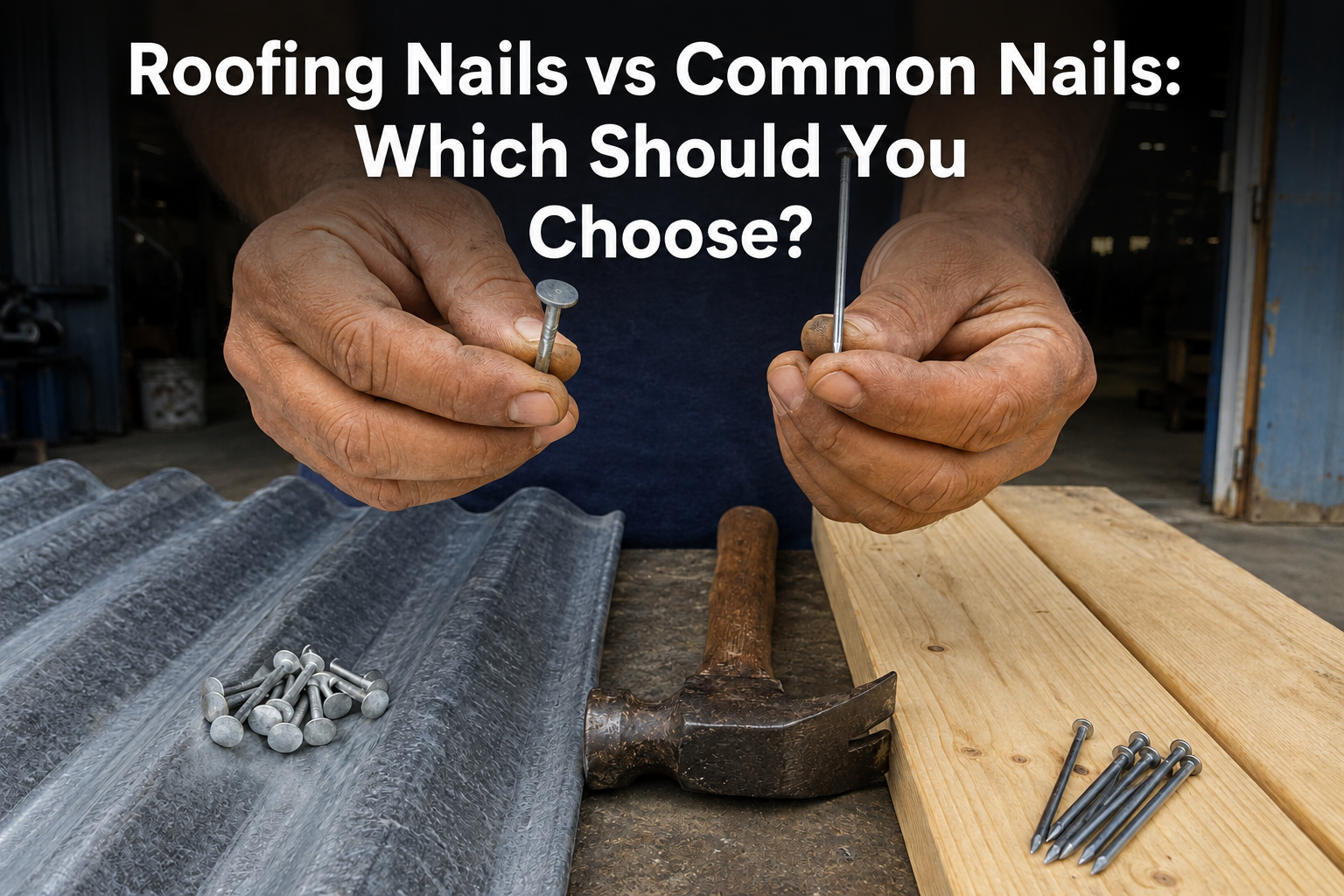
Roofing nails vs common nails is a small choice that can create a big problem when buyers treat both products as interchangeable. A wrong nail can lead to leaks, loose sheets, failed fastening, and warranty disputes. The better solution is to select nails by application, material, coating, and performance requirement.
Roofing nails are designed for roofing materials, while common nails are general-purpose construction fasteners.1 Roofing nails usually have a wider head, shorter body, and sometimes a ring shank to improve sealing, load distribution, and pull-out resistance.2 Common nails have a smaller head and longer shank for wood framing, crates, pallets, and general fixing.
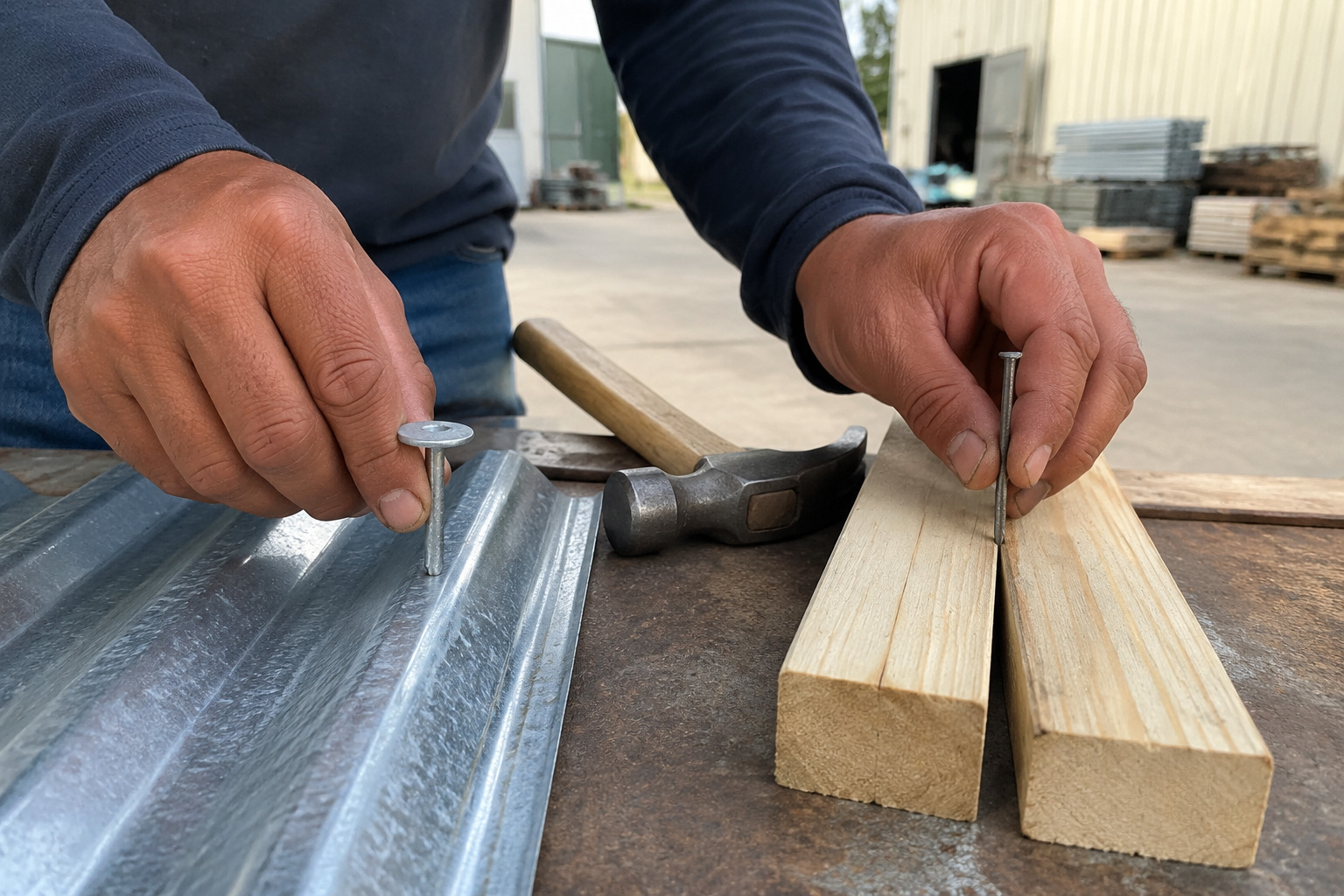
I have seen many buyers focus only on diameter, length, and price. That is understandable, especially in competitive wholesale markets. However, nail design is never random. The head, shank, point, coating, and packaging all affect how the nail performs after installation.
Roofing Nails vs Common Nails: Are They Interchangeable?
Many buyers ask this question because both products look simple and both are made from steel wire. That similarity can be misleading. If a contractor uses the wrong nail, the problem may not appear on day one. It may appear after rain, wind, heat, or repeated expansion and contraction.
Roofing nails and common nails are not interchangeable because they are engineered for different loads, materials, and failure risks.3 Roofing nails secure roofing sheets, shingles, or felt under weather exposure. Common nails provide general holding power in wood and construction materials where waterproofing and roof uplift resistance are not the main requirements.
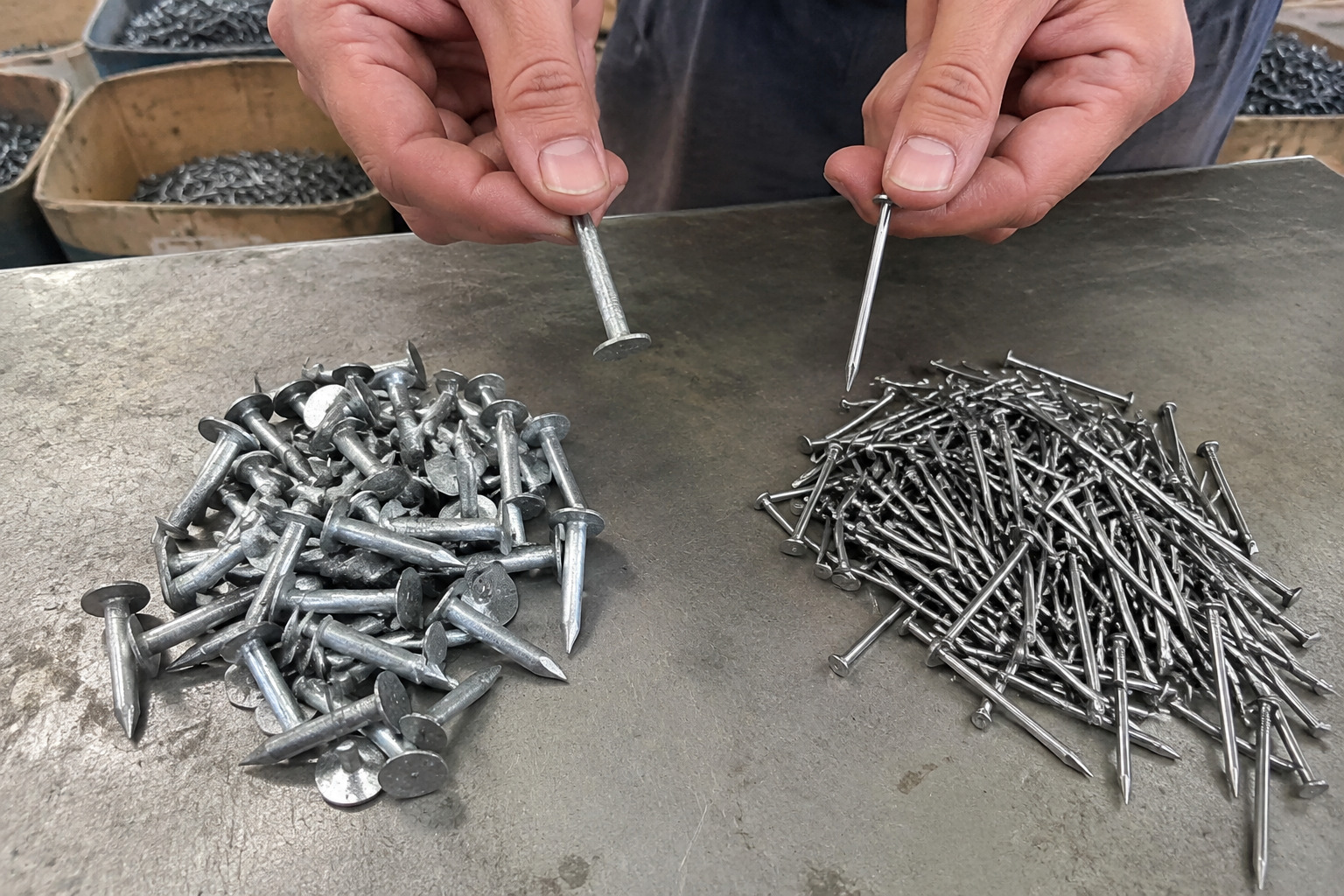
Why the “same nail” idea causes real problems
In my production and quality control work, I often start by asking one simple question: What will the nail fasten? That question matters more than a small price difference per carton.
A common nail may enter wood easily and hold well in many general applications. However, roofing work brings different challenges:
- Rainwater can enter through poor fastening points.4
- Wind can lift roofing sheets or shingles.5
- Roofing materials can tear around small nail heads.
- Heat can expand and contract metal sheets.
- Corrosion can reduce service life in humid or coastal areas.6
A roofing nail is made to address these risks. Its large flat head or umbrella head spreads pressure across a wider area. This helps prevent roofing felt, asphalt shingles, or thin metal sheets from pulling through.7 In some specifications, a washer or cap improves sealing. Some roofing nails also use ring shanks or spiral shanks to improve withdrawal resistance.
Common nails are different. They are often used for:
- Wood framing
- Pallet manufacturing
- Crate assembly
- General carpentry
- Temporary fixing
- Low-risk construction fastening
They usually have a smaller head compared with roofing nails. Their design focuses on driving strength and holding power in wood, not roof waterproofing.
| Feature | Roofing Nails | Common Nails | Practical Meaning |
|---|---|---|---|
| Head size | Large flat or umbrella head | Smaller flat head | Roofing nails distribute load better on roof materials |
| Main use | Roofing sheets, shingles, felt | Wood, crates, pallets, general fixing | Application decides the correct nail |
| Shank style | Smooth, ring, spiral, or twisted | Usually smooth | Ring shank improves pull-out resistance8 |
| Weather exposure | High | Medium to low | Roofing nails often need stronger corrosion protection |
| Failure risk | Leaks, roof uplift, material tearing | Loose wood joints, splitting | Different failures require different designs |
A nail is not only a piece of wire with a head. It is a fastening system designed for a specific failure mode.
For wholesalers, this difference is important. If an end customer buys common nails for roofing because the price is lower, the wholesaler may face complaints later. Even when the product quality is correct, the application choice may be wrong. I always recommend that buyers confirm the final use before comparing quotations.
Why Do Roofing Nails Have a Larger Head and Special Shank?
A roofing nail looks simple, but its shape has a purpose. The larger head is not only for appearance. The shank design is also not only a style choice. These features protect the roof system against water, wind, and material movement.
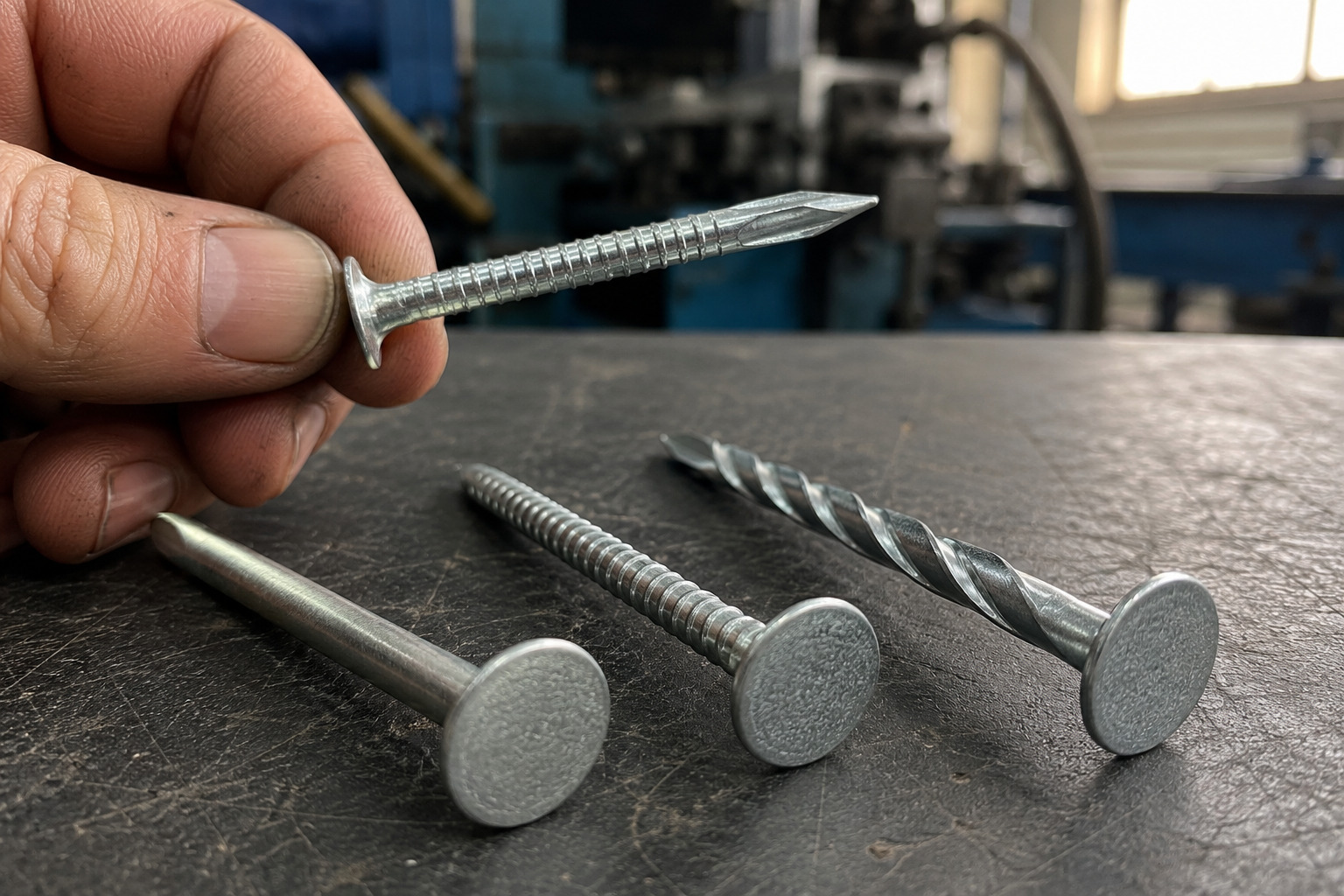
Roofing nails have a larger head to spread pressure and reduce pull-through in roofing materials. They may use ring shanks, spiral shanks, or twisted shanks to improve withdrawal resistance. These features help roofing sheets, shingles, and felt stay fixed under rain, wind, vibration, and temperature changes.
The head controls load distribution and sealing
When I check roofing nail samples, I pay close attention to the head. A weak or uneven head can create installation problems. A roof is not like a hidden wood joint. A roof fastener must hold the material and help protect it from water.
The large head of a roofing nail gives three practical benefits:
-
Better load distribution
The head spreads force over a larger surface. This helps prevent tearing in felt, shingles, thin sheet metal, or fiber cement materials. -
Improved sealing support
A wide head presses the roofing material down more evenly. When used with a washer or cap, it can help reduce water entry around the hole. -
Less pull-through risk
During wind uplift, small heads may pull through soft or thin materials. A roofing nail head resists this failure better.
In many developing markets, roofing nails are used with corrugated sheets, galvanized roofing panels, and asphalt materials. In these applications, the fastener must survive real outdoor conditions, not just a quick installation test.
The shank affects pull-out resistance
The shank is the body of the nail. A smooth shank is easier to drive and usually cheaper. However, it may have lower withdrawal resistance than a ring shank or spiral shank.
| Shank Type | Typical Benefit | Common Use |
|---|---|---|
| Smooth shank | Easy driving, economical | Basic roofing, general fixing |
| Ring shank | Higher withdrawal resistance | Roofing in windy areas, wood substrate |
| Spiral shank | Better grip through twisting action | Sheet fastening, wood applications |
| Twisted shank | Improved holding in some materials | Roofing and special construction use |
A ring shank roofing nail creates more friction inside wood or other base materials. The rings act like small ridges. They resist backward movement when wind pulls upward on the roof sheet.
This does not mean every roofing project needs ring shank nails. The correct choice depends on:
- Roof material
- Base material
- Local wind conditions
- Nail length and diameter
- Corrosion environment
- Installation method
- Buyer’s target price level
For example, a buyer supplying contractors in a coastal area may need stronger corrosion protection than a buyer selling into a dry inland region. A buyer serving industrial roofing projects may need different specifications than one supplying small housing repairs.
Coating is part of the performance
Roofing nails often use coatings such as galvanized finish to resist corrosion. Common nails may be bright polished, electro-galvanized, black, or other finishes depending on the market.
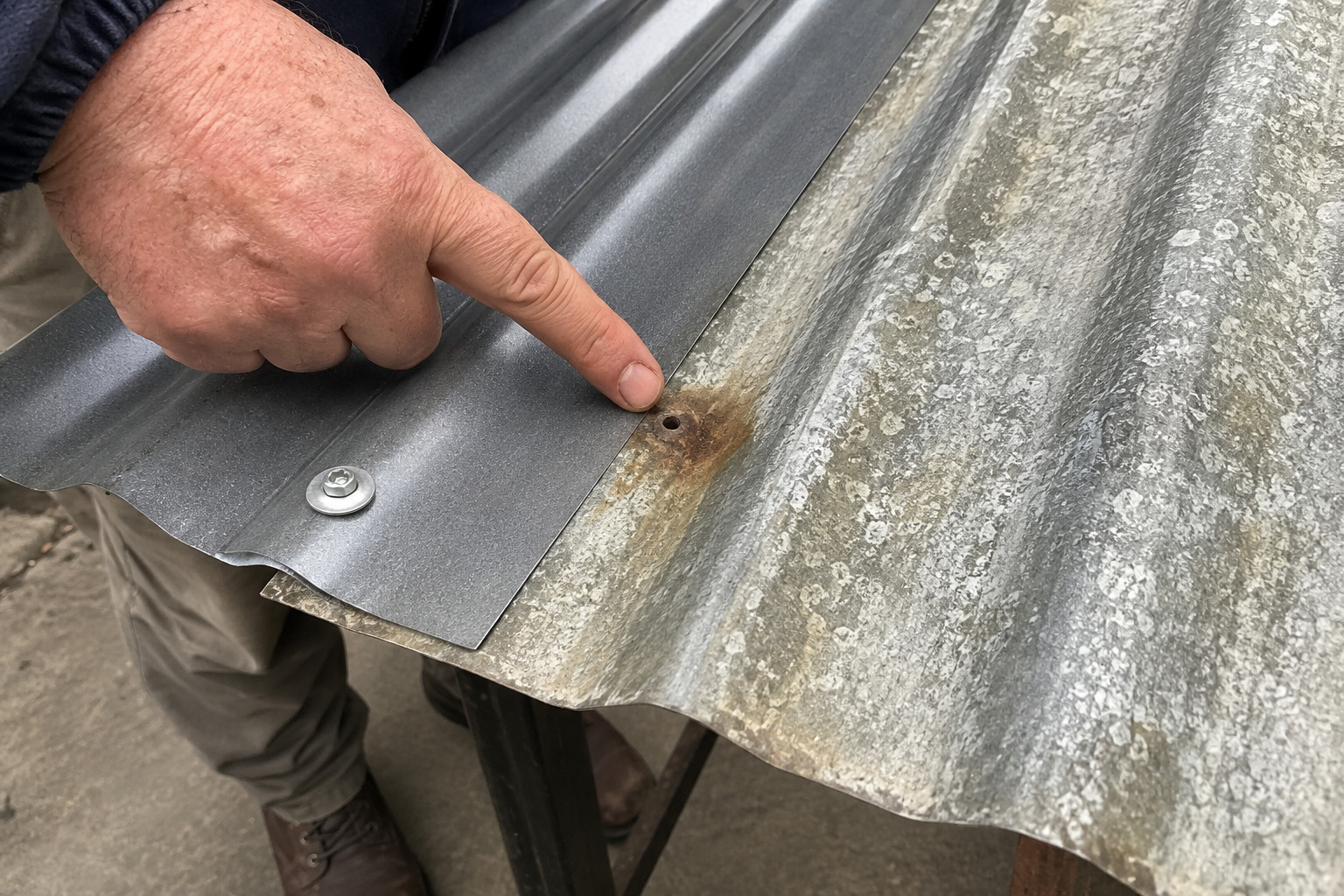
For roofing, corrosion protection is not a small detail. Once rust starts, the nail can lose strength and stain the roof surface.9 In severe cases, the fastener can fail before the roofing material reaches its expected service life.
I always suggest that buyers treat coating as a performance factor, not only a color preference. If a supplier claims a specific coating, buyers should request samples and check the finish, surface consistency, packing protection, and any available test documents.
Roofing Nails vs Common Nails: What Happens If You Use the Wrong One?
The lowest nail price can become expensive when the product fails in the field. A nail that works in a wooden crate may not work on a roof. Misapplication can damage the building and the seller’s reputation.
Using the wrong nail can cause roof leaks, sheet loosening, shingle damage, structural moisture problems, higher maintenance costs, and customer complaints.10 Common nails may lack the head size, corrosion resistance, or pull-out resistance needed for roofing. Roofing nails may also be unsuitable for deep structural wood fastening.
The first risk is water leakage
Roof leaks are often blamed on the roofing sheet or installer. Sometimes the fastener is the hidden problem. If the nail head is too small, it may not press the material properly. If the nail corrodes, the hole can enlarge. If the shank loosens, rainwater can enter.
Water leakage can lead to:
- Ceiling stains
- Mold growth
- Damaged insulation
- Rotten timber
- Electrical safety risks
- Customer claims
For wholesalers, this is a business risk. A customer rarely separates “wrong product selection” from “bad supplier.” If a contractor installs common nails on roofing sheets and problems appear later, the hardware seller may still receive the complaint.
The second risk is roof uplift
In windy areas, roofing materials face upward pulling force. A nail must resist withdrawal from the substrate. A smooth common nail with a smaller head may not provide enough resistance for some roofing applications.11
A roofing nail with a larger head and suitable shank provides better security. In higher-risk locations, buyers should work with qualified engineers or experienced contractors to confirm the fastening pattern, nail size, and substrate compatibility.
The third risk is shortened service life
A common nail may be strong enough at installation but fail early under moisture. Roofing fasteners face rain, humidity, and sometimes salt air. If corrosion protection is weak, the nail may rust long before the roof material wears out.
Here is a simple way to evaluate the risk:
| Misuse Scenario | Likely Problem | Business Impact |
|---|---|---|
| Common nail used for roofing sheet | Pull-through or leakage | Complaints and repair costs |
| Bright common nail used outdoors | Fast corrosion | Short product life |
| Short nail used in thick roofing system | Weak holding | Loose roofing material |
| Roofing nail used for deep wood framing | Insufficient penetration | Weak structural fastening |
| Wrong head type used on soft roof material | Tearing around fastener | Roof failure and poor appearance |
The fourth risk is reputation damage
In wholesale business, repeat orders depend on trust. Contractors and dealers remember which products caused problems. They also remember which suppliers helped them choose correctly.
I once handled a quality discussion where the nail itself met the ordered specification, but the application was wrong. The buyer had selected a cheaper nail for outdoor fastening without considering rain exposure. The lesson was clear: correct specification protects both sides.
Wholesalers can reduce risk by asking better questions before confirming orders:
- What material will the nail fasten?
- Is the application indoor or outdoor?
- Will the nail contact moisture or salt air?
- What base material will receive the nail?
- Does the contractor need smooth, ring, spiral, or twisted shank?
- What head style is required?
- What packaging size does the local market prefer?
These questions may take a few minutes, but they can prevent serious after-sales issues.
How Should Wholesalers Evaluate Roofing Nails vs Common Nails Before Buying?
Many buyers compare only price per ton or price per carton. That method is simple, but it can hide differences in wire quality, head forming, shank consistency, coating, packing, and application suitability. A better buying process compares performance and supplier reliability.
Wholesalers should evaluate roofing nails vs common nails by application, size, head design, shank type, coating, packing, sample quality, production consistency, and supplier communication. The best choice is not always the cheapest nail. It is the nail that fits the end use and reduces field failure risk.
Step 1: Start with the final application
Before requesting a quotation, I suggest that buyers define the application clearly. A quotation should not say only “nails.” It should include product type, specification, quantity, and packing.
For example:
- Roofing nail, umbrella head, galvanized, 2.5 mm × 50 mm, 25 kg carton
- Common nail, polished, 3.4 mm × 75 mm, 20 kg carton
- Ring shank roofing nail, galvanized, customized packing, buyer logo
At DINGZHOU BEST HARDWARE, the FOB quotation is usually based on product + specification + quantity + packing method. This approach helps avoid confusion and makes price comparison more accurate.
Step 2: Check physical quality
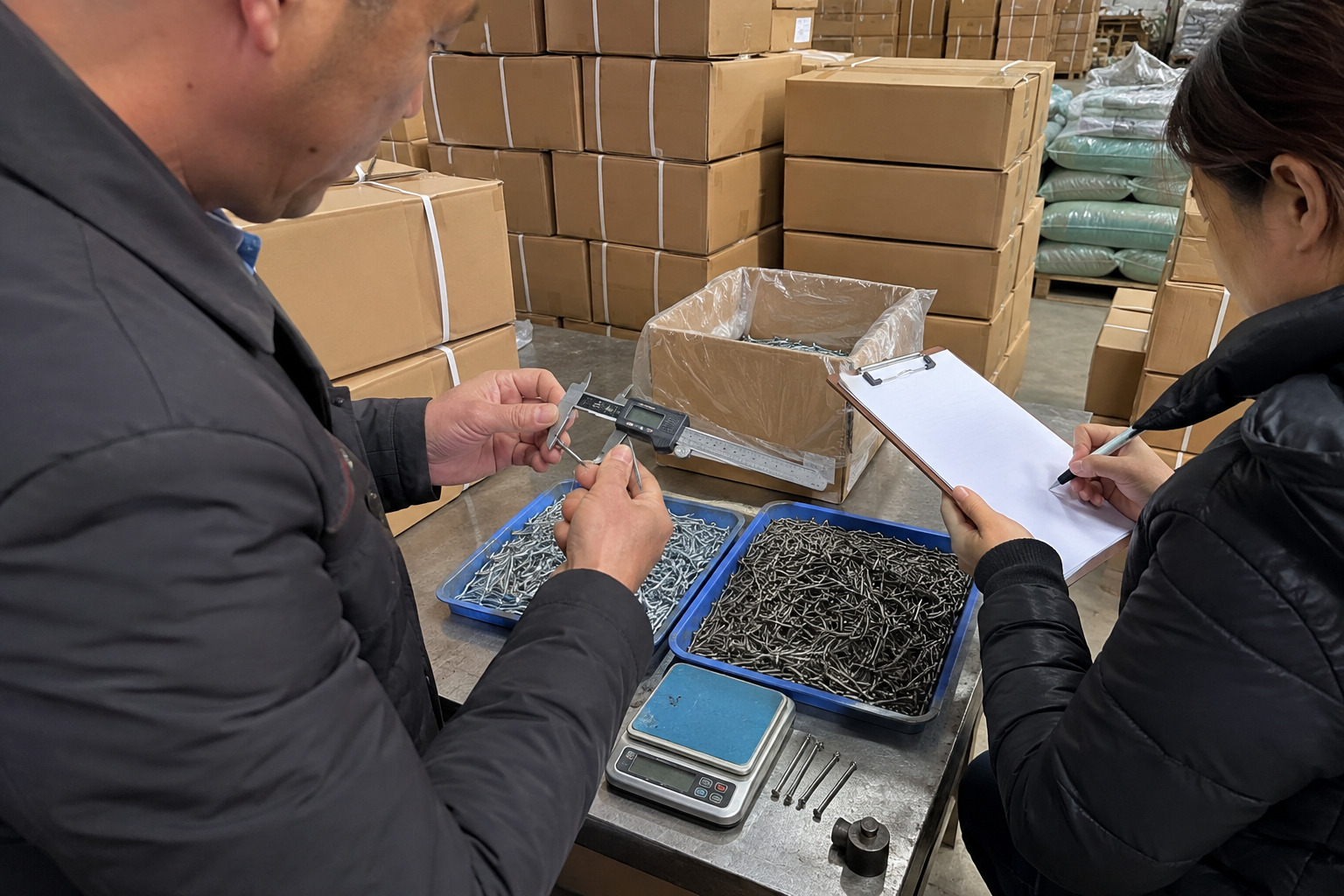
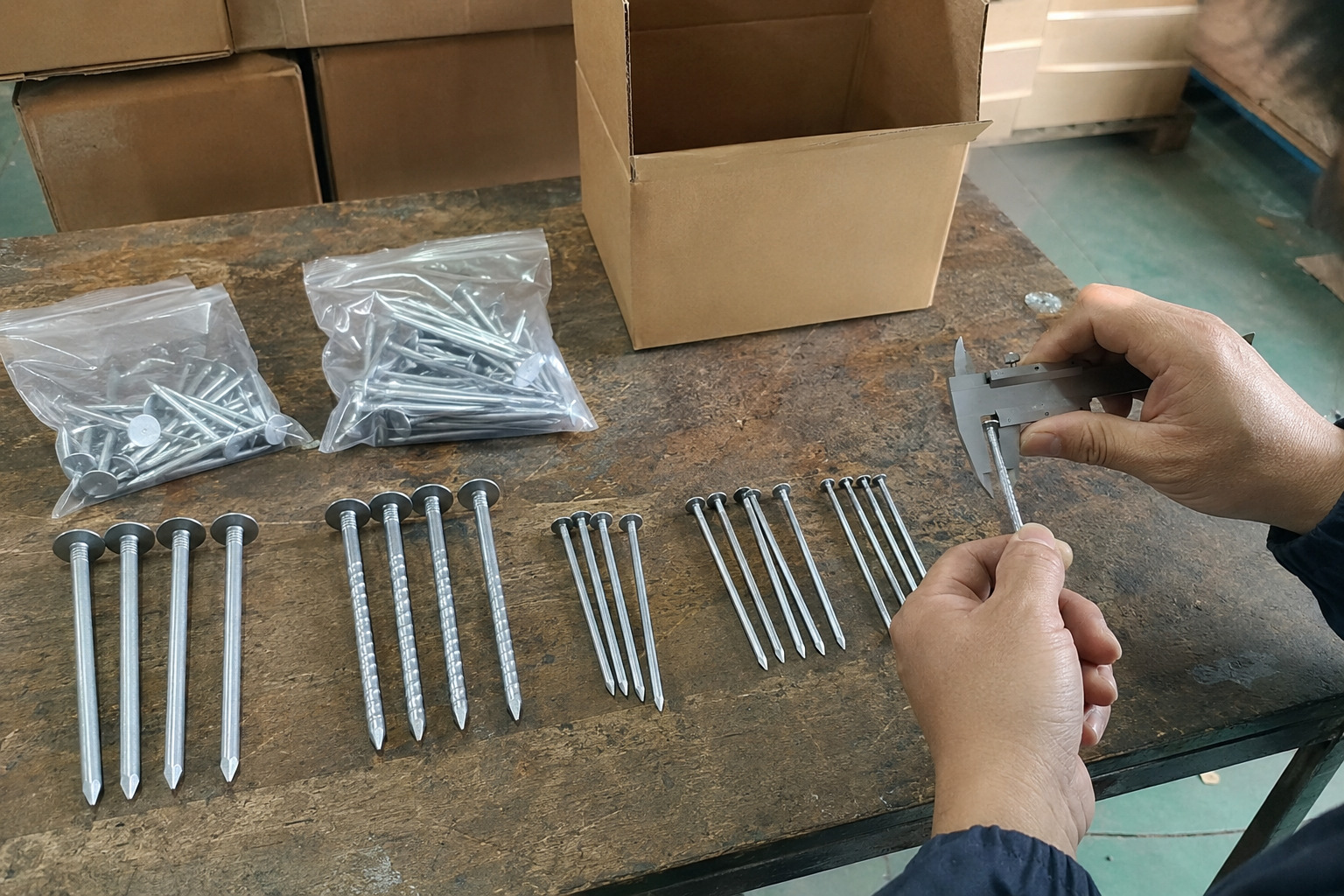
A buyer should inspect samples before placing a larger order. Samples can show whether the factory controls production well.
For roofing nails, check:
- Head diameter and flatness
- Umbrella or cap shape if required
- Shank straightness
- Point sharpness
- Ring or spiral consistency
- Coating coverage
- Rust or oil marks
- Weight per carton
- Packing strength
For common nails, check:
- Nail length and diameter
- Head centering
- Shank straightness
- Point formation
- Surface finish
- Driving behavior
- Carton or box weight consistency
I recommend that buyers test samples with the same material their customers use. A laboratory test is useful, but a practical field test also matters. If a buyer serves roofing contractors, the sample should be tested on roofing sheets, shingles, or local roof boards.
Step 3: Match coating to environment
Different markets need different finishes. In humid regions, galvanized roofing nails may be preferred. In dry indoor applications, polished common nails may be enough.
| Environment | Better Nail Choice | Reason |
|---|---|---|
| Indoor woodwork | Common nail, polished or bright | Cost-effective for dry use |
| Outdoor roofing | Galvanized roofing nail | Better corrosion resistance |
| Windy roofing area | Ring shank roofing nail | Stronger withdrawal resistance |
| Coastal or humid region | Heavier protective coating may be needed | Rust risk is higher |
| Temporary fixing | Common nail | Lower cost and easy removal |
Buyers should verify any coating claims with supplier documents, samples, and inspection when needed. If the project has special requirements, a qualified professional should confirm the fastener specification.
Step 4: Evaluate supplier capability
The right supplier is not only a low-price source. A good supplier helps reduce procurement risk. When I evaluate nail production, I look for process control from wire drawing to heading, pointing, polishing, galvanizing, and packing.
Useful supplier evaluation questions include:
- Does the supplier manufacture the product or only trade it?
- Can the supplier support OEM/ODM packaging?
- Can the supplier provide samples for quality checking?
- Can the supplier handle trial orders?
- What is the normal delivery time?
- Can the supplier ship by FCL and LCL?
- Does the supplier understand the target market?
DINGZHOU BEST HARDWARE is a manufacturing factory with nail production experience. We mainly supply markets such as the Middle East, Africa, Southeast Asia, and South America. We support OEM/ODM customization for product, packaging, and brand logo. Our MOQ is usually 5 tons or 200 cartons, and our normal lead time is 15–25 days, depending on order quantity. Samples can be provided for quality checking, usually with a basic sample fee that may be discussed for return in a formal order.
Step 5: Balance price and liability
A small saving on fasteners can create a large cost if a roof fails. Buyers should compare total business impact, not only unit price.
A practical selection rule is:
Use common nails for general wood and construction fastening. Use roofing nails for roof materials, weather exposure, and applications where sealing and pull-out resistance matter.
This rule is simple, but it prevents many expensive mistakes.
What Specifications Matter Most When Comparing Roofing Nails vs Common Nails?
Specifications can feel like a list of numbers, but each number affects real-world performance. If buyers do not understand the meaning behind the specification, they may choose a product that looks correct on paper but fails in use.
The most important specifications are nail length, wire diameter, head diameter, shank type, point shape, surface coating, packing weight, and material consistency. In roofing nails vs common nails selection, the head and shank often decide whether the nail is suitable for roofing or only for general fastening.
Length and diameter affect penetration and strength
Length decides how deep the nail enters the base material. Diameter affects bending strength and holding power.12 A thin nail may bend during driving. A short nail may not hold enough material. A very thick nail may split wood or damage thin sheets.
For roofing work, the nail must pass through the roofing material and enter the base with enough depth. For common construction work, the nail length is often selected based on the thickness of wood pieces being joined.
Head diameter affects pull-through resistance
This is one of the biggest differences between roofing nails and common nails. Roofing materials may be soft, thin, or flexible. A small head can pull through under wind or installation pressure. A large head reduces that risk.
If a customer says, “Can I use common nails on roofing to save money?” I usually ask, “Will the small head protect the roof material under wind and rain?” In many cases, the answer is no.
Shank design affects holding power
Smooth shank nails are common and economical. Ring shank and spiral shank nails can improve holding power. However, they may cost more and may require correct installation tools or technique.
A buyer should not choose ring shank only because it sounds stronger. The buyer should choose it because the application needs more withdrawal resistance.
Coating affects durability
For roofing, corrosion is a serious issue. A galvanized surface can improve resistance, but coating quality should be checked. Uneven coating, scratches, or poor packing can reduce protection.
For common nails used indoors, a bright or polished finish may be enough. For outdoor construction, buyers should think carefully about corrosion exposure.
Packing affects resale and field use
In wholesale markets, packaging matters. Contractors want clear labeling and strong cartons. Dealers want packaging that matches local buying habits. OEM packing can improve brand recognition.
Common options include:
- Bulk carton packing
- Small box inside carton
- Buyer brand logo
- Customized label
- Plastic bag or woven bag protection
- Palletized loading for container shipments
At 定州百斯特, we can support custom packaging and brand logo requirements. I suggest buyers confirm packing before quotation because packing directly affects FOB price, loading quantity, and local resale value.
Frequently Asked Questions
Can I use common nails instead of roofing nails?
I do not recommend using common nails for roofing unless a qualified contractor confirms the application. Common nails usually have smaller heads and may not provide enough sealing, pull-through resistance, or corrosion protection for roof exposure.
Are ring shank roofing nails better than smooth shank roofing nails?
Ring shank roofing nails usually provide higher withdrawal resistance than smooth shank nails. They are useful in windy areas or demanding roofing applications. However, the best choice depends on roof material, base material, installation method, and project requirements.
What coating is best for roofing nails?
Galvanized roofing nails are commonly used because they offer better corrosion resistance than bright or polished nails. In coastal, humid, or high-rainfall areas, buyers should verify coating quality and consider project-specific requirements before ordering.
Why do roofing nails have large heads?
Roofing nails have large heads to distribute pressure, reduce pull-through, and help secure roofing materials. The larger head also supports better sealing around the fastening point, especially when used with suitable roofing materials or washers.
What information should I provide when asking for a nail quotation?
You should provide product type, nail length, wire diameter, head type, shank type, coating, quantity, packing method, destination port, and any OEM requirements. Clear specifications help the factory provide a more accurate FOB quotation.
Conclusion
Roofing nails vs common nails is not just a comparison of two similar fasteners. It is a decision about application safety, roof performance, customer satisfaction, and business reputation. Roofing nails are designed for roof materials, weather exposure, sealing support, and pull-out resistance. Common nails are better suited for general wood and construction fastening. If you need samples, OEM packaging, or a trial order for your market, contact 定州百斯特 at [email protected] or WhatsApp +8618331061136.
-
"Wood Handbook: Wood as an Engineering Material", https://research.fs.usda.gov/fpl/wood-handbook. A general reference on nail types distinguishes common nails used in general wood construction from roofing nails used to attach roofing materials, supporting the article’s categorical distinction between the two fastener types. Evidence role: definition; source type: encyclopedia. Supports: A neutral reference should define common nails as general-purpose nails and roofing nails as nails used to fasten roofing materials.. Scope note: Such a source supports the product definitions, but it does not validate every application-specific performance claim in the article. ↩
-
"Withdrawal capacity of plain, annular shank and helical …", https://composites.umaine.edu/publication/withdrawal-capacity-of-plain-annular-shank-and-helical-shank-nail-fasteners-inspruce-pine-fir-lumber/. Roofing fastener specifications commonly require broad nail heads and appropriate shank dimensions for attachment of roofing materials, which supports the article’s description of roofing nails as purpose-built rather than interchangeable with common nails. Evidence role: general_support; source type: institution. Supports: A roofing standard or technical guidance should show that roofing nails are specified with broad heads and suitable shanks for fastening roofing materials.. Scope note: The source would support typical design characteristics, but specific nail dimensions vary by roof material, jurisdiction, and installation standard. ↩
-
"Fact Sheet 3.3.1: Roof Systems—Sloped Roofs", https://www.fema.gov/sites/default/files/documents/fema_p-2181-fact-sheet-3-3-1-roof-systems-sloped-roofs.pdf?bdr_campaign=BDR-DIG-DIR-ROOF-KY-PHO-DIRECTORY-202510-LEXINGTONEXTERNALDIRECTORY. Building and hazard-mitigation guidance treats roofing fasteners as specified components of roof assemblies, supporting the view that roofing nails and general common nails are not automatically interchangeable in roofing applications. Evidence role: expert_consensus; source type: government. Supports: A building-code or public technical guidance source should show that roofing fasteners are specified according to roof covering, substrate, and exposure conditions.. Scope note: The source would establish the need for application-specific fastener selection, but it may not compare every commercial roofing nail and common nail variant directly. ↩
-
"[PDF] Fact Sheet 3.3.1: Roof Systems—Sloped Roofs | FEMA", https://www.fema.gov/sites/default/files/documents/fema_p-2181-fact-sheet-3-3-1-roof-systems-sloped-roofs.pdf?bdr_campaign=BDR-DIG-DIR-ROOF-KY-PHO-DIRECTORY-202510-LEXINGTONEXTERNALDIRECTORY. Building-envelope literature identifies roof penetrations and inadequately sealed fastening points as potential paths for water intrusion, supporting the article’s claim that poor fastening can allow rainwater entry. Evidence role: mechanism; source type: research. Supports: A building science source should explain that roof penetrations and failed fastener seals can become paths for water intrusion.. Scope note: This support is mechanism-based and does not prove that any specific nail in the article will leak in a given installation. ↩
-
"Fact Sheet 3.3.1: Roof Systems—Sloped Roofs", https://www.fema.gov/sites/default/files/documents/fema_p-2181-fact-sheet-3-3-1-roof-systems-sloped-roofs.pdf?bdr_campaign=BDR-DIG-DIR-ROOF-KY-PHO-DIRECTORY-202510-LEXINGTONEXTERNALDIRECTORY. Government wind-mitigation guidance describes wind uplift forces on roof coverings and the role of fasteners in resisting those forces, supporting the article’s discussion of wind-related fastening risk. Evidence role: mechanism; source type: government. Supports: A government wind or hazard-mitigation source should describe wind uplift acting on roof coverings and the importance of secure fastening.. Scope note: The source would support the physical mechanism of uplift, while actual failure depends on wind speed, roof geometry, substrate, fastener spacing, and installation quality. ↩
-
"Marine Atmospheric Corrosion of Carbon Steel: A Review – PMC", https://pmc.ncbi.nlm.nih.gov/articles/PMC5506973/. Atmospheric corrosion classifications identify humidity and marine chloride exposure as major contributors to steel corrosion, supporting the article’s statement that humid or coastal service conditions can shorten fastener life. Evidence role: general_support; source type: institution. Supports: A corrosion standard or institutional reference should link humidity, salt exposure, and atmospheric corrosivity to steel corrosion rates.. Scope note: The source supports the environmental corrosion risk generally; fastener life still depends on coating type, coating thickness, installation damage, and local exposure. ↩
-
"Nail Application of Asphalt Shingles", https://www.asphaltroofing.org/nail-application-of-asphalt-strip-shingles-for-new-and-recover-roofing/. Roofing fastener specifications that prescribe minimum head diameters for roof-covering attachment support the mechanism that a wider head distributes load and reduces pull-through risk in relatively thin or flexible roofing materials. Evidence role: mechanism; source type: institution. Supports: A roofing technical standard or guidance document should show that head size affects load distribution and resistance to pull-through in roof coverings.. Scope note: The source would support the design principle; actual pull-through resistance depends on the roof covering, substrate, fastener spacing, and installation pressure. ↩
-
"Withdrawal strength of ring-shank nails embedded in southern pine …", https://research.fs.usda.gov/treesearch/25675. Experimental and technical literature on nailed wood connections reports greater withdrawal resistance for deformed-shank nails, including annular or ring-shank forms, than for comparable smooth-shank nails. Evidence role: mechanism; source type: paper. Supports: A peer-reviewed or technical study should report that annular or ring-shank nails increase withdrawal resistance relative to smooth nails under comparable conditions.. Scope note: The magnitude of improvement is material- and installation-dependent and should not be treated as a universal numerical value. ↩
-
"Influence of Corrosion on Fatigue of the Fastening Bolts – PMC", https://pmc.ncbi.nlm.nih.gov/articles/PMC8003002/. Corrosion science sources describe rusting of steel as a process that consumes the metal substrate and produces iron-oxide staining, supporting the article’s claim that rust can impair fastener strength and discolor adjacent surfaces. Evidence role: mechanism; source type: research. Supports: A corrosion or building-materials reference should explain that steel corrosion consumes metal, reduces cross-section, and can create rust staining.. Scope note: The source supports the general corrosion mechanism, not the time to failure for a particular roof or nail coating. ↩
-
"[PDF] Fact Sheet 3.3.1: Roof Systems—Sloped Roofs | FEMA", https://www.fema.gov/sites/default/files/documents/fema_p-2181-fact-sheet-3-3-1-roof-systems-sloped-roofs.pdf?bdr_campaign=BDR-DIG-DIR-ROOF-KY-PHO-DIRECTORY-202510-LEXINGTONEXTERNALDIRECTORY. Hazard-mitigation guidance links inadequate roof-covering attachment with wind damage and subsequent water intrusion, supporting the article’s claim that wrong fastener selection can contribute to leaks, loosening, and moisture-related building problems. Evidence role: general_support; source type: government. Supports: A government roof-damage or hazard-mitigation source should connect inadequate roof fastening with roof-covering failure and resulting water intrusion.. Scope note: The source would support the technical failure pathways, while customer complaints and maintenance costs are business outcomes that vary by contract and market. ↩
-
"Fact Sheet 3.3.1: Roof Systems—Sloped Roofs", https://www.fema.gov/sites/default/files/documents/fema_p-2181-fact-sheet-3-3-1-roof-systems-sloped-roofs.pdf?bdr_campaign=BDR-DIG-DIR-ROOF-KY-PHO-DIRECTORY-202510-LEXINGTONEXTERNALDIRECTORY. Wind-resistant roofing guidance identifies fastener attachment strength and roof-covering securement as important to resisting uplift, supporting the article’s caution that a smooth, smaller-headed common nail may be inadequate in some roofing conditions. Evidence role: general_support; source type: government. Supports: A wind-resistant roofing guidance source should show that fastener head size, shank type, and withdrawal resistance affect roof-covering performance.. Scope note: The support is conditional; some local, low-risk applications may permit simpler fasteners if allowed by the applicable roof specification or code. ↩
-
"Lateral Resistance of Ring-shank Nail Connections in …", https://digitalcommons.georgefox.edu/cgi/viewcontent.cgi?article=1040&context=mece_fac. Technical guidance on wood fasteners relates nail penetration and diameter to withdrawal, lateral resistance, and bending behavior, supporting the article’s explanation that length and diameter influence fastening performance. Evidence role: mechanism; source type: government. Supports: A government wood construction handbook should explain how nail penetration, diameter, and connection strength are related.. Scope note: The cited mechanics primarily describe nails in wood; performance in metal sheets, composite boards, or masonry-like substrates requires separate evaluation. ↩