A nail making machine does much more than cut steel wire into small pieces. Many buyers think nails are simple, so they focus only on price. That can lead to unstable length, weak heads, blunt points, or poor resale value. I prefer to explain the process through quality, so importers can judge suppliers better.
A nail making machine works by feeding and straightening wire, cutting it to length, forming the point, shaping the head1, and preparing the nail for polishing, surface treatment, inspection, and packing. For importers, the key is not only how the machine runs, but how each step affects nail consistency, market suitability, and final resale quality.
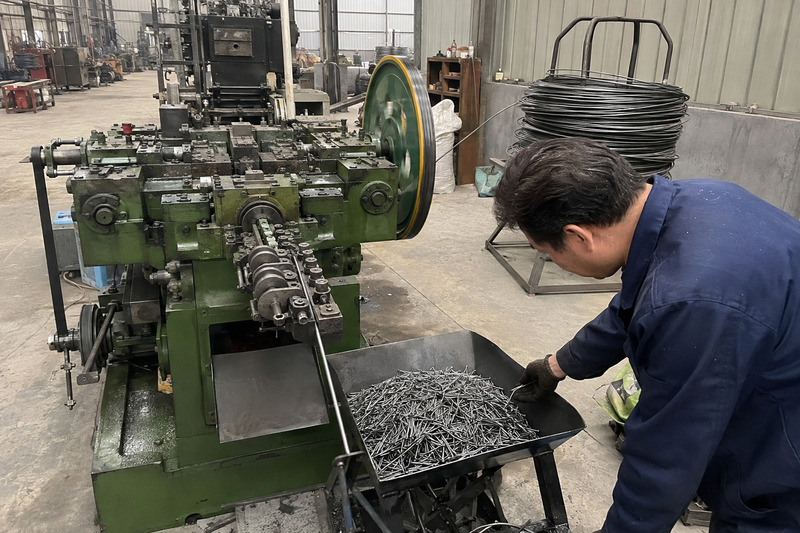
I have seen buyers ask one simple question: “Is a nail just wire cut into pieces?” The short answer is no. The better question is: can the factory control each production step well enough to make nails suitable for your market, packaging, and end users?
What steps does a nail making machine use to turn wire into nails?
If a buyer only sees finished cartons, the production process can look invisible. That creates risk. A supplier may say the nails are “standard,” but the final product depends on several small steps. When one step is weak, the whole shipment can feel cheap in the market.
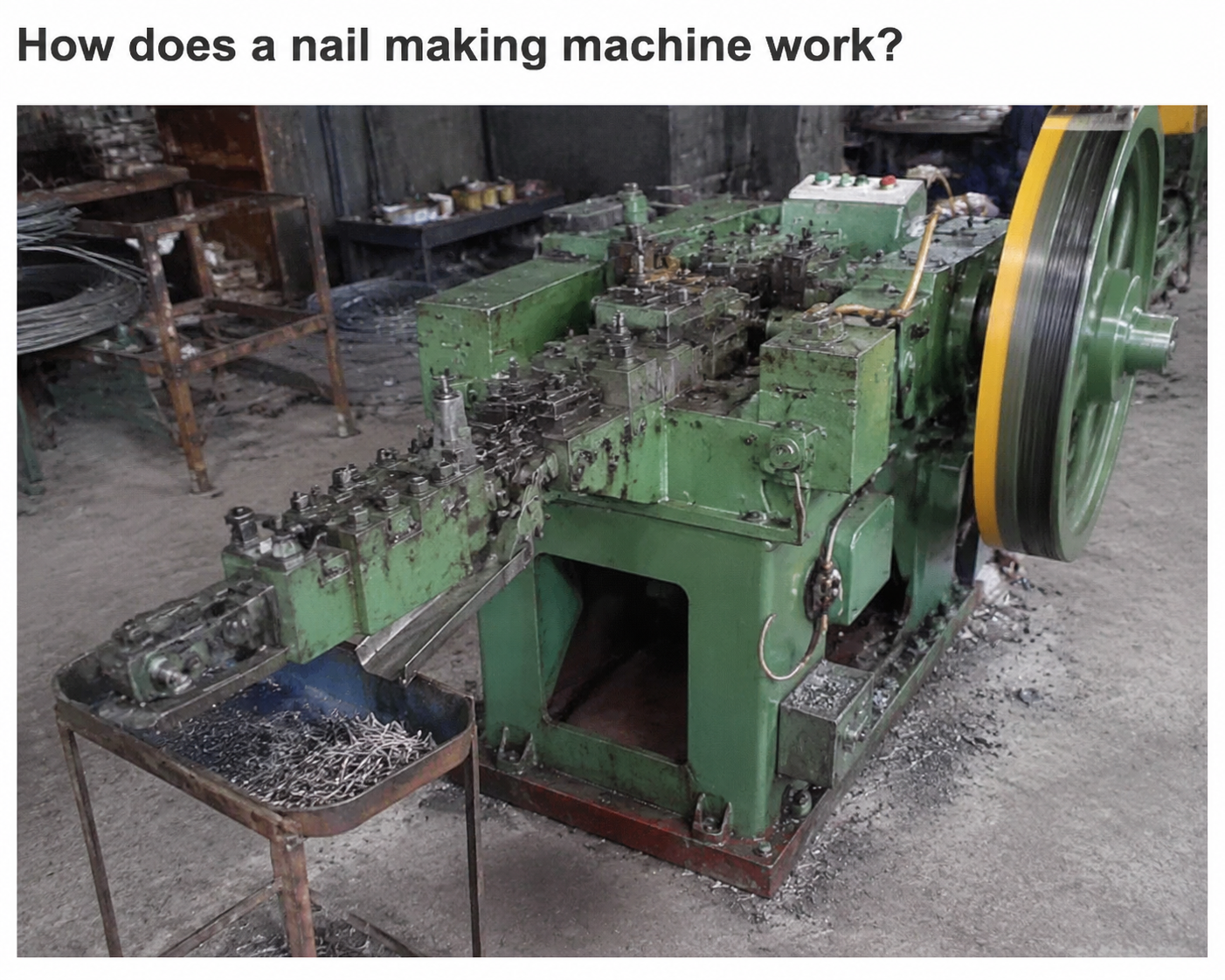
A nail making machine usually works through wire feeding, wire straightening, cutting or point forming, head forming, and nail discharge. After that, the factory may polish, clean, coat, sort, inspect, and pack the nails. Each stage influences length accuracy, head shape, point sharpness, and surface appearance.
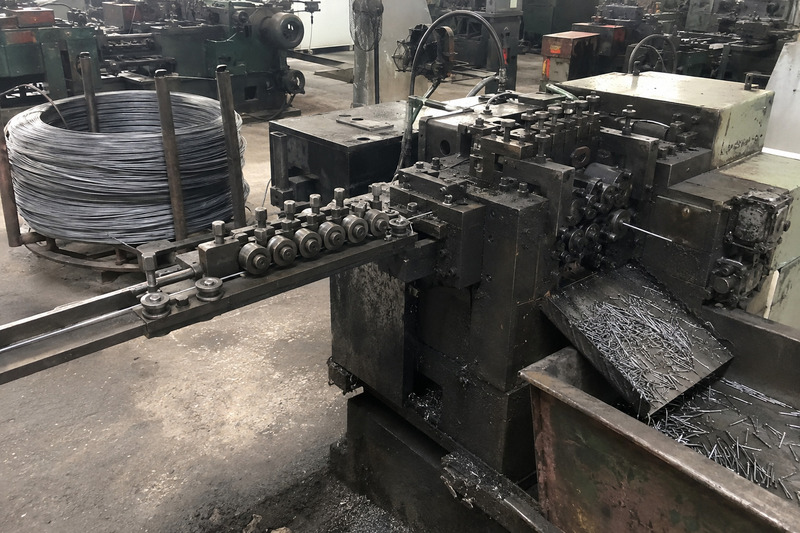
The basic flow from wire to finished nail
In my factory experience, the first thing I explain to new importers is that nail production is a chain. The chain starts with wire and ends with cartons that can be resold. The nail making machine is important, but it is not the only factor. Wire quality, machine adjustment, worker experience, polishing, and packing all matter.
A common simplified production flow looks like this:
-
Wire selection and preparation
The factory prepares steel wire suitable for the nail type. Different nails may need different wire characteristics.2 Buyers should confirm the specification with the supplier instead of assuming one wire fits all nails. -
Wire feeding
The machine feeds wire forward in a controlled rhythm. If feeding is unstable, nail length may vary.3 This becomes a serious issue when wholesalers sell by size, carton, or brand promise. -
Wire straightening
Straightening helps the wire enter the cutting and forming area correctly. Poor straightening can cause bent nails, poor alignment, or uneven final appearance.4 -
Cutting and pointing
The machine cuts the wire and forms the nail point. A sharp, consistent point improves usability.5 A weak point can make the nail harder to drive and easier to reject by retailers. -
Head forming
The machine presses or forms the head. This step affects holding power, appearance, and customer confidence.6 A poor head can break, deform, or look inconsistent in a retail bag. -
Discharge and collection
Finished nail blanks leave the machine and move to the next process. This stage also matters because rough handling may affect surface appearance or create mixed sizes if management is careless. -
Polishing or surface treatment
Many nails need cleaning, polishing, coating, blackening, galvanizing, or other surface preparation depending on the product and market use. Buyers should verify the exact treatment with the factory. -
Inspection and packing
The final carton quality depends on sorting, weight control, label accuracy, inner packing, and outer carton strength.
Why the machine step is only one part of quality
A machine can run fast, but speed alone does not prove stable nail quality. When I speak with hardware wholesalers in markets such as the Middle East, Africa, Southeast Asia, and South America, many care about three things:
- Will the nail size match the local demand?
- Will the head and point look acceptable to retailers?
- Will the packaging survive sea shipping and local handling?
That is why I always connect machine work with final product evaluation. A supplier who only talks about machine capacity may not be giving enough information. A serious buyer should ask about:
| Production area | What buyers should check | Why it matters |
|---|---|---|
| Wire feeding | Length consistency | Helps prevent mixed or inaccurate sizes |
| Straightening | Nail straightness | Improves appearance and usability |
| Point forming | Point sharpness | Affects driving performance |
| Head forming | Head size and shape | Affects holding power and resale trust |
| Surface finish | Cleanliness and coating | Affects market acceptance |
| Packing | Weight, carton, logo, label | Affects wholesale distribution |
A nail may look simple, but the production logic is not simple. The buyer does not need to become a machine engineer. Still, understanding the process helps the buyer ask better questions before placing a trial order.
How does a nail making machine affect nail quality?
Many importers feel pressure to buy cheaper nails. The problem is that low price can hide unstable production. If the supplier does not control the nail making machine well, the buyer may receive nails with uneven length, poor heads, weak points, or mixed surface finish.
A nail making machine affects quality by controlling how wire is fed, cut, pointed, and headed. Good adjustment supports stable nail dimensions, consistent head shape, sharp points, and a cleaner production flow. Poor adjustment can create defects that later polishing or packing cannot fully hide.
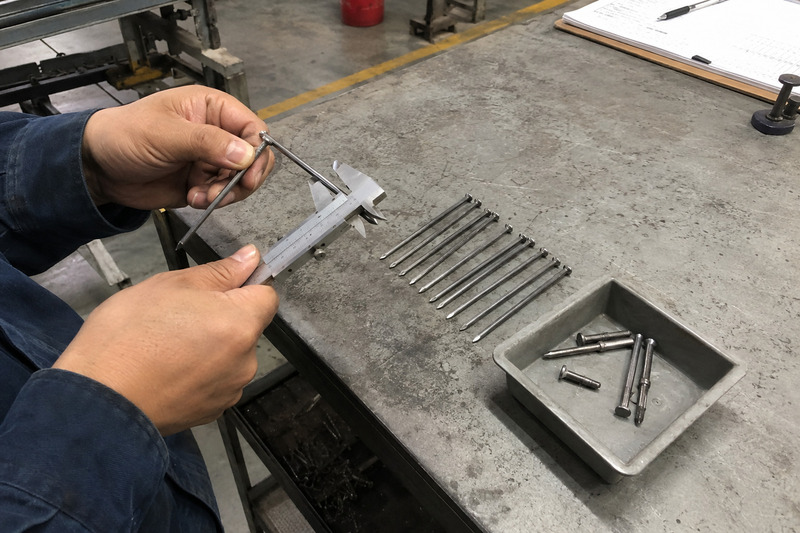
The main quality points buyers should understand
When I check nails in production, I do not only look at whether the machine is running. I look at what the machine is producing. A running machine can still make bad nails if the wire, settings, tools, or inspection are not managed well.
Here are the main quality points that importers should connect with machine operation:
1. Nail length consistency
Length is one of the first things buyers notice. If a carton is marked with one size but contains many uneven nails, the wholesaler may face complaints from retailers. Stable wire feeding and cutting control support consistent length.
Buyers should ask the supplier how they check length during production. The answer does not need to sound complicated, but it should show a real process. For example, the factory should be able to describe sampling, visual checks, and corrective action if size variation appears.
2. Nail head shape
The head is small, but it creates a strong impression. A poor head may look thin, off-center, cracked, or incomplete. For some products, head appearance is especially important because customers compare nails directly inside bags or boxes.
A stable head forming process helps protect the buyer’s brand image. If the importer uses private label packaging, inconsistent nail heads can damage trust quickly.
3. Point sharpness
The point determines how easily the nail starts entering the material. A blunt or uneven point may frustrate end users. It may also create the feeling that the nail is low grade, even when the steel wire itself is acceptable.
Point quality depends on cutting and forming conditions. It also depends on tool wear and worker attention. I have seen buyers focus heavily on carton design but ignore point quality. That is a mistake because end users judge the nail during use.
4. Surface appearance
The machine creates the nail shape, but later steps influence surface appearance. Polishing, cleaning, coating, and handling all matter.7 A nail that leaves the forming process with too many burrs or rough areas may still look poor after finishing.
For wholesale markets, surface appearance affects shelf confidence. Buyers may compare:
- Bright polished finish
- Black steel finish
- Galvanized or coated appearance
- Oil residue level
- Rust risk during storage and shipping
The exact surface requirement depends on product type and market use. Buyers should confirm details before production.
Machine quality and buyer risk
Here is a practical way to connect machine control with business risk:
| Machine-related issue | Possible product problem | Buyer risk |
|---|---|---|
| Unstable feeding | Mixed nail lengths | Retailer complaints |
| Poor straightening | Bent nails | Low resale confidence |
| Worn cutting tools | Blunt points or burrs | Poor user experience |
| Weak head forming | Small or broken heads | Product rejection |
| Poor process sorting | Mixed defects in carton | Brand damage |
A serious supplier should not avoid quality questions. The supplier should welcome them because clear requirements reduce disputes. In my own customer communication, I prefer when buyers send photos, target markets, packaging ideas, and expected nail applications. That helps us recommend the right nail type, carton method, and trial order plan.
Why do different nail types need different production checks?
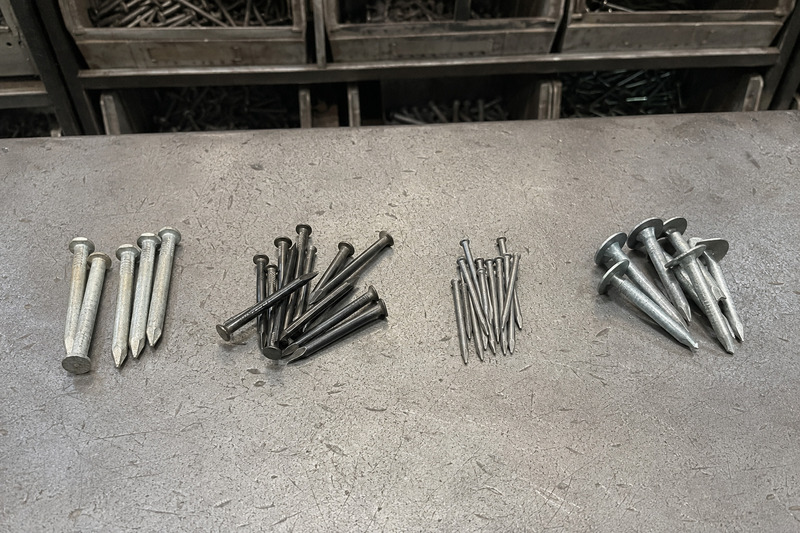
A common buying mistake is treating all nails as the same product. That creates problems. Concrete nails, roofing nails, lost head nails, black steel nails, and other types may look similar in a catalog, but their use, forming logic, hardness needs, and packing expectations can differ.
Different nails need different checks because each nail type has a different end use. Concrete nails may require more attention to strength and point performance. Roofing nails may need head and washer-related checks if applicable. Lost head nails need careful head appearance. Buyers should verify technical parameters with the factory.
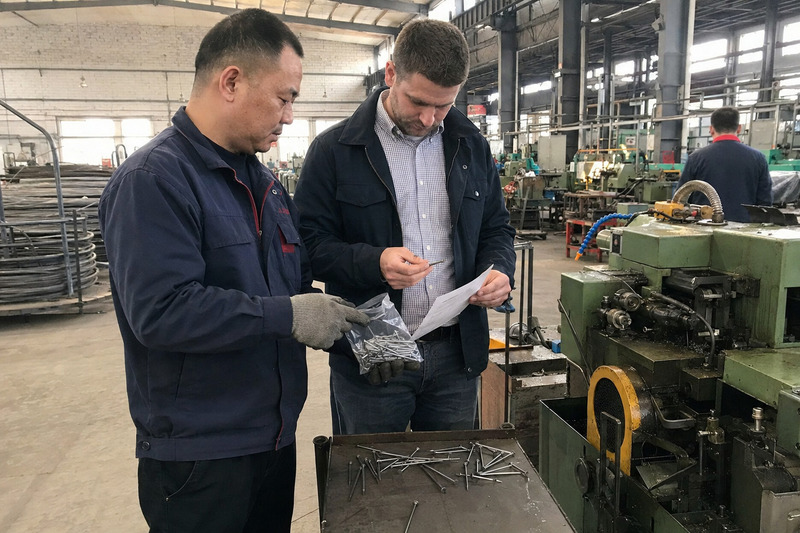
One production logic does not fit every nail
The nail making machine process gives a useful base, but buyers should not assume that every nail type follows the same final quality standard. The right inspection focus depends on how the nail will be used and sold.
In our product range, buyers often ask about:
- Concrete nails
- Black steel nails
- Lost head nails
- Roofing nails
- Other common hardware nails for wholesale markets
Each product has different buyer concerns.
Concrete nails
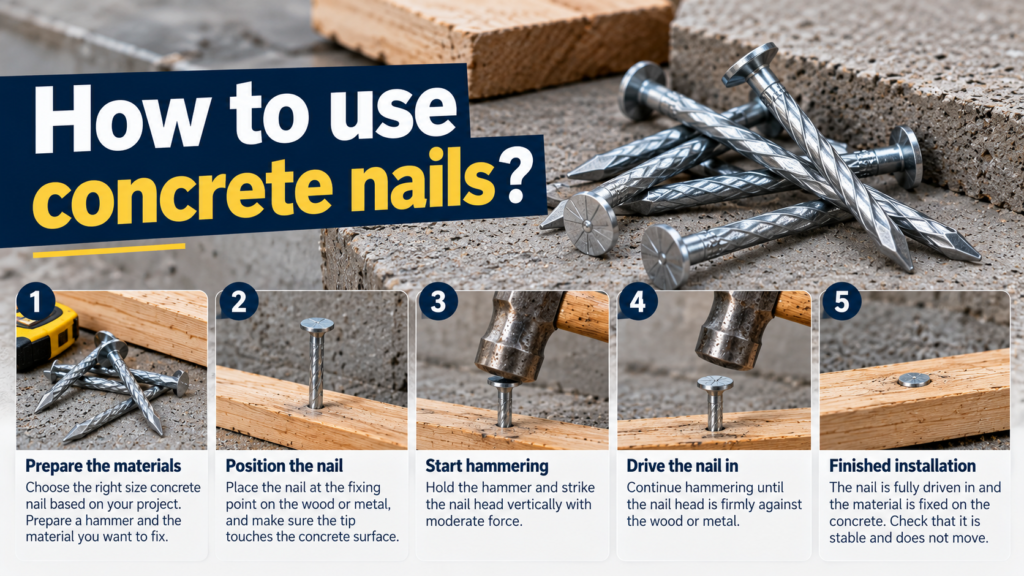
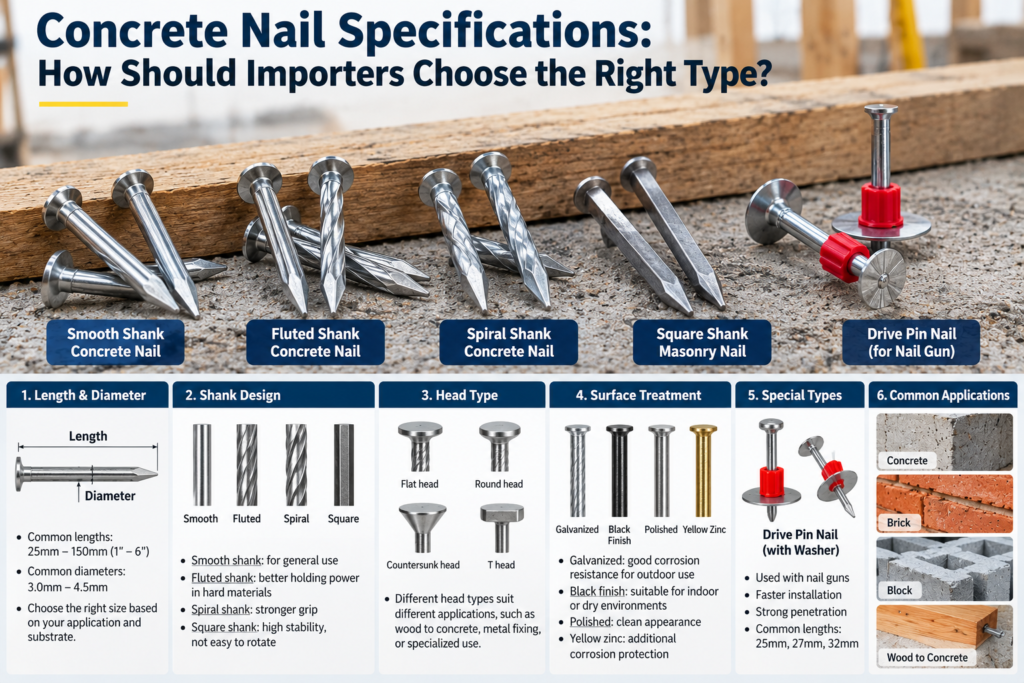
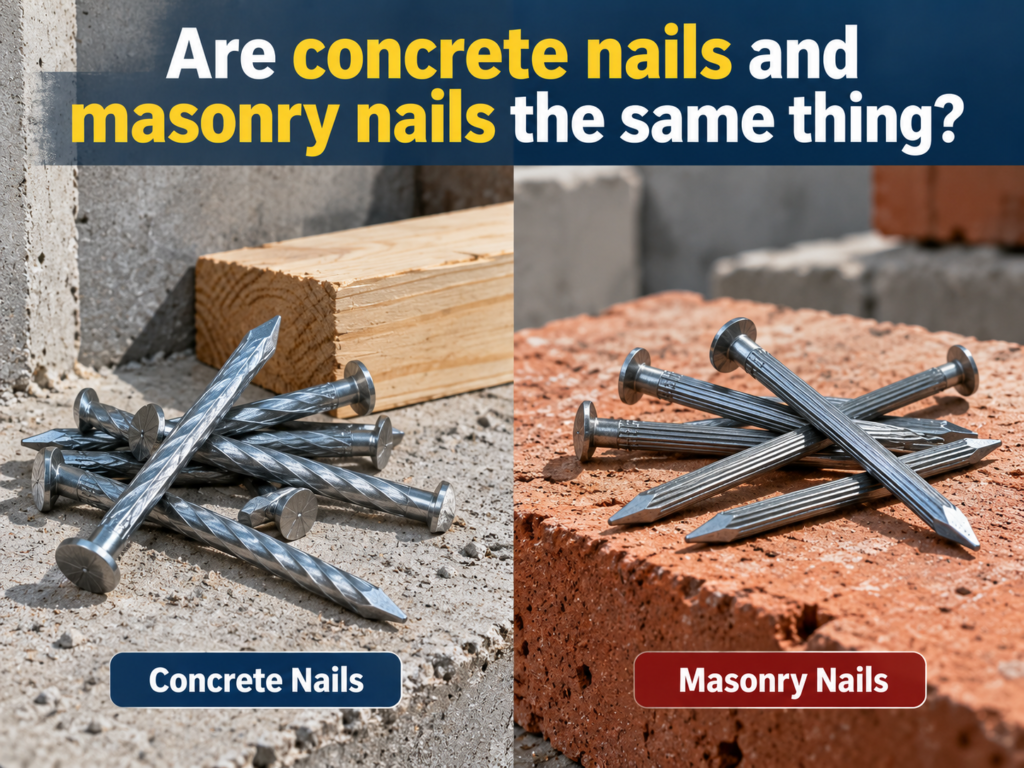
Concrete nails are often judged by strength, point performance, and suitability for harder materials.8 Buyers should discuss the application clearly with the supplier. They should not rely only on the product name. The supplier should confirm suitable specifications, production process, and any required finishing.
For importers, the risk is buying a product that looks like a concrete nail but does not meet the local user expectation. In some markets, users care about hardness, bending behavior, and point performance. These details should be confirmed with the factory before bulk orders.
Black steel nails
Black steel nails are often selected for specific market preferences and cost-performance needs. Buyers usually check appearance, oil level, straightness, head shape, and packing. If the surface looks inconsistent, retailers may complain even when the nail is usable.
Black finish requirements should be clear before production. Buyers should send photos of the local popular product if possible. I find that pictures reduce misunderstandings much faster than general words like “good quality” or “standard quality.”
Lost head nails
Lost head nails have a smaller or less visible head. Their appearance and consistency are important because the product is often chosen for a cleaner finish. The forming process should support head consistency. If the head is too irregular, the nail may not meet the buyer’s expected use.
For this product, I suggest that buyers confirm size, head form, surface finish, and packing style before production.
Roofing nails
Roofing nails are judged by head, shank, surface protection, and packaging suitability.9 Depending on the type, buyers may need to confirm additional details with the supplier. The key point is that roofing nails are not only “common nails with a bigger head.” Their market use creates specific expectations.
Comparison of buyer checks by nail type
| Nail type | Main buyer concern | What to verify with supplier |
|---|---|---|
| Concrete nail | Strength, point, application fit | Wire/specification, treatment, size, test sample |
| Black steel nail | Surface appearance, straightness | Finish, oil level, packing, size tolerance approach |
| Lost head nail | Small head consistency | Head shape, length, finish, sample appearance |
| Roofing nail | Head and weather-related suitability | Head style, coating, packing, market requirement |
Why samples matter before bulk orders
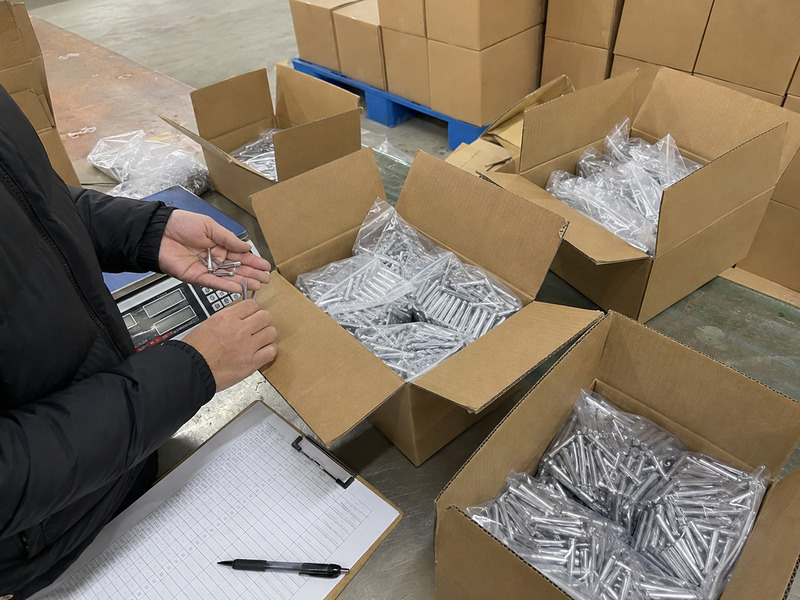
I strongly recommend samples for quality checking, especially when the buyer is entering a new market segment. Samples cannot replace full shipment inspection, but they help both sides confirm direction.10
Our usual sample policy is practical: samples can be provided for quality evaluation, and a basic sample fee may apply. In many cases, the fee can be discussed for return or adjustment in the formal order. This helps serious buyers test the product without committing to a full container immediately.
For wholesale buyers with agents in Yiwu or other sourcing centers, I also suggest comparing samples with the products already selling in the local market. This gives a better view of product-market fit.
What should importers ask a supplier about the nail making machine and quality control?
A buyer may not visit the factory before the first order. That creates uncertainty. If the supplier only sends a low FOB price and a few product photos, the buyer may not know whether the factory can control quality. Better questions can reduce this risk.
Importers should ask how the nail making machine process is controlled, how nail dimensions are checked, how heads and points are inspected, what surface treatment is used, and how packing is managed. Buyers should also request samples, photos, specifications, and clear packaging details before confirming bulk orders.
Practical questions I like buyers to ask
I do not expect every importer to understand factory engineering. Most hardware wholesalers only need enough knowledge to select a reliable supplier and avoid avoidable defects. In my experience, good buyer questions often lead to better production communication.
Here are useful questions to ask before placing an order:
Product and specification questions
- What wire material or specification will be used for this nail?
- What size range can you produce for this nail type?
- What are the common sizes for my target market?
- Can you match my sample or market photo?
- What surface finish do you recommend for my market?
Machine and process questions
- How do you control nail length during production?
- How do you check head shape and point sharpness?
- What happens if workers find bent nails or poor heads?
- Do different nail types use different production or finishing steps?
- Can you send production photos or short videos?
Packing and shipping questions
- What carton weight and packing method do you recommend?
- Can you support OEM/ODM packaging and brand logo?
- Can you make customized bags, boxes, or labels?
- Is the packing suitable for sea shipping?
- Can you support FCL and LCL shipment?
Commercial questions
- What is the minimum order quantity?
- What is the FOB price based on product, size, quantity, and packing?
- What is the delivery time for my order quantity?
- Can I start with a trial order?
- How do you handle sample costs?
For our business, the usual MOQ is 5 tons or 200 cartons, depending on product and packaging. We usually quote by FOB, based on product type, specification, quantity, and packing method. Delivery is often around 15–25 days, depending on order quantity and production schedule. Buyers should confirm the current timing before ordering.
What a good supplier answer should sound like
A good answer should be specific enough to be useful, but not fake. I become cautious when a supplier promises everything without asking about use, market, or packing.
A stronger supplier response may include:
- Product size recommendation based on target market
- Photos or videos from real production
- Sample arrangement for quality checking
- Packing options with carton details
- Clear MOQ and lead time
- Honest limits on customization
- FOB quote structure
A weak supplier response may include:
- Only “best quality, cheap price”
- No clear product specification
- No sample support
- No packing discussion
- No explanation of nail type differences
- No quality control conversation
A low price is useful only when the nail matches the buyer’s market and the supplier can keep quality stable.
Why production experience matters
As a nail and hardware factory, I see the same problem often. Buyers compare two prices, but they do not compare the production details behind those prices. One supplier may use better control, better packing, and more careful sorting. Another may offer a lower price but create after-sales problems.
The nail making machine is part of the answer, but the factory’s management system is just as important. Buyers should evaluate both.
How can buyers connect nail making machine knowledge to supplier selection?
Supplier selection can feel confusing because many quotations look similar. The problem is that similar product names do not always mean similar quality. A buyer who understands the nail making machine process can ask sharper questions and avoid suppliers who cannot explain quality control.
Buyers can use nail making machine knowledge to judge whether a supplier understands wire control, forming quality, nail type differences, surface treatment, inspection, and packing. This helps importers choose a factory that can support stable wholesale supply, OEM/ODM branding, and market-appropriate specifications.
A simple supplier evaluation framework
I suggest that importers use a practical framework before they place the first order. This framework does not require engineering training. It only requires clear questions and careful comparison.
Step 1: Confirm the nail use
The buyer should first explain where the nail will be sold and how customers use it. For example, a wholesaler in Dar es Salaam may sell to small retailers, builders, and mixed hardware shops. The buyer may need many product categories, and the nail must fit local buying habits.
Useful details include:
- Target country or city
- Common local nail sizes
- Preferred packing weight
- Brand or no-brand requirement
- Retailer feedback on current products
- Photos of popular local nails
Step 2: Match the nail type
The buyer should not choose only by price. The supplier should help confirm whether the buyer needs concrete nails, roofing nails, lost head nails, black steel nails, or another type.
This is where production knowledge helps. If the supplier understands the nail type, the supplier can explain the practical quality focus. If the supplier gives the same answer for every product, the buyer should be careful.
Step 3: Check sample quality
Samples allow the buyer to judge:
- Length and size impression
- Head shape
- Point sharpness
- Straightness
- Surface finish
- Packing concept
- Local market acceptance
Samples should be checked against the buyer’s market reality. A nail that looks acceptable in one region may not be preferred in another.
Step 4: Confirm packaging and branding
For many wholesalers, packaging is part of the product. We support OEM/ODM customization, including product, packaging, and brand logo. Buyers should confirm carton strength, label design, inner packing, and shipping marks.
For sea transportation, packaging must survive handling, humidity risk, stacking, and local warehouse conditions.11 FCL and LCL shipping can both be arranged, but packing should match the shipping plan.
Step 5: Start with a trial order
A trial order is often the best way to reduce risk. It allows both sides to confirm communication, production, inspection, loading, documents, and market feedback. We support trial orders, and I often recommend them when a buyer is testing a new size or nail type.
Supplier selection checklist
| Evaluation area | Good sign | Warning sign |
|---|---|---|
| Product knowledge | Supplier explains nail type differences | Supplier treats all nails the same |
| Production control | Supplier discusses length, head, point, finish | Supplier talks only about machine speed |
| Sample support | Supplier can provide samples for checking | Supplier avoids sample discussion |
| Packaging | Supplier offers OEM/ODM and carton options | Supplier cannot confirm packing details |
| Quotation | FOB price is based on spec, quantity, packing | Price is vague or incomplete |
| Lead time | Supplier gives realistic production timing | Supplier promises too fast without details |
Why this matters for wholesale buyers
Wholesale buyers carry the real market risk. If a carton arrives with poor heads, mixed sizes, or weak packaging, the importer must handle complaints. The overseas supplier may be far away, and replacement takes time. This is why factory selection should include production understanding.
A buyer does not need to inspect every machine part. However, the buyer should understand how the process affects the nail. This knowledge helps the buyer protect margin, brand, and customer trust.
Frequently Asked Questions
Is a nail just wire cut into pieces?
No. A nail starts as wire, but the process includes feeding, straightening, cutting or pointing, head forming, surface finishing, inspection, and packing. Each step affects the final nail’s length, head shape, point sharpness, appearance, and suitability for resale.
Does every nail making machine produce the same nail quality?
No. A nail making machine depends on correct setup, tool condition, wire quality, worker experience, and inspection. Two factories may use similar equipment but produce different quality if process control and quality checks are different.12
Why should importers care about nail production if they buy finished nails?
Importers should care because production affects resale quality. If nail length, head shape, point sharpness, or finish is unstable, retailers and end users may complain. Basic production knowledge helps buyers ask better supplier questions before bulk orders.
Can I request customized nail packaging and brand logo?
Yes. We support OEM/ODM customization, including product, packaging, and brand logo. Buyers should confirm carton size, inner packing, label design, shipping marks, and MOQ before production. Packaging should also match the target market and sea shipping method.
Should I test samples before placing a full nail order?
Yes. Samples help buyers check size, head shape, point quality, finish, and market fit before bulk production. Samples may require a basic fee, and the fee can often be discussed in relation to the formal order.
Conclusion
A nail making machine works through wire feeding, straightening, cutting or pointing, head forming, and later finishing, inspection, and packing. For importers, the bigger value is understanding how each step affects nail quality and supplier reliability. Different nails need different checks, so buyers should confirm specifications, samples, and packaging before ordering. If you import nails for wholesale markets in the Middle East, Africa, Southeast Asia, or South America, contact us at [email protected] or WhatsApp +8618331061136 to discuss suitable nail specifications, trial orders, and OEM/ODM packaging.
-
"Nail (fastener)", https://en.wikipedia.org/wiki/Nail_(fastener). A technical overview of wire-nail manufacture describes production as a sequence of wire preparation, cutting or point forming, and head formation, supporting the article’s description of the machine workflow. Evidence role: definition; source type: encyclopedia. Supports: The source should define or describe the standard wire-nail production workflow, including wire feeding or straightening, cutting or pointing, and head formation.. Scope note: The source would support the general process rather than the exact configuration of any specific machine or factory. ↩
-
"Standard Specification for Driven Fasteners: Nails, Spikes, and Staples", https://store.astm.org/f1667-11ae01.html. A fastener standard specifying dimensions, materials, coatings, or design features for different nail categories supports the article’s statement that wire characteristics may vary by nail type. Evidence role: definition; source type: institution. Supports: The source should show that nail standards specify different dimensions, materials, coatings, or design features for different fastener types.. Scope note: The standard would establish recognized specification differences, not determine the correct wire choice for a particular supplier’s product. ↩
-
"Low-Roughness-Surface Additive Manufacturing of Metal-Wire … – PMC", https://pmc.ncbi.nlm.nih.gov/articles/PMC8348733/. Research or technical literature on wire-feeding and cut-to-length machinery identifies feed accuracy as a determinant of part length tolerance, supporting the article’s claim that unstable feeding can produce variable nail lengths. Evidence role: mechanism; source type: research. Supports: The source should explain that feed accuracy in wire cutting or forming machinery affects the length tolerance of cut parts.. Scope note: The support is contextual if the source concerns wire cutting machinery generally rather than nail making machines specifically. ↩
-
"Simulation of a Steel Wire Straightening Taking into Account …", https://etasr.com/index.php/ETASR/article/view/275. Studies of wire straightening and forming processes show that residual curvature and misalignment in wire stock can affect downstream forming accuracy and visible product defects, supporting the article’s discussion of bent or uneven nails. Evidence role: mechanism; source type: paper. Supports: The source should explain how wire straightness affects alignment and defect formation in downstream cutting or forming processes.. Scope note: The source may address wire forming broadly, so it should be cited as mechanism-level support rather than proof of defect rates in nail production. ↩
-
"Biomechanical Consequences of Nail Insertion Point and Anterior Cortical …", https://pmc.ncbi.nlm.nih.gov/articles/PMC7772046/. Fastener research indicates that point geometry influences insertion or driving resistance, supporting the article’s claim that a sharp and consistent nail point improves usability. Evidence role: mechanism; source type: paper. Supports: The source should connect fastener point shape or sharpness with insertion force, driving resistance, or ease of use.. Scope note: The source may test specific fasteners or substrates, so it should not be treated as universal proof for every nail type and material. ↩
-
"Wood Handbook, Chapter 08: Fastenings", https://research.fs.usda.gov/download/treesearch/37424.pdf. Government or engineering guidance on mechanical fasteners explains that nail head geometry contributes to pull-through or holding performance, supporting the article’s claim that head forming has functional consequences. Evidence role: mechanism; source type: government. Supports: The source should show that nail head geometry or head size affects holding, pull-through, or fastening performance.. Scope note: The source would substantiate the mechanical aspect of holding power, not the article’s separate assertion about customer confidence. ↩
-
"1 DURABLE, HYDROPHOBIC SURFACE TREATMENT …", https://www.waru.edu/sites/default/files/Migrated/CopDocuments/Durable%2C%20Hydrophobic%20Surface%20Treatment%20for%20Enhanced%20Corrosion%20Protection%20of%20Landing%20Gear.pdf. Materials literature on steel fasteners and coatings shows that surface preparation, coating condition, and handling affect appearance and corrosion performance, supporting the article’s emphasis on post-forming surface processes. Evidence role: general_support; source type: research. Supports: The source should show that cleaning, coating, and surface condition affect steel fastener appearance, corrosion behavior, or service suitability.. Scope note: The source would provide general materials support rather than evaluating the specific polishing or coating practices of the article’s factory. ↩
-
"Soil Nail Wall – Reference Manual – Federal Highway Administration", https://www.fhwa.dot.gov/engineering/geotech/pubs/nhi14007.pdf. Technical guidance on masonry or concrete nails describes them as fasteners intended for harder substrates and emphasizes material hardness, strength, or point design, supporting the article’s application-specific quality criteria. Evidence role: general_support; source type: institution. Supports: The source should indicate that concrete or masonry nails are designed for harder materials and commonly require suitable hardness, strength, or point characteristics.. Scope note: The source would support the general engineering rationale, not the performance of any individual concrete nail batch. ↩
-
"FEMA Hurricane Recovery Advisories", https://www.fema.gov/sites/default/files/2020-08/fema488_appx_d_ras.pdf. Government or building-code guidance for roofing fasteners identifies head size, shank characteristics, and corrosion resistance as relevant performance requirements, supporting the article’s claim that roofing nails require product-specific checks. Evidence role: general_support; source type: government. Supports: The source should show that roofing fastener guidance addresses head size, shank characteristics, corrosion resistance, or installation suitability.. Scope note: Such guidance may not address commercial packaging directly, so it should be used primarily for the fastener-design and surface-protection aspects. ↩
-
"6.2.2. What kinds of Lot Acceptance Sampling Plans (LASPs) are there?", https://www.itl.nist.gov/div898/handbook/pmc/section2/pmc22.htm. Acceptance-sampling standards and quality-control literature treat sampling as a statistical method for assessing lot quality, supporting the article’s distinction between sample approval and full shipment inspection. Evidence role: expert_consensus; source type: institution. Supports: The source should explain that sampling provides evidence about quality but does not fully guarantee the condition of every unit in a production lot or shipment.. Scope note: The source supports the inspection principle generally and does not prescribe the exact sample or inspection plan for nail imports. ↩
-
"[PDF] Code of Practice for Packing of Cargo Transport Units (CTUs) (CTU Code …", https://www.ippc.int/sites/default/files/documents/1362665459_CTU_Code_Draft_CoP_2013_v1.pdf. International cargo-transport guidance notes that packaged goods should be secured and protected against handling stresses, stacking loads, and environmental exposure during transport, supporting the article’s discussion of sea-shipping packaging risks. Evidence role: expert_consensus; source type: institution. Supports: The source should provide transport-packaging guidance addressing cargo handling, moisture or humidity, stacking, and storage or container conditions.. Scope note: The source would provide general cargo-packaging principles rather than nail-carton-specific test results. ↩
-
"ISO 9001:2015 – Quality management systems", https://www.iso.org/standard/62085.html. Quality-management standards emphasize process control, monitoring, and corrective action as conditions for consistent product conformity, supporting the article’s claim that similar equipment can yield different quality under different management systems. Evidence role: expert_consensus; source type: institution. Supports: The source should show that controlled processes, monitoring, corrective action, and quality-management systems are used to achieve consistent product conformity.. Scope note: The source would support the general quality-management principle, not compare any specific factories. ↩