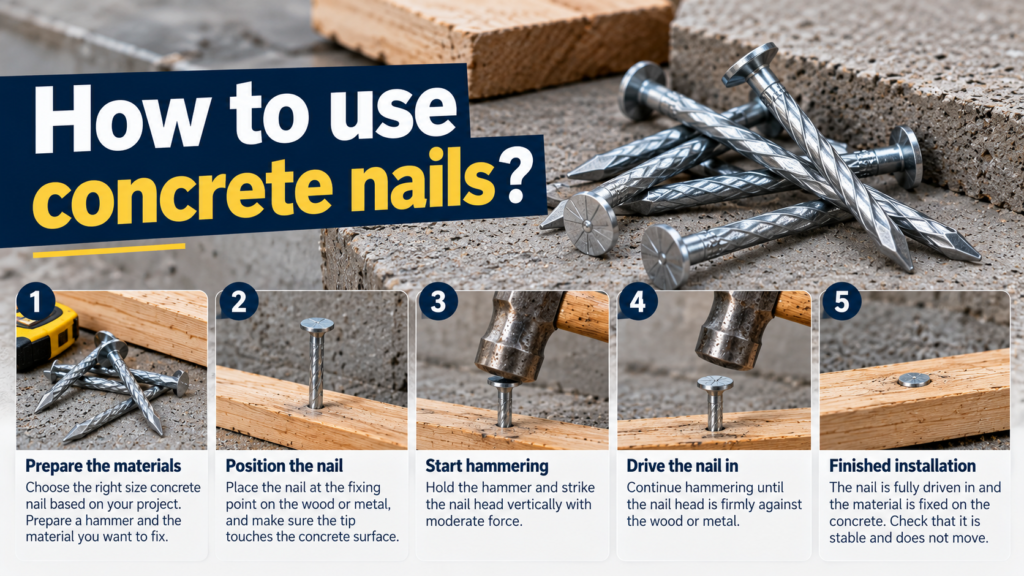
To import common nails from China successfully, buyers must avoid starting with price alone. A cheap quotation can become expensive if the nail size, packing, MOQ, shipping plan, or bulk quality is unclear. The safer solution is to treat the order as a verification process before you commit serious money.
You can import common nails from China successfully by confirming specifications, requesting samples, testing a trial order, checking packaging, planning MOQ, and calculating shipping feasibility before placing a full order. The goal is not only to find a supplier, but to reduce risk in product quality, carton packing, delivery, and resale value.
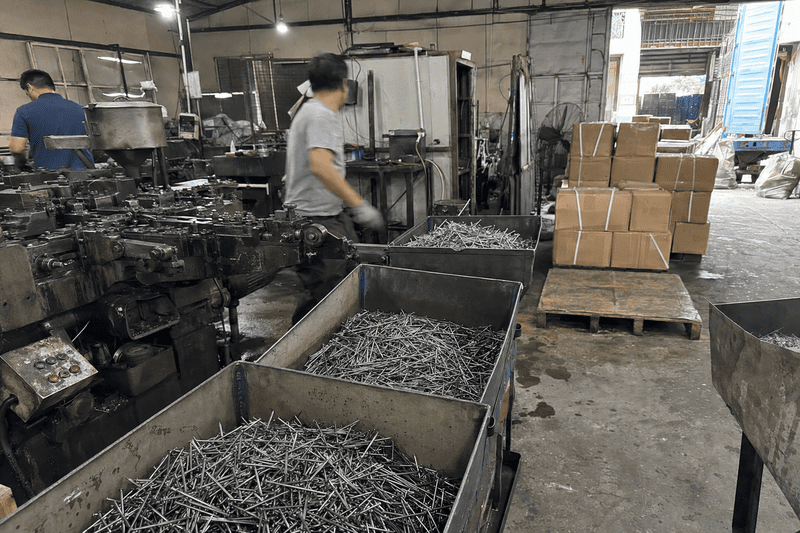
Many buyers ask me for “best price” in the first message. I understand that price matters. However, from my factory experience, the best import result usually comes from clear order details, not from the fastest quotation. Let’s break down the practical steps.
What Should You Confirm Before You Import Common Nails from China?
Importing common nails can feel simple because the product looks basic. But small specification mistakes can create big resale problems. If the length, wire diameter, head type, or packing weight does not match your market, your customers may reject the goods even if the price looks attractive.
The first step to import common nails from China is to confirm the nail size, wire diameter, quantity, packing method, destination port, and shipping plan. A reliable FOB quotation normally depends on these details. Without them, suppliers can only give a rough price, not a practical offer for purchasing.
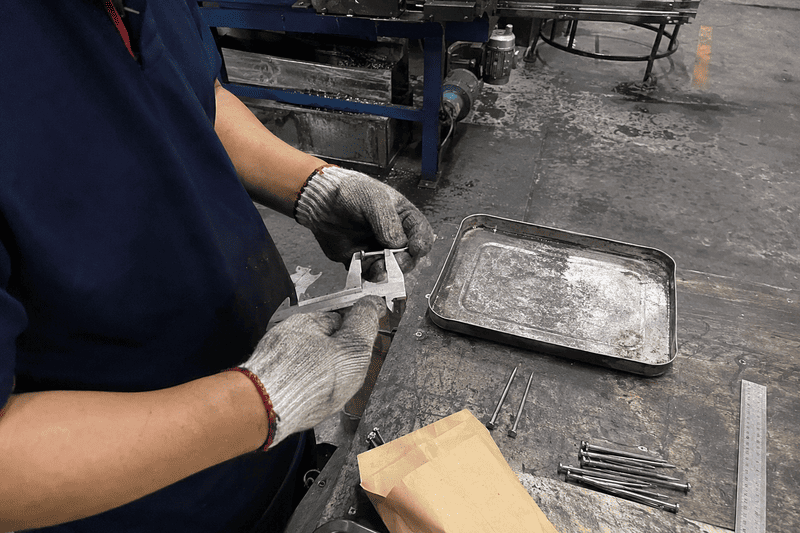
Why exact specifications matter
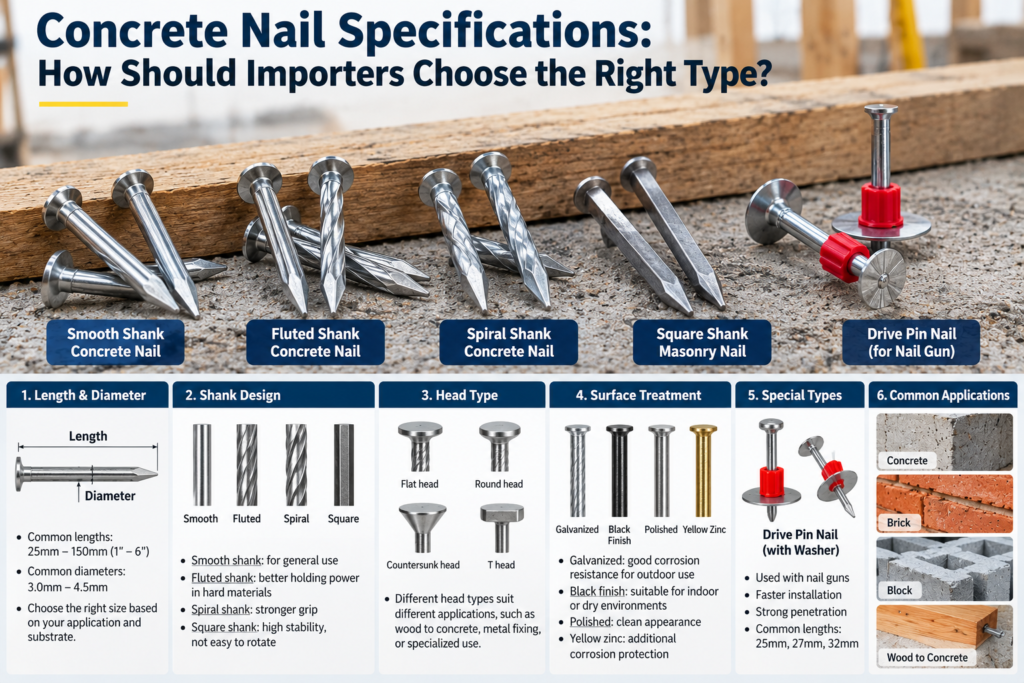
Common nails are not complicated products, but they are specification-sensitive.1 A buyer in Tanzania, Kenya, Ghana, Saudi Arabia, Indonesia, or Chile may use different market names for nail sizes. One market may ask for “2 inch common nails,” while another buyer may describe the same product by length and wire diameter.
When a buyer asks me for a quotation, I usually need to confirm:
- Product name: common nail, concrete nail, roofing nail, black steel nail, or other hardware nail
- Nail length: for example, 1 inch, 2 inch, 3 inch, 4 inch, or metric size
- Wire diameter: this affects weight, strength, and cost
- Head type: flat head, checkered head, or local preference
- Surface finish: bright, polished, galvanized, or black
- Quantity: in tons, cartons, or container load
- Packaging: bulk carton, small box, plastic bag, branded carton, or OEM packing
- Destination port: such as Dar es Salaam, Mombasa, Jebel Ali, Tema, Lagos, or Santos
- Shipping mode: FCL or LCL
- Sample requirement: whether the buyer wants samples before trial order
If one of these details is missing, the quotation may look complete but still be weak. For example, two suppliers may both quote “2 inch common nails,” but one may quote thinner wire and lighter packing. The unit price may be lower, but the product may not match your local market.
Common nail buying details buyers should compare
| Buying item | Why it matters | Buyer risk if unclear |
|---|---|---|
| Length | Defines market size and use | Wrong size may not sell locally |
| Wire diameter | Affects strength and weight | Thin nails may bend easily |
| Packing weight | Affects wholesale resale | Cartons may not match buyer expectation |
| Carton strength | Affects sea transport damage | Cartons may break during handling |
| [Surface finish | Affects appearance and corrosion resistance](https://www.litnaglis.com/galvanized-steel-nails-litnaglis/)[^2] | Customers may complain about rust or finish |
| Quantity | Affects MOQ and FOB price | Small order may not be cost-effective |
| Destination port | Affects shipping feasibility | Freight cost may change decision |
How I suggest buyers prepare an inquiry
A strong inquiry does not need to be long. It needs to be complete. For example:
“I need common nails, 2 inch and 3 inch, bright finish, packed 25 kg per carton, total 5 tons, OEM carton with my logo, FOB China, shipping to Dar es Salaam. Please quote and confirm sample cost.”
This type of inquiry helps a factory answer quickly. It also helps you compare suppliers fairly. If you only ask, “How much common nail?” each supplier will guess differently. Then you may compare prices that are not based on the same product.
For first-time buyers, I suggest making a small spreadsheet. You can list size, diameter, packing, quantity, supplier price, sample status, lead time, and remarks. This simple tool can prevent confusion when you talk to several suppliers at the same time.
How Do Samples and Trial Orders Help You Import Common Nails from China?
A sample can look acceptable, but bulk goods still need verification. This is why buyers should not treat one small sample as the only proof of supplier quality. The real risk appears when production volume, carton packing, labeling, and shipping handling are added to the order.
Samples and trial orders help buyers import common nails from China with lower risk. Samples verify basic product appearance and size. Trial orders verify bulk production, packing, communication, delivery time, and document handling.2 A formal order should come after the supplier proves consistency in real order conditions.
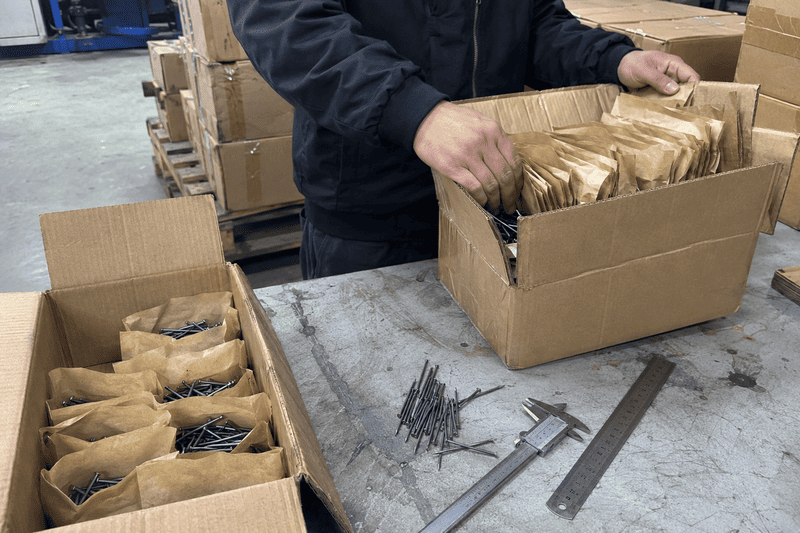
The sample → trial order → formal order path
In my daily work with overseas hardware wholesalers, I often see three stages:
- Sample confirmation
- Trial order
- Formal bulk order
Each stage answers a different question.
| Stage | Main purpose | What buyer should check |
|---|---|---|
| Sample | Verify basic quality | Size, finish, hardness, appearance, head shape |
| Trial order | Verify execution | Packing, carton strength, quantity accuracy, lead time |
| Formal order | Scale up purchasing | Stable quality, repeatable packing, shipping schedule |
A sample is useful, but it is not the whole story.3 For common nails, a buyer should check the sample with practical eyes. Does the nail bend too easily? Is the head formed cleanly? Is the surface finish acceptable for the market? Does the nail match the size that local customers request?
However, the trial order is usually where the buyer learns more. A trial order shows whether the supplier can produce consistent goods and pack them correctly. It also shows whether communication is smooth during payment, production, inspection, loading, and document preparation.
Why trial orders are important for wholesalers
Many wholesalers do not only buy for one project. They buy for resale. That means packaging and market presentation matter. A trial order helps confirm:
- Whether the carton weight matches the agreement
- Whether the carton printing is correct
- Whether the brand logo is clear
- Whether the cartons survive handling
- Whether the bulk goods match the approved sample
- Whether the supplier can meet the promised delivery time
- Whether the factory can support repeat orders
For example, a buyer may approve a common nail sample but later discover that the carton is too weak for local distribution. In many developing markets, goods may pass through ports, warehouses, trucks, wholesale shops, and smaller resellers. Weak cartons can create losses even if the nails are acceptable.4
How I handle sample discussions
As a manufacturer and exporter, I usually recommend that buyers treat samples as a quality-checking tool. Samples may carry a basic cost, especially if the buyer asks for several specifications or special packing. In many cases, the sample cost can be discussed again when the formal order is placed.
Buyers should also understand that samples sent by express courier are small. They do not show full container loading conditions. That is why I prefer buyers to use the sample to approve the product direction, and then use a trial order to test the complete order process.
What to record during sample and trial order review
I suggest buyers record details with photos and notes:
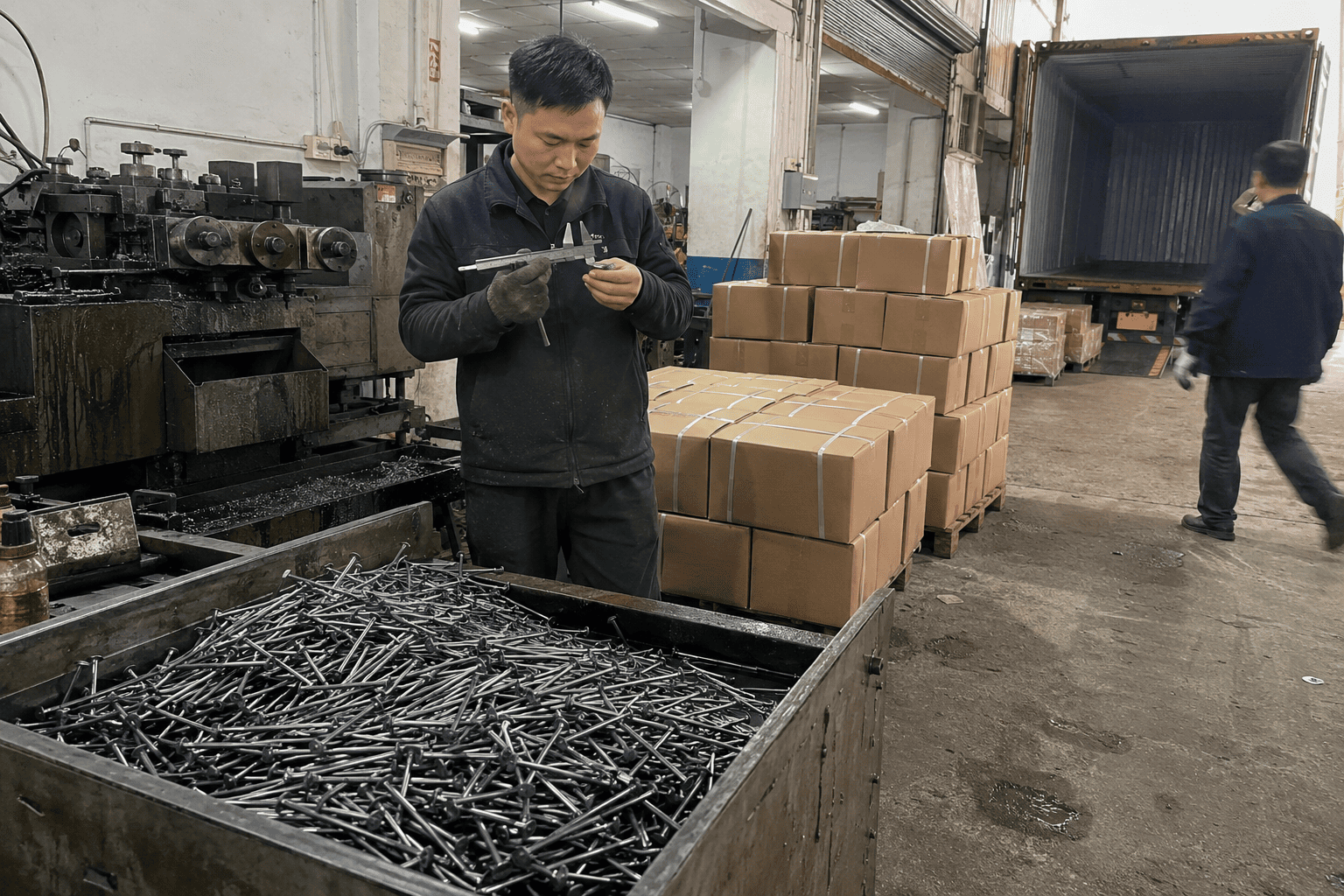
- Nail length measured by ruler or caliper
- Wire diameter measured by caliper
- Nail head shape and finish
- Packing weight per box or carton
- Carton dimensions
- Carton printing and logo position
- Any bending, rust, broken carton, or shortage issue
This record is useful later. If you place a repeat order, you can send the same approved details to avoid misunderstanding. If your local staff or China agent helps you inspect goods, your record gives them a clear standard.
How Can You Compare Suppliers When You Import Common Nails from China?
Supplier comparison can become confusing because many quotations look similar. One supplier may offer a lower price, another may offer better packing, and another may have faster delivery. If buyers compare only the unit price, they may miss the real cost and risk behind the offer.
To compare suppliers when you import common nails from China, evaluate specification accuracy, sample quality, MOQ, packing ability, lead time, communication speed, and export experience. A good supplier should help you clarify the order, not only send a low price. Buyers should verify documents and quality before scaling up.
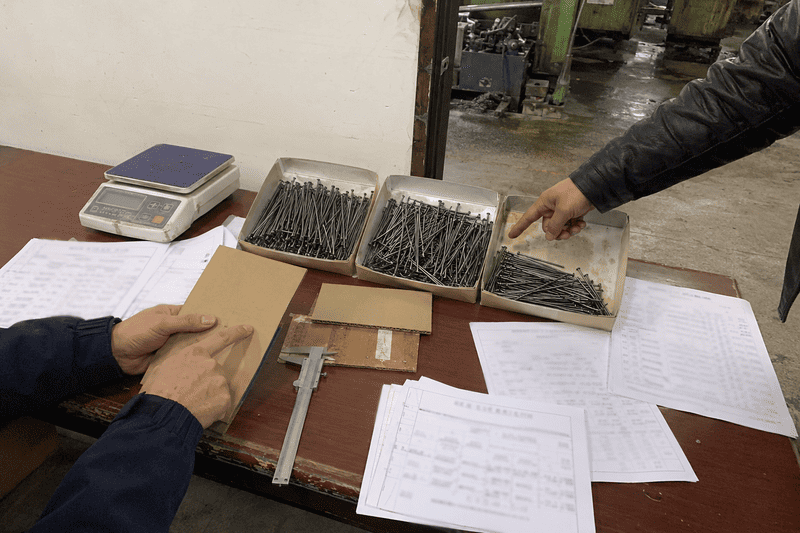
Price comparison is not enough
Common nails are competitive hardware products. Price changes with raw material cost, size, wire diameter, packing, order quantity, and sea freight.5 A low quotation may be real, but it may also be based on a lighter specification or simpler packaging.
When I review buyer inquiries, I often see this problem:
- Supplier A quotes by exact wire diameter and 25 kg carton
- Supplier B quotes by general size without diameter
- Supplier C quotes by different packing
- Supplier D quotes without confirming destination port or quantity
These four prices cannot be compared directly. The buyer may think Supplier B is cheaper. But the product may not match the local market requirement.
Practical supplier evaluation checklist
Buyers can use this checklist before choosing a common nails supplier:
| Evaluation point | What to ask | Why it matters |
|---|---|---|
| Factory or trader | Are you a factory? Can you support OEM? | Affects control and communication |
| Product range | Do you make common nails and related nails? | Helps with mixed hardware orders |
| MOQ | What is the minimum order? | Determines whether the order is executable |
| Samples | Can you provide samples? What is the cost? | Helps verify before ordering |
| Packing | Can you do my carton, bag, or brand logo? | Supports resale business |
| Lead time | How many days after deposit? | Helps stock planning |
| FOB quotation | Which port and what terms? | Prevents unclear cost comparison |
| Inspection | Can goods be checked before shipment? | Reduces bulk quality risk |
For our business, we usually support trial orders, OEM/ODM customization, and sea shipment by FCL or LCL. Our typical MOQ is 5 tons or 200 cartons, depending on product and packing. Lead time is commonly 15–25 days, depending on quantity and production schedule.
I mention these numbers not as a universal rule for every supplier, but as practical reference points. Buyers should always confirm the current MOQ, lead time, and price with the supplier before placing an order.
Communication quality is part of supplier quality
Good supplier communication saves money. If a supplier asks clear questions, this is usually a positive sign. It means the supplier is trying to quote the correct product.
A serious supplier may ask:
- What nail size do you need?
- Do you have a local standard or sample photo?
- What is the wire diameter?
- How many tons or cartons do you need?
- What packing do you sell in your market?
- Do you need a private label or neutral carton?
- What is the destination port?
- Do you have a China agent?
- Do you want FOB, or do you need shipping support?
Some buyers feel these questions slow the process. I see them differently. These questions reduce mistakes. They help both sides understand whether the order can be produced, packed, shipped, and resold successfully.
Verify documents and product claims
For technical and industrial purchasing, buyers should verify documents instead of accepting claims blindly.6 If a supplier provides certificates, test reports, factory photos, or export records, buyers should check whether those documents are relevant and current.
For application-specific decisions, such as construction requirements, safety use, or local market standards, buyers should consult qualified local professionals, import agents, or inspectors. A China supplier can support product information, samples, production details, and export documents, but the buyer should verify destination-country duties, clearance rules, and local compliance requirements7 with local experts.
How Do MOQ, FOB, FCL, and LCL Affect Common Nails Import Cost?
Many buyers focus on product price per carton or per ton. That is understandable. But nails are heavy goods, so freight, container use, MOQ, and destination charges can strongly affect the final decision. A low FOB price may not create a good landed cost if the shipment plan is weak.
MOQ, FOB terms, FCL, and LCL affect common nails import cost because they decide whether the order is practical after production and sea freight. Buyers should calculate product value, packing, container loading, local port costs, and resale margin before ordering. The cheapest product price is not always the best import result.
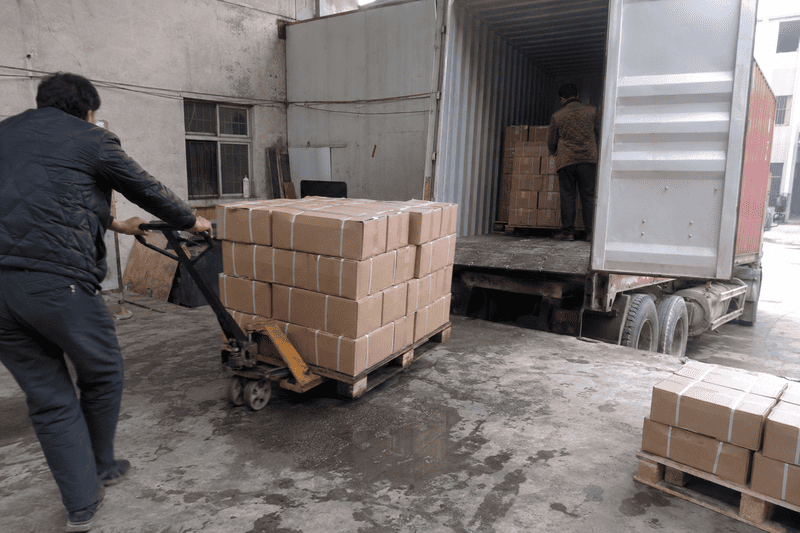
Why MOQ matters for common nails
Common nails are heavy, low-to-medium value hardware items. Because of this, very small orders often become inefficient. The supplier still needs to arrange raw material, machine time, packing, labor, warehouse handling, export preparation, and loading. At the same time, sea freight and local charges may make a small order expensive per carton.
For many nail products, a practical MOQ may start around 5 tons or 200 cartons, though it depends on the factory, specification, and packing. If the buyer needs customized packaging, logo printing, or special carton design, the MOQ may need more discussion because packaging materials also have minimum production quantities.
FOB quotation needs clear inputs
Our common FOB quotation usually depends on:
Product + specification + quantity + packaging method
For example:
- Common nail, 2 inch, bright finish, 25 kg/carton, 5 tons
- Common nail, 3 inch, polished, 20 kg/carton, 10 tons
- Common nail, mixed sizes, OEM carton, 1x20GP container
The FOB price normally covers goods and export handling to the agreed China port under FOB terms. It does not automatically include destination-country duty, tax, customs clearance, delivery to warehouse, or local port charges.8 Buyers should confirm these with their forwarder, local agent, or importer.
FCL vs LCL for common nails
Common nails can ship by FCL or LCL. The right choice depends on quantity, urgency, destination, and cost.
| Shipping option | Best for | Advantages | Possible limits |
|---|---|---|---|
| FCL | Larger orders and repeat buyers | Better control, often lower cost per ton, easier loading plan | Requires more capital and stock capacity |
| LCL | Trial orders or smaller buyers | Lower starting quantity, useful for testing supplier | Higher handling risk, more charges per unit, longer consolidation time9 |
For heavy goods like nails, FCL is often more efficient when the buyer has enough sales volume.10 But not every buyer should start with a full container. A trial order by LCL can make sense if the buyer wants to test a new supplier, new packing, or new market size.
Why cheap product price can mislead buyers
A supplier may offer a low FOB price, but the final cost may still be unattractive if:
- The order quantity is too small
- LCL charges are high
- Destination port fees are expensive
- The cartons are too weak and cause damage
- The product size does not match market demand
- The packing is not suitable for resale
- The buyer needs urgent replenishment but lead time is too long
This is why I tell buyers to evaluate the whole order, not only the unit price. In wholesale hardware, profit often depends on stable supply, correct packing, and repeatable quality. A slightly higher product price can sometimes be better if it reduces complaints and makes local resale easier.
A simple cost-thinking example
Imagine two offers for the same common nails:
| Item | Supplier A | Supplier B |
|---|---|---|
| FOB product price | Lower | Slightly higher |
| Wire diameter confirmed | Not clear | Confirmed |
| Packing | Neutral carton | OEM carton |
| MOQ | Low | 5 tons |
| Sample support | Limited | Available |
| Lead time | Unclear | 15–25 days |
| Trial order support | Not confirmed | Supported |
Supplier A may look cheaper at first. But Supplier B may be easier to manage if the buyer needs branded resale packing and repeat orders. The best choice depends on the buyer’s market, capital, sales speed, and risk tolerance.
How Should Packaging and OEM Branding Be Planned for Resale?
Packaging can decide whether common nails sell smoothly in a wholesale market. Buyers often focus on nail quality first, but local customers also judge carton weight, printing, handling strength, and brand consistency. Poor packaging can damage trust even when the product inside is acceptable.
Buyers should plan common nail packaging by confirming carton weight, inner packing, carton strength, printed marks, brand logo, language, and resale channel. OEM packaging can improve local recognition, but it must be confirmed before production. Packaging samples, artwork approval, and trial orders reduce branding and distribution risk.
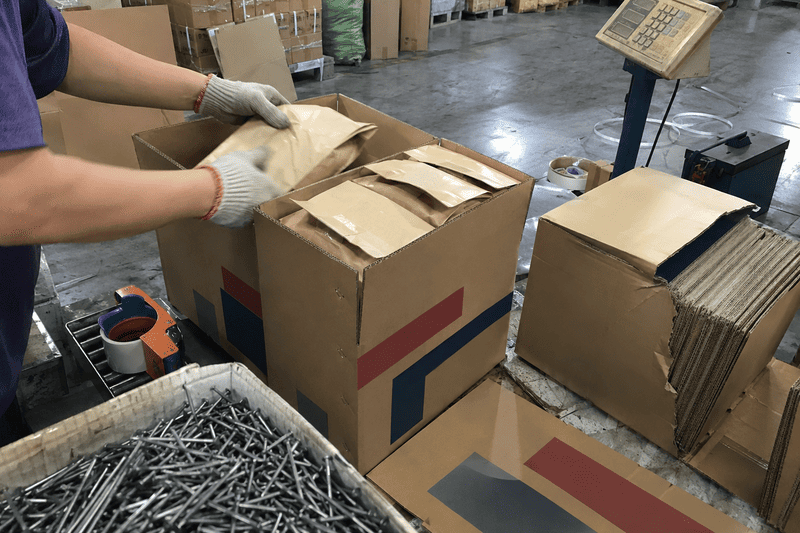
Packaging choices for common nails
Common nails can be packed in several ways. The best choice depends on local wholesale habits and buyer resale channels.
Common options include:
- Bulk carton packing
- 25 kg carton
- 20 kg carton
- Small box inside master carton
- Plastic bag packing
- Woven bag packing
- OEM printed carton
- Private brand logo packing
A hardware wholesaler in Dar es Salaam may prefer one carton style, while a buyer in the Middle East or South America may prefer another. Buyers should check what their local customers already accept. If your competitors sell 25 kg cartons, a 20 kg carton may look cheaper but may also confuse customers unless the price difference is clear.
OEM and ODM details to confirm
For buyers with their own brand, packaging is not a small detail. It affects local recognition and repeat sales. When buyers ask for OEM packing, I usually suggest confirming:
- Logo file format
- Carton size
- Carton weight
- Printing color
- Product name and size marks
- Country or market language
- Barcode or item code if needed
- Inner packing method
- Pallet requirement if any
- Carton strength for sea shipment
Buyers should approve artwork before printing. A spelling mistake, wrong size mark, or unclear logo can create problems after goods arrive. If a buyer has a China-based purchasing agent, the agent can help check printed cartons before shipment. This can improve communication efficiency.
Packaging and shipping damage
Common nails are heavy. Heavy cartons face pressure during warehouse handling and container loading. If the carton board is weak, cartons may tear or deform. If the carton is too large, workers may handle it roughly. If the packing weight is too high, local wholesalers may complain.
Good packaging should balance:
- Cost
- Strength
- Market preference
- Ease of handling
- Container loading
- Brand appearance
For trial orders, buyers should pay close attention to carton condition after arrival. If the cartons are damaged, the buyer should determine whether the issue came from carton quality, loading method, LCL handling, port handling, or local transport. The solution may be stronger cartons, better loading, FCL shipment, or adjusted carton weight.
Why packaging should be discussed early
Packaging affects price and lead time. OEM cartons may need printing preparation. Special bags or labels may need extra time. If buyers confirm packaging late, the supplier may need to adjust the price or delay production.
A complete packaging instruction can look like this:
“Pack common nails in 25 kg strong export cartons. Print our logo on two sides. Mark size, net weight, gross weight, and item name clearly. Use bright finish nails. Send carton artwork for approval before production.”
This type of instruction reduces misunderstanding. It also helps the supplier prepare a realistic quotation.
Frequently Asked Questions
What information should I send to get a common nails quotation from China?
You should send the nail type, length, wire diameter, surface finish, quantity, packaging method, destination port, and preferred shipping mode. If you need OEM cartons or samples, mention that early. Clear information helps the supplier give a practical FOB quotation instead of a rough estimate.
Can I start with a trial order before a full container?
Yes, many buyers start with a trial order to check product quality, packing, communication, and delivery time. For common nails, the trial order should still meet the supplier’s MOQ and shipping feasibility. LCL can work for testing, while FCL is often better for larger repeat orders.
Is FOB price the same as landed cost?
No. FOB price usually covers the goods and export handling to the agreed China port under FOB terms. It does not include sea freight, destination customs duty, tax, clearance, local port charges, or inland delivery. You should verify these costs with your forwarder or local import agent.
Can I use my own brand logo on common nail cartons?
Yes, many manufacturers can support OEM packaging, including brand logo, carton printing, and customized marks. You should confirm artwork, carton size, packing weight, printing color, and MOQ before production. It is better to approve packaging artwork and samples before a formal bulk order.
How long does common nails production usually take?
Production time often depends on order quantity, specifications, and packaging. As a practical reference, our common lead time is usually around 15–25 days after order confirmation, but this can change with production schedule and customization. Buyers should confirm lead time before paying the deposit.
Conclusion
To import common nails from China successfully, you should treat the purchase as a step-by-step verification process. Clear specifications, samples, trial orders, MOQ planning, packaging confirmation, and shipping feasibility all reduce risk before a full order. A low price is useful only when the goods match your market and can be shipped cost-effectively. If you are planning a trial order or OEM common nails purchase, you can contact us at [email protected] or WhatsApp +8618331061136 for specification and quotation discussion.
-
"Standard Specification for Driven Fasteners: Nails, Spikes, and Staples", https://store.astm.org/f1667-11ae01.html. A fastener standard classifies nails by dimensional and physical characteristics, supporting the point that common nails require precise specification; it does not prove that every export transaction fails when specifications are incomplete. Evidence role: definition; source type: institution. Supports: A standards or technical reference should show that nails are defined by measurable specifications such as length, shank diameter, head form, and finish.. Scope note: The support is technical and contextual rather than direct evidence about China import outcomes. ↩
-
"Supply-Chain Program Requirements and Co …", https://www.federalregister.gov/documents/2017/11/06/2017-24098/supply-chain-program-requirements-and-co-manufacturer-supplier-approval-and-verification-for-human. Quality-management guidance treats supplier evaluation and production conformity as processes extending beyond initial sample review, supporting the distinction between sample checks and trial-order verification; it does not prescribe this exact three-stage purchasing sequence. Evidence role: general_support; source type: institution. Supports: A quality-management source should support the idea that supplier evaluation involves confirming product conformity and production process capability beyond a single sample.. Scope note: The source would provide general quality-management context rather than direct proof about common-nail imports. ↩
-
"Understanding Random Sampling Inspection – ECQA", https://ecqa.com/random-sampling-inspection/. Statistical inspection standards evaluate production lots through defined sampling plans, supporting the caution that one sample cannot establish bulk-order conformity; they do not determine the correct sample size for a specific nail shipment without an agreed inspection plan. Evidence role: expert_consensus; source type: institution. Supports: A statistical quality-control source should show that lot quality is assessed through sampling plans or inspections rather than relying on one isolated item.. Scope note: The evidence is general to quality inspection and does not evaluate any supplier named in the article. ↩
-
"Mitigating packaging damage in the supply chain", https://www.packagingdigest.com/trends-issues/mitigating-packaging-damage-in-the-supply-chain. Transport-packaging research identifies inadequate package strength and handling stresses as contributors to distribution damage, supporting the claim that weak cartons can create losses even when the goods are usable; it does not quantify losses for common nails in a particular market. Evidence role: general_support; source type: research. Supports: A transport-packaging source should show that packaging performance affects product damage, handling losses, or distribution outcomes.. Scope note: The support is contextual because losses vary by carton design, route, handling, and local distribution practices. ↩
-
"The 2021 Commodity Price Surge: Causes and Impacts on Trade Flows", https://www.usitc.gov/research_and_analysis/tradeshifts/2021/special_topic. Trade and manufacturing cost references identify raw materials, product specifications, packaging, scale, and transport as cost components, supporting the statement that nail pricing changes with these variables; they do not provide a live quotation for any specific supplier. Evidence role: general_support; source type: institution. Supports: A trade or manufacturing economics source should support that steel input costs, product specifications, packaging, scale, and transport costs influence final product pricing.. Scope note: The evidence would support the cost structure generally, not the exact price movement for a particular order. ↩
-
"OECD Due Diligence Guidance for Responsible Supply …", https://www.oecd.org/content/dam/oecd/en/publications/reports/2016/04/oecd-due-diligence-guidance-for-responsible-supply-chains-of-minerals-from-conflict-affected-and-high-risk-areas_g1g65996/9789264252479-en.pdf. Supply-chain due-diligence guidance emphasizes verifying supplier information and documentation as part of risk management, supporting the advice not to rely on unverified claims; it does not assess the authenticity of any document from a specific nail supplier. Evidence role: expert_consensus; source type: institution. Supports: A procurement or due-diligence source should support verification of supplier claims, certificates, and quality documentation.. Scope note: The support is procedural and does not prove that a particular supplier’s documents are valid or invalid. ↩
-
"Basic Importing and Exporting – U.S. Customs and Border Protection", https://www.cbp.gov/trade/basic-import-export. Customs guidance explains that import duties, clearance procedures, and compliance obligations are administered by the importing country, supporting the need to verify destination-country requirements; it does not identify the duties applicable to any one nail shipment. Evidence role: general_support; source type: institution. Supports: A customs or international trade source should show that import duties, clearance procedures, and regulatory compliance are determined by the importing jurisdiction.. Scope note: The source would support the general compliance principle rather than a specific tariff classification or duty rate. ↩
-
"Know Your Incoterms", https://www.trade.gov/know-your-incoterms. Incoterms guidance for FOB allocates seller obligations to delivery on board the vessel at the named port and leaves subsequent freight, import clearance, duties, and destination costs to the buyer unless otherwise agreed, directly supporting the article’s description of FOB pricing. Evidence role: definition; source type: institution. Supports: An Incoterms source should define FOB obligations and clarify which costs and risks are allocated to seller and buyer.. ↩
-
"LCL Consolidation at CFS — Full Process", https://suaidglobal.com/insights/lcl-consolidation-guide/. Freight-forwarding guidance explains that LCL cargo is consolidated and deconsolidated with other shipments, supporting the statement that LCL can involve additional handling, charges, and time; it does not quantify the incremental cost for common nails on a specific lane. Evidence role: general_support; source type: institution. Supports: A logistics source should explain that LCL cargo is consolidated with other shipments and may involve additional handling, documentation, and consolidation steps.. Scope note: The effect varies by forwarder, port, route, shipment size, and local destination charges. ↩
-
"Economies of Scale and Alliances in Container Shipping", https://economics.mit.edu/sites/default/files/inline-files/jmp_0.pdf. Maritime logistics literature describes economies of scale and container utilization as factors that can lower per-unit transport costs, supporting the claim that FCL may be more efficient at sufficient volume; it does not show that FCL is cheaper on every route or for every order size. Evidence role: general_support; source type: institution. Supports: A maritime transport or logistics source should explain how container utilization and economies of scale can reduce per-unit transport costs.. Scope note: Actual efficiency depends on route, freight rates, destination charges, cargo weight limits, and buyer inventory capacity. ↩