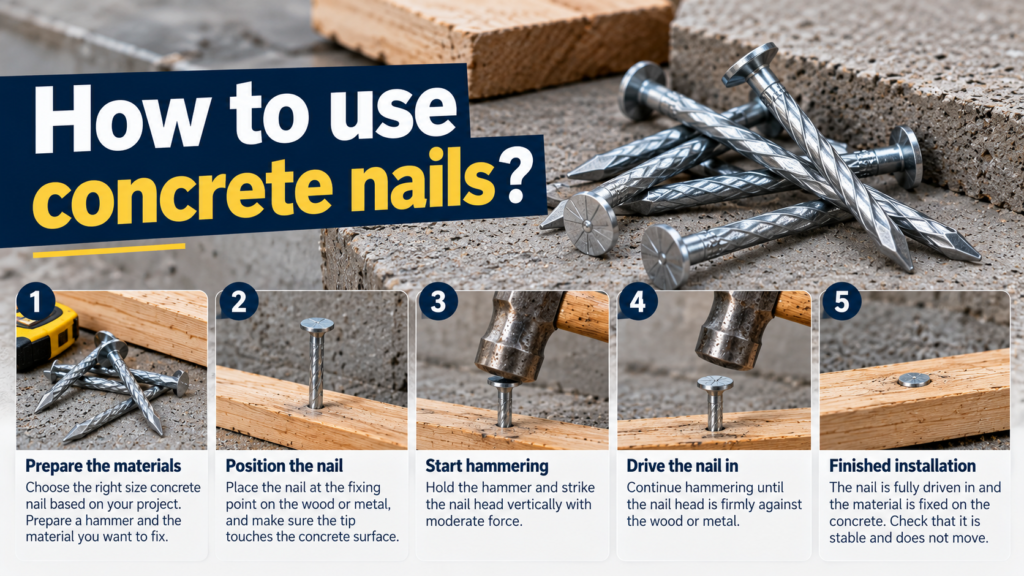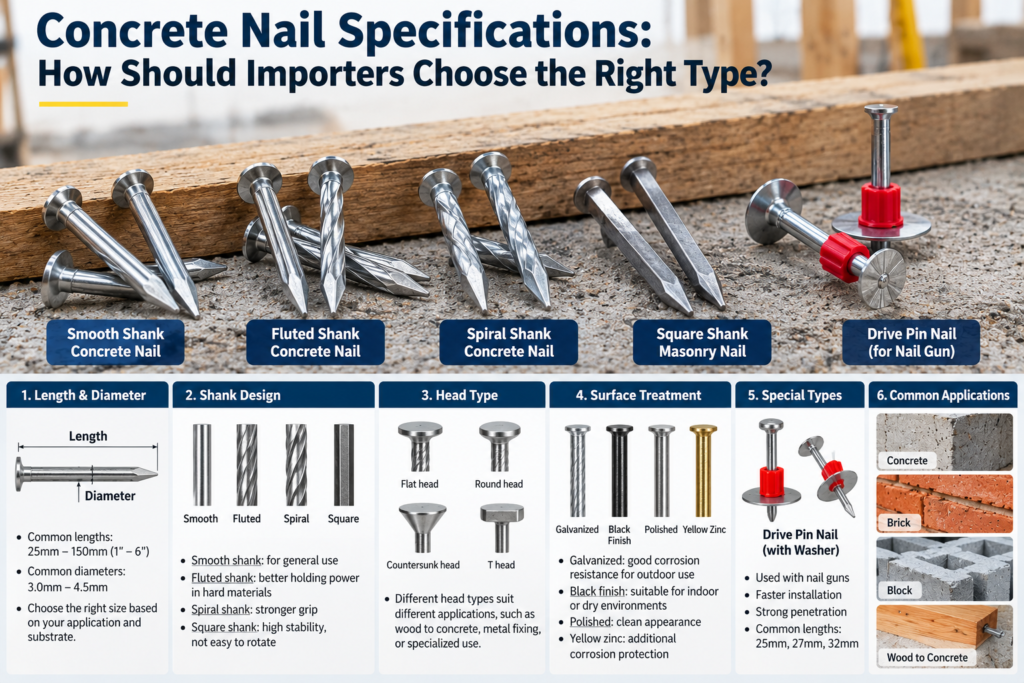
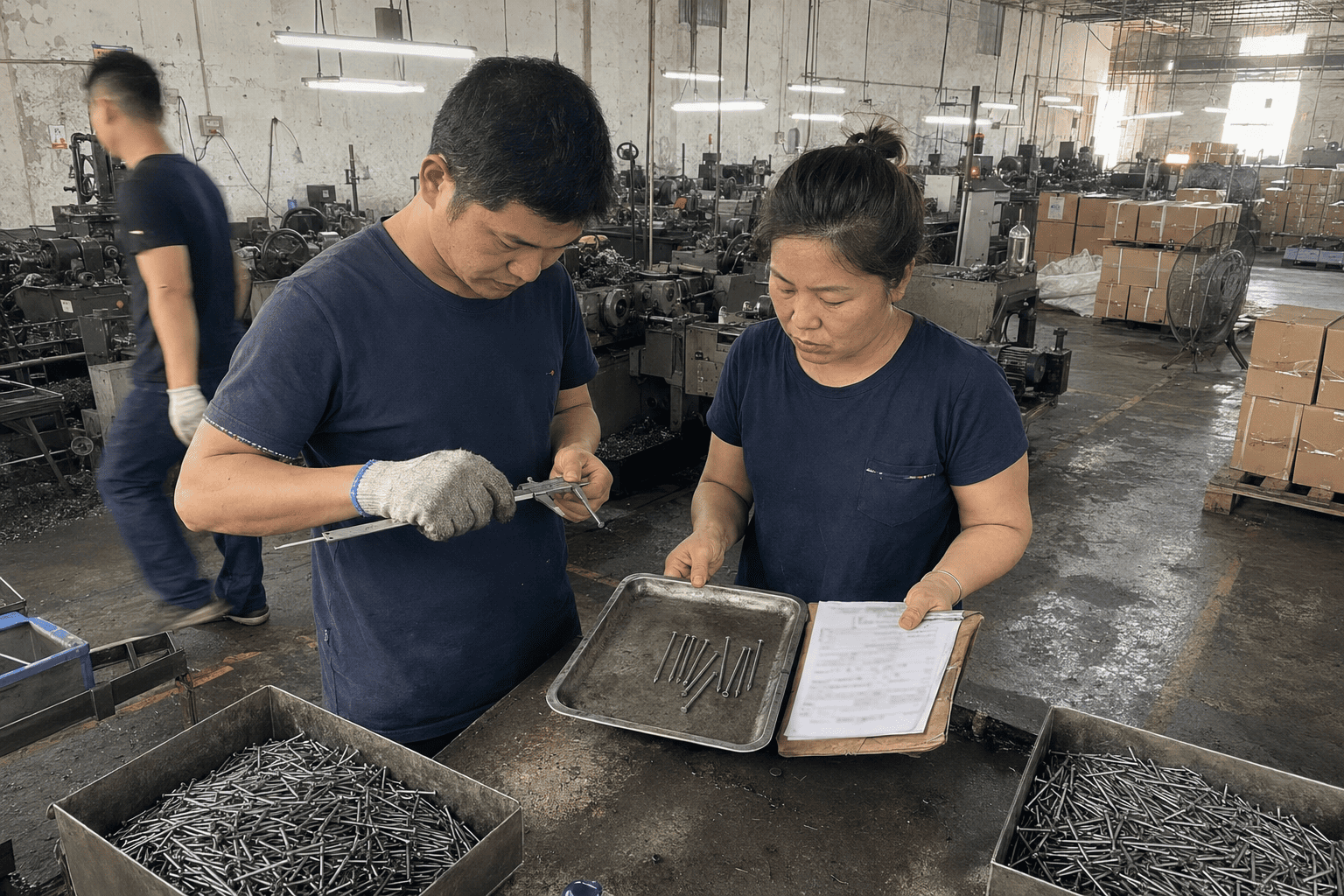
A reliable common nail manufacturer in China can protect your wholesale profit, but an unclear supplier can create weight differences, packaging errors, and delayed shipments. These problems often appear after buyers accept a low price. I recommend evaluating how clearly the manufacturer controls specifications, quotation details, samples, packaging, loading, and delivery.
A reliable common nail manufacturer in China should provide transparent specifications, net and gross weights, packaging options, loading estimates, MOQ, FOB terms, sample procedures, and realistic delivery times. Buyers should compare the complete order value rather than the price per ton alone1, then use samples or a trial order to verify execution.
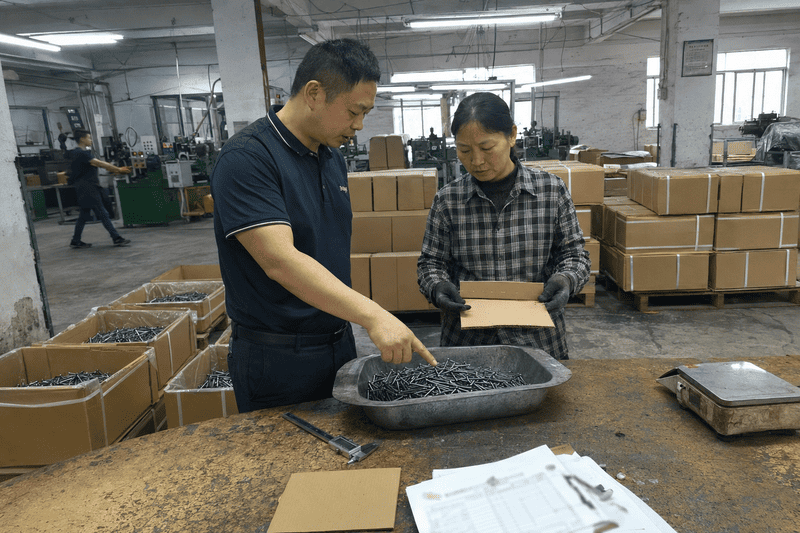
I have handled overseas inquiries in which the first question concerned price, but the later discussion focused on carton weight, loading quantity, private-label packaging, and delivery. That pattern shows why buyers need to examine the complete order before selecting a Chinese nail supplier.
How Should You Evaluate a Common Nail Manufacturer in China?
Many buyers begin by asking whether a supplier owns a factory. That question has value, but it does not reveal whether the supplier can control your order. If the manufacturer cannot explain weights, packaging, loading, and timing, factory ownership alone will not reduce your purchasing risk2.
A buyer should evaluate a common nail manufacturer in China by reviewing its specification accuracy, quotation transparency, packaging experience, sample consistency, MOQ, production schedule, and shipping preparation. The strongest supplier is usually the one that gives complete, consistent answers and identifies unclear order details before production begins.
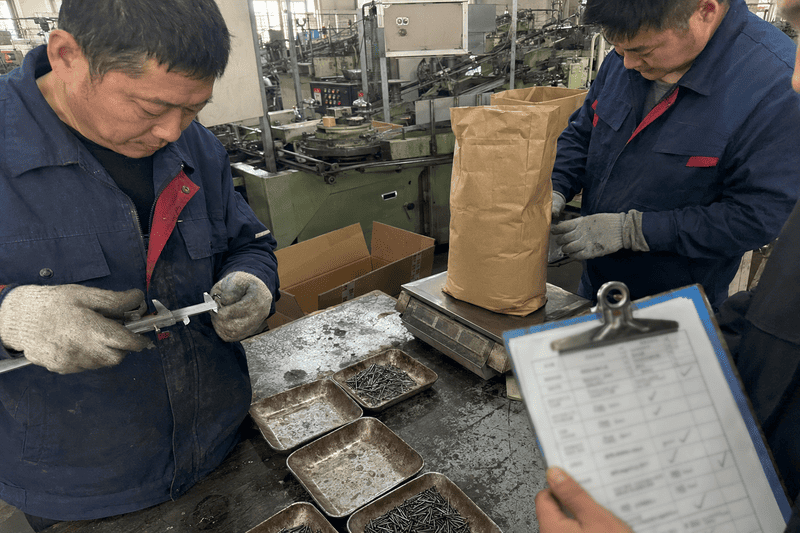
I focus on order risk, not supplier labels
I treat reliability as an order-control question. A supplier may present factory photographs, business documents, or production videos, but these items do not automatically prove that the next shipment will match the agreed order.
For common nails, I check whether the supplier can clearly confirm:
- Product type: common nail rather than concrete nail, roofing nail, or another similar product.
- Length and diameter: stated in millimeters, inches, gauge, or another market-specific system.
- Material and finish: based on the buyer’s intended market and application.
- Head and shank details: including any specific market preference.
- Packing unit: kilograms per bag, box, or carton.
- Net and gross weight: with the difference explained.
- Quantity tolerance: confirmed before production.
- Labeling requirements: including brand, size, origin marks, and carton information.
- Container loading estimate: calculated from the agreed packaging and shipment plan.
- Delivery schedule: based on quantity, packaging complexity, and production availability.
A supplier’s questions also reveal its competence. For example, if I receive an inquiry for “one container of common nails,” I still need to know the size mix, packing method, target market, and brand requirements. A manufacturer that issues a final quotation without asking for these details may be making assumptions.
I verify consistency between documents
I compare the quotation, sample details, pro forma invoice, packaging artwork, and final order confirmation. The same specification should appear consistently across every document.3
| Evaluation point | Reliable response | Warning sign |
|---|---|---|
| Nail specification | Provides length, diameter, finish, and packing details | Writes only “common nail” |
| Weight | Separates net and gross weight | Gives an unexplained carton weight |
| Packaging | Confirms inner and outer packing | Says packaging will be decided later |
| Loading | Gives an estimate with assumptions | Promises an exact quantity immediately |
| Delivery | Provides a realistic production range | Promises unusually fast delivery without checking |
| OEM details | Requests artwork and labeling instructions | Prints before obtaining approval |
I also treat certifications and inspection documents as items to verify rather than automatic proof of quality. Buyers should confirm that any document is current, relevant to the product, and issued to the correct company.4 Application-specific requirements should be reviewed by a qualified professional or inspection provider.
What Information Should You Send a Common Nail Manufacturer in China?
An incomplete inquiry often produces an incomplete quotation.5 Buyers may then compare prices that cover different nail dimensions, carton weights, or packaging methods. I find that a structured request saves time and makes it much easier to identify which suppliers understand wholesale common nail orders.
You should send the manufacturer the common nail type, dimensions, required quantity, packing method, destination or target market, OEM requirements, and sample needs. You should also state whether the order will ship by FCL or LCL. This information allows the supplier to prepare a comparable FOB quotation.
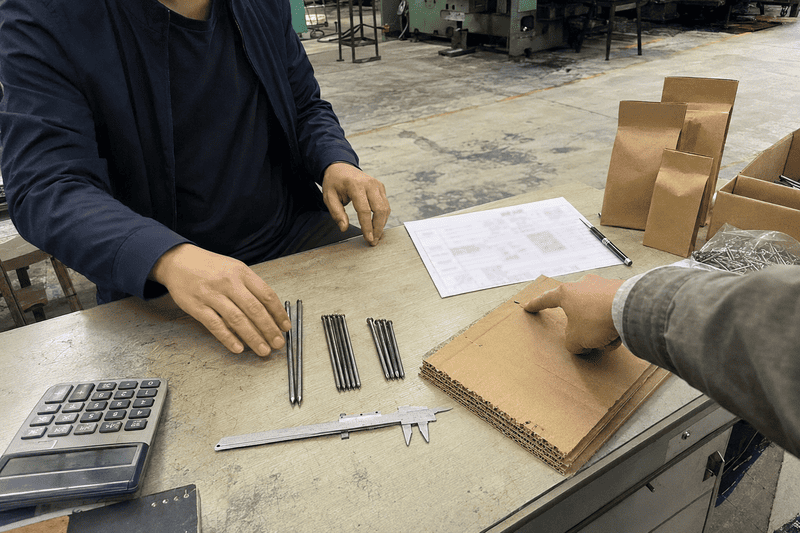
I use a seven-point inquiry format
A useful inquiry does not need to be long. It needs to remove expensive uncertainty. I recommend including the following information:
- Product: common nails.
- Specification: length, diameter, finish, and any head or shank requirements.
- Size mix: one size or several sizes, with quantity for each.
- Packaging: weight per box, bag, or carton; inner packing; outer carton; and pallet requirements if any.
- Quantity: metric tons, cartons, or container quantity.
- Branding: neutral packaging, buyer’s logo, OEM artwork, barcode, or local-language label.
- Commercial requirements: destination port, FCL or LCL, sample request, trial-order plan, and required delivery window.
A practical inquiry might read:
I need common nails for wholesale resale in Tanzania. Please quote 2-inch, 3-inch, and 4-inch sizes. The total quantity is 10 metric tons. Please use 25 kg cartons with our brand and provide the net weight, gross weight, FOB price, estimated loading quantity, sample cost, and production time.
This request gives a common nail manufacturer in China enough information to build a meaningful offer. It also allows the buyer to compare suppliers on the same basis.
I clarify the target market
Packaging habits differ between markets. Some wholesalers need small inner boxes for retail distribution. Others prefer bulk bags or heavier cartons for hardware shops. Local handling conditions can also influence carton strength, moisture protection, label language, and box size.
I ask about the target market because a technically acceptable nail can still become a weak commercial product if its packaging does not suit local wholesalers. A carton that is too heavy may be inconvenient to handle.6 A small package may increase packing cost. A label that omits the locally recognized size could slow resale.
I confirm the quotation basis
Our usual quotation method is FOB7, calculated from the product, specification, quantity, and packaging method. Buyers should state the preferred Chinese loading port or ask the supplier to identify the applicable port.
A complete quotation should show:
- Product and size breakdown
- Packing method
- Quantity
- Unit price and price basis
- MOQ
- Production lead time
- Payment terms
- Quotation validity
- Sample terms
- OEM charges, if applicable
- Estimated loading information
Our normal MOQ is 5 metric tons or 200 cartons, depending on the order. We can also discuss trial orders, but buyers should confirm whether their selected size mix and custom packaging can meet practical production quantities.
Why Is the Lowest Common Nail Price Often Misleading?
A low price per ton attracts attention, especially in price-sensitive wholesale markets. However, two quotations may represent different quantities of resale-ready products. If the sizes, net weight, carton construction, loading quantity, or branding differ, the lower headline price may deliver a weaker margin.
The lowest common nail price can be misleading because it may be based on different dimensions, weight definitions, packaging materials, quantity tolerances, or container-loading assumptions. Buyers should calculate the landed cost per saleable carton or kilogram8 and compare the expected resale value, not just the quoted cost per ton.
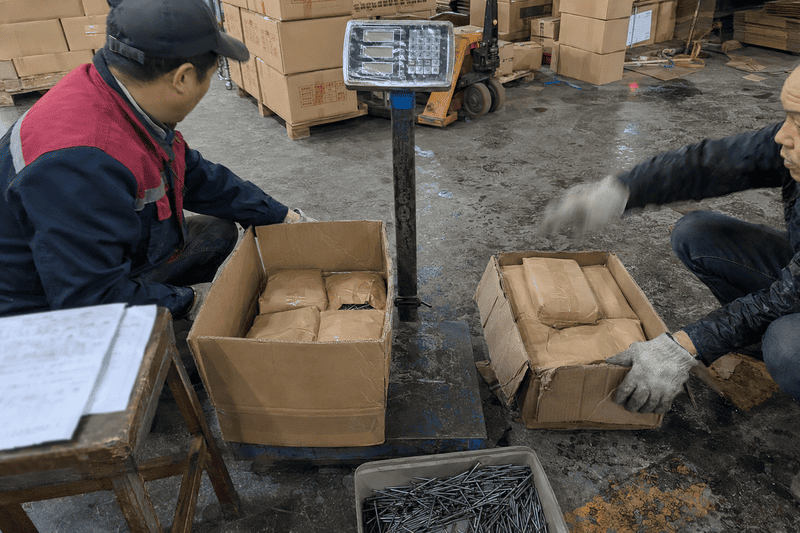
I compare like with like
In many inquiries, buyers first ask for the lowest price. The discussion often moves quickly to carton weight, loading quantity, and OEM details. This happens because the price only makes sense after both sides define what the buyer will receive.
I recommend checking these variables before comparing offers:
| Cost variable | Question to ask | Possible profit effect |
|---|---|---|
| Nail dimensions | Are the length and diameter identical? | Smaller or lighter nails may reduce material cost |
| Net weight | How much nail product is inside each carton? | Lower net weight can reduce resale value |
| Gross weight | Does the stated weight include all packaging? | Confusion can distort freight calculations |
| Carton quality | What board strength and construction are used? | Weak cartons can cause handling losses |
| Inner packing | Are nails loose, bagged, or boxed? | Different methods change cost and marketability |
| Loading estimate | How many cartons or tons are expected? | Poor assumptions can change unit freight cost |
| OEM printing | Is custom artwork included? | Extra printing plates or materials may add cost |
| Quantity tolerance | What variation is permitted? | Unclear tolerance can cause receiving disputes |
I calculate the commercial unit
A hardware wholesaler may resell by carton rather than by metric ton. In that case, I believe the buyer should calculate:
Landed cost per carton = product cost + inland charges + ocean freight + destination charges + duties and taxes ÷ saleable cartons received
The exact calculation depends on the buyer’s market and shipping arrangement. A local freight forwarder or customs professional should confirm destination charges and import obligations.
Buyers should also compare the expected gross margin per carton:
Expected gross margin = resale price per carton − total landed cost per carton
A low FOB ton price does not guarantee the best gross margin. For example, weaker packaging may create crushed cartons during handling. An unfamiliar pack size may also sell more slowly, even if the nail quality is acceptable.
I question unusually precise loading promises
Common nails are dense steel products, so shipment planning must consider container weight limitations as well as physical space9. The estimated number of cartons depends on the net weight, outer carton weight, pallets, internal protection, size mix, and applicable shipping limits.
A trustworthy common nail manufacturer in China should explain the assumptions behind its loading estimate. Buyers should avoid treating an early estimate as a final guarantee. The supplier, freight forwarder, and loading team should confirm the practical plan before shipment.
Does Factory Status Prove a Common Nail Manufacturer in China Is Reliable?
Buyers often look for a direct factory because they want better prices and production control. I understand that preference. However, a factory can still misunderstand packaging or communicate poorly. A trading company can also coordinate well. The buyer therefore needs stronger evidence than the supplier’s business category.
Factory status does not prove that a common nail manufacturer in China is reliable. Buyers should verify business identity, production involvement, specification knowledge, packaging control, quality procedures, communication accuracy, and delivery capability. The supplier’s ability to execute the agreed order matters more than the label “factory” or “trading company.”
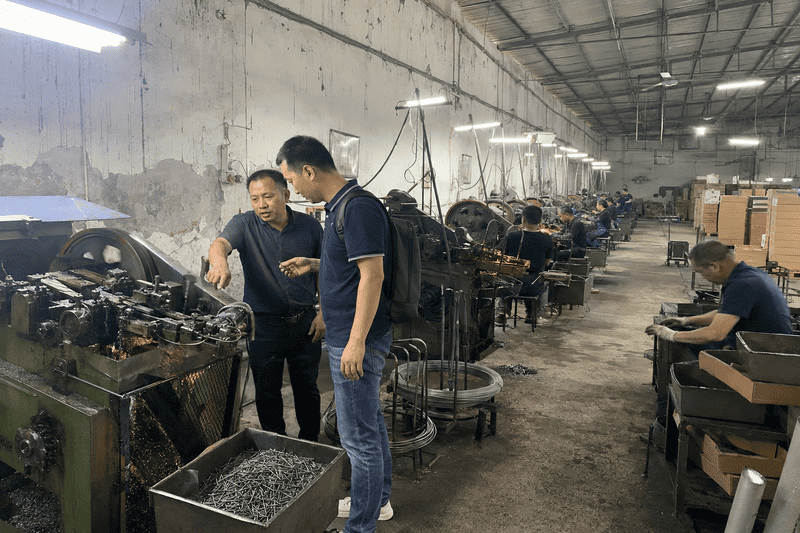
I verify relevant production capability
Our business operates as a manufacturing factory and has also established production overseas. Still, I do not believe buyers should select us or another supplier based on that statement alone. Buyers should request evidence connected to their actual order.
Useful checks can include:
- Business registration information
- Factory address and legal company name
- Current production photographs or video calls
- Machinery relevant to nail forming and packing
- Examples of available packaging formats
- Quality-control records for dimensions and weight
- Sample labeling or approved artwork procedures
- Export documentation experience
- Contact details that remain consistent across documents
A video call can be helpful, but it should have a purpose. I suggest asking the supplier to show the common nail production or packing area, explain how dimensions are checked, and demonstrate how cartons are weighed. A general tour without order-specific discussion provides limited evidence.
I look for technical and commercial understanding
The supplier should understand more than nail production. Wholesale orders also require packaging materials, printed labels, carton markings, container planning, and document preparation.
I listen for clear answers to questions such as:
- How will the supplier confirm nail length and diameter?
- How will workers check the weight of each packing unit?
- Who approves OEM artwork before printing?
- How will the supplier separate multiple sizes?
- How will the shipment quantity appear on the packing list?
- What happens if the buyer changes the packaging after sampling?
- How will the supplier report a production delay?
A reliable response should be specific without making unrealistic guarantees. If the supplier does not know an answer, I prefer a direct statement followed by verification. A fast but invented answer creates more risk than a short delay.
I examine communication discipline
Communication quality often predicts production discipline.10 I check whether the salesperson records changes, updates the quotation, and asks for written approval. Voice messages can speed up discussion, but important specifications should appear in written order documents.
I recommend using a final confirmation sheet that covers:
- Nail specifications
- Size quantities
- Packaging construction
- Net and gross weights
- Artwork files
- Shipping marks
- Production time
- Inspection arrangement
- Loading plan
- Required export documents
This record helps both parties prevent disputes. It also allows an independent inspection company to review the correct criteria if the buyer arranges pre-shipment inspection.
How Can Samples and Trial Orders Verify a Common Nail Manufacturer in China?
Samples are sometimes treated as a simple sales gesture. I see them as a practical risk-control tool. A polished sample does not prove that every production carton will match11, but it can expose specification misunderstandings, weak packaging, inaccurate labels, or poor communication before a larger commitment.
Samples and trial orders can verify a common nail manufacturer in China by testing specification accuracy, surface condition, packaging, labeling, weight, communication, and repeatability. Buyers should approve measurable details in writing and compare production goods with the approved sample instead of judging appearance alone.
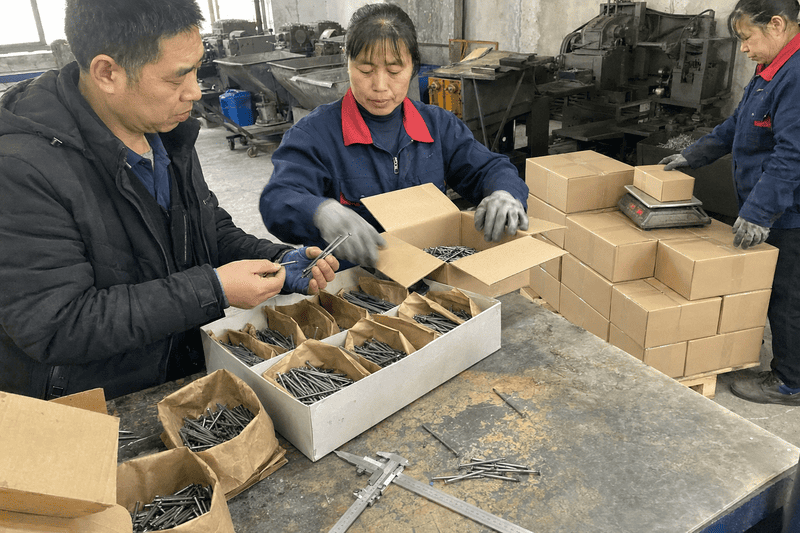
I use samples to confirm specific details
We can provide samples for quality evaluation. We normally charge a basic sample fee, which may be discussed for reimbursement or credit in a formal order. The buyer and supplier should also agree on courier costs before dispatch.
A useful sample review can cover:
- Nail length and diameter
- Straightness
- Head shape and consistency
- Point formation
- Surface appearance
- Piece count, if sold by count
- Net product weight
- Inner bag or box dimensions
- Outer carton construction
- Label text, logo position, and barcode
- Ease of handling and resale suitability
The buyer should not approve a sample with a general message such as “quality is good.” I recommend written approval that identifies the sample, date, specifications, packaging, and any permitted changes.
For application-specific performance or technical suitability, buyers should engage a qualified testing provider or professional. The supplier’s sample should not replace independent evaluation where safety, structural performance, or local regulations require specialist review.
I separate product samples from packaging samples
A small courier sample may confirm the nail itself but not the final carton. OEM packaging often requires a digital artwork review, printed proof, or physical packing sample.
I usually divide approval into three stages:
- Product confirmation: The buyer checks the nail specification and appearance.
- Artwork confirmation: The buyer approves the logo, text, size marks, colors, and shipping marks.
- Production packing confirmation: The supplier shows how the approved nails will be packed and weighed.
This process is especially important for brand owners. A spelling mistake, incorrect size label, or poor barcode can damage resale even when the nails are acceptable.
I treat a trial order as a process test
A trial order tests more than the product. It shows whether the supplier can follow the complete commercial process, including order confirmation, artwork approval, production updates, packing, documents, and shipment coordination.
Our standard lead time is normally 15–25 days, subject to order quantity, size mix, packaging, and the production schedule. We support sea freight through both full-container load (FCL) and less-than-container load (LCL) arrangements. Buyers should confirm the final schedule before placing the order.
During a trial order, I recommend tracking:
- Response accuracy before payment
- Sample-to-production consistency
- Packaging approval discipline
- Production update frequency
- Document accuracy
- Quantity and weight consistency
- Shipment timing
- Condition on arrival
- Feedback from local wholesalers
A successful first shipment does not eliminate every future risk. However, it provides better evidence than a low quotation or factory photograph.
Frequently Asked Questions
What is a normal MOQ for common nails from China?
The MOQ depends on the manufacturer, size mix, and packaging. Our normal minimum is 5 metric tons or 200 cartons. Custom boxes and logos may require practical printing quantities. I recommend asking whether several nail sizes can be combined and whether the supplier supports a trial order.
What should an FOB common nail quotation include?
An FOB quotation should identify the common nail specifications, quantity, packaging, unit price, loading port, lead time, payment terms, and quotation validity. It should also clarify net weight, gross weight, OEM costs, sample terms, and the assumptions used for estimated container loading.
Should I request common nail samples before placing an order?
Yes. I recommend using samples to check nail dimensions, appearance, weight, and packaging details. Buyers should record the approved specifications in writing. If the intended application requires technical performance testing, buyers should use a qualified independent laboratory or professional evaluator.
Can I order common nails with my own brand and packaging?
Yes. We support OEM and ODM customization for products, packaging, and brand logos. Buyers should provide artwork, label text, colors, barcode requirements, and carton marks. I recommend approving a digital proof or physical packing sample before mass printing begins.
Is FCL better than LCL for common nail shipments?
FCL can be suitable for larger orders and may reduce handling between origin and destination. LCL can support smaller trial shipments, but it may involve more handling and added consolidation charges.12 Buyers should compare total landed cost, shipment timing, and local port expenses with their freight forwarder.
Conclusion: Choosing a Common Nail Manufacturer in China
Finding a reliable common nail manufacturer in China requires more than checking the lowest price or confirming factory status. I recommend comparing specifications, net and gross weights, packaging, loading assumptions, MOQ, sample procedures, OEM control, and delivery timing. Samples and trial orders provide practical evidence before repeat purchasing.
If you are preparing a common nail inquiry, send us your sizes, quantity, packaging, target market, and branding requirements. Contact China Best Hardware at [email protected] or WhatsApp +86 183 3106 1136 for an FOB quotation, sample discussion, or trial-order plan.
-
"Analyzing Costs Using Total Cost of Ownership", https://psep.smeal.psu.edu/short-courses/supply-chain-accelerator/advanced-procurement-analyzing-costs-using-total-cost-of-ownership. Research on total cost of ownership in purchasing finds that supplier evaluation can include logistics, quality, transaction, and other acquisition-related costs rather than unit price alone; this framework is general and does not establish the cost structure of a particular nail order. Evidence role: general_support; source type: paper. Supports: Purchasing research supports considering acquisition, logistics, quality, handling, and other ownership costs in addition to the quoted price.. Scope note: The evidence concerns general purchasing methodology rather than common nails specifically. ↩
-
"Evaluating Key Factors in Supplier Selection for Micro- …", https://mds.marshall.edu/cgi/viewcontent.cgi?article=1009&context=mgmt_faculty. Supplier-selection research commonly treats quality, delivery performance, capacity, technical capability, and service as distinct evaluation criteria, indicating that factory ownership alone is not a complete measure of execution risk; the literature does not assess the particular supplier discussed here. Evidence role: expert_consensus; source type: paper. Supports: Supplier-selection literature evaluates reliability through multiple criteria, including quality, delivery, capacity, technical capability, and communication.. Scope note: The support is based on general supplier-selection research, not direct evidence about Chinese common-nail manufacturers. ↩
-
"BHEC-Procurement-and-Contract-Management-Guide-FY24 …", https://bhec.texas.gov/wp-content/uploads/2024/11/BHEC-Procurement-and-Contract-Management-Guide-FY24.docx. Quality-management standards require organizations to control documented information and communicate applicable requirements for externally provided products, supporting consistent specifications across purchasing records; such standards describe process controls rather than guaranteeing error-free orders. Evidence role: mechanism; source type: institution. Supports: Quality-management guidance supports controlling documented requirements and ensuring that purchasing information accurately communicates applicable specifications.. Scope note: Document control reduces ambiguity but does not itself prove that production goods conform. ↩
-
"Part 4 – Administrative and Information Matters", https://www.acquisition.gov/far/part-4. Accreditation guidance indicates that a management-system certificate should be checked for its status, defined scope, covered locations, named organization, and accredited issuing body; even a valid certificate does not certify every individual product or shipment unless its scope expressly does so. Evidence role: general_support; source type: institution. Supports: Accreditation guidance supports checking the issuing body, certification status, scope, site, and named legal entity.. Scope note: Certification verifies conformity within a stated scope and is not direct proof of the quality of a specific shipment. ↩
-
"REQUEST FOR QUOTATION", https://www.newrochelleny.gov/DocumentCenter/View/2231. Institutional procurement guidance emphasizes that solicitation requirements should be clear, complete, and unambiguous so bidders price the same requirement and evaluators can compare offers on a common basis; public-procurement procedures are not identical to private wholesale negotiations. Evidence role: mechanism; source type: institution. Supports: Public-procurement guidance explains that clear, complete, and nonambiguous specifications enable responsive and comparable offers.. Scope note: The cited principle comes from formal procurement and applies to private sourcing by analogy. ↩
-
"Revised NIOSH Lifting Equation | Ergonomics", https://www.cdc.gov/niosh/ergonomics/about/RNLE.html. Occupational-safety guidance identifies load weight as one of several factors affecting the physical demands and musculoskeletal risks of manual handling; it does not prescribe a universally safe carton weight because posture, frequency, grip, distance, and worker characteristics also matter. Evidence role: mechanism; source type: government. Supports: Occupational-safety guidance identifies load weight, lifting frequency, posture, grip, and carrying distance as factors affecting manual-handling risk.. Scope note: Weight alone does not determine whether a carton is safe or commercially suitable. ↩
-
"Know Your Incoterms", https://www.trade.gov/know-your-incoterms. Under the Incoterms rules, Free on Board requires the seller to deliver the goods on board the buyer-nominated vessel at the named port of shipment, where risk transfers to the buyer; FOB is intended for sea or inland-waterway transport rather than every mode of carriage. Evidence role: definition; source type: institution. Supports: Incoterms rules define FOB delivery and risk transfer by reference to goods placed on board a vessel at the named port of shipment.. ↩
-
"Determine Total Export Price", https://www.trade.gov/determine-total-export-price. Government trade guidance generally defines landed cost as the purchase price plus applicable freight, insurance, duties, taxes, and handling or clearance expenses required to bring imported goods to their destination; the precise components depend on the contract, jurisdiction, and accounting purpose. Evidence role: definition; source type: government. Supports: Government trade guidance describes landed cost as including the purchase price and relevant transportation, insurance, duty, tax, and handling expenses incurred to bring imported goods to their destination.. Scope note: There is no single universal landed-cost formula, and some destination or overhead costs may be treated differently. ↩
-
"Overweight Container Study", https://www.wsdot.wa.gov/research/reports/fullreports/275.1.pdf. The International Maritime Organization’s SOLAS requirements require the verified gross mass of a packed container before vessel loading, and container safety markings identify the maximum permissible gross mass; these rules establish weight constraints but do not determine the carton count for a particular shipment. Evidence role: mechanism; source type: institution. Supports: International maritime rules require a packed container’s verified gross mass before loading, while container safety markings specify maximum permissible gross mass.. Scope note: Actual loading also depends on equipment specifications, road limits, carrier policies, weight distribution, and packaging volume. ↩
-
"Information Quality and Supply Chain Performance: The Mediating Role of …", https://www.academia.edu/25102691/Information_Quality_and_Supply_Chain_Performance_The_Mediating_Role_of_Information_Sharing. Empirical supply-chain research has associated timely, accurate information sharing and communication quality with improved buyer-supplier coordination and operational performance; this association does not establish that communication alone predicts the production discipline of an individual supplier. Evidence role: general_support; source type: paper. Supports: Supply-chain studies associate information sharing, communication quality, and collaborative planning with improved coordination and operational performance.. Scope note: The evidence is correlational and does not justify using communication quality as a standalone reliability test. ↩
-
"6.2.2. What kinds of Lot Acceptance Sampling Plans (LASPs …", https://www.itl.nist.gov/div898/handbook/pmc/section2/pmc22.htm. Statistical acceptance-sampling guidance treats lot acceptance as a probabilistic decision based on a defined sampling plan, so conformity of one selected sample cannot establish that every unit in a production lot meets the specification. Evidence role: mechanism; source type: government. Supports: Acceptance-sampling guidance explains that conclusions about a production lot are probabilistic and depend on representative sampling plans rather than a single item.. Scope note: A representative sampling plan still carries producer and consumer risks and is not a guarantee of zero defects. ↩
-
"H092560: Transaction value; charges incident to the …", https://rulings.cbp.gov/ruling/H092560. International transport guidance describes less-than-container-load cargo as consignments consolidated with other shipments and deconsolidated near destination, which can add handling stages and consolidation-related charges; whether LCL costs more overall depends on shipment size, route, carrier, and local fees. Evidence role: mechanism; source type: institution. Supports: Transport guidance explains that LCL cargo is consolidated with other consignments and later separated, creating handling stages and possible consolidation-related charges.. Scope note: The operational difference does not prove that FCL is cheaper or less risky for every shipment. ↩