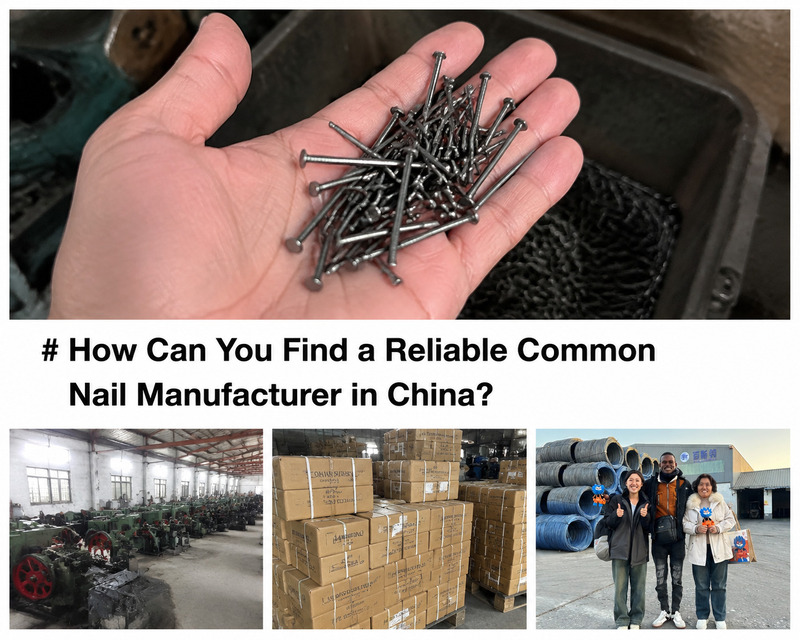
Finding a reliable common nail manufacturer in China can feel simple at first. You ask for a price, compare suppliers, and choose the lowest offer. Then the real problems appear: wrong weight, weak packaging, unclear loading quantity, or delayed delivery. The better solution is to evaluate how the supplier controls the full order.
A reliable common nail manufacturer in China is one that can clearly confirm nail specifications, actual weight, packaging method, carton details, MOQ, FOB quotation logic, sample process, container loading, and delivery time. Buyers should judge reliability by order execution ability, not only by factory status or the lowest price.
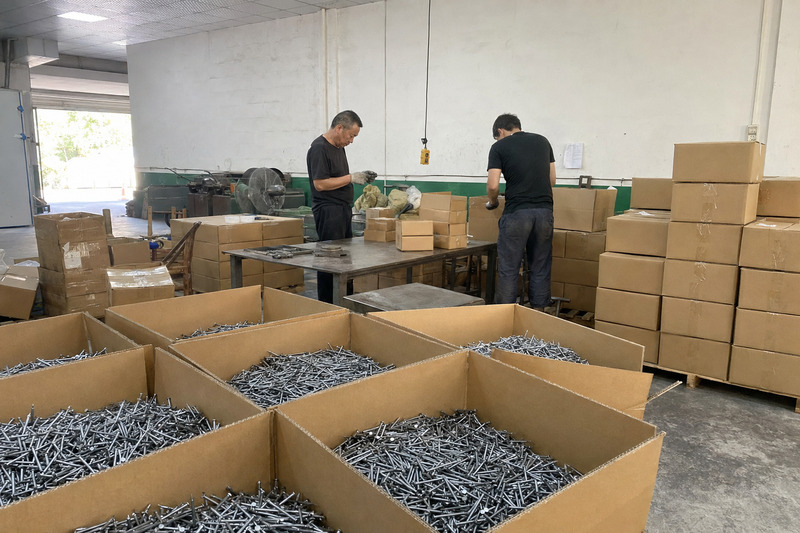
Many importers I speak with first ask for the lowest price per ton. That is normal. But after a few messages, the discussion usually moves to packaging, carton weight, loading quantity, OEM details, and whether the supplier can support repeat wholesale orders. That is where real supplier reliability becomes clear.
Why Is a Reliable Common Nail Manufacturer in China More Than Just a Low Price?
A low price looks attractive when you are comparing several quotations. The problem is that common nails are sold by size, weight, packing, and market habit, not price alone. If one detail changes, your resale profit may change too.
A reliable common nail manufacturer in China should explain what is included in the price: nail size, wire material, shank type, head type, net weight, gross weight, carton or bag packing, FOB port, MOQ, and loading quantity. A cheap offer is only useful when every detail is clear.
Price Can Hide Several Order Risks
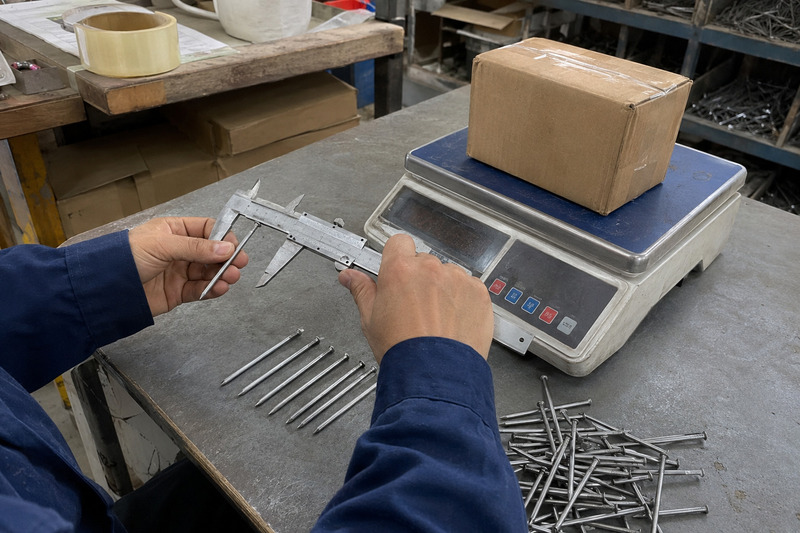
In common nail sourcing, the price per ton is only one part of the cost. I have seen buyers compare two quotations and think one supplier is much cheaper. But later they find that the packing method is different, the carton weight is lower, or the loading quantity is not practical for their market.
A common nail is a basic product, but the order details are not always basic. A wholesaler in Dar es Salaam, Lagos, Dubai, or Lima may care about different things:
- Carton size that fits local retail or wholesale resale habits
- Net weight per carton that customers already accept
- Strong packaging for long sea transport and warehouse handling
- Clear brand printing for OEM resale
- Container loading quantity that supports profit calculation
- Consistent nail size and finish across repeat orders
If a supplier only says, “Our price is low,” that is not enough. A better supplier should be able to explain why the price is at that level.
What Should Be Confirmed Before Comparing Prices?
Before you compare suppliers, you should confirm the same basis. Otherwise, the comparison is unfair.
| Quotation Item | Why It Matters | Buyer Risk If Unclear |
|---|---|---|
| Nail size | Affects material use and market demand | Wrong product for resale |
| Net weight | Affects real product value | Lower resale profit |
| Carton packing | Affects handling and market acceptance | Customer complaints |
| Brand/OEM printing | Affects brand resale | Extra cost or delays |
| FOB port | Affects total landed cost | Wrong freight calculation |
| Loading quantity | Affects container cost per ton | Higher unit cost |
| Delivery time | Affects stock planning | Missed selling season |
The Lowest Price May Not Be the Best Profit
A buyer often focuses on the supplier’s price. I understand that because wholesale business depends on margin. However, margin is not protected by the cheapest price alone. Margin is protected by correct specifications, stable packing, accurate weight, and predictable supply.
For example, if you import common nails for resale under your own brand, a weak carton can damage your reputation. If the carton weight does not match the local market habit, your customers may resist. If the loading quantity is lower than expected, your freight cost per carton rises.
So, when I evaluate whether a supplier is reliable, I do not start with the lowest number. I start with this question:
Can this supplier clearly explain what I will receive, how it will be packed, how it will be loaded, and when it will ship?
That answer says more than the price alone.
What Information Should You Prepare Before Contacting a Common Nail Manufacturer in China?
Many sourcing problems begin with an unclear inquiry. A buyer may ask, “Please send your best price for common nails.” The supplier then has to guess the size, packing, quantity, and market requirement. That makes the quotation less useful.
Before contacting a common nail manufacturer in China, you should prepare the product type, nail size, quantity, packaging method, target market, brand requirements, sample needs, and trial order plan. A clear inquiry helps the supplier quote correctly and helps you judge whether the reply is professional.
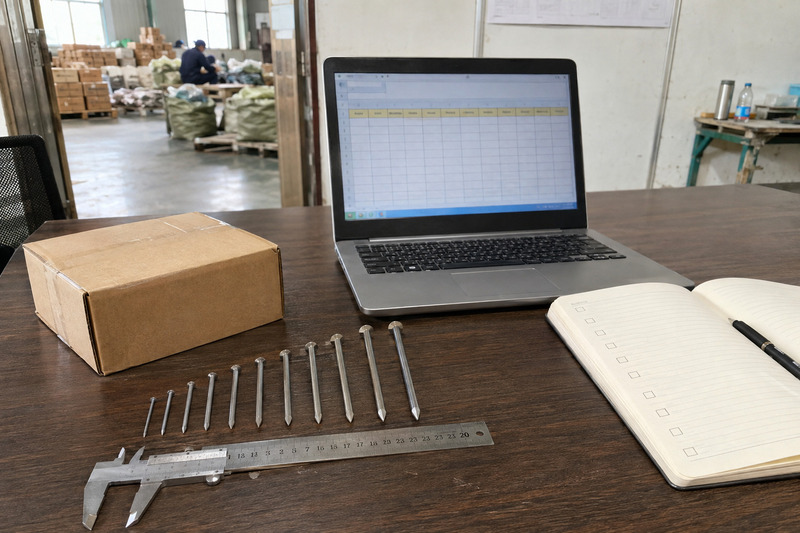
A Good Inquiry Saves Time and Reduces Mistakes
In my daily communication with overseas buyers, I notice one pattern. Buyers who provide clear details receive faster and more accurate quotations. Buyers who only ask for “best price” usually spend more time correcting assumptions later.
For common nails, the supplier needs practical details. These details affect production, packing, weight calculation, and shipping.
You should prepare:
-
Product type
Confirm whether you need common nails, concrete nails, roofing nails, black steel nails, or another type. This article focuses on common nails, but many importers buy several nail types together. -
Size or specification
Give the nail length, diameter, or local specification. If you use market names, send photos or samples when possible. -
Order quantity
A serious quotation usually needs a quantity. For our business, the usual MOQ is 5 tons or 200 boxes, depending on the order structure. -
Packaging method
Confirm whether you need bulk carton, small boxes inside carton, woven bag, plastic bag, or another wholesale packing style. -
Carton weight
Tell the supplier the net weight or gross weight expected by your market. This is very important for resale. -
Target market
A supplier serving Africa, the Middle East, Southeast Asia, and South America should understand that local packaging habits can differ. -
OEM or brand requirements
If you need your own logo, carton design, label, or printed bag, mention it early. -
Sample request
Samples can be used for quality checking. In many cases, samples have a basic fee, which may be discussed for return or deduction in a formal order. -
Shipping method
Most nail orders move by sea freight. You can ask for FCL or LCL support depending on quantity.
Example of a Clear Inquiry
A weak inquiry looks like this:
“Hello, send price for common nails.”
A better inquiry looks like this:
“Hello, I need common nails for Tanzania wholesale market. Please quote FOB price for 5 tons, size 2 inch and 3 inch, packed in cartons with our brand logo. Please confirm carton weight, MOQ, loading quantity, sample cost, and delivery time.”
The second inquiry gives the supplier enough information to respond properly. It also makes it easier for you to compare suppliers.
Why the Supplier’s Reply Matters
A reliable supplier should not only send a price. The supplier should answer your questions clearly. If the reply ignores packaging, weight, or delivery time, you should be careful.
A useful reply should include:
- Product name and size
- Quantity basis
- Packaging details
- FOB price and port
- MOQ confirmation
- Sample policy
- Estimated delivery time
- OEM packing possibility
- Loading quantity if available
- Payment and order discussion points
This does not mean every supplier must answer perfectly in one message. But the supplier should be willing to clarify details. Communication quality is part of order control.
How Can You Verify a Common Nail Manufacturer in China Through Samples and Trial Orders?
A product sample is not just a formality. It is a small test of whether the supplier understands your request. A trial order is also not only a small purchase. It is a way to check packing execution, communication accuracy, and delivery control.
You can verify a common nail manufacturer in China by requesting samples, checking nail size and finish, reviewing packaging details, confirming carton weight, and placing a trial order before repeat purchasing. Samples and trial orders help reduce first-order risk in wholesale sourcing.
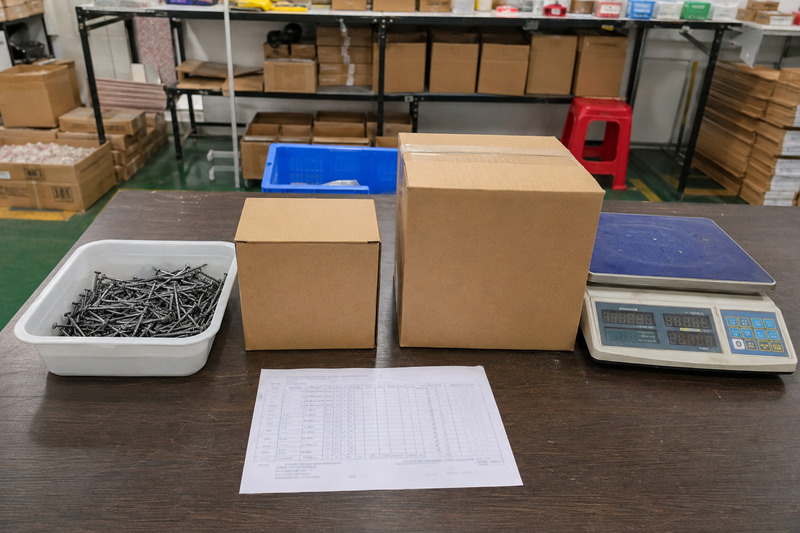
Samples Show More Than the Nail Itself
When buyers ask for samples, they often focus only on the nail. That is important, but it is not the only point. For common nails, the sample process can also show how carefully the supplier communicates.
You can use samples to check:
- Nail length and diameter
- Head shape
- Shank appearance
- Surface finish
- Bending or strength impression
- Packing sample or label sample
- Whether the supplier follows your requested specification
I always suggest that buyers treat samples as a verification tool. A supplier may charge a basic sample fee. That is normal in many industrial product inquiries, especially when customized packing or international express delivery is involved. In some cases, the sample cost can be discussed again when a formal order is placed.
Trial Orders Reduce First-Order Risk
For wholesale common nails, a trial order can be a practical step. It helps both sides test cooperation before scaling up. Our business supports trial orders, usually within the MOQ structure of 5 tons or 200 boxes.
A trial order can help you confirm:
| Verification Point | What You Should Check |
|---|---|
| Product consistency | Are the nails close to approved samples? |
| Carton strength | Can packing handle transport and warehouse movement? |
| Carton printing | Is logo, brand, and text correct? |
| Weight accuracy | Does the carton match the agreed weight? |
| Delivery time | Did the supplier ship within the promised schedule? |
| Communication | Did the supplier update you clearly? |
What Should You Inspect When Goods Arrive?
When your first shipment arrives, do not only count cartons. You should inspect a few cartons from different positions. This gives you a better view of consistency.
A simple receiving check may include:
-
Check outer carton condition
Look for damage, weak glue, poor printing, or moisture issues. -
Check label and brand details
Confirm that the market name, size, logo, and packing information are correct. -
Check actual weight
Weigh cartons to compare with agreed net and gross weight. -
Check nail size
Measure several nails from different cartons. -
Check customer feedback
Ask your wholesale customers whether the packing and nail size match their expectations.
For application-specific quality decisions, especially if the nails will be used in demanding construction conditions, buyers should arrange qualified inspection or professional evaluation. A supplier can provide production and packing details, but your market requirement should guide your acceptance standard.
Why Repeat Orders Are the Real Test
One good shipment is useful. Repeat consistency is better. A reliable common nail supplier should be able to keep the same packing, weight, size, and delivery rhythm across orders.
This is especially important if you sell under your own brand. Your customers expect the same carton, the same weight, and the same product each time. If the second shipment is different from the first, your brand takes the risk.
That is why samples and trial orders are not small details. They are the first steps in building a stable supply chain.
Is Factory Status Enough When Choosing a Common Nail Manufacturer in China?
Many buyers ask, “Are you a factory or trading company?” This is a fair question. But it is not a shortcut. Factory status alone does not guarantee reliable execution. A supplier still needs strong communication, clear packing control, and stable delivery management.
Choosing a common nail manufacturer in China should not depend only on whether the supplier says it is a factory. The stronger signal is whether the supplier can explain specifications, packaging, loading, MOQ, OEM requirements, samples, and delivery details transparently and consistently.
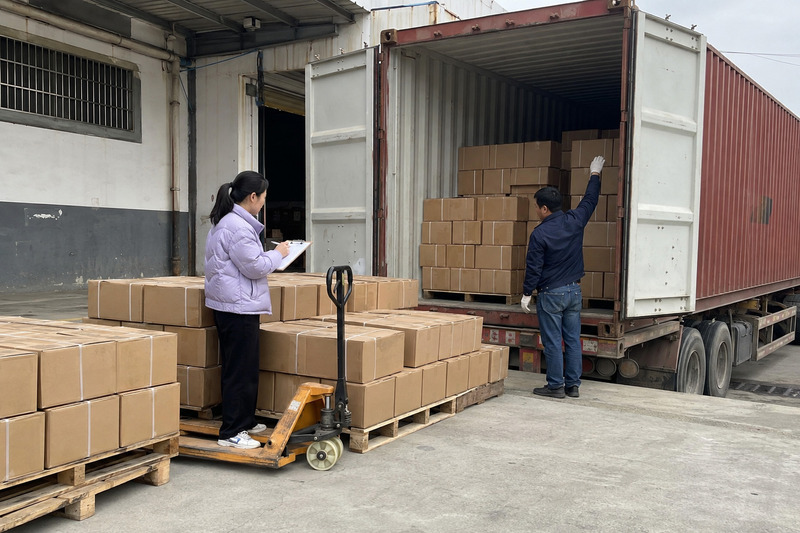
Factory Status Is Useful, But Not Complete
A real factory can offer advantages. It may control production more directly. It may support OEM or ODM requirements. It may also adjust packing and production planning faster. Our business operates as a production factory and supports customized product, packaging, and brand logo requirements.
However, I do not think buyers should stop evaluating after hearing “we are a factory.” A factory can still make mistakes if the order details are unclear. A trading company can also be professional if it manages suppliers well. The real question is order risk.
A buyer should ask:
- Can the supplier explain the production and packing process?
- Can the supplier confirm carton weight clearly?
- Can the supplier support your market’s packing habit?
- Can the supplier provide samples?
- Can the supplier support OEM branding?
- Can the supplier quote based on FOB terms correctly?
- Can the supplier meet the delivery time for your quantity?
- Can the supplier provide realistic loading information?
What Transparent Communication Looks Like
A reliable supplier does not make every answer sound perfect. A reliable supplier gives practical answers. If a packaging design needs time, they say so. If the delivery time depends on quantity, they explain it. If the MOQ applies, they state it early.
For example, our usual delivery time is 15–25 days, depending on order quantity and production schedule. That is the kind of information buyers need for stock planning. If your market has a peak season, you should confirm timing early.
Questions That Reveal Supplier Reliability
You can ask direct questions to test whether a supplier understands common nail wholesale orders.
| Buyer Question | What a Reliable Supplier Should Explain |
|---|---|
| What is your MOQ? | Minimum order basis, such as tons or boxes |
| How do you quote FOB? | Product, specification, quantity, packing, and port |
| Can you do OEM packing? | Logo, carton, label, artwork process, and cost |
| Can you provide samples? | Sample fee, delivery method, and sample scope |
| What is the delivery time? | Estimated time based on order quantity |
| How many tons load in a container? | Loading estimate based on packing and container type |
| Can I make a trial order? | Trial order terms and MOQ details |
Why Market Experience Matters
A supplier who works with buyers in Africa, the Middle East, Southeast Asia, and South America may understand wholesale realities better than a supplier focused on developed markets. In many of these regions, buyers care deeply about:
- Strong but economical packaging
- FOB price control
- Fast communication through WhatsApp
- Flexible OEM branding
- Practical trial order support
- Sea freight by FCL or LCL
- Product mix for hardware wholesale channels
A common nail order is not only production. It is also resale planning. The supplier should understand that you are not buying nails for decoration. You are buying stock for a competitive hardware market.
How Should You Compare FOB Quotations From a Common Nail Manufacturer in China?
FOB quotations can look simple, but they are easy to misunderstand. A price without specification, packing, and quantity is not a complete quotation. If you compare incomplete FOB prices, you may choose the wrong supplier.
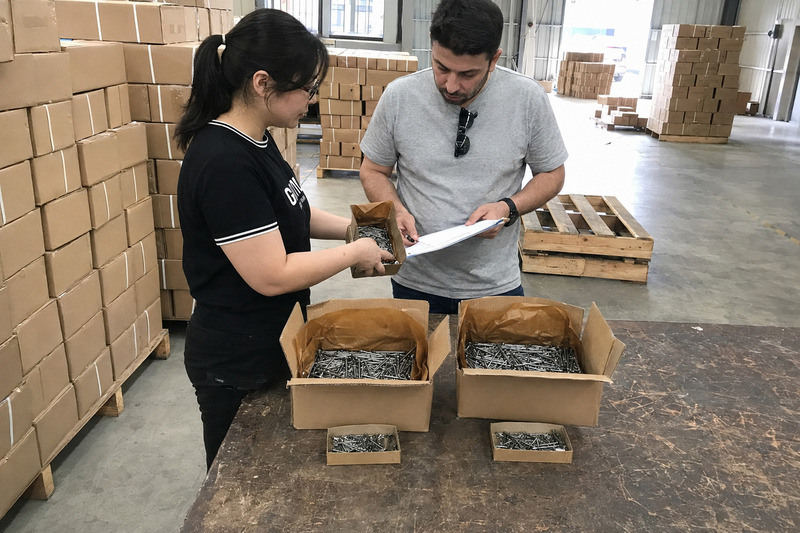
When comparing a common nail manufacturer in China, check whether the FOB quotation includes product type, size, quantity, packaging, carton weight, OEM details, loading quantity, and delivery time. FOB price should be compared only when all order conditions are the same.
What FOB Really Means for Common Nail Buyers
FOB means the seller handles goods until they are loaded at the agreed port, while the buyer usually handles ocean freight and later costs. But for common nails, the FOB price still depends on many order details.
A proper FOB quotation should usually be based on:
- Product name: common nail
- Specification: size, length, diameter, finish if needed
- Quantity: tons, cartons, or container quantity
- Packaging: carton, bag, small box, OEM design
- Carton weight: net weight and gross weight
- MOQ: minimum order requirement
- FOB port: port used for shipment
- Delivery time: based on production schedule
- Loading quantity: estimate for FCL or LCL planning
If two suppliers quote FOB but one includes stronger packing and one uses weaker packing, the prices are not equal. If one carton has different weight, the resale calculation is different.
A Practical FOB Comparison Table
When I help buyers think through quotations, I like to place offers in a simple table. This makes hidden differences easier to see.
| Item | Supplier A | Supplier B | Supplier C |
|---|---|---|---|
| Nail size | 2 inch | 2 inch | 2 inch |
| Quantity | 5 tons | 5 tons | 5 tons |
| Carton net weight | 25 kg | 20 kg | Not stated |
| Packing | OEM carton | Plain carton | Not stated |
| FOB port | Stated | Stated | Not stated |
| Delivery time | 15–25 days | 25–30 days | Not stated |
| Sample support | Yes | Yes | Unclear |
| Loading estimate | Stated | Unclear | Unclear |
This table shows why the lowest price may not be the clearest offer. If Supplier C has the lowest number but does not state carton weight or packing, the risk is higher.
The Right Way to Ask for FOB Price
You can make your quotation request more professional with a clear format:
“Please quote FOB price for common nails, size , quantity tons, packing , carton weight kg, with/without OEM logo. Please confirm MOQ, sample cost, delivery time, loading quantity, and whether FCL or LCL shipment is available.”
This format helps both sides. The supplier can quote faster. You can compare more accurately.
Why Loading Quantity Affects Real Cost
Common nails are heavy goods. Loading quantity matters because sea freight cost must be spread across the goods. A small difference in packing style or carton size can affect container utilization.
For example:
- If cartons are too weak, they may not stack well.
- If carton dimensions are inefficient, loading may be lower.
- If the order is less than a full container, LCL may be suitable.
- If the quantity is large, FCL is usually easier for cost control.
Our business supports sea freight shipment by FCL and LCL, depending on quantity and buyer needs. For many wholesalers, FCL becomes more efficient when repeat orders grow. But for a first trial order, LCL may sometimes help reduce initial pressure.
Do Not Ignore Packaging in FOB Comparison
Packaging is not decoration. Packaging is part of your resale system. It protects the nails, presents your brand, and helps your customers recognize the product.
If you sell under your own brand, you should confirm:
- Carton design
- Logo placement
- Product name
- Size marking
- Weight marking
- Language requirements
- Barcode or label needs if any
- Color and artwork approval
OEM packaging should be confirmed before production. Artwork mistakes can delay delivery. They can also create market problems after arrival.
What Signs Show a Common Nail Manufacturer in China Is Suitable for Long-Term Cooperation?
A first order can be successful, but long-term cooperation needs more than one shipment. You need a supplier who can keep communication clear, repeat quality stable, packaging consistent, and delivery predictable.
A suitable common nail manufacturer in China for long-term cooperation gives transparent quotations, supports samples and trial orders, confirms OEM packaging carefully, communicates delivery changes early, and understands the buyer’s wholesale market. Long-term value comes from consistency, not only price.
Long-Term Cooperation Depends on Repeat Control
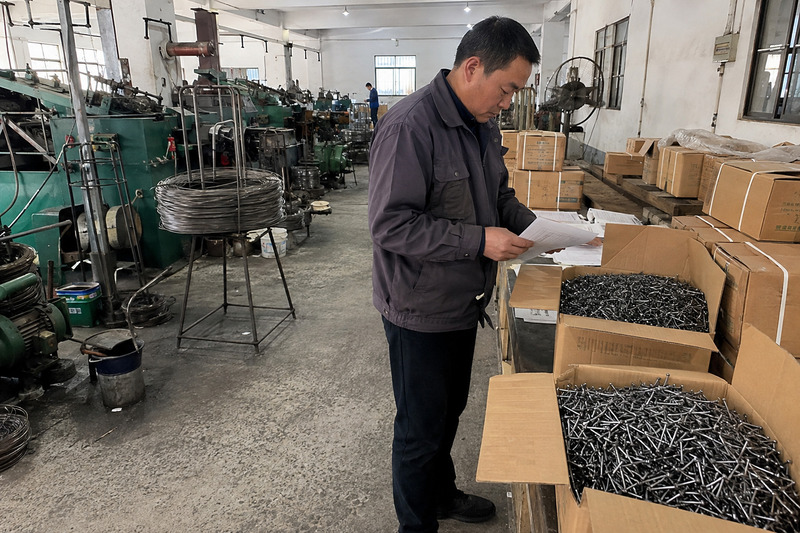
Hardware wholesalers need stable supply. If you sell many product categories, common nails may be one of your regular moving items. When stock runs out, your customers may buy from another wholesaler. So the supplier’s delivery and repeat order control become important.
A good long-term supplier should help you avoid:
- Different carton weight between orders
- Changed packing without approval
- Late shipment without warning
- Unclear sample confirmation
- Confusing price changes
- Poor communication after deposit
- OEM printing mistakes
- Inaccurate loading information
What I Look For in Repeat Cooperation
From my experience handling overseas inquiries and order communication, I pay close attention to small details. Small details often show whether the supplier is organized.
I look for these habits:
-
The supplier records confirmed specifications
The size, packing, logo, and carton details should not be forgotten after the first order. -
The supplier confirms changes before production
If material cost, packaging design, or delivery time changes, the buyer should know early. -
The supplier supports practical communication
Many buyers prefer WhatsApp because it is fast. Quick clarification can prevent mistakes. -
The supplier understands wholesale resale
The supplier should know that packaging, weight, and brand details affect your local customers. -
The supplier can support repeat production rhythm
Delivery time should be realistic. For our orders, the usual range is 15–25 days, depending on quantity.
Short-Term Cheap Supplier vs. Long-Term Reliable Supplier
| Factor | Short-Term Cheap Supplier | Long-Term Reliable Supplier |
|---|---|---|
| Price | Very attractive at first | Competitive but explained |
| Specification | May be vague | Clearly confirmed |
| Packaging | May change easily | Stable and approved |
| Weight | May be unclear | Net/gross weight confirmed |
| Samples | May treat as formality | Uses samples for verification |
| Delivery | May overpromise | Gives realistic timing |
| OEM | May rush details | Confirms artwork and packing |
| Communication | Fast before payment only | Consistent before and after order |
Why Supplier Fit Matters by Market
A buyer in the Middle East may prefer certain carton styles. A buyer in Africa may focus on strong packing and accepted local carton weight. A buyer in Southeast Asia may need mixed items and flexible logistics. A buyer in South America may care about brand presentation and shipping planning.
So the “best” supplier is not always the biggest supplier. It is the supplier who fits your buying model.
If your business is hardware wholesale, mixed category distribution, or OEM brand importing, you should choose a supplier who can support:
- Common nails and related nail products
- OEM/ODM customization
- Trial orders
- Wholesale packing
- Sea shipment
- FOB pricing
- Repeat order communication
That combination reduces risk more than a low first price.
Frequently Asked Questions
What is the usual MOQ when buying common nails from China?
The MOQ depends on the supplier and packing method. In our business, the usual MOQ is 5 tons or 200 boxes. Buyers should confirm MOQ early because nail size, packaging, OEM printing, and trial order requirements can affect the final order arrangement.
Can I request OEM packaging for common nails?
Yes, many suppliers can support OEM packaging, including carton design, logo printing, label details, and brand information. You should confirm artwork, carton weight, packing method, and language requirements before production. A sample or digital proof can help reduce printing mistakes.
Should I choose the cheapest common nail supplier?
You should not choose only by the cheapest price. A low price may hide differences in nail size, carton weight, packing strength, loading quantity, or delivery control. You should compare quotations on the same specification, quantity, packaging, and FOB terms.
Are samples necessary before placing a common nail order?
Samples are useful because they help you check nail size, finish, packing details, and supplier communication accuracy. They are especially important for new suppliers or OEM orders. A sample fee may apply, and the refund or deduction can be discussed during the formal order.
How long does common nail production usually take?
Production time depends on quantity, packing, and factory schedule. For our common nail and related nail orders, the usual delivery time is 15–25 days, with adjustment based on order volume. Buyers should confirm timing early, especially before peak sales seasons.
Conclusion
Finding a reliable common nail manufacturer in China is not just about factory identity or the lowest FOB price. You should check whether the supplier can control specifications, weight, packaging, MOQ, samples, loading, OEM details, and delivery time. A clear inquiry leads to a clearer quotation, and samples or trial orders help reduce first-order risk. If you are sourcing common nails for wholesale markets in Africa, the Middle East, Southeast Asia, or South America, you can contact us at [email protected] or WhatsApp +8618331061136 to discuss specifications and trial order options.