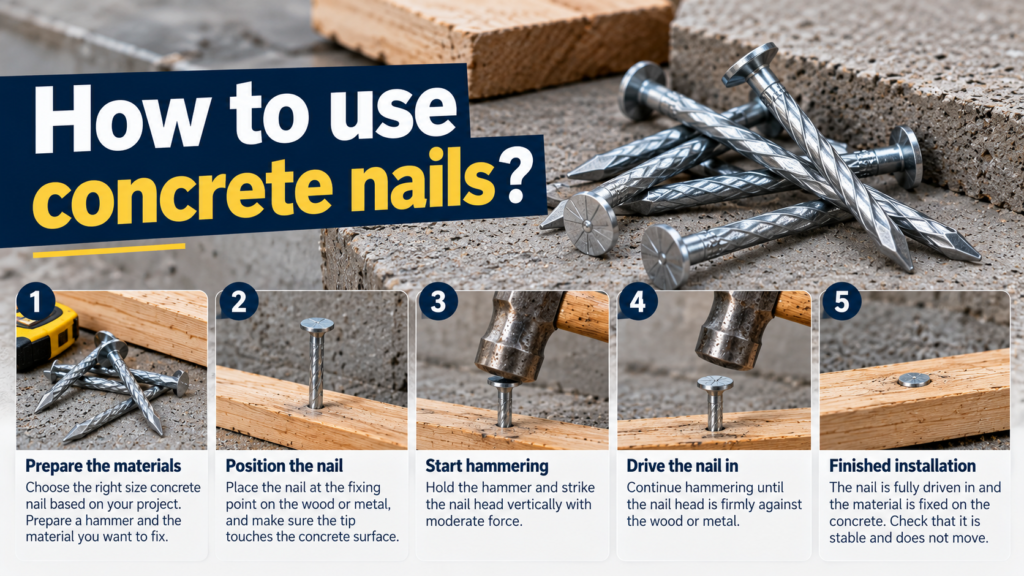
Import common nails from China without clear specifications, and a cheap quote can quickly become an expensive mistake. Small differences in wire diameter, length, packing weight, or carton strength can affect resale and customer satisfaction.1 I use a simple verification path to reduce risk before any buyer places a full order.
To import common nails from China successfully, I recommend confirming the nail specifications, quantity, packaging, destination port, shipping method, sample requirements, and trial order plan before comparing prices. The safest path is sample approval, small trial order, packaging confirmation, and then a formal bulk order based on FOB terms and realistic sea freight planning.
Many buyers ask me for “the best price” first. I understand why. But in factory communication, the best result usually comes from a better question: “What information do I need to make this order executable?” That is where successful importing really begins.
What Specifications Do I Need to Import Common Nails from China Successfully?
A buyer can lose time when a common nail inquiry is too general. The supplier may quote the wrong size, the wrong packing, or the wrong steel wire standard. This creates confusion and makes price comparison unreliable before the order even starts.
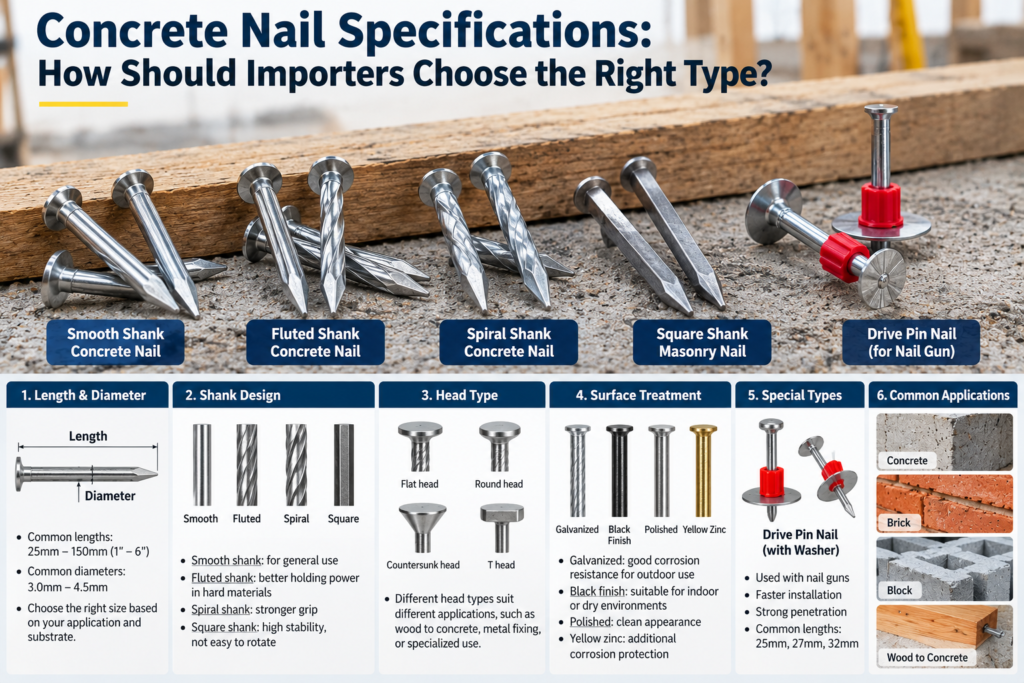
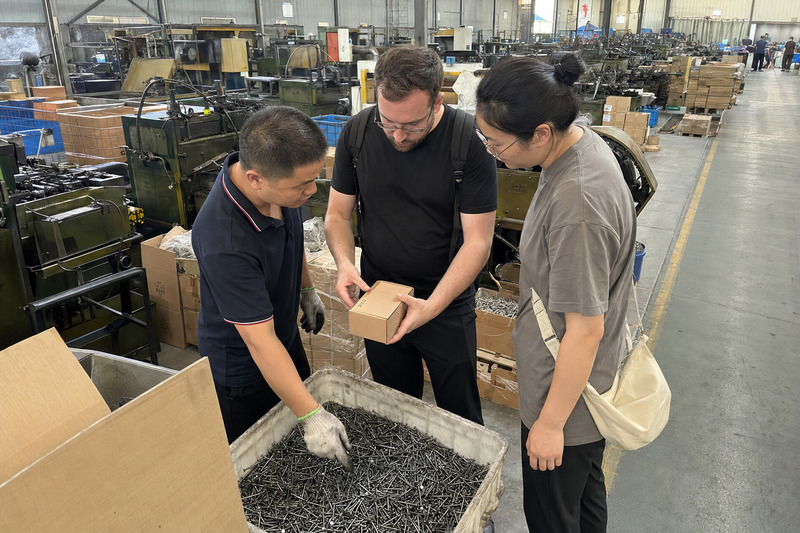
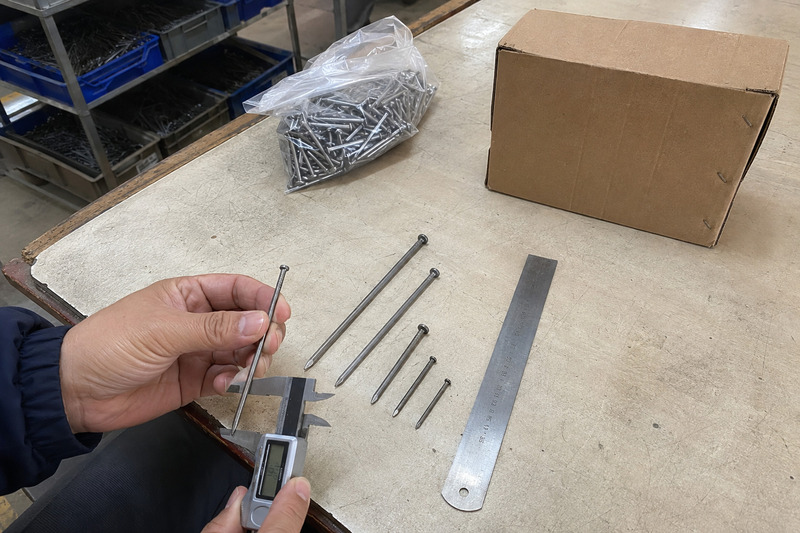
To import common nails from China successfully, I usually ask buyers to confirm nail length, wire diameter, head type, shank type, finish, quantity, packing method, carton weight, and destination port. If the buyer uses a local market size standard, I ask for a sample photo, drawing, or previous invoice to avoid misunderstanding.
Why Specifications Come Before Price
When I receive a common nails inquiry, I do not treat it as only a price request. I treat it as an order-verification process. A reliable FOB quotation needs enough detail to connect production, packing, loading, and shipping.
For example, “common nails 2 inch” may not be enough. In one market, the buyer may expect a thicker wire. In another market, the same length may be sold with a lighter wire to meet local price levels. Both products may be called common nails, but they are not the same product for manufacturing cost or resale.
A practical common nails inquiry should include:
- Product name: Common nails, polished common nails, black common nails, or other finish.
- Length: For example, 1 inch, 2 inch, 3 inch, 4 inch, or metric length.
- Wire diameter: In mm, gauge, BWG, or the local standard size.
- Head and shank: Flat head, smooth shank, or other requested design.
- Quantity: Tons, cartons, or container quantity.
- Packaging: Bulk carton, small box, bag, woven bag, or OEM carton.
- Destination port: Such as Dar es Salaam, Mombasa, Jebel Ali, Durban, Santos, or other ports.
- Shipping method: FCL or LCL by sea.
- Buyer role: Wholesaler, brand owner, importer, or buyer with a China agent.
Here is a simple table I often use when checking whether an inquiry is complete:
| Item to Confirm | Why It Matters | Example |
|---|---|---|
| Nail length | Affects usage and market category | 2 inch, 3 inch, 4 inch |
| [Wire diameter | Affects strength, weight, and price](https://research.fs.usda.gov/treesearch/49146)[^2] | 2.5 mm, 3.0 mm, BWG 10 |
| [Finish | Affects appearance and corrosion behavior](https://nvlpubs.nist.gov/nistpubs/jres/16/jresv16n2p185_A1b.pdf)[^3] | Polished, black |
| Packing weight | Affects resale and handling | 25 kg/carton, 20 kg/carton |
| Quantity | Affects MOQ and unit cost | 5 tons, 1x20ft container |
| Destination port | Affects freight feasibility | Dar es Salaam, Tema, Jebel Ali |
I manufacture and export hardware nails, so I see this issue often. A buyer may compare three quotes and think one supplier is cheaper. Later, the buyer discovers that the cheaper quotation uses a lighter wire, weaker carton, or different packing weight. That is why I prefer to confirm specifications first and price second.
A low unit price is only useful when the product specification is the same.
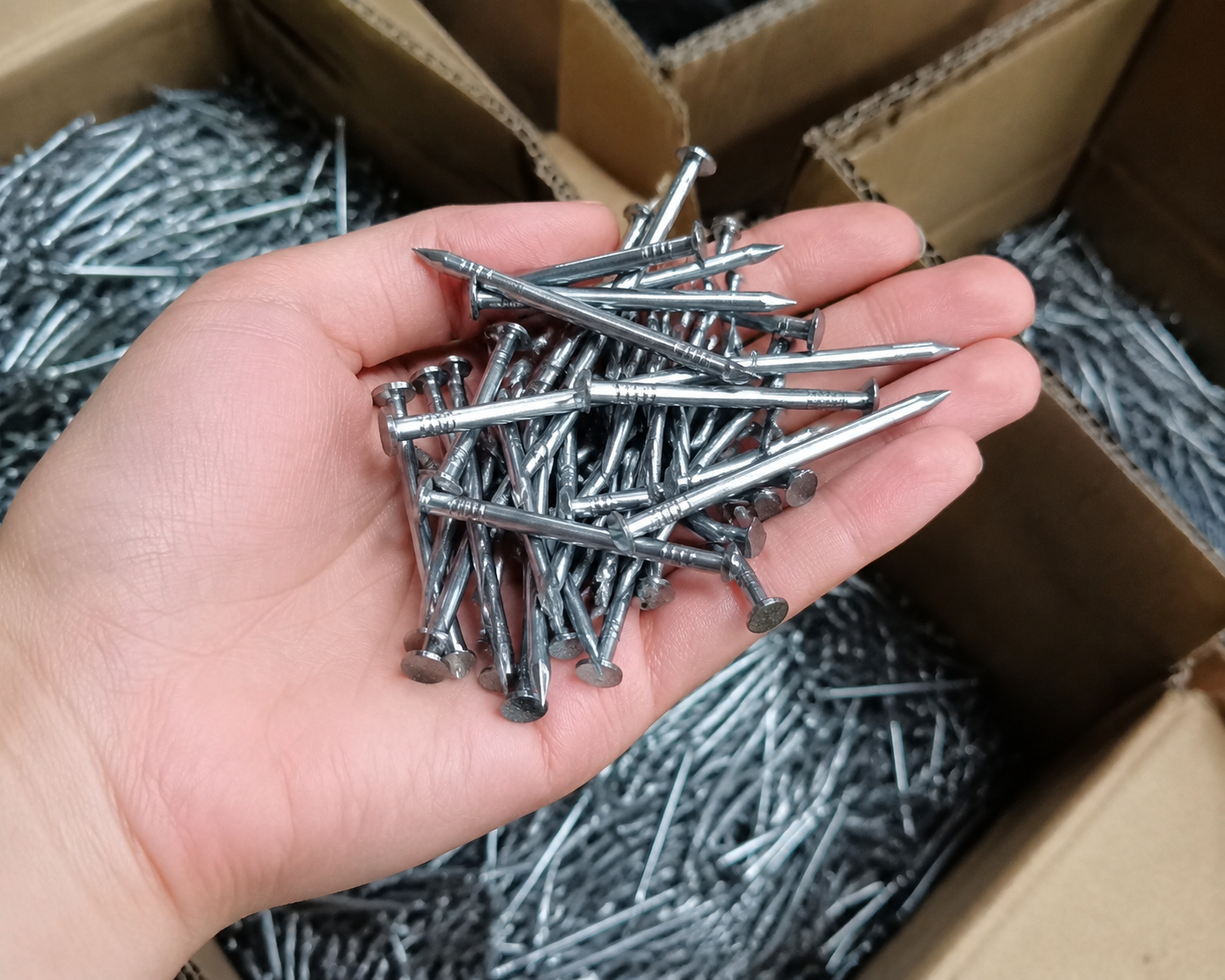
If you have your own local market standard, I suggest sending a photo of the nail beside a ruler, a carton photo, or an old supplier’s packing label. I do not need confidential supplier information. I only need enough technical detail to avoid producing the wrong nail.
How Do Samples and Trial Orders Help Me Import Common Nails from China?
A sample can look good, but bulk production may still create problems if the order details are not controlled. The buyer may approve the nail, but later dislike the carton, the label, the weight tolerance, or the loading result.
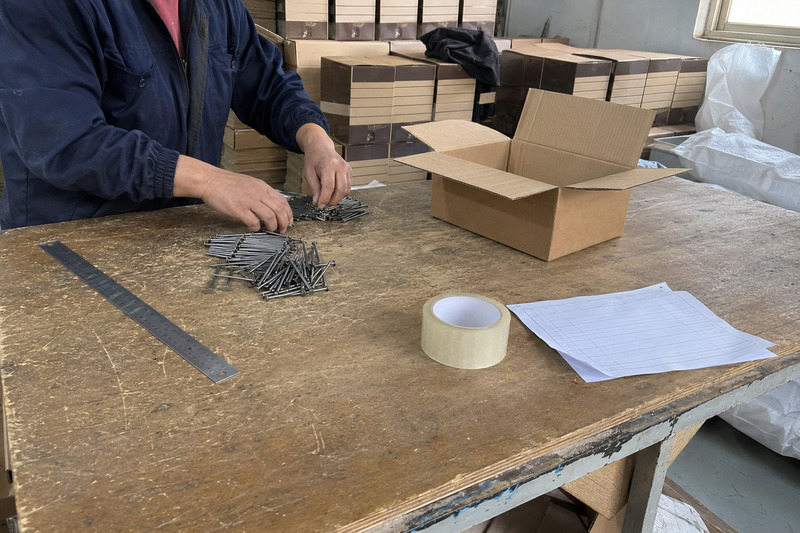
Samples and trial orders help me import common nails from China with lower risk because they separate product verification from bulk purchasing. A sample confirms size and appearance. A trial order checks production consistency, packing strength, communication quality, shipping arrangement, and resale feedback before the buyer commits to a larger container order.
The Sample → Trial Order → Formal Order Path
I usually recommend a three-step path for new buyers:
- Sample confirmation
- Trial order
- Formal order
This path may look slower than ordering a full container immediately. However, it usually saves time when the buyer is new to the supplier or wants OEM packaging.
Step 1: Sample Confirmation
A sample is useful for checking:
- Nail length and diameter
- Head size and shape
- Surface finish
- Bending resistance by simple field testing
- Local customer acceptance
- Comparison with existing stock
Our sample policy is practical. I can provide samples for quality checking, and samples usually have a basic fee. In some cases, the buyer and I can discuss returning or deducting this cost in the formal order. I always suggest buyers test samples in their real market, not only in an office.
However, samples have limits. A sample does not fully prove carton strength, mass production consistency, or loading condition.2 That is why a trial order matters.
Step 2: Trial Order
For common nails, our normal MOQ is 5 tons or 200 cartons, depending on the product and packing. I support trial orders because they help both sides check whether the cooperation is practical.
| Trial Order Check | What the Buyer Learns |
|---|---|
| Bulk nail consistency | Whether the production matches the approved sample |
| Carton strength | Whether the carton survives handling and sea transport |
| Packing accuracy | Whether carton weight and inner packing match the order |
| Label and logo | Whether OEM/ODM artwork is correct |
| Communication speed | Whether the factory responds clearly |
| Shipping feasibility | Whether FCL or LCL works for the order size |
I have seen buyers discover important resale details only after a trial order. For example, their local customers may prefer 25 kg cartons instead of 20 kg cartons. Some wholesalers prefer smaller boxes because shop owners buy in smaller quantities. Other importers need strong cartons because inland transport after port clearance is rough.
Step 3: Formal Order
After the trial order, the formal order becomes easier. The buyer and factory already understand the specification, packing, artwork, and shipment process. This reduces the chance of argument after production.
A formal order should be based on written confirmation:
- Product specification
- Quantity
- Unit price and FOB port
- Packing details
- Carton mark or brand logo
- Delivery time
- Payment terms
- Inspection requirements
- Shipping plan
I do not advise buyers to skip written confirmation. Clear records protect both sides. They also help a China-based purchasing agent, if the buyer uses one, check the goods more efficiently before shipment.
How Do MOQ, FOB Terms, and Shipping Affect Common Nails Importing Costs?
A cheap product price can be misleading when the order quantity is too small or the freight cost is high. Common nails are heavy goods, so shipping method, port plan, and container loading can affect the real buying decision.
MOQ, FOB terms, and shipping affect common nails importing costs because nails are dense, heavy, and usually transported by sea4. A buyer should calculate product price, packing, local handling, sea freight, destination charges, import duty, and inland delivery before deciding whether the order is cost-effective.
Why FOB Price Is Not the Landed Cost
Our normal quotation method is FOB, based on:
Product + specification + quantity + packaging method
This means the FOB price usually covers the product and export-side cost to the named Chinese port5, but it does not automatically include every cost after the goods leave China. The buyer should confirm sea freight, insurance if needed, destination port charges, duty, tax, customs clearance, and inland transport6 with a local freight forwarder or import agent.
I am a manufacturer and exporter, not a customs authority in the buyer’s country. So I can help with product and export communication, but buyers should verify destination-country rules with their own agent.
MOQ and Order Feasibility
For my factory, the common reference MOQ is 5 tons or 200 cartons. This level helps make production, packing, and shipping more practical. Very small orders can look attractive for testing, but the per-ton cost may become high after local handling and LCL charges.
Here is a basic comparison:
| Order Type | Typical Use | Advantage | Possible Risk |
|---|---|---|---|
| Sample | Product checking | Low commitment | Does not prove bulk packing |
| Trial order | Supplier verification | Tests real cooperation | Unit logistics cost may be higher |
| LCL shipment | Smaller volume | Lower starting quantity | More handling and possible carton damage |
| FCL shipment | Larger wholesale order | Better loading control | Requires more capital and stock planning |
FCL vs LCL for Common Nails
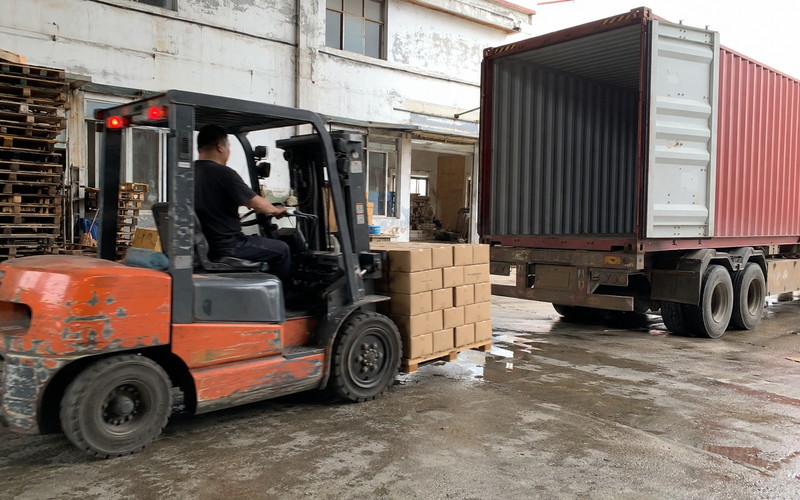
Common nails are heavy. This creates a special shipping issue. A container may reach weight limits before it reaches full volume.7 Buyers should not only ask, “How many cartons fit?” They should also ask, “What is the allowed gross weight for this route and container?”
For example, a 20-foot container is often more relevant for heavy hardware goods than a 40-foot container8. The actual loading plan depends on carton weight, pallet use, port rules, and shipping line restrictions. I always recommend confirming this with the forwarder before final order planning.
Why the Cheapest Quote May Not Win
A supplier can quote a lower price by changing hidden details:
- Thinner wire diameter
- Lighter carton weight
- Weaker carton material
- Different finish
- Less strict weight control
- No OEM printing
- Different loading arrangement
That does not always mean the product is bad. Some markets truly need economical specifications. But buyers should know exactly what they are buying.
For wholesalers in the Middle East, Africa, Southeast Asia, and South America, the best order is usually not the lowest unit price. It is the order that can be sold smoothly after sea freight, clearance, inland transport, and local market margin.
What Packaging Details Matter When I Import Common Nails from China for Wholesale?
Packaging can decide whether a common nail order sells quickly or creates complaints. A nail may meet the specification, but weak cartons, unclear labels, or unsuitable packing weight can cause problems in wholesale markets.
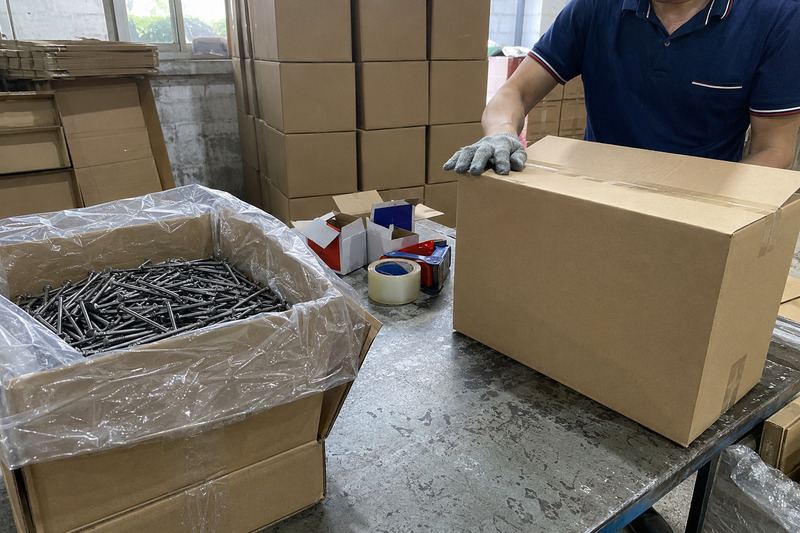
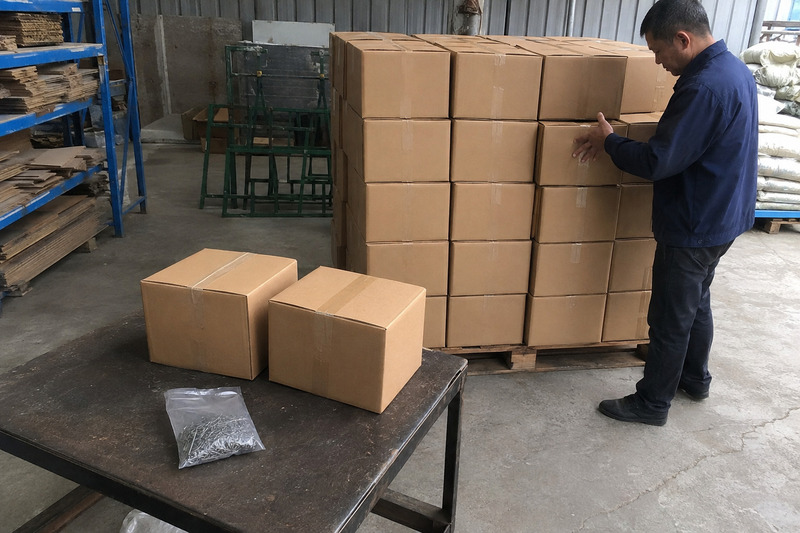
When I import common nails from China for wholesale, I should confirm carton weight, inner packing, carton thickness, brand logo, shipping marks, barcode needs, language, and resale style. OEM packaging can improve local brand recognition, but all artwork and carton samples should be approved before mass production.
Packaging Is Part of the Product
Many first-time buyers focus on nail size and ignore packaging. In wholesale trade, I see packaging as part of the product. A strong carton protects the nails. A clear label helps warehouse workers. A good logo helps the importer build repeat sales.
Common packaging options include:
- Bulk cartons
- Small boxes inside master cartons
- Woven bags
- Plastic bags inside cartons
- OEM cartons with buyer logo
- Neutral packing
- Printed shipping marks
The right option depends on the buyer’s market. For example, a hardware wholesaler in Dar es Salaam may sell to small shops that prefer manageable carton weights. A construction supplier may prefer heavier bulk packing because contractors buy larger quantities. A brand owner may need a printed carton with consistent colors and a clear logo.
Packaging Questions I Usually Ask
When a buyer requests OEM/ODM common nails, I usually ask:
- Do you need your own brand logo?
- Do you have print-ready artwork?
- What carton weight do you sell locally?
- Do you need inner boxes or only bulk packing?
- What language should appear on the carton?
- Do you need product size printed on each carton?
- Does your China agent need to inspect packaging before shipment?
These questions reduce delays. They also prevent disputes after production. If the buyer changes artwork after carton printing starts, cost and delivery time may change.
Packaging and Resale Trust
Packaging can influence customer trust in developing wholesale markets. Shop owners often judge consistency by carton appearance, label clarity, and weight stability. If one carton is 25 kg and another feels lighter, customers may complain even if the nail quality is acceptable.
A simple packaging confirmation table can help:
| Packaging Item | Buyer Should Confirm | Why It Matters |
|---|---|---|
| Carton weight | 20 kg, 25 kg, or custom | Affects resale and handling |
| Carton strength | Standard or reinforced | Affects sea and inland transport |
| Brand logo | Neutral or OEM | Affects market recognition |
| Printing color | 1-color, 2-color, full color | Affects cost and appearance |
| Inner packing | Bulk or small boxes | Affects retail distribution |
| Shipping mark | Buyer name, size, destination | Affects warehouse control |
Customization Capability
My factory supports OEM/ODM customization, including product details, packaging, brand logo, and carton design. However, I prefer to confirm custom packaging carefully before production. If the buyer has a purchasing agent in Yiwu or another China city, that agent can help check carton samples or loading photos.
Custom packaging is useful, but it should match order quantity. For a very small trial order, fully custom packaging may increase cost. For repeat wholesale orders, branded packaging can help the buyer build a stronger local identity.
How Should I Choose a Reliable Common Nails Supplier in China?
A buyer may find many suppliers online, but not every supplier can handle specifications, trial orders, OEM packaging, and export communication well. The risk is not only product quality. The risk is unclear responsibility before shipment.
I should choose a reliable common nails supplier in China by checking factory capability, product range, export experience, sample support, MOQ policy, packaging customization, delivery time, and communication quality. I should also verify business documents, inspection records, and any claimed certifications before placing a larger order9.
Supplier Selection Is Risk Management
When buyers ask me how to choose a supplier, I suggest that they look beyond the product photo. Product photos can be copied. A real supplier should be able to answer detailed questions about specifications, packing, MOQ, delivery, and shipping feasibility.
Useful supplier evaluation points include:
- Does the supplier understand common nail sizes for your market?
- Can the supplier provide samples for testing?
- Can the supplier support trial orders?
- Does the supplier offer clear FOB quotation details?
- Can the supplier customize packaging and logo?
- Does the supplier communicate delivery time honestly?
- Can the supplier work with your China agent if needed?
- Does the supplier provide production photos, packing photos, or loading photos when agreed?
For our business, the usual delivery time is 15–25 days, depending on order quantity and production schedule. I avoid promising one fixed time for every order because real production depends on specification, packing, order volume, and factory workload.
Factory vs Trading Company
Both factories and trading companies can be useful. The right choice depends on the buyer’s needs.
| Supplier Type | Strength | Possible Limitation |
|---|---|---|
| Factory | Direct production control, technical detail, OEM support | Product range may be more focused |
| Trading company | Wide product sourcing, mixed containers | Less direct control over production |
| China agent | Local checking and coordination | Usually needs clear buyer instructions |
I am a China-based hardware nails manufacturer and exporter, and our main products include common nails, concrete nails, black steel nails, lost head nails, and roofing nails. I also understand that many customers sell mixed hardware categories. If a buyer has a China agent, I see that as helpful, not as a problem. A good agent can inspect packing, confirm documents, and coordinate shipping.
What Buyers Should Verify Independently
Buyers should verify the following through their own team, agent, or qualified professional:
- Import duties and taxes in the destination country
- Customs clearance requirements
- Product standards required by local authorities or large projects
- Insurance needs
- Destination port and inland transport cost
- Any certification claims from suppliers
- Local labeling requirements
I can provide product and export-side documents according to the order agreement. However, local import compliance belongs to the buyer’s market. I recommend confirming it before shipment, not after the goods arrive.
Communication Quality Matters
A reliable supplier should ask questions. If a supplier quotes immediately without confirming details, the quote may not be comparable. When I prepare a quotation, I usually need:
- Product name
- Size and wire diameter
- Quantity
- Packing method
- Destination port
- FCL or LCL plan
- Sample or trial order requirement
- OEM logo or neutral packing preference
This may feel slower at first. But it creates a more accurate quotation and a smoother order.
Frequently Asked Questions
What is the usual MOQ for common nails from your factory?
Our usual MOQ is 5 tons or 200 cartons, depending on the specification and packaging. I can support trial orders for new buyers. A trial order helps both sides confirm quality, packing, communication, and shipping feasibility before moving to larger formal orders.
Can I use my own brand logo on common nail packaging?
Yes, I support OEM/ODM packaging, including brand logo, carton design, product information, and customized packing style. I recommend confirming artwork, carton weight, printing color, and shipping marks before mass production. For trial orders, buyers should check whether custom packaging is cost-effective.
How long does production usually take?
Our usual delivery time is 15–25 days, but the exact schedule depends on order quantity, nail specification, packaging requirements, and factory production plan. I suggest confirming delivery time in writing after all product and packing details are finalized.
Should I choose FCL or LCL for common nails?
FCL is often better for larger wholesale orders because common nails are heavy and need stable loading. LCL can work for smaller trial orders, but handling cost and carton damage risk may be higher.10 Buyers should confirm the best option with their freight forwarder.
Do you provide samples before a formal order?
Yes, I can provide samples for quality testing. Samples usually require a basic fee, and the buyer and I can discuss whether this cost can be adjusted in the formal order. I recommend testing samples in the buyer’s real market before confirming a larger order.
Conclusion
To import common nails from China successfully, I would not start with the lowest price. I would start with clear specifications, sample testing, a realistic trial order, confirmed packaging, MOQ planning, and sea freight feasibility. This process helps buyers reduce purchasing risk and build stable wholesale supply. If you are preparing a common nails inquiry for Africa, the Middle East, Southeast Asia, or South America, you can contact me at [email protected] or WhatsApp +8618331061136 to discuss specifications, samples, and FOB quotation details.
-
""The Impact of Consumer Product Package Quality on Consumption …", https://repository.rit.edu/japr/vol6/iss1/4/. Quality-management and packaging research links product conformity and package integrity with reduced damage, fewer complaints, and higher customer satisfaction; this supports the article’s general risk framing, although it does not directly measure common-nail resale outcomes in any one market. Evidence role: general_support; source type: paper. Supports: Research on quality consistency and packaging performance can support the idea that specification variation and packaging failures affect customer experience and resale outcomes.. Scope note: Contextual support only; the source should establish the general relationship between conformity, packaging integrity, and customer satisfaction rather than specific common-nail sales data. ↩
-
"ISO 2859-1:1999(en), Sampling procedures for inspection by attributes", https://www.iso.org/obp/ui/#iso:std:iso:2859:-1:ed-2:v1:en. Sampling-inspection and package-testing standards distinguish individual sample checks from lot-level conformity and distribution-performance testing, supporting the article’s warning that a product sample alone cannot prove bulk consistency or carton performance. Evidence role: expert_consensus; source type: institution. Supports: Standards on sampling inspection and packaging distribution testing can support the distinction between sample approval and bulk-shipment verification.. ↩
-
"(PDF) Supplier Evaluation Model Procurement and Contracting", https://www.academia.edu/11846445/Supplier_Evaluation_Model_Procurement_and_Contracting. Supply-chain and quality-management research treats pilot production, first-article inspection, and supplier qualification as methods for reducing uncertainty before full-scale purchasing; this supports the article’s trial-order logic, although it does not specifically evaluate common-nail imports. Evidence role: general_support; source type: paper. Supports: Procurement or quality-management literature should support the use of pilot runs or trial orders to reduce supplier and production risk.. Scope note: Contextual support only; the evidence should support trial-order risk reduction generally, not this supplier’s specific process. ↩
-
"MATERIAL Type Cost", https://web.mit.edu/course/3/3.11/www/modules/props.pdf. UNCTAD reports that maritime transport carries the majority of global merchandise trade by volume, which supports sea-freight planning for heavy steel goods such as nails; the statistic is sector-wide and does not prove the exact shipping mode used for every common-nail order. Evidence role: statistic; source type: institution. Supports: An international maritime-trade source can support the general importance of sea transport for heavy traded goods, while a materials source can contextualize steel density.. Scope note: Contextual support only; the source supports maritime transport’s general role, not a nail-specific shipment share. ↩
-
"Know Your Incoterms", https://www.trade.gov/know-your-incoterms. Incoterms 2020 defines Free on Board as a rule under which the seller delivers the goods on board the vessel at the named port of shipment, after which costs and risks shift according to the rule; this supports the article’s distinction between FOB price and later landed-cost items. Evidence role: definition; source type: institution. Supports: An Incoterms source should define FOB and the division of seller and buyer obligations.. ↩
-
"Duty – Cost Insurance and Freight (CIF) – help.CBP.gov", https://www.help.cbp.gov/s/article/Article1126. Customs and trade-agency guidance commonly treats landed cost as including the purchase price plus logistics, insurance where applicable, duties, taxes, clearance charges, and delivery-related costs, supporting the article’s warning that FOB price is not the total import cost. Evidence role: definition; source type: government. Supports: Customs or trade-agency guidance should support the components commonly considered in import landed cost.. ↩
-
"Shipping 20ft and 40ft Sea Containers: Specs & Weight", https://www.freightos.com/freight-resources/20ft-40ft-container/. Standard freight-container specifications list both cubic capacity and maximum gross or payload mass, demonstrating that dense cargo can be constrained by weight before volume is exhausted. Evidence role: mechanism; source type: institution. Supports: Container specification sources should show that containers have both volume capacity and maximum gross or payload weight limits.. ↩
-
"20ft and 40ft shipping containers: How to choose [+Key differences]", https://www.container-xchange.com/blog/container-types-20ft-and-40ft. Container capacity tables show that 40-foot containers offer substantially more cubic volume than 20-foot containers but not a proportional increase in allowable payload, supporting the article’s point that 20-foot containers can be more relevant for dense hardware cargo; route-specific legal and carrier limits still determine the final loading plan. Evidence role: general_support; source type: institution. Supports: Container specification data should support that 40-foot containers provide much more volume but not proportionally more allowable payload than 20-foot containers.. Scope note: Contextual support only; the source supports the payload-volume relationship, while the best container choice depends on route, carrier, and local road-weight rules. ↩
-
"IAF CertSearch: IAF Certification Validation", https://www.iafcertsearch.org/. Accreditation and procurement guidance recommends verifying the validity and scope of supplier certifications and supporting records rather than relying only on supplier representations, supporting the article’s due-diligence advice before larger purchases. Evidence role: expert_consensus; source type: institution. Supports: Certification and procurement guidance should support independent verification of supplier credentials and certification claims.. ↩
-
"Less than Container Load Shipping Simplified: The Power of LCL", https://www.msc.com/en/lp/blog/shipping/less-than-container-load-guide. Logistics research on freight consolidation notes that LCL cargo is commonly consolidated, deconsolidated, and handled at additional transfer points, supporting the article’s concern about higher handling exposure and possible carton damage; actual damage rates depend on carrier practice, packaging, and route. Evidence role: general_support; source type: paper. Supports: Logistics literature should support that consolidated cargo often requires additional handling, which can increase damage exposure.. Scope note: Contextual support only; the source should establish the handling-risk mechanism rather than a universal LCL damage rate. ↩