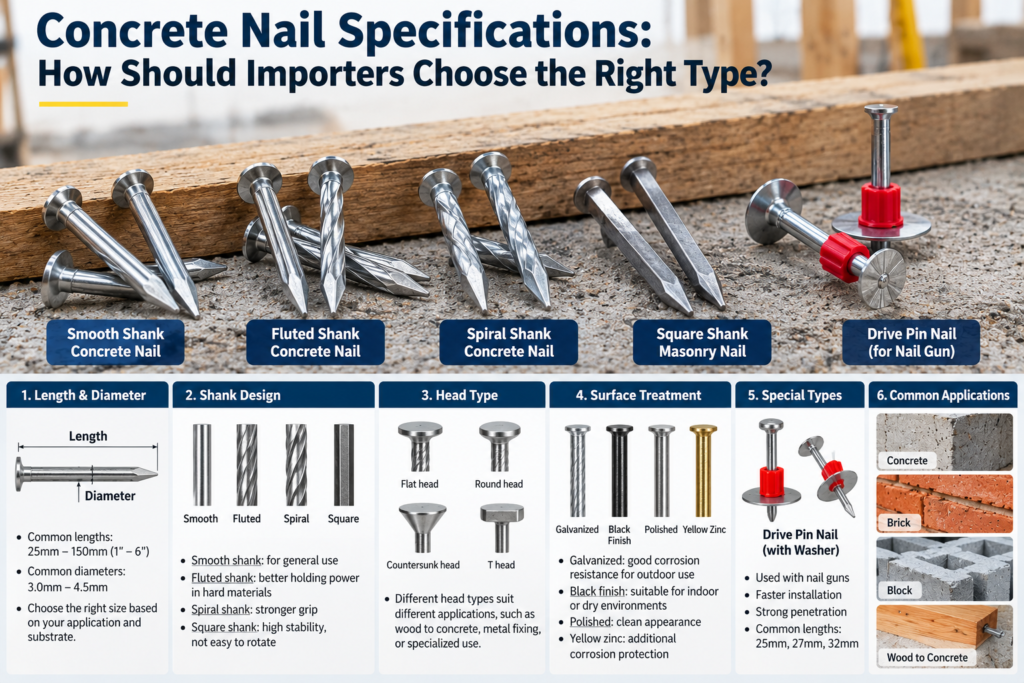
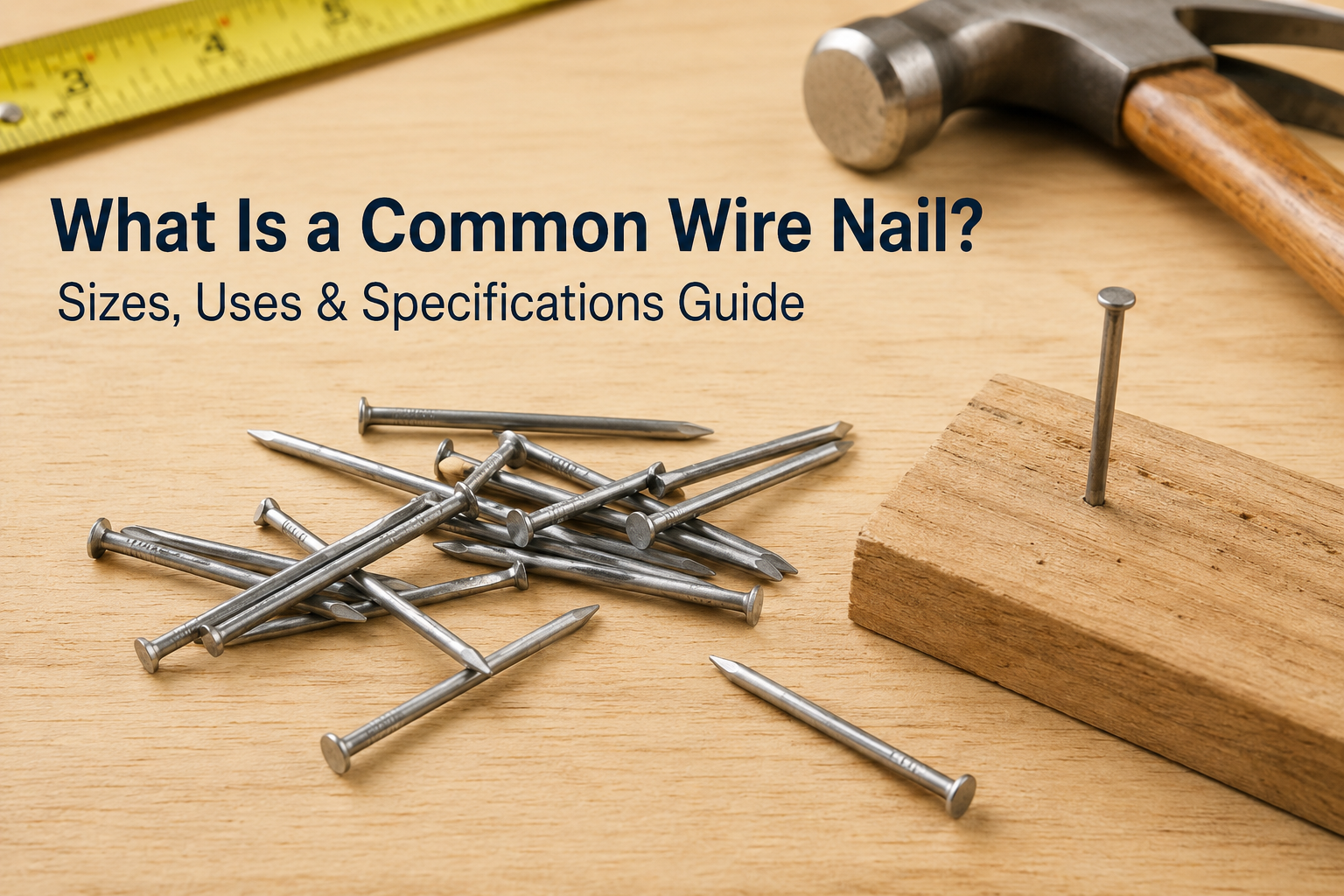
Do you find yourself confused when choosing the right fasteners for your construction projects? Many builders struggle with selecting appropriate nails for different applications.
Common wire nails are general-purpose steel fasteners with thick shanks and flat heads, designed for heavy-duty wood construction, framing, and carpentry work.1 They range from 2d to 60d sizes and provide strong holding power for structural applications.
After working with construction fasteners for over a decade, I have seen countless projects succeed or fail based on nail selection. The right common wire nail can make the difference between a sturdy structure and costly repairs down the line.
What Are Common Wire Nails and How Do They Work?
Have you ever wondered why some nails hold better than others in demanding construction applications? The answer lies in understanding what makes common wire nails unique.
Common wire nails are thick-shank steel fasteners with large flat heads, manufactured from low-carbon steel wire.2 They feature smooth or textured surfaces and provide superior holding power compared to finishing nails or brad nails.
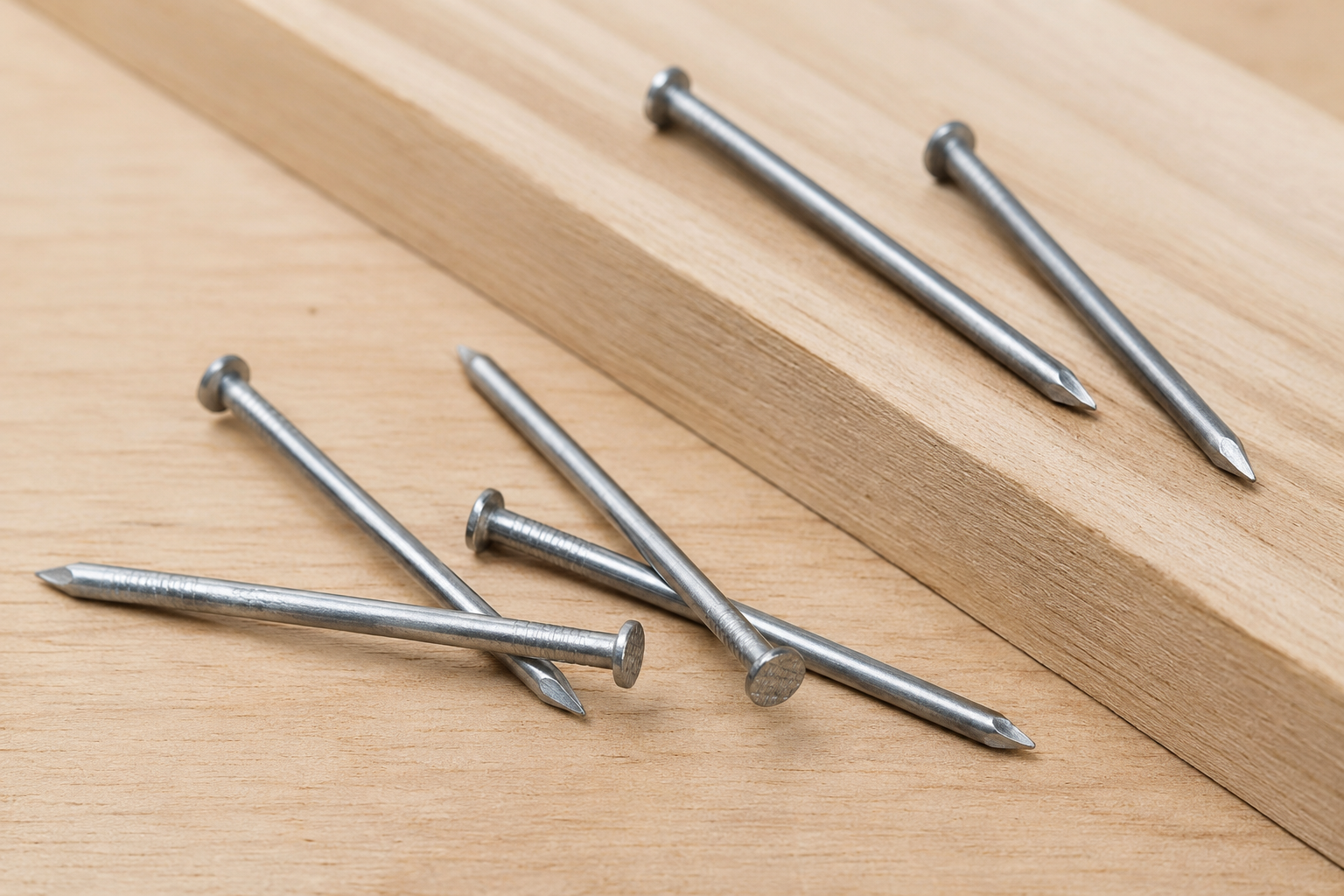
Common wire nails get their strength from their robust construction. The thick shank resists bending under heavy loads, while the large flat head distributes weight across a wider surface area. This design prevents the nail from pulling through the material under stress.
The manufacturing process starts with high-quality steel wire that gets cut to precise lengths. The head forms through a cold-forging process that creates the characteristic flat top. The point gets shaped through grinding or cutting, depending on the intended application.
Common Wire Nail Specifications
| Feature | Standard Range | Purpose |
|---|---|---|
| Shank Diameter | 0.072" to 0.263" | Load-bearing capacity |
| Head Diameter | 2-3x shank diameter | Pull-through resistance |
| Point Type | Diamond or chisel | Penetration characteristics |
| Length | 1" to 6" | Material thickness coverage |
Most manufacturers offer both bright (uncoated) and galvanized versions. Galvanized common wire nails provide rust resistance for outdoor applications, while bright nails work well for interior construction where cost matters more than corrosion protection.
What Are the Standard Common Nail Sizes Available?
Are you confused by the penny system used to measure nail sizes? This traditional measurement system still dominates the construction industry today.
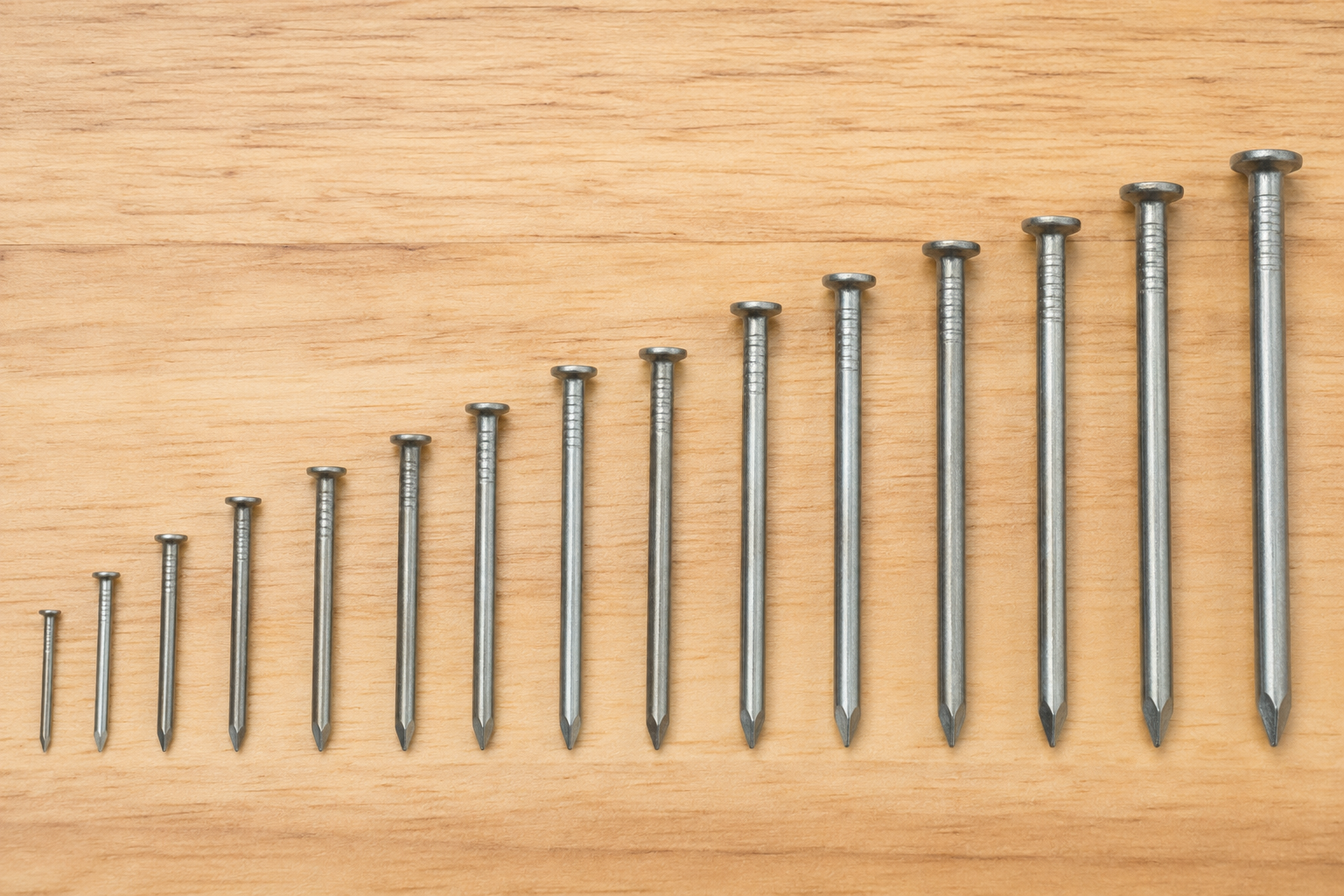
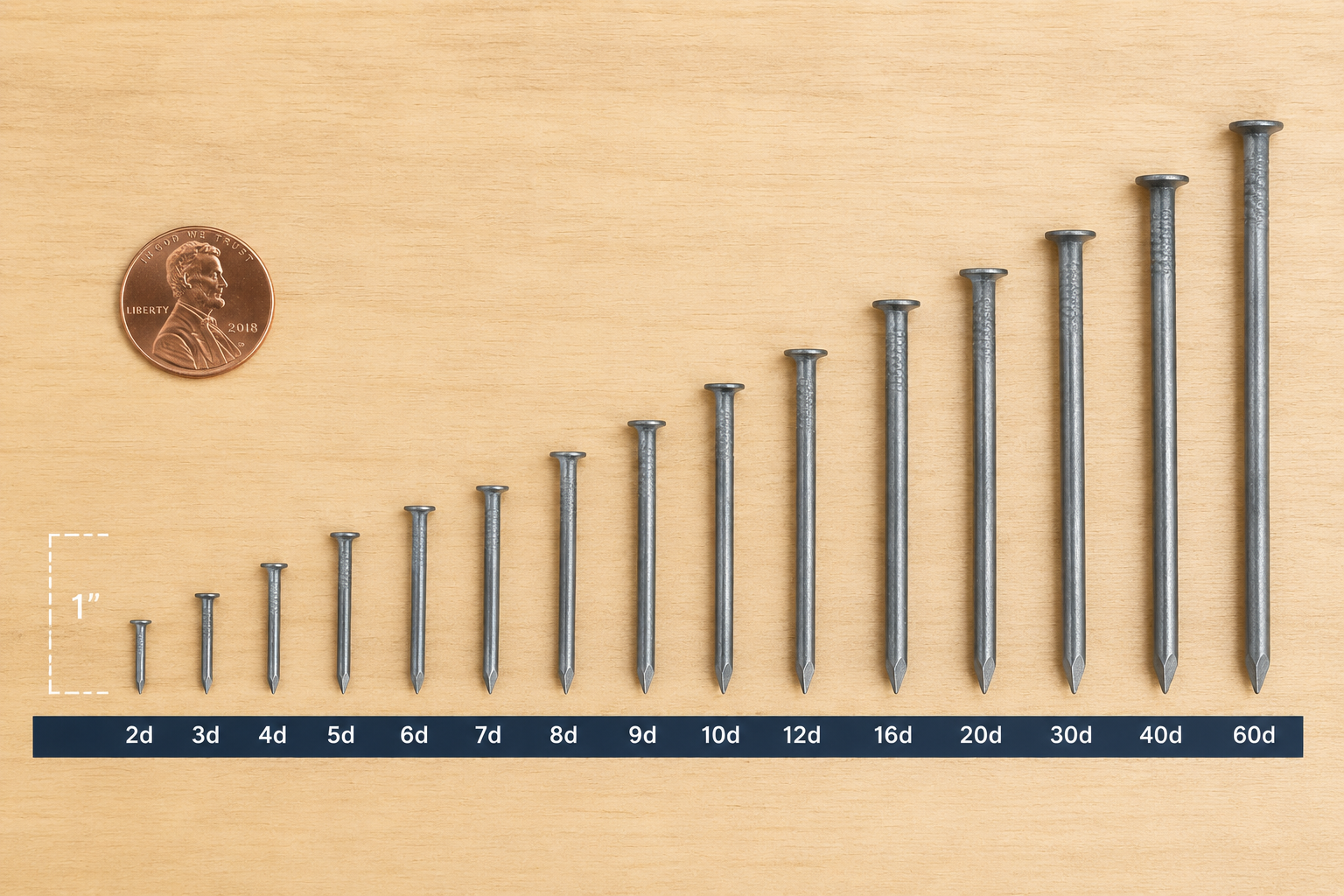
Common nail sizes range from 2d (1 inch) to 60d (6 inches), with the "d" representing the penny system.3 Popular sizes include 8d (2.5"), 10d (3"), 16d (3.5"), and 20d (4") for most construction applications.

The penny system originated in England centuries ago when nails were sold by the penny per hundred. A 2d nail cost two pence per hundred pieces. Today, the system persists even though pricing has changed completely.
Understanding nail gauge sizes becomes critical for professional applications. An 8d nail typically measures 0.131 inches in diameter, while a 10d nail measures 0.148 inches. The 4D nail size equals 1.5 inches in length with a 0.109-inch diameter.
Nail Size Chart Construction Reference
| Penny Size | Length (inches) | Diameter (inches) | Gauge | Common Uses |
|---|---|---|---|---|
| 2d | 1.0 | 0.072 | 15 | Light framing |
| 4d | 1.5 | 0.109 | 12 | Cabinet work |
| 6d | 2.0 | 0.120 | 11.5 | General construction |
| 8d | 2.5 | 0.131 | 10.25 | Standard framing |
| 10d | 3.0 | 0.148 | 9 | Heavy framing |
| 16d | 3.5 | 0.162 | 8 | Structural work |
| 20d | 4.0 | 0.192 | 6 | Heavy construction |
The 8d nail diameter in inches equals 0.131, making it perfect for 2×4 lumber connections. For thicker materials, the 10d nail diameter provides extra holding power at 0.148 inches. These measurements help ensure proper penetration without splitting the wood.
What Are Common Nails Used For in Construction?
Do you know which applications require the superior holding power of common wire nails? These fasteners excel in situations where strength matters more than appearance.
Common nails serve framing, wood construction, fencing, pallet assembly, crate building, roofing support, and general carpentry.4 Their thick shanks and large heads provide maximum holding power for structural applications requiring long-term durability.
In my experience supplying fasteners to construction companies worldwide, common wire nails dominate heavy-duty applications. Builders choose them when structures must withstand significant loads, weather exposure, or repeated stress cycles.
Framing represents the most common application. When connecting 2×4 or 2×6 lumber, common nails penetrate deeply and resist withdrawal forces. The large head prevents pull-through even when wood moves due to moisture changes or settling.
Primary Applications by Industry
Residential Construction:
- Wall framing connections
- Floor joist attachment
- Roof rafter installation
- Subfloor sheathing
- Deck construction
Commercial Applications:
- Warehouse framing
- Industrial building construction
- Temporary structure assembly
- Concrete form construction
- Heavy equipment mounting
Packaging Industry:
- Wooden crate assembly
- Pallet construction
- Shipping container repairs
- Export packaging reinforcement
The packaging industry particularly values common wire nails for export applications.5 International shipping subjects packages to extreme handling conditions. Common nails maintain their grip even when crates experience drops, impacts, or moisture exposure during ocean transport.
How Big Is a 10 Gauge Nail and What Does Gauge Mean?
Does nail gauge sizing confuse you when selecting fasteners for specific applications? Understanding gauge measurements helps ensure proper nail selection every time.
Nail gauge indicates wire diameter, with lower numbers representing thicker nails. A 10 gauge nail measures approximately 0.135 inches in diameter, though exact measurements vary between manufacturers and nail types.6
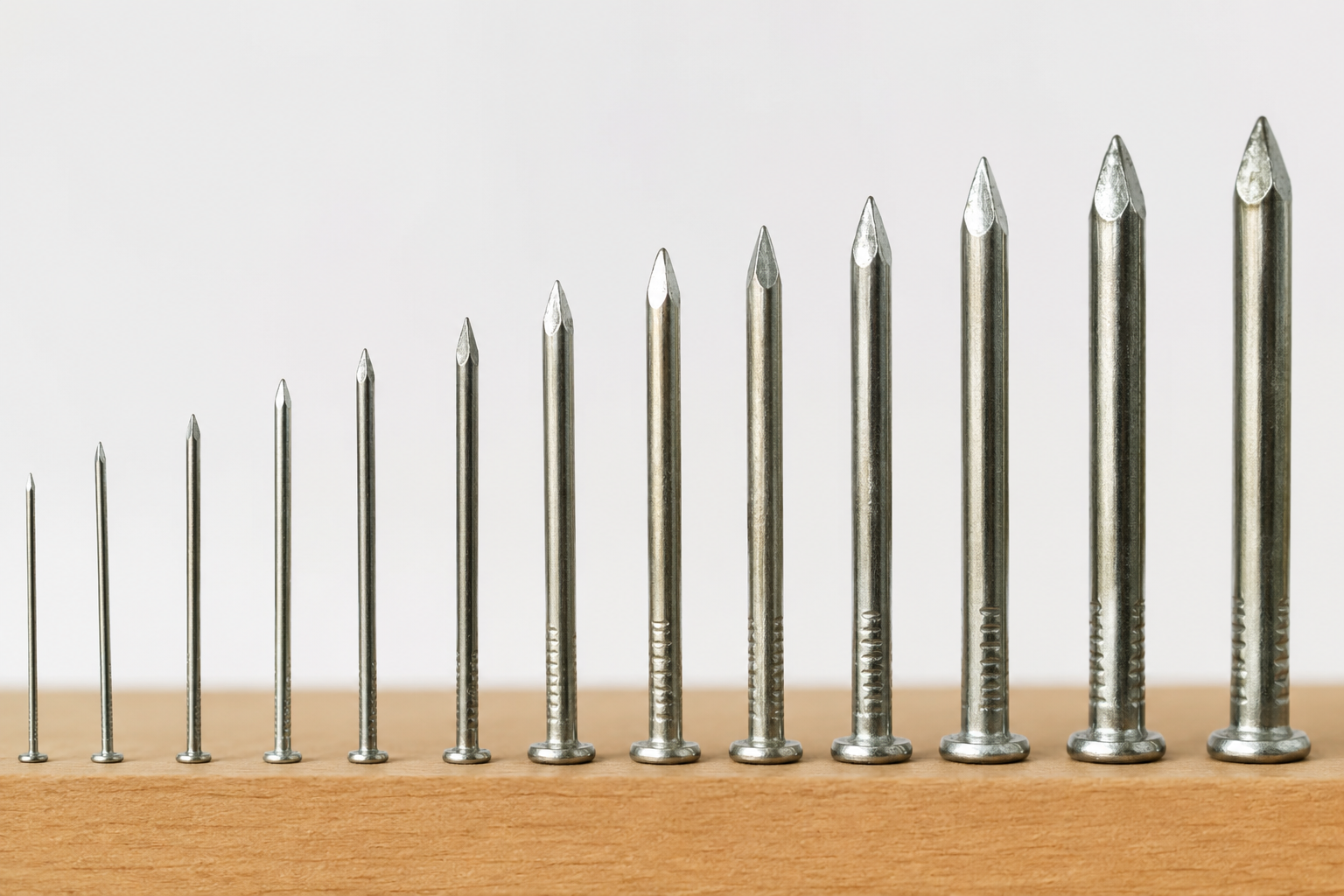
The gauge system works inversely to what many people expect.7 As gauge numbers decrease, nail diameter increases. This system originated from wire manufacturing, where thicker wire required fewer drawing operations through progressively smaller dies.
Common wire nail gauge sizes typically range from 6 gauge (thickest) to 15 gauge (thinnest). Heavy construction applications use 6-8 gauge nails, while lighter work employs 10-12 gauge options.8 Finishing applications might use 15 gauge or higher.
Gauge Size Conversion Reference
| Gauge | Diameter (inches) | Diameter (mm) | Typical Applications |
|---|---|---|---|
| 6 | 0.192 | 4.88 | Heavy structural |
| 8 | 0.162 | 4.11 | Standard framing |
| 9 | 0.148 | 3.76 | Medium construction |
| 10 | 0.135 | 3.43 | General carpentry |
| 11 | 0.120 | 3.05 | Light framing |
| 12 | 0.109 | 2.77 | Cabinet work |
When ordering from manufacturers like our facility in China, specifying both penny size and gauge ensures accurate product selection. International customers often request nail gauge sizes in mm for compatibility with local standards. Our technical team provides detailed specifications to prevent ordering mistakes.
Professional contractors understand that gauge selection affects holding power significantly.9 Thicker gauges resist bending and provide superior withdrawal resistance.10 However, they also require more driving force and may split thin materials if used incorrectly.
Conclusion
Common wire nails provide essential fastening solutions for construction, packaging, and carpentry applications requiring maximum holding power and durability in demanding environments.11
-
"Lateral Resistance of Ring-shank Nail Connections in …", https://digitalcommons.georgefox.edu/cgi/viewcontent.cgi?article=1040&context=mece_fac. This source explains the design and typical applications of common wire nails, including their use in heavy-duty wood construction and framing. Evidence role: definition; source type: encyclopedia. Supports: Common wire nails are general-purpose steel fasteners with thick shanks and flat heads, designed for heavy-duty wood construction, framing, and carpentry work.. ↩
-
"Mechanical Properties of Cold-Drawn Low Carbon Steel …", https://www.academia.edu/15941466/Mechanical_Properties_of_Cold_Drawn_Low_Carbon_Steel_for_Nail_Manufacture_Experimental_Observation. This source provides details on the material composition and manufacturing process of common wire nails, emphasizing their low-carbon steel construction. Evidence role: mechanism; source type: education. Supports: Common wire nails are thick-shank steel fasteners with large flat heads, manufactured from low-carbon steel wire.. ↩
-
"Looking At the Effect of Pallet Fastener Quality on Pallet …", https://unitload.vt.edu/education/white-papers/6-wp-effect-of-fastener-quality-on-pallet-durability.html. This source explains the penny system for nail sizing and confirms the range of common nail sizes from 2d to 60d. Evidence role: historical_context; source type: encyclopedia. Supports: Common nail sizes range from 2d (1 inch) to 60d (6 inches), with the "d" representing the penny system.. ↩
-
"Fasteners | Blaine, MN", https://www.blainemn.gov/4205/Fasteners. This source lists the primary applications of common nails, including framing, wood construction, and pallet assembly. Evidence role: general_support; source type: government. Supports: Common nails serve framing, wood construction, fencing, pallet assembly, crate building, roofing support, and general carpentry.. ↩
-
"Looking At the Effect of Pallet Fastener Quality on Pallet …", https://unitload.vt.edu/education/white-papers/6-wp-effect-of-fastener-quality-on-pallet-durability.html. This source discusses the use of common wire nails in the packaging industry, especially for export applications requiring durability. Evidence role: case_reference; source type: institution. Supports: The packaging industry particularly values common wire nails for export applications.. ↩
-
"Comparison of nail-holding performance of Pinus massoniana …", https://bioresources.cnr.ncsu.edu/resources/comparison-of-nail-holding-performance-of-pinus-massoniana-and-cunninghamia-lanceolata-dimension-lumber-based-on-round-steel-nails/. This source provides the standard diameter for 10 gauge nails and notes variations among manufacturers. Evidence role: statistic; source type: education. Supports: A 10 gauge nail measures approximately 0.135 inches in diameter, though exact measurements vary between manufacturers and nail types.. Scope note: Exact measurements may vary depending on the manufacturer and nail type. ↩
-
"Looking At the Effect of Pallet Fastener Quality on Pallet …", https://unitload.vt.edu/education/white-papers/6-wp-effect-of-fastener-quality-on-pallet-durability.html. This source explains the inverse relationship between gauge numbers and nail thickness, providing clarity on the gauge system. Evidence role: definition; source type: education. Supports: The gauge system works inversely to what many people expect.. ↩
-
"Construction Technology", https://www.cccneb.edu/cnst. This source outlines the typical gauge ranges for heavy and light construction applications, confirming the use of 6-8 gauge nails for heavy work. Evidence role: general_support; source type: education. Supports: Heavy construction applications use 6-8 gauge nails, while lighter work employs 10-12 gauge options.. ↩
-
"A STUDY OF NAIL SALON WORKERS AND INDUSTRY IN …", https://www.labor.ucla.edu/wp-content/uploads/2018/11/NAILFILES_FINAL.pdf. This source discusses the importance of gauge selection in determining nail holding power for professional construction applications. Evidence role: expert_consensus; source type: education. Supports: Professional contractors understand that gauge selection affects holding power significantly.. ↩
-
"Threaded-nail Fasteners", https://digitalcommons.georgefox.edu/cgi/viewcontent.cgi?referer=&httpsredir=1&article=1039&context=mece_fac. This source explains how thicker nail gauges resist bending and enhance withdrawal resistance in construction applications. Evidence role: mechanism; source type: research. Supports: Thicker gauges resist bending and provide superior withdrawal resistance.. ↩
-
"Halex 2-1/2 In. x 1-1/2 In. Steel Cable Protector Plate (50-Pack)", https://www.flsouthern.edu/getmedia/fb54f58a-459f-4f38-956b-42a10080e05c/pannellum.htm?config=/%5C/000o.sbs/c/zemzsulywwh. This source highlights the versatility and durability of common wire nails in construction, packaging, and carpentry applications. Evidence role: general_support; source type: encyclopedia. Supports: Common wire nails provide essential fastening solutions for construction, packaging, and carpentry applications requiring maximum holding power and durability in demanding environments.. ↩