Electro Galvanized vs Hot Dip Galvanized Roofing Nails is not just a price question for wholesalers. A low-cost nail can look attractive at purchase, but early rust, coating peeling, or customer complaints can quickly erase the margin. I recommend choosing based on climate, roof application, expected lifespan, and supplier quality control.
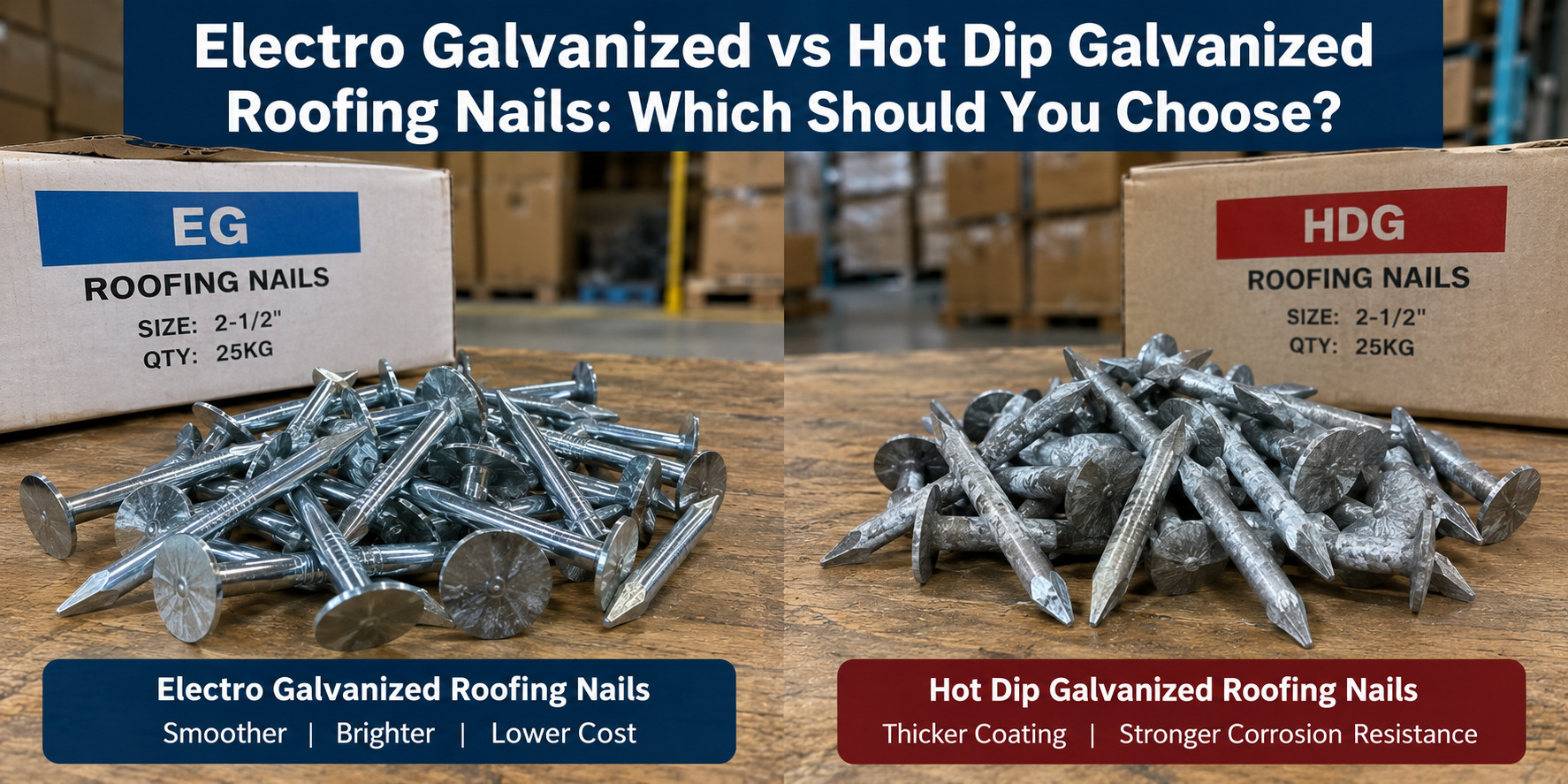
Electro galvanized roofing nails are usually smoother, brighter, and lower-cost, but they have a thinner zinc coating1. Hot dip galvanized roofing nails usually offer stronger corrosion resistance2 because the nails are dipped in molten zinc, creating a thicker protective layer. For humid, coastal, or long-life roofing jobs, HDG is usually the safer choice.
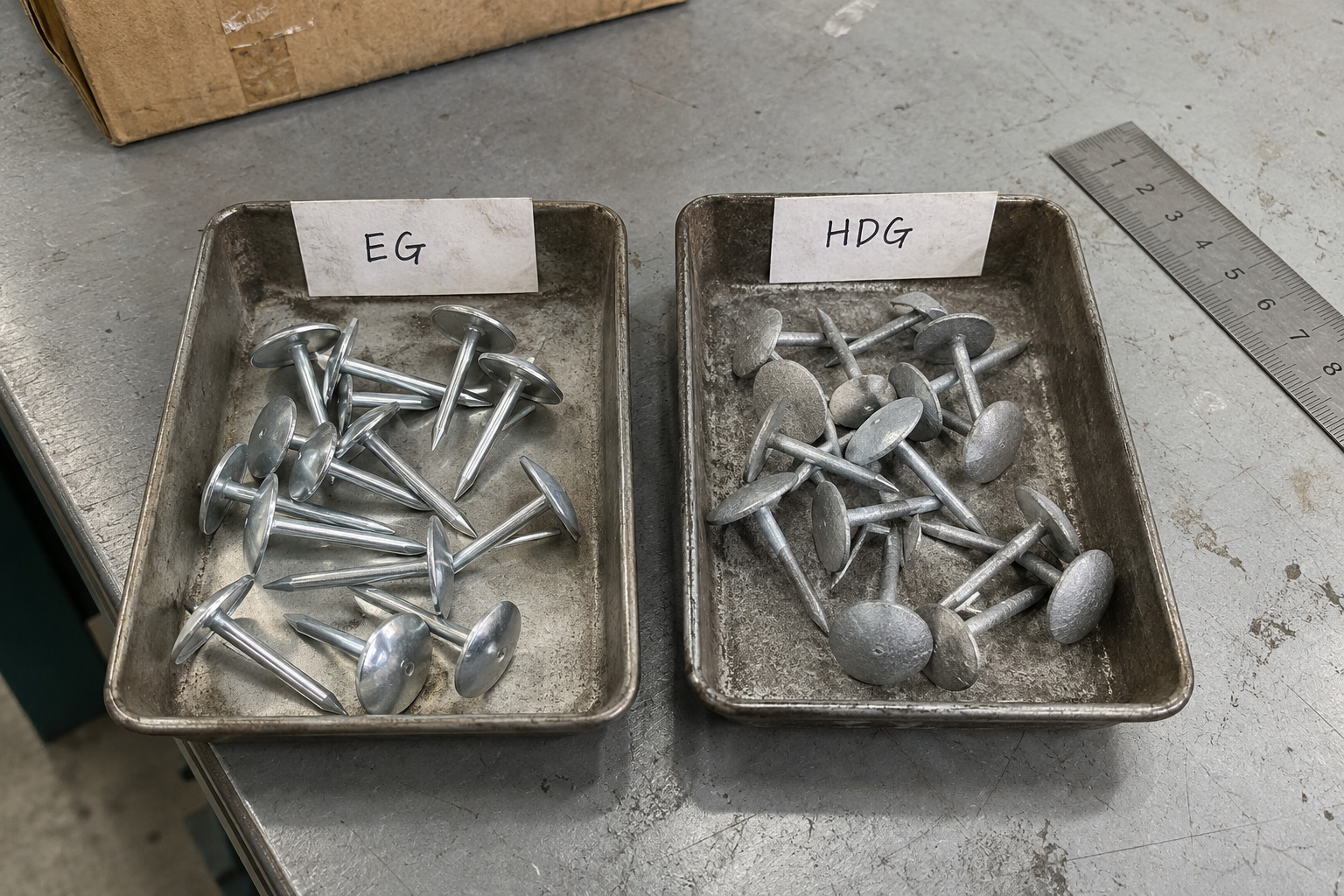
The challenge is that both products can look acceptable in a carton. The real difference appears after months of rain, humidity, salt air, or heat. I have worked with both EG and HDG roofing nails in production and quality control, and I want to explain how buyers can evaluate them before placing orders.
What Is the Real Difference in Electro Galvanized vs Hot Dip Galvanized Roofing Nails?
Many buyers compare Electro Galvanized vs Hot Dip Galvanized Roofing Nails by unit price first. That is understandable, especially in competitive wholesale markets. However, the coating process controls the nail’s real performance. If the coating is too thin or poorly bonded, rust can appear earlier than expected.
Electro galvanized roofing nails are coated through an electrolytic zinc plating process, which usually creates a thinner and more uniform surface. Hot dip galvanized roofing nails are dipped into molten zinc3, which normally creates a thicker zinc layer and stronger corrosion protection for outdoor roofing use.
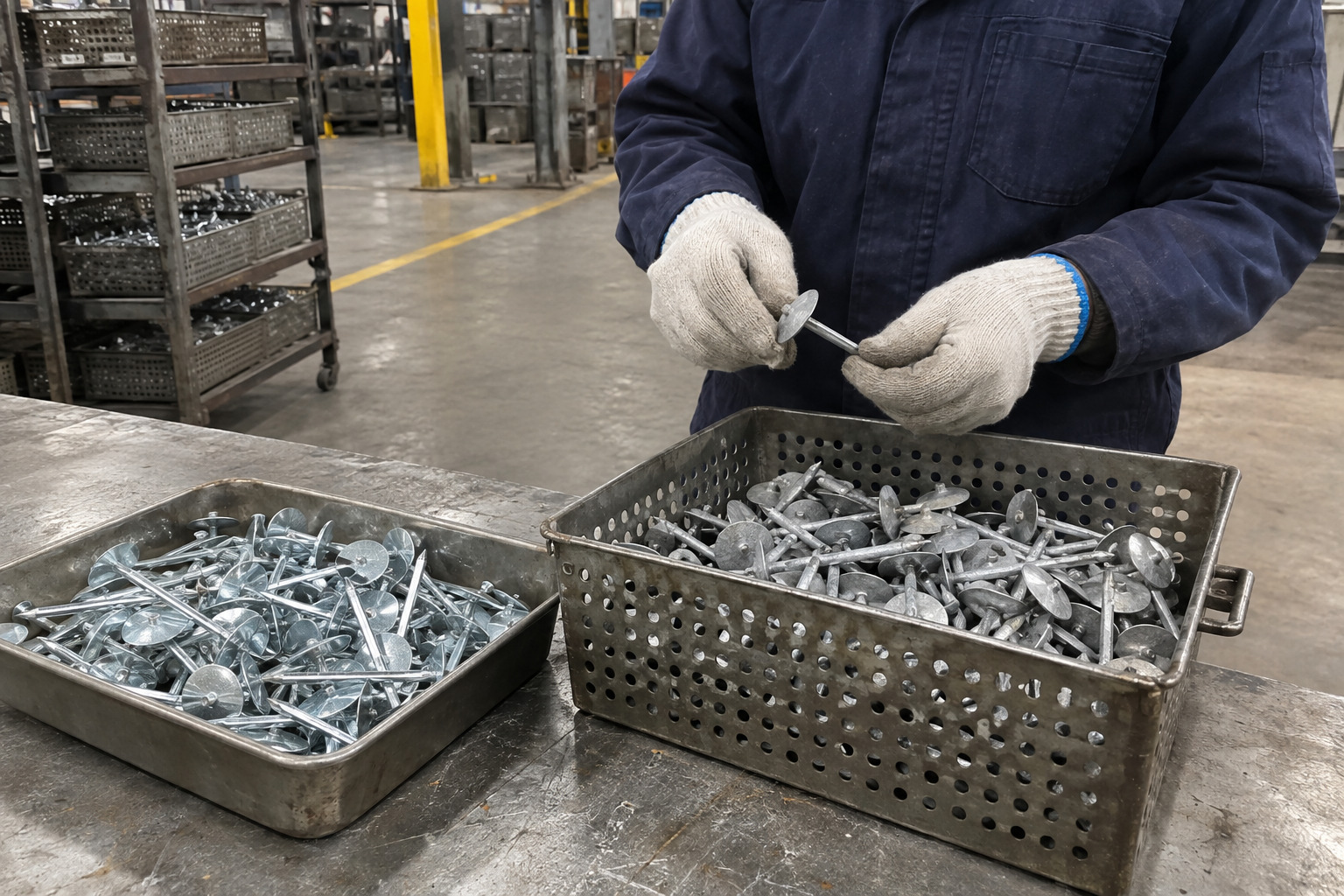
Process controls performance
In production, I do not treat galvanizing as a simple finishing step. I treat it as a performance feature. The zinc layer is the first defense between the steel nail and moisture. When that layer is thin, damaged, or uneven, the steel underneath becomes vulnerable.
Electro galvanizing, often called EG, uses an electrical current to deposit zinc onto the steel nail. The result is usually:
- A bright and smooth appearance
- A more controlled surface finish
- A relatively thin zinc coating
- Lower production cost in many cases
- Good suitability for dry or short-life applications
Hot dip galvanizing, often called HDG, uses a molten zinc bath. The nail is cleaned, fluxed, and dipped into liquid zinc. This process often creates:
- A thicker zinc layer
- Better resistance to long-term outdoor corrosion
- A rougher or duller appearance
- Higher zinc consumption
- Higher production cost
The key point is simple: EG and HDG are not two versions of the same coating strength. They are different manufacturing methods, and they create different levels of corrosion protection.
Why coating thickness matters
The zinc coating protects steel in two ways. First, it acts as a physical barrier. Second, zinc corrodes before steel, so it gives sacrificial protection.4 When the zinc layer is thicker, the nail usually has more time before red rust appears.5
For wholesalers, this means coating thickness is not just a technical detail. It affects:
| Factor | Electro Galvanized Roofing Nails | Hot Dip Galvanized Roofing Nails |
|---|---|---|
| Typical appearance | Bright, smooth, clean | Duller, sometimes rougher |
| Zinc coating | Thinner | Thicker |
| Corrosion resistance | Moderate | Stronger |
| Cost level | Lower | Higher |
| Best use | Dry areas, temporary or lower-risk roofing | Humid, coastal, long-life roofing |
| Buyer risk | Early rust if used in harsh climates | Higher initial cost but lower corrosion risk |
Why surface appearance can mislead buyers
I have seen buyers prefer EG nails because they look cleaner in the carton. The bright surface gives a good first impression. However, a bright nail is not always a longer-lasting nail.
HDG nails may look less “perfect” because the zinc layer is thicker and formed through dipping. Some small surface irregularity can be normal6, depending on the production process and specification. Buyers should not judge roofing nails by shine alone.
Instead, I suggest checking:
- Coating type: EG or HDG should be clearly confirmed.
- Wire material and hardness: The nail must drive properly without bending too easily.
- Head shape and shank quality: Roofing nails need stable holding power.
- Washer compatibility if applicable: Some roofing applications require washers.
- Packaging protection: Poor packaging can expose nails to moisture during sea transport.
- Sample testing: Buyers should test samples before large orders.
For technical orders, the buyer should also request specifications and verify any certification or test document with the supplier. A document is useful, but it should match the actual goods shipped.
How Do Electro Galvanized vs Hot Dip Galvanized Roofing Nails Perform in Harsh Climates?
Electro Galvanized vs Hot Dip Galvanized Roofing Nails perform differently when exposed to humidity, salt air, heavy rain, and high heat. A product that works in a dry inland market may fail faster in coastal Africa, Southeast Asia, the Middle East, or parts of South America.
EG roofing nails can be suitable for mild and relatively dry conditions, but HDG roofing nails are usually more appropriate for humid, rainy, coastal, or long-service roofing environments. The thicker zinc coating on HDG nails generally provides a longer protection period before corrosion reaches the steel.
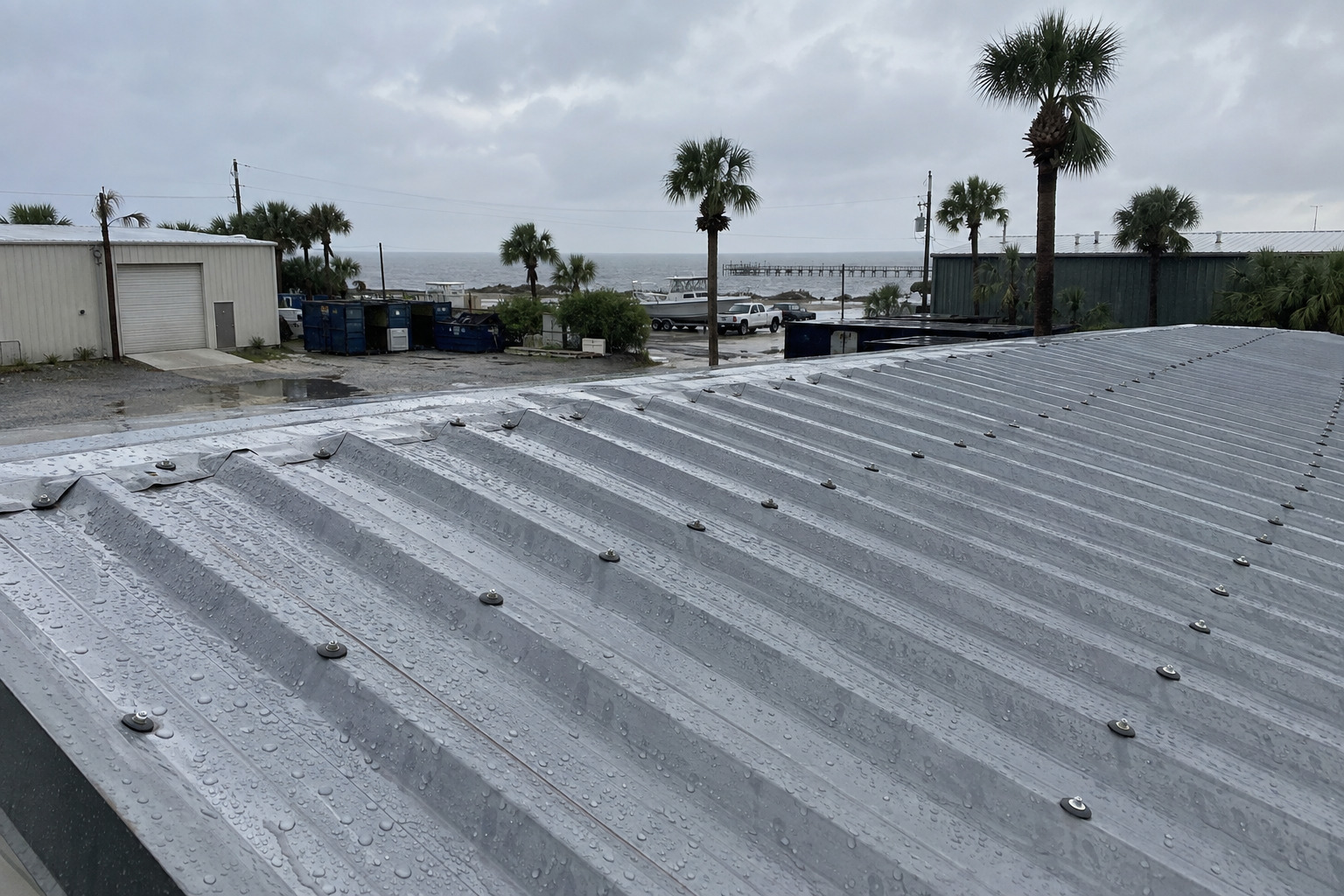
Climate is a purchasing variable
For roofing nails, I always ask where the nails will be used. The market location matters as much as the product size. Many wholesalers sell to different regions through agents, so one container may serve several end markets. That makes the decision harder.
A buyer serving dry inland construction may have different needs from a buyer serving coastal housing projects. The same nail can produce different feedback depending on local weather.
Here are common climate pressures in many developing markets:
- High humidity in tropical countries
- Salt air near coastlines and ports
- Heavy seasonal rain
- High daytime temperatures
- Storage in non-air-conditioned warehouses
- Long sea transport before distribution
Each factor increases the importance of coating quality.
Practical climate comparison
| Application Environment | EG Roofing Nails | HDG Roofing Nails | Practical Buyer Note |
|---|---|---|---|
| Dry inland area | Often acceptable | Also acceptable, but may be over-specified | EG can help control cost |
| Humid tropical area | Higher risk of early rust | Better option | HDG reduces complaint risk |
| Coastal area | Not ideal for long exposure | Usually preferred | Salt air is aggressive7 |
| Temporary roofing | Often acceptable | May be unnecessary | Match nail to project lifespan |
| Long-life roofing | Risk depends on exposure | Safer choice | Consider total cost, not only price |
| Low-cost retail pack | Common choice | Premium option | Segment products clearly |
Common misconception: “all galvanized nails are anti-rust”
This is one of the biggest mistakes I see in procurement conversations. “Galvanized” does not mean “will never rust.” It means the steel has a zinc coating that delays corrosion. The protection level depends on the coating process, coating thickness, surface condition, and environment.
In a humid warehouse, even nails inside cartons can show surface changes if packaging is weak or storage is poor. During sea shipping, containers can face condensation8. This is why packaging and loading practice also matter.
For export orders, I usually recommend buyers discuss:
- Inner plastic bag or moisture protection
- Carton strength
- Pallet requirements if needed
- Container loading plan
- Desiccant use for sensitive routes
- Expected storage time after arrival
Rust complaints affect more than one order
A wholesaler may think the difference between EG and HDG is only a few dollars per ton. But the real cost of premature corrosion can include:
- Returns from distributors
- Discount demands from customers
- Loss of trust in the wholesaler’s brand
- Slow-moving stock
- Replacement shipments
- More inspection pressure on future orders
This is why I encourage buyers to classify roofing nails by climate and customer expectation. If your customer is selling into coastal housing areas, HDG may protect your reputation better. If your customer needs a low-cost nail for short-term or dry use, EG may be commercially reasonable.
The right choice is not always the strongest nail. The right choice is the nail that fits the job, the climate, and the promised lifespan.
When Should Wholesalers Choose EG Roofing Nails?
EG roofing nails are often attractive because they combine a clean surface, stable appearance, and competitive price. The problem starts when buyers use them in applications where customers expect long outdoor durability. I view EG as a practical option, but not a universal roofing solution.
Wholesalers should choose electro galvanized roofing nails when the target market is price-sensitive, the environment is relatively dry, the expected service life is moderate, and customers understand the product level. EG can be a smart choice when it is matched with the right roofing application.
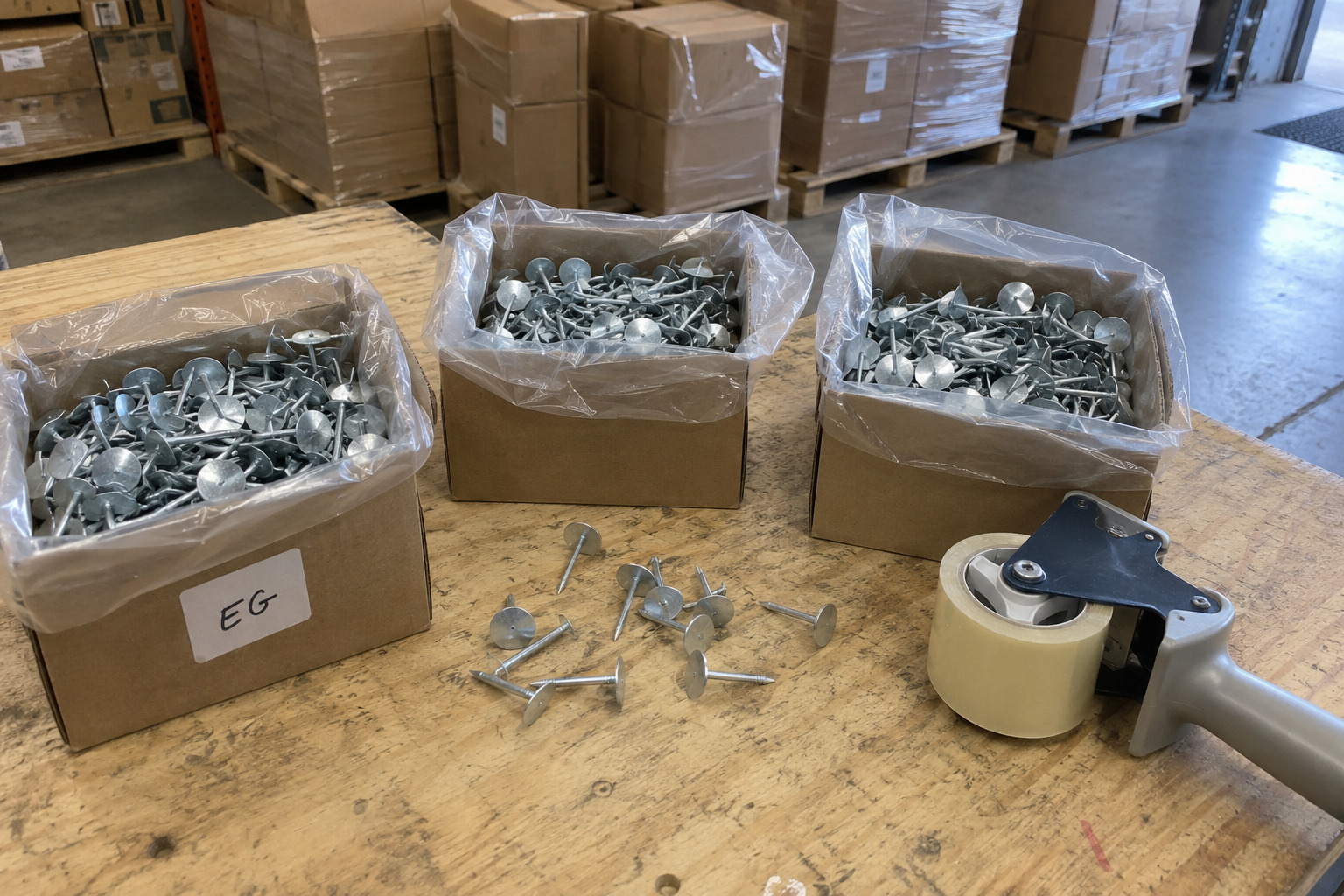
EG is useful when cost control is critical
Many wholesalers in the Middle East, Africa, Southeast Asia, and South America need several quality levels in their product line. Not every customer wants the highest specification. Some customers want a fast-moving, affordable roofing nail for general use.
In those cases, EG roofing nails can be a good product category. The smooth surface also helps retail presentation. If the nails are packed in small boxes or branded cartons, EG products often look clean and consistent.
However, buyers should avoid overselling EG nails as heavy-duty anti-rust nails. That can create complaints later.
Good-fit situations for EG roofing nails
EG roofing nails may be suitable for:
- Dry inland markets
- Low to medium exposure roofing
- Shorter expected service life projects
- Cost-sensitive retail distribution
- Temporary structures
- Projects where the nail is not exposed to severe moisture
- Customers who prioritize price over long-term corrosion resistance
Procurement checklist for EG roofing nails
Before buying EG roofing nails, I suggest checking the practical details, not only the quotation.
| Checkpoint | Why It Matters |
|---|---|
| [Nail diameter and length | Affects driving strength and holding power](https://research.fs.usda.gov/treesearch/62200)[^9] |
| Head diameter | Important for roofing sheet holding |
| Shank type | Smooth, twisted, or ring shank changes grip9 |
| Zinc coating consistency | Uneven coating can create weak points |
| Surface cleanliness | Oil, stains, or black spots reduce customer confidence |
| Packaging method | Moisture protection matters during sea shipping |
| Carton weight | Heavy cartons may break during handling |
| Sample approval | Helps avoid misunderstanding before mass order |
Total cost thinking for EG
EG can reduce purchase cost, but buyers should calculate the full business risk. A lower FOB price is only one part of the cost.
For example, a buyer may save money by choosing EG instead of HDG. That can work if the nails are sold in the right region. But if those nails go to a humid coastal area and rust quickly, the buyer may lose more through customer claims than the original savings.
I recommend asking three questions:
- Where will the nails be used?
- How long does the customer expect them to last?
- What happens if rust appears early?
If the answer to the third question is “we lose the customer,” then the buyer should think carefully before choosing EG for that application.
Supplier quality control matters
Not all EG roofing nails are equal. The plating process must be controlled. Poor cleaning before plating can reduce adhesion.10 Weak process control can lead to uneven coating. Poor drying or packaging can also cause surface problems before shipment.
As a manufacturer, I focus on production checks such as:
- Wire drawing quality
- Nail forming accuracy
- Head shape stability
- Surface cleaning before coating
- Plating consistency
- Drying and packing condition
- Random sample inspection
For buyers, the most practical step is to request samples for inspection and local testing. If your market is humid, test the nails under realistic storage and use conditions before placing a larger order.
When Are Hot Dip Galvanized Roofing Nails Worth the Higher Cost?
Hot dip galvanized roofing nails usually cost more than EG nails. This can make buyers hesitate, especially when competitors offer cheaper prices. The real question is whether the end customer needs better corrosion resistance. If the answer is yes, HDG can be the more economical choice over time.
Hot dip galvanized roofing nails are worth the higher cost when the nails will face rain, humidity, coastal air, long service life expectations, or higher customer complaint risk. HDG is often preferred when reliability and corrosion resistance matter more than the lowest initial purchase price.
HDG is a risk-reduction product
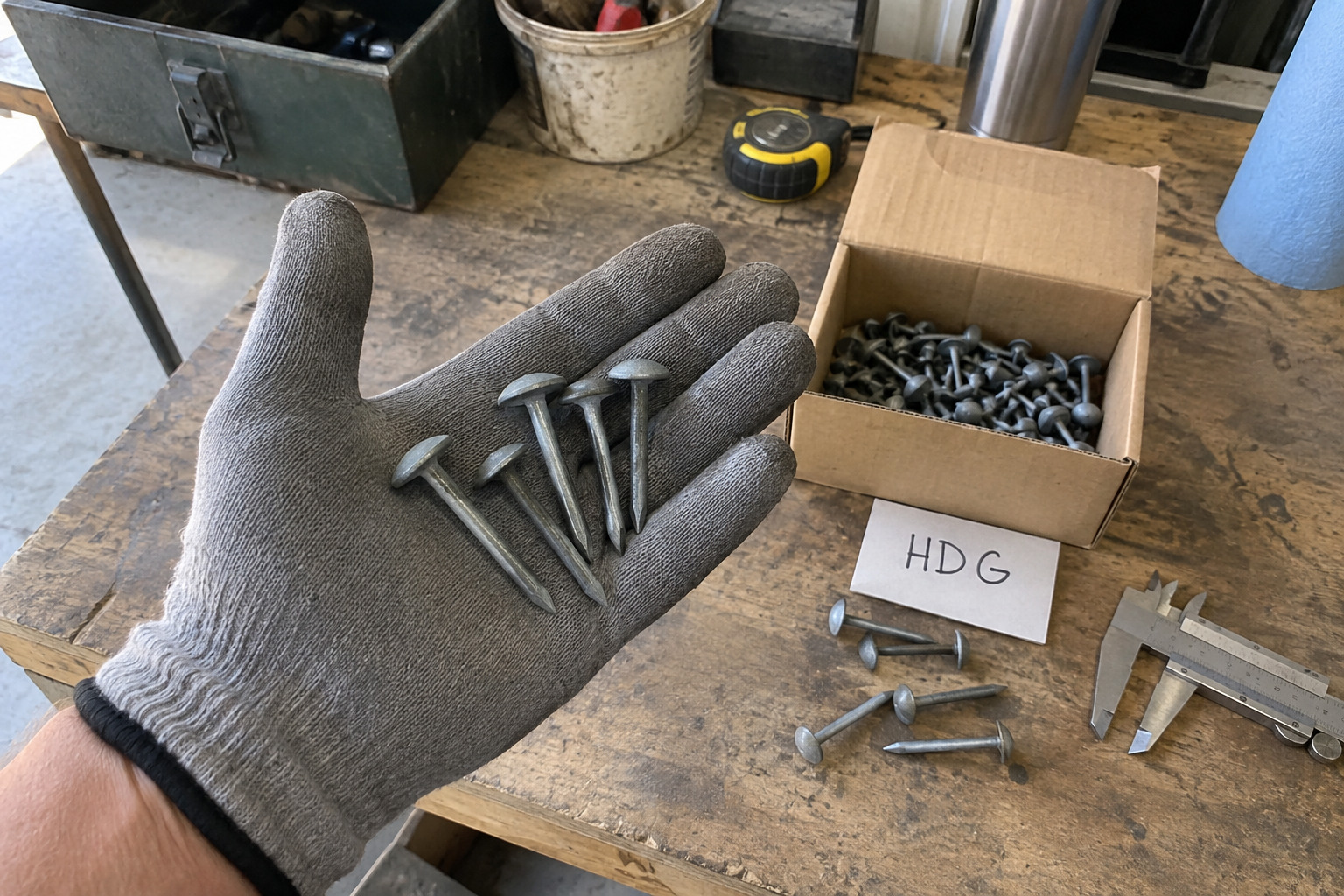
I see HDG roofing nails as a risk-control option for wholesalers. The thicker zinc layer gives better protection in demanding environments. This does not mean HDG nails are perfect or rust-proof forever. It means they usually offer a wider safety margin.
That safety margin matters in markets where roofing products face intense weather. It also matters when the wholesaler sells under a private label or wants to build a stable reputation.
When HDG makes business sense
HDG roofing nails are usually the better choice for:
- Coastal regions
- Rainy tropical climates
- Long-term roofing installations
- Agricultural buildings
- Warehouses and outdoor structures
- Customers who complain quickly about rust
- Premium wholesale lines
- Branded packaging programs
If your customer asks for “good anti-rust roofing nails,” I would first clarify the environment. If the project is near the sea or in a humid region, HDG is usually a safer recommendation than EG.
HDG quality points buyers should check
HDG production can also have quality issues if process control is poor. A thicker coating is good, but the coating still needs proper adhesion and acceptable surface condition.
Important quality checks include:
| Quality Point | Practical Meaning |
|---|---|
| Zinc coating adhesion | Poor adhesion can cause flaking or peeling |
| Coating uniformity | Thin spots become corrosion starting points |
| Nail point sharpness | Excess zinc should not make driving difficult |
| Head shape | Roofing application needs stable holding |
| Thread or shank condition | Grip should not be weakened by coating defects |
| Carton moisture protection | HDG still needs proper packing |
| Batch consistency | Mixed quality creates distributor complaints |
Why peeling can happen
Some buyers think peeling is only a coating thickness problem. In practice, peeling can be related to surface preparation, process temperature, steel surface condition, or handling after galvanizing.11 If the steel is not properly cleaned before dipping, the zinc may not bond well.
For roofing nails, coating damage can occur during bulk handling if nails are roughly moved before packing. This is why production and packaging discipline matter.
I recommend buyers inspect samples for:
- Visible flaking
- Bare steel spots
- Excessive zinc lumps
- Weak nail points
- Cracked coating around the head
- Rust marks before shipment
HDG and product positioning
Wholesalers do not need to replace all EG nails with HDG nails. A better strategy is product segmentation.
You can build a line like this:
- Economy line: EG roofing nails for dry or price-sensitive markets.
- Standard line: Better-controlled EG or light galvanized options for general use.
- Premium line: HDG roofing nails for humid, coastal, or long-life use.
- OEM/ODM line: Customized packaging, logo, and specifications for key distributors.
This approach helps buyers serve different customers without confusing the market. It also reduces the risk of selling a low-spec product into a high-exposure application.
At Dingzhou Best Hardware, we support OEM/ODM customization for nails and packaging, including product specifications, carton design, and brand logo. For large export orders, I always prefer clear specification confirmation before production because it protects both sides.
How Should Buyers Compare Total Cost Instead of Only FOB Price?
Many roofing nail quotations look similar at first glance. Buyers often compare product name, size, quantity, and FOB price. That is necessary, but it is not enough. A roofing nail order should also be evaluated by application risk, quality stability, packaging, and after-sale complaint probability.
Buyers should compare EG and HDG roofing nails by total cost of ownership, not only FOB price. The better choice depends on corrosion risk, product lifespan, customer expectations, packaging needs, return risk, and the wholesaler’s brand position in the target market.
The quotation is only the starting point
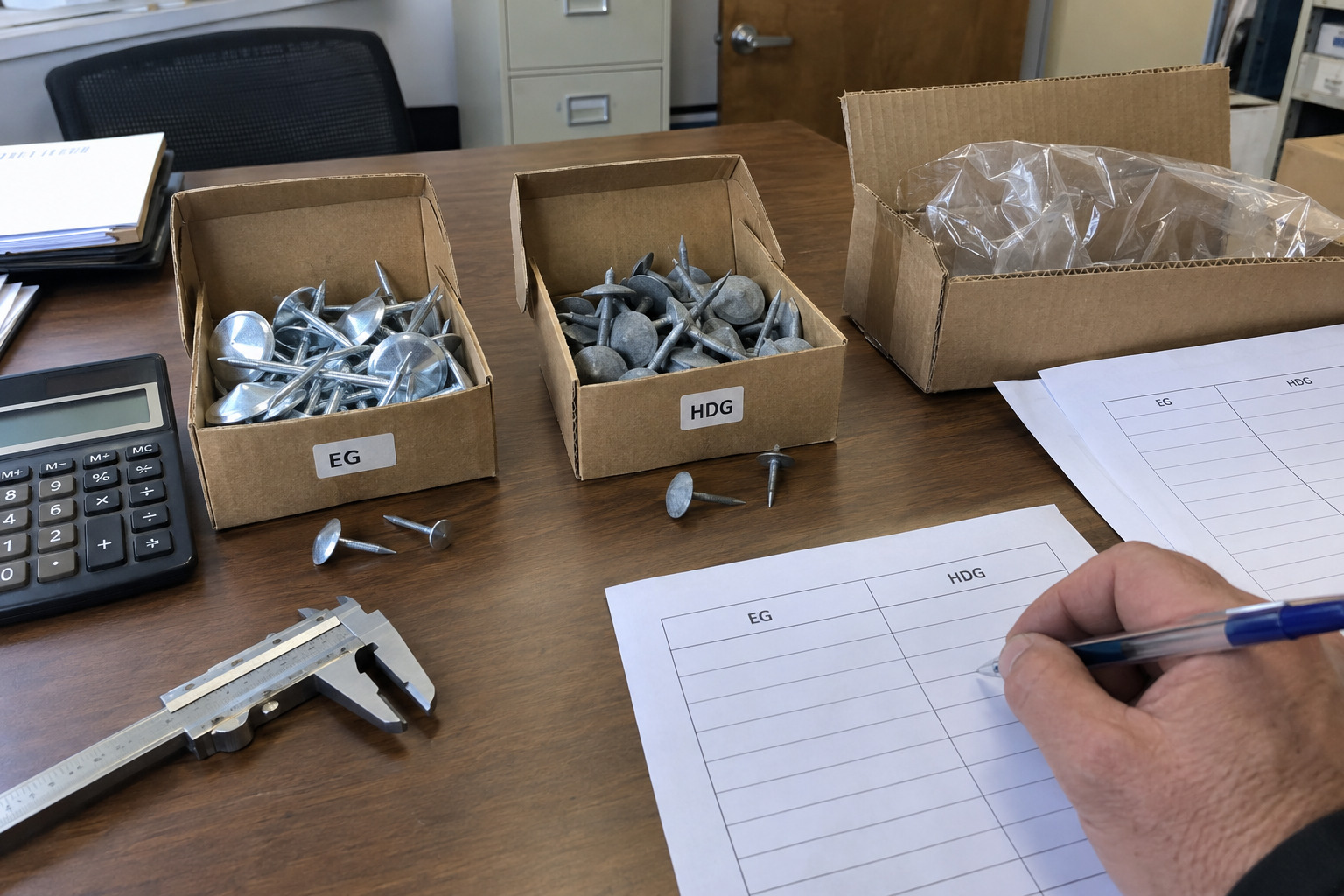
Our usual FOB quotation depends on product + specification + quantity + packaging method. This is normal for roofing nails because small changes can affect cost. Nail length, wire diameter, head size, shank type, galvanizing method, box weight, and carton design all influence the final price.
For buyers, a clear RFQ helps avoid wrong comparisons. If one supplier quotes EG and another quotes HDG, the cheaper offer is not actually comparable. If one supplier uses stronger cartons and another uses thin cartons, the delivery risk is also different.
A practical decision framework
I suggest using a simple scoring method before placing an order.
| Decision Factor | Low Risk | Medium Risk | High Risk |
|---|---|---|---|
| Climate | Dry inland | Seasonal rain | Coastal or humid |
| Customer expectation | Low price | Balanced | Long durability |
| Complaint impact | Small | Manageable | Serious brand damage |
| Storage time | Fast turnover | 2–4 months | Long warehouse storage |
| Product position | Economy | Standard | Premium |
| Suggested nail type | EG | EG or HDG | HDG |
If most answers fall in the high-risk column, HDG is usually easier to justify. If most answers fall in the low-risk column, EG may be a better commercial choice.
Cost items buyers often forget
A lower purchase price can be useful, but hidden costs may appear later. Buyers should consider:
- Cost of customer returns
- Cost of discounting rusty stock
- Cost of replacing damaged cartons
- Cost of agent disputes
- Cost of delayed projects
- Cost of losing distributor trust
- Cost of holding slow-moving inventory
- Cost of switching suppliers after complaints
These costs are hard to see in the quotation, but they are real.
Sample testing before trial orders
We can provide samples for quality checking. Samples usually have a basic charge, and the fee can be discussed for return or adjustment in the formal order. I recommend sample testing especially when a buyer is switching from EG to HDG, changing packaging, or entering a new climate market.
A practical sample review can include:
-
Visual inspection
Check coating, head shape, point sharpness, and surface defects. -
Basic driving test
Test whether the nail bends, cracks, or drives smoothly. -
Storage simulation
Keep samples in a humid area for a short period to observe surface reaction. -
Packaging review
Confirm box strength, carton marks, and handling resistance. -
Distributor feedback
Ask one or two trusted customers to compare samples before the full order.
For application-specific engineering decisions, buyers should also consult qualified local professionals. Roofing systems can differ by sheet material, roof design, weather exposure, and local building practice.
Trial orders reduce risk
For new buyers, we support trial orders. Our minimum order quantity is usually 5 tons or 200 boxes, depending on product and packing details. Lead time is generally 15–25 days, adjusted by order quantity and production schedule. Shipment is normally by sea, with both FCL and LCL options available.
A trial order is useful because it gives the buyer real market feedback before a larger shipment. It also helps confirm:
- Whether the specification matches customer demand
- Whether the packaging survives transport
- Whether the zinc coating meets market expectations
- Whether the price level fits resale channels
- Whether repeat orders are likely
This is a more practical method than choosing only from photos or price sheets.
Frequently Asked Questions
Are electro galvanized roofing nails rust-proof?
Electro galvanized roofing nails are not rust-proof. They have a zinc coating that delays corrosion, but the coating is usually thinner than hot dip galvanized coating. EG nails are better suited for dry or moderate environments, not long-term exposure in humid or coastal areas.
Are hot dip galvanized roofing nails always better than EG nails?
Hot dip galvanized roofing nails usually offer stronger corrosion resistance, but they are not always the best commercial choice. If the market is dry, price-sensitive, or short-term, EG may be suitable. The best option depends on climate, customer expectation, and total cost risk.
Why do some galvanized roofing nails peel or flake?
Peeling can happen when surface cleaning, galvanizing temperature, coating adhesion, or handling is not well controlled. It is not only about zinc thickness. Buyers should inspect samples for flaking, bare spots, cracked coating, and uneven zinc before confirming mass production.
Which roofing nails should I buy for coastal markets?
For coastal markets, hot dip galvanized roofing nails are usually the safer choice because salt air is highly corrosive. Buyers should also check packaging, storage conditions, and coating consistency. For important projects, local professional evaluation is recommended before final product selection.
Can I customize roofing nails and packaging for my market?
Yes. At Dingzhou Best Hardware, we support OEM/ODM customization for roofing nails, including product specifications, packaging style, carton design, and brand logo. Buyers should provide target market, size, quantity, and packing requirements so we can quote accurately on an FOB basis.
Conclusion
Electro Galvanized vs Hot Dip Galvanized Roofing Nails should be evaluated by application, climate, lifespan, and business risk, not only by initial price. EG roofing nails can be a smart economy choice for dry or cost-sensitive markets. HDG roofing nails are usually better for humid, coastal, and long-life roofing use. If you are sourcing roofing nails for the Middle East, Africa, Southeast Asia, or South America, contact Dingzhou Best Hardware at [email protected] or WhatsApp +8618331061136 to discuss samples, specifications, packaging, and trial orders.
-
"Evaluation of zinc coating procedures : final report. – ROSA P", https://rosap.ntl.bts.gov/view/dot/21971. A materials-engineering source describes zinc electroplating as a process that typically produces relatively thin zinc coatings compared with hot-dip galvanizing; this supports the article’s general distinction between EG and HDG coating thickness. Evidence role: general_support; source type: education. Supports: A university or standards-based source should support that zinc electroplating generally deposits thinner zinc layers than hot-dip galvanizing.. Scope note: The source may describe galvanized steel generally rather than roofing nails specifically. ↩
-
"The Influence of Heat Treatment on Corrosion Resistance and …", https://pmc.ncbi.nlm.nih.gov/articles/PMC9456602/. Corrosion-engineering literature links longer galvanized-steel service life to zinc coating thickness and exposure environment, supporting the article’s general statement that HDG nails usually offer stronger corrosion resistance than EG nails. Evidence role: general_support; source type: research. Supports: A neutral corrosion-engineering source should support that thicker hot-dip zinc coatings generally provide longer corrosion protection than thinner electroplated zinc coatings in outdoor exposure.. Scope note: The source may support the coating principle broadly rather than provide nail-specific field data. ↩
-
"Hot-dip galvanization", https://en.wikipedia.org/wiki/Hot-dip_galvanization. A technical reference defines hot-dip galvanizing as the immersion of steel or iron in molten zinc to create a zinc coating, supporting the article’s description of the HDG manufacturing process. Evidence role: definition; source type: encyclopedia. Supports: A reference source should define hot-dip galvanizing as immersing iron or steel in molten zinc to form a protective zinc coating.. ↩
-
"[PDF] Corrosion-protective value of electrodeposited zinc and cadmium …", https://nvlpubs.nist.gov/nistpubs/jres/16/jresv16n2p185_A1b.pdf. Materials-science sources describe galvanized zinc coatings as providing both barrier protection and sacrificial, preferential corrosion protection for steel, supporting the article’s explanation of how zinc delays rusting. Evidence role: mechanism; source type: education. Supports: A materials science source should explain that zinc coatings protect steel by acting as a barrier and by corroding preferentially to steel.. ↩
-
"Time to First Maintenance – American Galvanizers Association", https://galvanizeit.org/hot-dip-galvanizing/how-long-does-hdg-last/in-the-atmosphere/time-to-first-maintenance. Guidance on galvanized-steel durability states that zinc coating thickness is a principal factor in time to corrosion or first maintenance, supporting the article’s claim that a thicker zinc layer generally delays red rust. Evidence role: mechanism; source type: institution. Supports: A standards or corrosion guidance source should support that galvanized coating life is broadly proportional to zinc thickness under similar exposure conditions.. Scope note: Actual service life also depends strongly on atmosphere, wetness, chlorides, and coating damage. ↩
-
"What Causes Variation in the Appearance of Galvanized Steel?", https://www.azz.com/featured_stories/what-causes-variation-in-the-appearance-of-hot-dip-galvanized-steel/. Galvanizing inspection guidance notes that variations in brightness, texture, or minor surface appearance can occur in hot-dip galvanized coatings and are not necessarily defects, supporting the article’s caution against judging HDG nails by shine alone. Evidence role: general_support; source type: institution. Supports: A galvanizing inspection or standards source should explain that hot-dip galvanized coatings may have dull, matte, spangled, or uneven appearances while still being acceptable if coating requirements are met.. Scope note: Acceptance depends on the applicable product specification and whether irregularities affect function or coating continuity. ↩
-
"[PDF] ACCELERATED LABORATORY CORROSION TEST METHODS …", https://nvlpubs.nist.gov/nistpubs/jres/1/jresv1n2p255_A1b.pdf. Atmospheric corrosion research identifies chloride deposition in marine air as a major accelerator of zinc and steel corrosion, supporting the article’s statement that salt air is an aggressive exposure condition for roofing nails. Evidence role: mechanism; source type: paper. Supports: A corrosion study should support that airborne chlorides in marine atmospheres accelerate corrosion of zinc and steel compared with many inland environments.. Scope note: Local corrosion rates vary with distance from the shore, rainfall, humidity, sheltering, and pollutant levels. ↩
-
"How to Prevent Moisture in Sea Containers", https://www.unitload.vt.edu/education/white-papers/3-wp-moisture-in-sea-containers.html. Maritime cargo guidance describes condensation, sometimes called container sweat or cargo sweat, as a recognized risk during transport when humidity and temperature conditions change, supporting the article’s concern about moisture exposure in sea-shipped cartons. Evidence role: general_support; source type: government. Supports: A maritime safety or cargo-handling source should support that temperature and humidity changes in freight containers can cause condensation during transport.. Scope note: The source supports the transport risk generally and does not prove that a specific shipment of roofing nails will condense. ↩
-
"Withdrawal strength of ring-shank nails embedded in southern …", https://research.fs.usda.gov/treesearch/25675. Fastener-performance guidance reports that shank form affects nail withdrawal resistance, with ring or screw-type shanks often providing greater grip than smooth shanks under comparable conditions, supporting the article’s claim that shank type changes grip. Evidence role: mechanism; source type: government. Supports: A wood-fastener or building-science source should support that deformed shank nails, including ring or screw/twist shanks, can increase withdrawal resistance compared with smooth shank nails in many substrates.. Scope note: Performance depends on substrate, penetration depth, moisture, installation quality, and the specific nail design. ↩
-
"Zinc Adhesion and Surface Prep | Critical Cleaning Secrets", https://plateco.net/blog/surface-prep-zinc-adhesion-cleaning/. Surface-engineering references explain that contaminants, oxides, or inadequate cleaning before electroplating can impair coating adhesion, supporting the article’s claim that poor cleaning before plating can reduce zinc adhesion. Evidence role: mechanism; source type: education. Supports: A surface engineering source should support that cleaning and surface preparation are critical for adhesion of electroplated coatings.. Scope note: The source may address electroplating generally rather than roofing-nail production specifically. ↩
-
"Matls IM 410, revised 4/21/20", https://ia.iowadot.gov/erl/current/IM/content/410.htm. Galvanizing defect guidance attributes peeling or flaking to factors such as surface condition, preparation, process control, substrate characteristics, and subsequent mechanical damage, supporting the article’s explanation that peeling is not only a coating-thickness issue. Evidence role: mechanism; source type: institution. Supports: A galvanizing defect or inspection source should support that adhesion failures can be associated with preparation, process conditions, substrate characteristics, and mechanical damage.. Scope note: Specific failure attribution requires inspection or testing of the affected batch. ↩