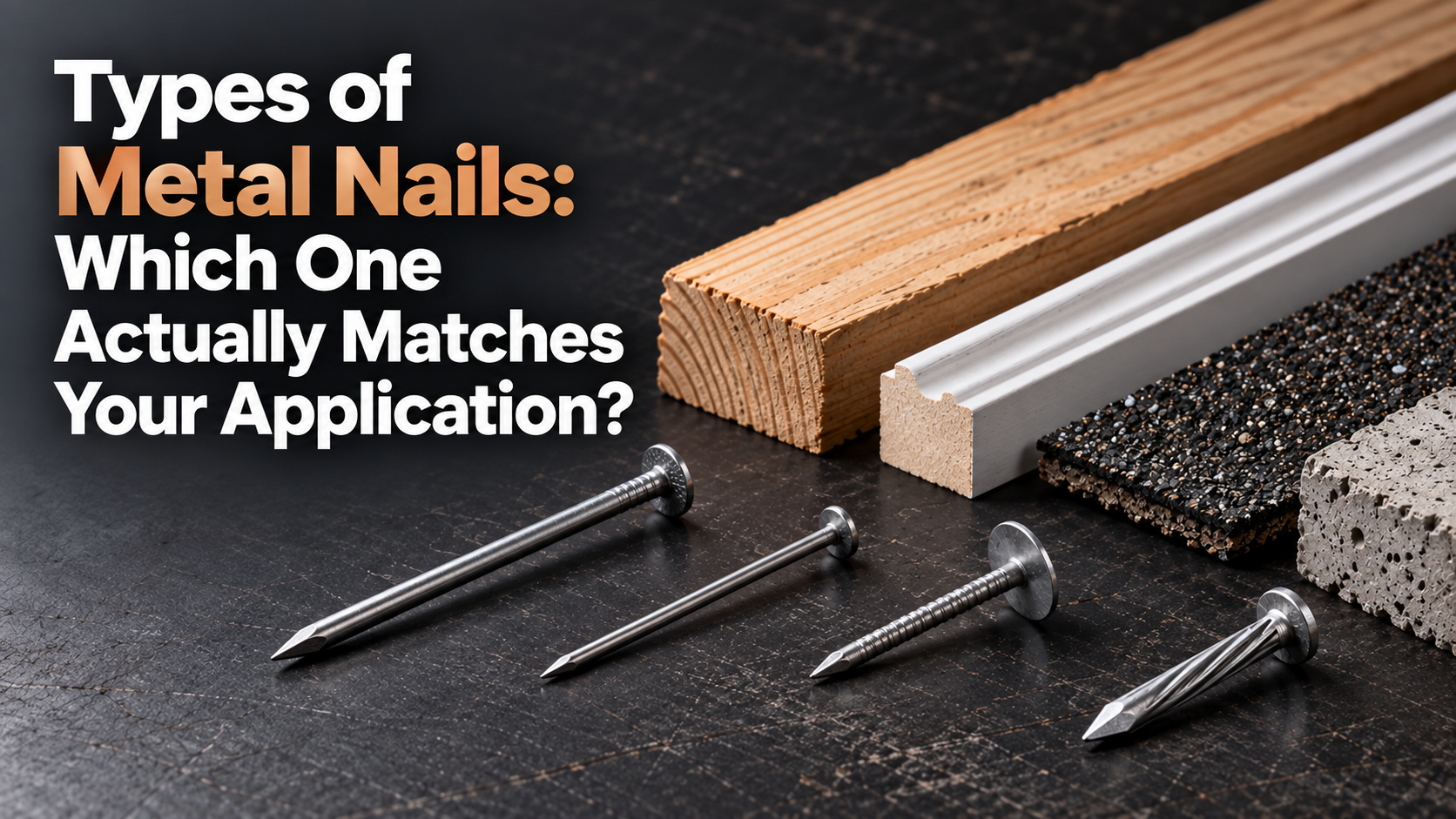
Choosing the wrong type of metal nail is a procurement mistake that costs more than the nails themselves. When buyers receive the wrong product — or worse, a product that looks correct but fails in the application — the cost shows up in returns, project delays, and damaged supplier relationships1. Understanding types of metal nails means understanding the decisions behind them.
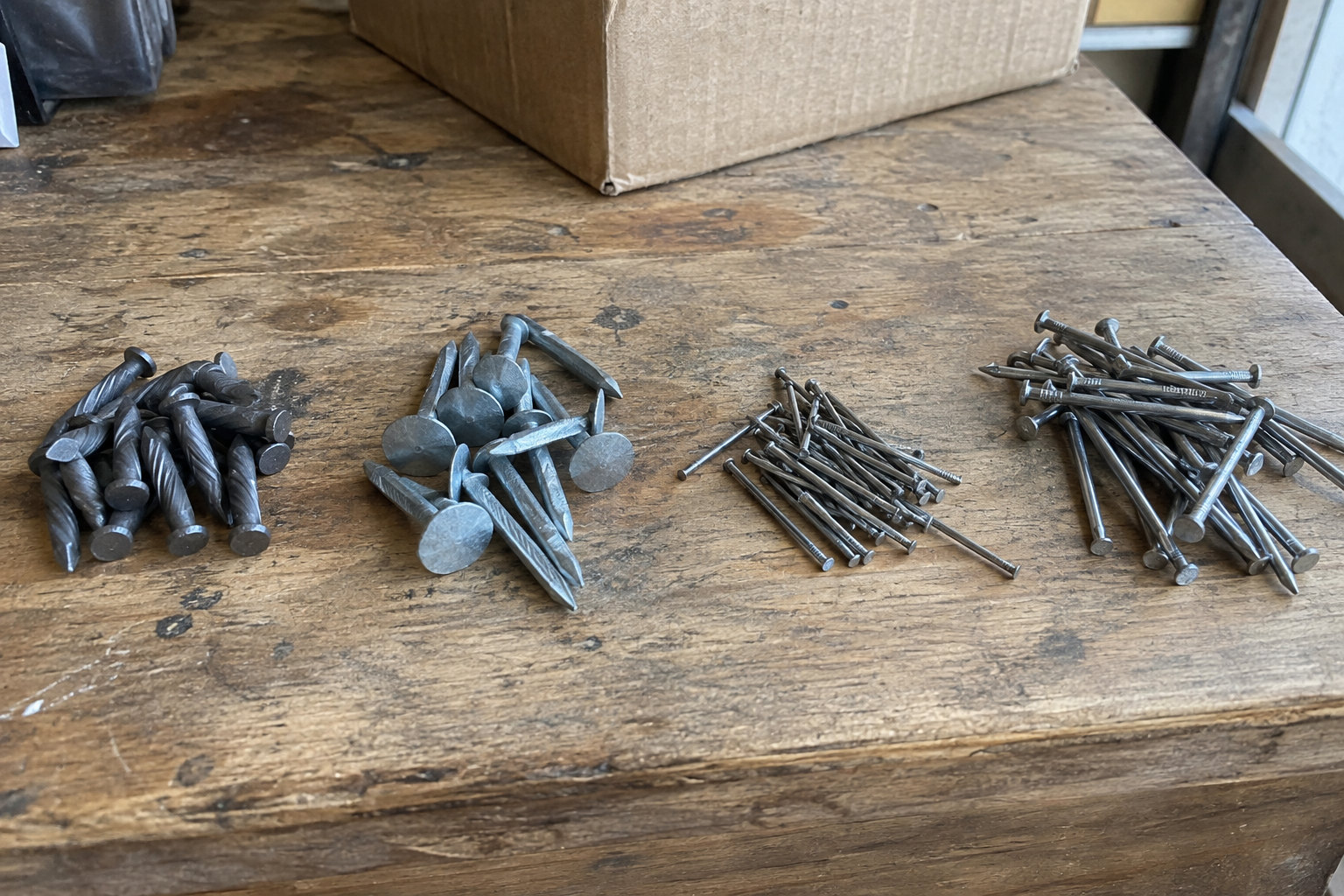
Metal nails are categorized by application, not just by appearance. The main types used in construction and hardware distribution include concrete nails, roofing nails, lost head nails, and common steel nails. Each type differs in steel hardness, shank design, head shape, surface finish, and packaging — and these differences determine whether a nail performs correctly or fails in its intended use.
This article goes beyond a simple name list. If you are sourcing nails for resale, construction purchasing, or hardware distribution in markets like the Middle East, Africa, Southeast Asia, or South America, the sections below will help you match nail type to application — and prepare the right information before you request a quote.
Are All Metal Nails Made the Same Way?
Many buyers approach their first hardware order assuming that a nail is a nail. If it is the right length and made of steel, it should work. This assumption causes more sourcing problems than most buyers expect.
No, metal nails are not made the same way. Concrete nails require hardened steel to penetrate masonry2. Roofing nails need wide heads and often a corrosion-resistant finish. Lost head nails are designed to sit flush or below the surface. Common steel nails are general-purpose fasteners. Treating these as interchangeable creates real application and commercial risk.
Understanding why nails differ is the foundation for making a sound sourcing decision. The differences are not marketing categories — they reflect real engineering requirements at the application level.
Why Nail Design Is Application-Driven
Each nail type solves a specific problem:
- Concrete nails must penetrate dense, abrasive material without bending or shattering. That demands high-carbon, hardened steel and a sharp fluted or square shank.
- Roofing nails must hold thin sheet materials against wind uplift and weather exposure. That demands a large flat head, and often a galvanized or hot-dipped zinc finish to resist moisture.
- Lost head nails must disappear into the surface of finished woodwork. That demands a minimal head — just enough to drive flush — and a smooth shank for easy setting.
- Common construction nails must hold structural timber connections over years of load. That demands good wire quality, reliable shank grip, and consistent dimensional tolerances.
The Key Specification Variables Across All Nail Types
When a buyer asks for a quote, the product name alone is never enough. In common trade practice, a complete nail specification includes:
| Variable | What It Affects |
|---|---|
| Material / steel grade | Hardness, bendability, surface treatment options |
| Length | Penetration depth, holding strength |
| Diameter (gauge) | Shear resistance, driving behavior |
| Head type | Holding surface, visibility after installation |
| Shank style | Withdrawal resistance (smooth vs. ring vs. spiral) |
| Surface finish | Corrosion resistance, suitable climate |
| Packaging | Resale format, logistics, end-user convenience |
A buyer who provides all of these details will receive a more accurate quotation and a product that actually fits their market.
What Are Concrete Nails and When Should You Source Them?
Concrete nails look deceptively simple. They are short, thick, and often overlooked in hardware catalogs. But sourcing the wrong concrete nail — particularly one made from low-carbon wire — is a common and expensive mistake for first-time importers.
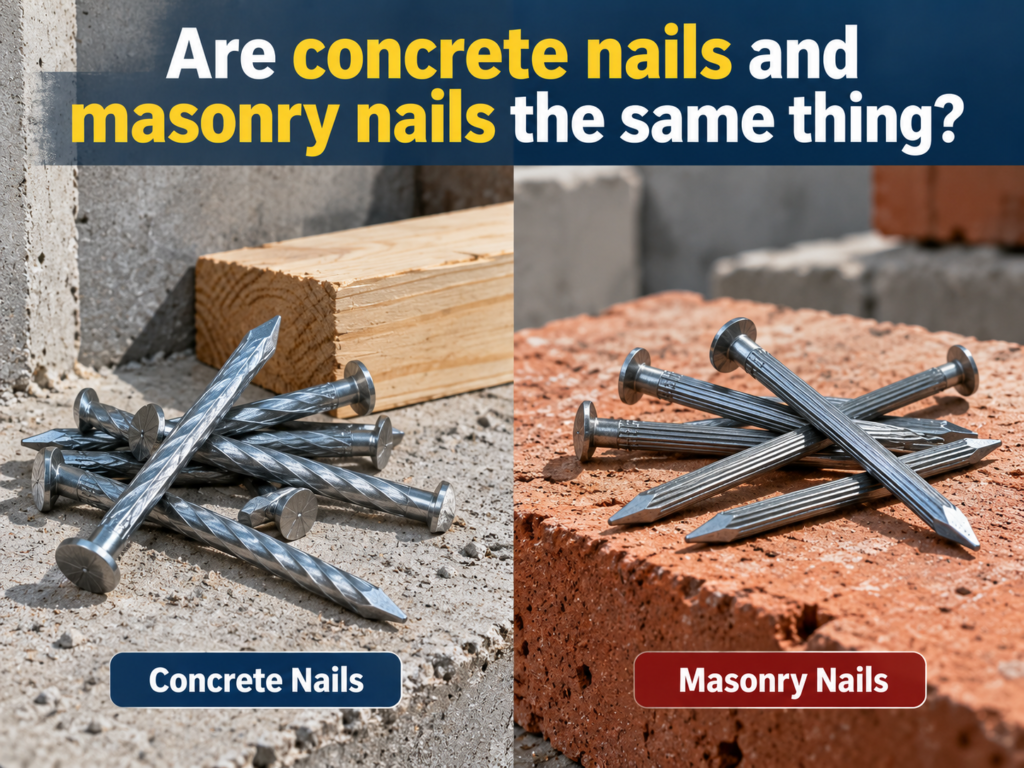
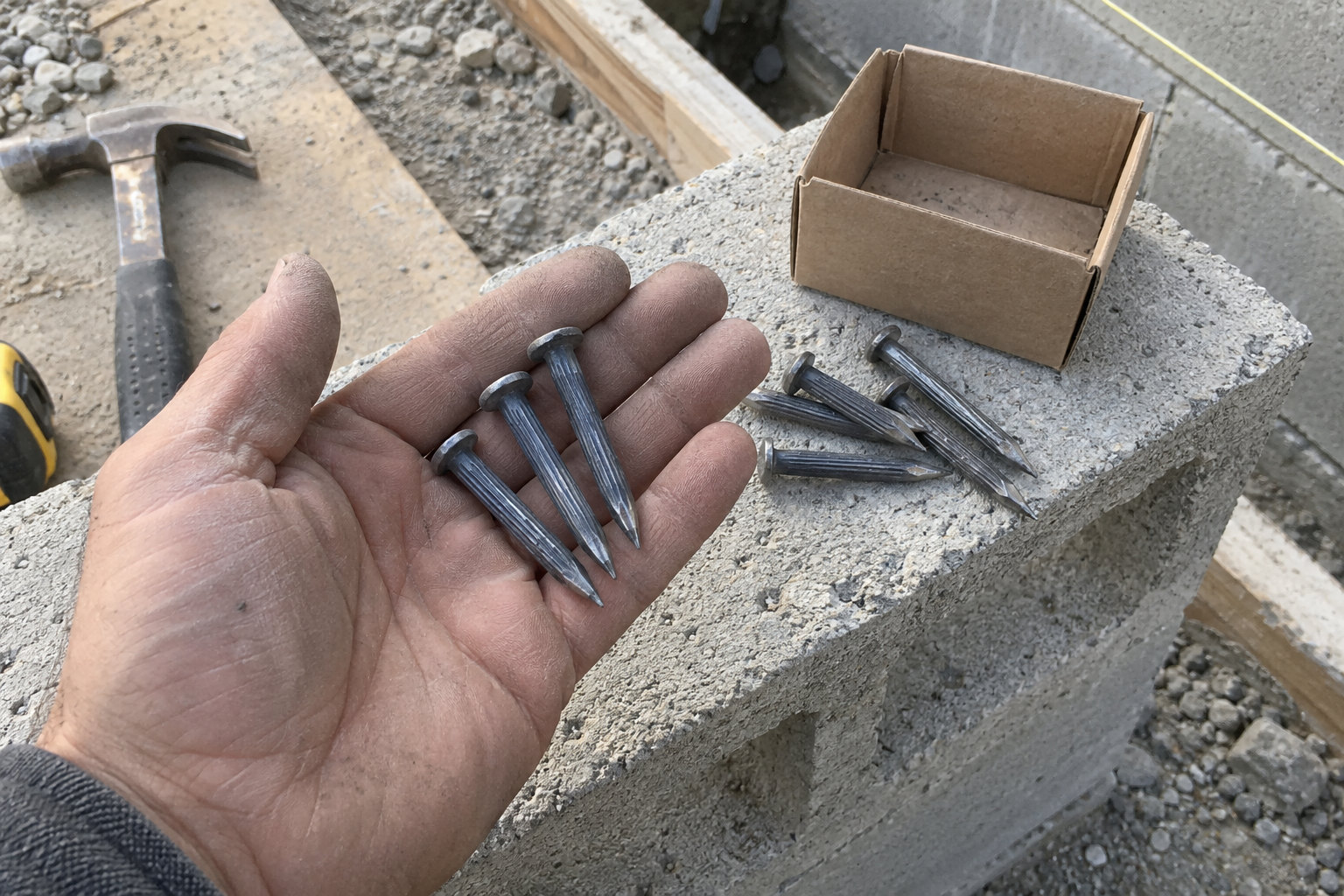
Concrete nails are hardened steel fasteners designed to be driven directly into concrete, brick, or masonry without pre-drilling in many applications. They typically feature a fluted or cut shank, a flat or countersunk head, and a hardened tip. The key procurement variable is steel hardness — a soft nail will bend on contact with masonry and render the fastener useless.
Selecting Concrete Nails for Your Market
From an export supplier perspective, concrete nails are among the most specification-sensitive products in the hardware category. Buyers frequently request concrete nails by length alone — for example, "50mm concrete nails" — without specifying the steel treatment or shank style. This creates a real risk of receiving a product that looks correct but performs poorly.
Common specification points buyers should confirm:
- Steel hardness: True concrete nails are made from high-carbon steel that has been hardened. In trade terms, buyers should ask about the carbon content or hardness specification, or request a sample for site testing before placing a bulk order.
- Length range: Concrete nails are typically available from approximately 15mm to 100mm. The correct length depends on the material being fastened and the substrate depth.
- Shank type: Fluted shanks are common in concrete nails. The fluting helps the nail grip the masonry as it is driven and reduces lateral movement after installation3.
- Head type: Flat heads are standard for most applications. Countersunk heads are used where the fastener needs to sit flush.
- Packaging: In many export markets — particularly hardware distribution channels in Africa and the Middle East — concrete nails are packed in small boxes of 100 or 500 pieces, or in bulk cartons. Buyers should confirm whether their resale channel requires branded retail packaging or bulk trade packing.
A note on application risk: In common trade practice, hardened concrete nails are not suitable substitutes for structural fasteners in framing or engineered connections4. Buyers sourcing for construction project use should confirm application suitability with the project engineer or site supervisor, not solely with the product name.
What Are Roofing Nails and What Should Importers Know?
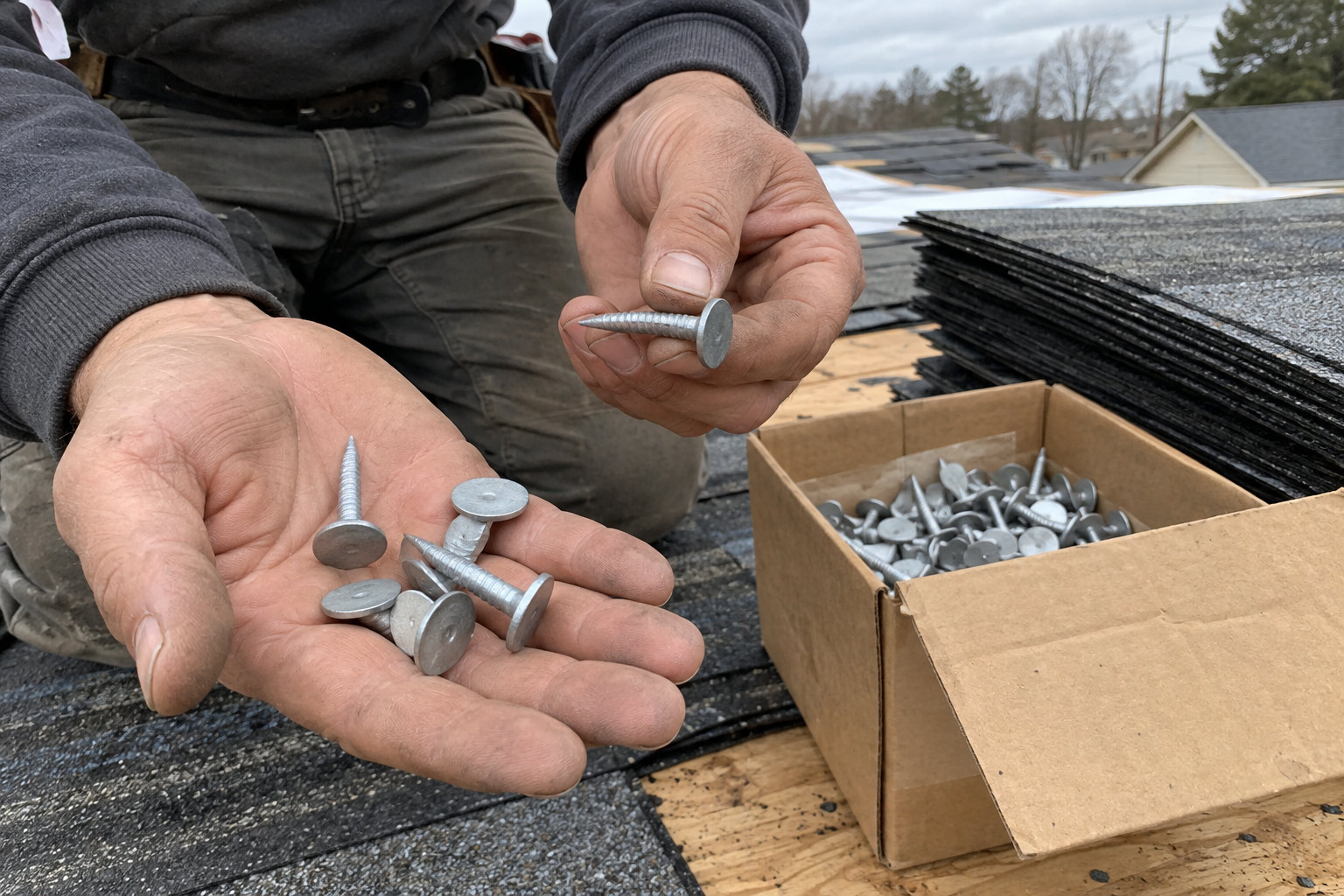
Roofing nails serve one of the most weather-exposed applications in construction. The nail itself is not visible after installation, but its performance — specifically its resistance to corrosion and its ability to hold roofing material against wind — is critical to the end user’s satisfaction.
Roofing nails are wide-head steel nails designed to fasten roofing materials such as felt, shingles, and thin sheet metal. The large flat head distributes load across the material to prevent pull-through. The most important procurement variable after head diameter is surface finish — roofing nails in humid or coastal environments typically require galvanized or hot-dipped zinc coating to resist corrosion.
Why Surface Finish Matters More Than Length for Roofing Nails
Many buyers focus on length when ordering roofing nails. Length matters — a roofing nail that does not penetrate the substrate sufficiently will not hold. But in markets with high humidity, coastal exposure, or seasonal rainfall (common across Southeast Asia, West Africa, and parts of South America), an under-specified surface finish will cause visible rust within months and lead to end-user complaints.
Surface finish options commonly available in trade:
- Bright / plain steel: No coating. Lowest cost. Suitable only for dry, interior-adjacent applications or short-term use.
- Electro-galvanized: A thin zinc layer applied by electroplating. Better than plain but not suitable for prolonged outdoor exposure.
- Hot-dipped galvanized (HDG): Thicker, more durable zinc coating applied by immersion. Generally preferred for roofing applications in humid or coastal climates.
- Cement-coated: A resin coating that increases friction and withdrawal resistance. Common in some markets but not a substitute for corrosion resistance.
Other specification points for roofing nail procurement:
- Head diameter is a key differentiator. Roofing nails typically have wider heads than common wire nails of the same shank diameter.
- Shank styles vary: smooth, ring-shank, and screw-shank options exist. Ring-shank roofing nails offer better withdrawal resistance and are preferred in high-wind markets5.
- Packaging for retail hardware channels often means small boxes (1kg, 5kg) or pre-counted packs. Construction project buyers may prefer 25kg cartons or bulk bags.
What Are Lost Head Nails and Where Are They Used?
Lost head nails are less discussed in general hardware catalogs, but they fill a specific and important role in finished construction and joinery work. They are also one of the nail types most commonly misidentified or substituted incorrectly.
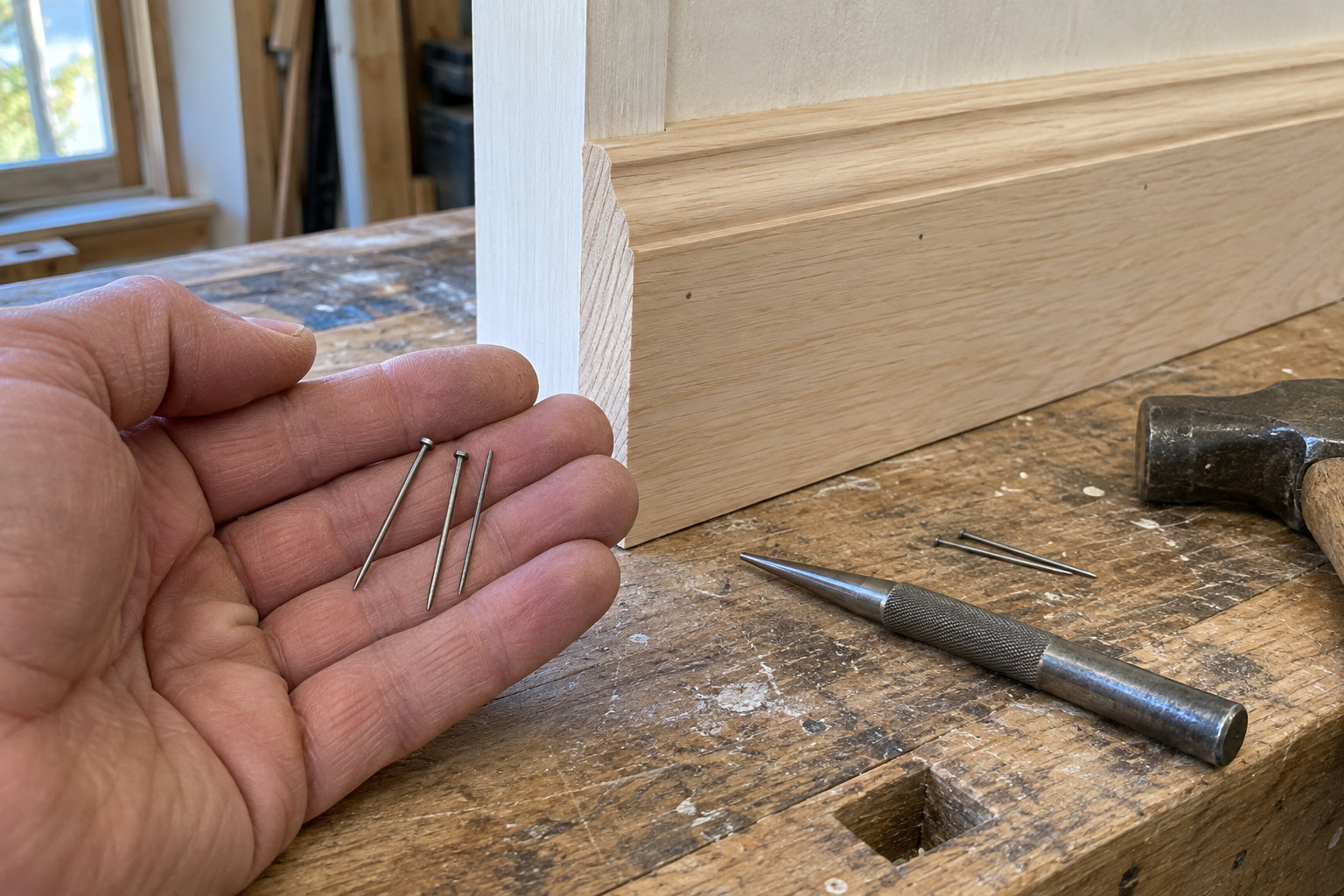
Lost head nails — also called finishing nails in some markets — have a very small head that can be punched below the surface of wood6, leaving a hole that can be filled and painted. They are used in finish carpentry, flooring, skirting boards, architrave, and wood trim where visible nail heads would be aesthetically unacceptable. The key selection variable is head size relative to shank diameter.
Procurement Considerations for Lost Head Nails
Lost head nails serve a different supply channel than structural or roofing nails. In many markets, they reach the end user through joinery contractors, fit-out companies, or specialized hardware retailers rather than general construction wholesalers. This affects how buyers should think about specification and packaging.
Key points for importers and distributors:
- Head diameter: The head on a lost head nail is only slightly wider than the shank. This allows it to be driven flush and then punched below the surface with a nail set. Buyers should verify that the head dimension is within specification before bulk ordering — a slightly oversized head will be visible after finishing.
- Length and gauge: Lost head nails are typically available in a wide length range — from around 25mm to 75mm — in multiple gauges. Thinner gauges reduce splitting risk in hardwood trim7.
- Surface finish: Bright (plain) steel is most common for interior use. Stainless or galvanized options are available for exterior trim applications.
- Packaging format: Lost head nails for joinery contractors are often packed in small boxes by weight or count. Retail hardware display packaging — branded boxes with product images — is common in this segment and worth discussing with your supplier if you are building a private-label hardware range.
- OEM / branding considerations: This nail type is well-suited to OEM packaging programs. If you are a hardware distributor building your own brand, finishing nails are a practical product to start with.
What Are Common Steel Nails and How Do You Specify Them Correctly?
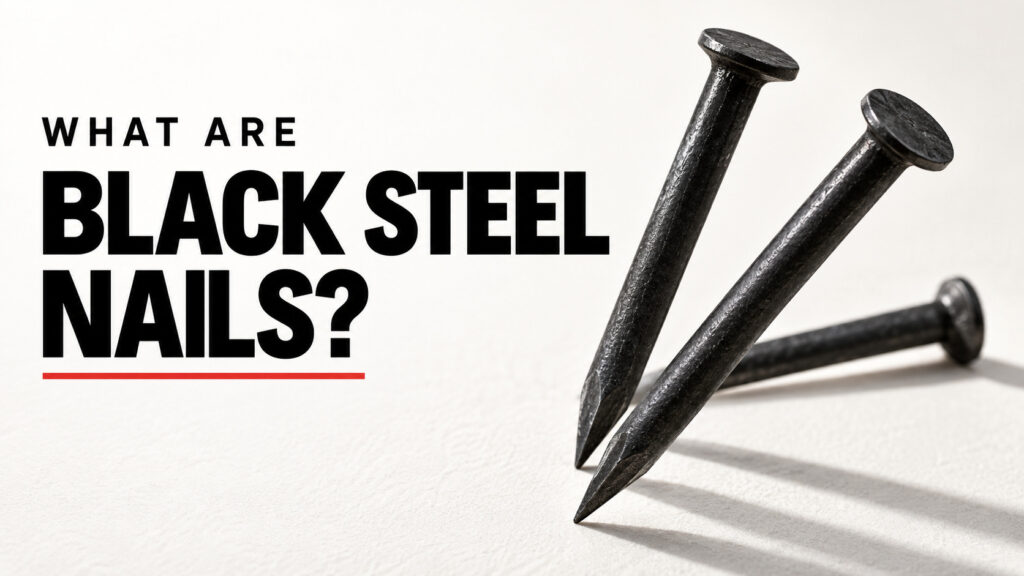
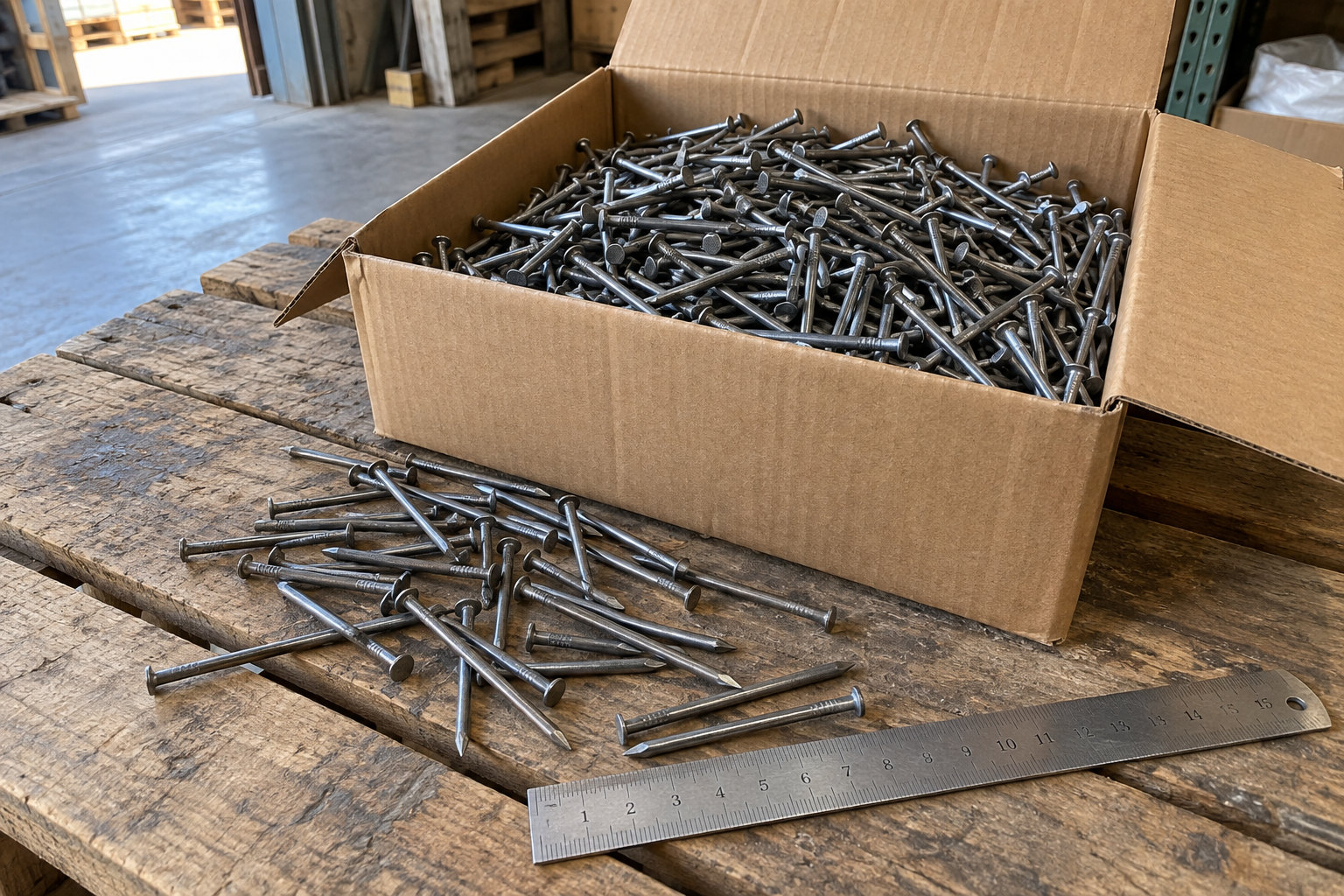
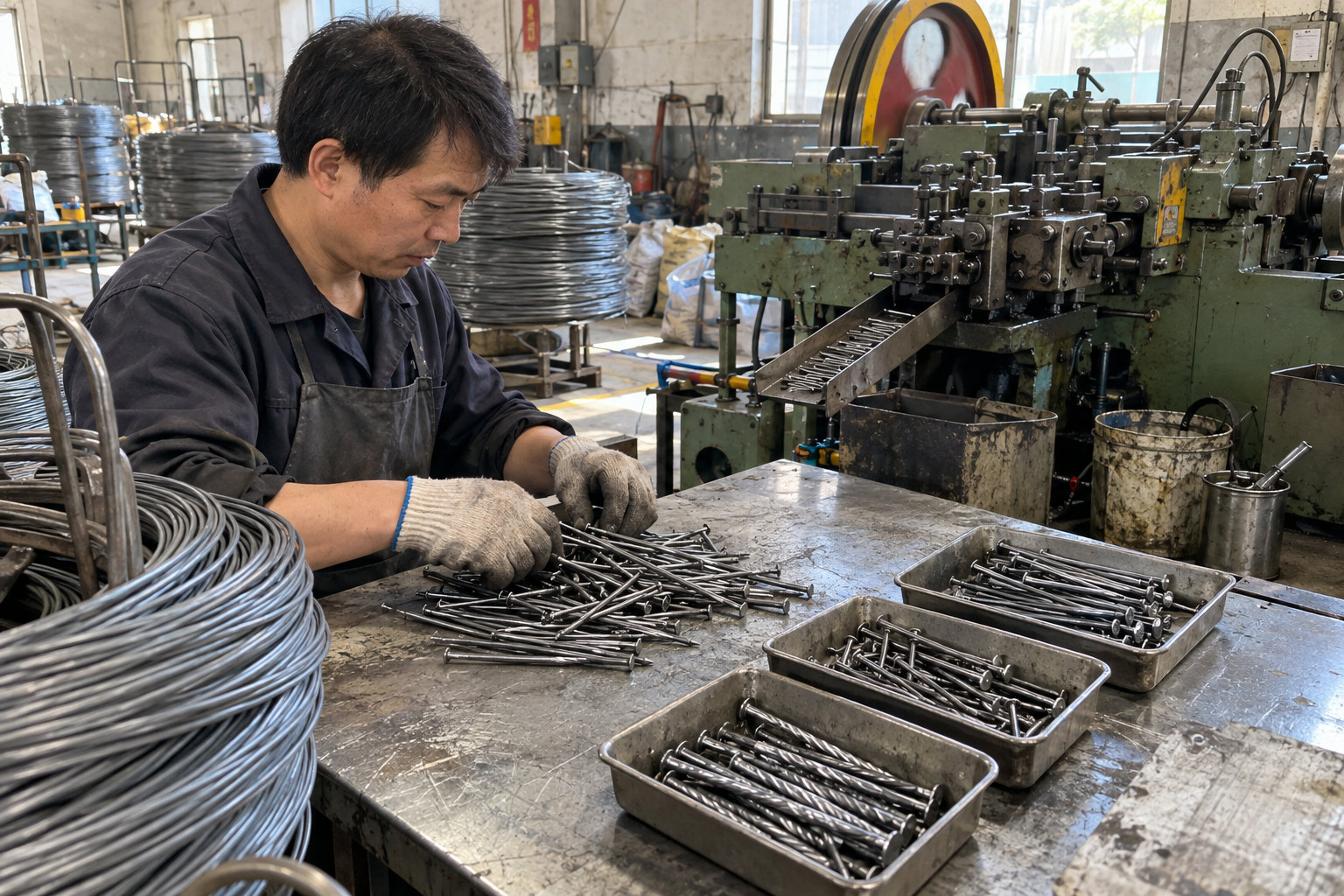
Common steel nails — sometimes called wire nails, round nails, or black steel nails depending on the market — are the most widely traded nail type globally. They are used across general timber construction, formwork, crating, pallet making, and rough carpentry. Because they are so widely used, they are also the category where vague specifications create the most commercial problems.
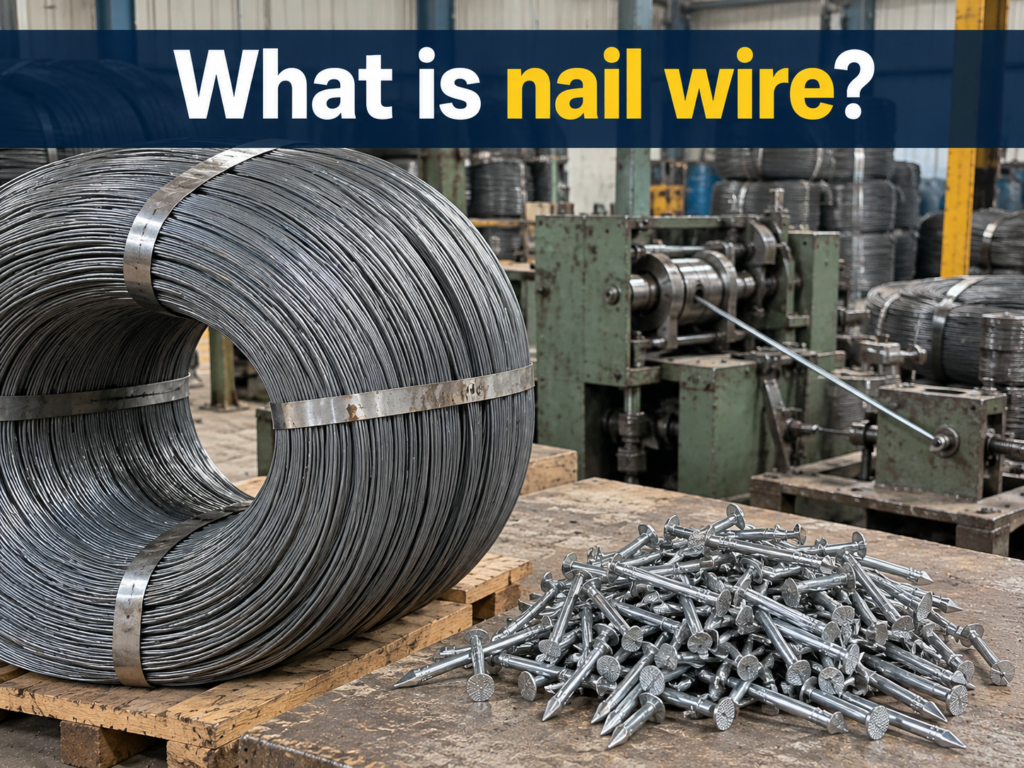
Common steel nails are round-wire nails made from mild steel wire, used for general timber fastening. They are typically available in bright (plain), galvanized, or cement-coated finishes, and in a wide range of lengths and gauges. The most important specification variables are length, gauge (diameter), finish, and packaging — because these directly affect FOB pricing and market suitability.
Breaking Down the Specification for a Sourcing Inquiry
In our experience supplying hardware distributors across export markets, the most useful thing a buyer can do before requesting a quote is prepare a complete specification. For common steel nails, that means:
Length and gauge: These should be specified together. A "3-inch nail" means different things in different markets depending on the wire gauge. Use millimeter dimensions where possible, or specify both imperial length and gauge number.
Surface finish: Bright steel nails are the most economical and are widely used in dry construction environments. Galvanized nails are preferred in humid climates or for outdoor timber work. Some buyers in specific markets prefer a cement-coated shank for improved withdrawal resistance in timber framing.
Head type: Flat-head (also called round-head) is standard. Oval head and clout head variants exist for specific applications.
Shank style: Smooth shanks are standard for most common nail uses. Ring-shank or spiral-shank variants are available when higher withdrawal resistance is needed — for example, in hardwood decking or wind-rated construction.
Packaging options for export markets:
| Packaging Format | Typical Use Case |
|---|---|
| 25kg carton (bulk) | Construction project supply, wholesale |
| 5kg box | Hardware retail, small contractor supply |
| 1kg retail box | Consumer hardware stores, DIY retail |
| Custom branded box | Distributor OEM / private label |
Minimum order quantities in B2B nail supply are typically discussed in metric tons or carton quantities. For buyers planning a trial order, many manufacturers — including factories like ours — can support small first orders to verify quality before scaling.
Frequently Asked Questions
What is the difference between a concrete nail and a common wire nail?
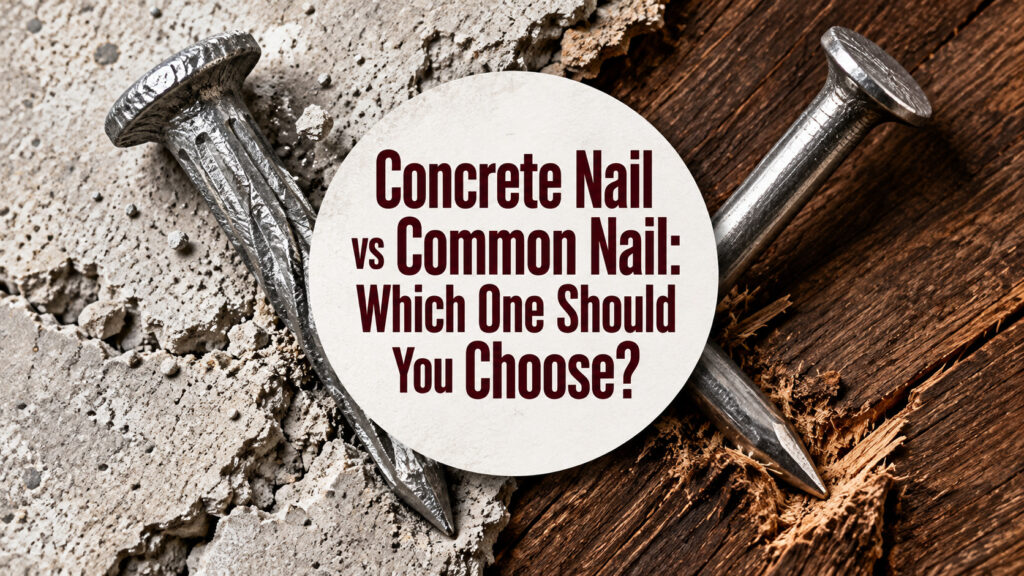
A concrete nail is made from hardened high-carbon steel and is designed to penetrate masonry without bending. A common wire nail uses mild steel and is intended for timber. Using a common nail on concrete will cause it to bend or buckle immediately. Buyers should confirm steel hardness, not just length, when sourcing concrete nails.
Do roofing nails need to be galvanized?
Not universally — but in humid, coastal, or high-rainfall environments, galvanized roofing nails are strongly preferred. Plain bright steel nails will corrode in exposed roofing applications, leading to rust staining and eventual fastener failure. Buyers in Southeast Asia, West Africa, or coastal South America should confirm surface finish before placing a bulk order.
What information do I need to prepare before requesting an FOB nail quotation?
At minimum, suppliers need: product type, length, gauge/diameter, surface finish, packaging format, and destination port. Order quantity affects per-unit pricing and lead time. Providing a sample or reference product can significantly reduce the risk of specification mismatch, especially for first orders.
Can nail packaging be customized for private-label distribution?
In common trade practice, yes. Many B2B nail manufacturers offer OEM packaging with custom brand names, logos, and box designs. This is particularly relevant for hardware distributors building their own product range. Buyers should discuss minimum quantities and lead time for custom packaging separately from standard product lead times.
What is the typical minimum order quantity for imported metal nails?
This varies by supplier, but in our trade experience, B2B nail orders are typically discussed in metric tons or carton quantities — with minimums often starting around 5 metric tons or 200 cartons for standard products8. Trial or sample orders are usually available but may carry a handling fee that can be credited against the first production order.
Conclusion
Understanding types of metal nails is ultimately a procurement decision, not a vocabulary exercise. Concrete nails, roofing nails, lost head nails, and common steel nails each solve different problems in different applications — and each requires a specific combination of steel type, length, diameter, surface finish, and packaging to perform correctly in your market. Treating similar-looking nails as interchangeable is one of the most common and avoidable sourcing mistakes in hardware distribution.
If you are importing nails for construction projects, wholesale distribution, or retail resale in the Middle East, Africa, Southeast Asia, or South America, take the time to specify correctly before you quote. A mismatched product costs far more than the price difference between grades.
Ready to discuss your nail sourcing requirements? Contact the Dingzhou Best Hardware team via WhatsApp at +8618331061136, email us at [email protected], or visit chinabesthardware.com to request a sample or FOB quotation tailored to your market and order volume.
-
"12. Mistakes in Bids – Construction Contracting", https://pressbooks.lib.vt.edu/constructioncontracting/chapter/mistakes-in-bids/. Construction procurement research consistently identifies specification errors and material substitution as contributors to project cost overruns and schedule delays, with rework costs often exceeding the original material cost by a significant multiple. Evidence role: general_support; source type: research. Supports: That incorrect component specification in construction procurement generates downstream costs beyond the unit price of the component itself. Scope note: Published data on fastener-specific procurement failures is limited; most construction rework cost studies address broader material and design errors rather than fastener categories specifically. ↩
-
"Fasteners", https://www.cityofminnetrista.gov/media/176. Fastener engineering literature establishes that nails intended for masonry applications require significantly higher carbon content and heat treatment compared to common wire nails, as the hardness differential between the fastener and substrate determines penetration success and fastener integrity. Evidence role: mechanism; source type: research. Supports: That concrete nails require high-carbon hardened steel to resist bending and fracture during masonry penetration. Scope note: General fastener engineering sources may not specify exact hardness values for concrete nails across all international standards; regional standards such as BS, DIN, or ASTM may differ in their precise requirements. ↩
-
"Withdrawal strength of ring-shank nails embedded in southern …", https://research.fs.usda.gov/treesearch/25675. Fastener engineering literature describes how non-circular shank profiles, including fluted and cut geometries, create localized compressive stress and mechanical interlock within masonry substrates during driving, contributing to improved lateral and withdrawal resistance relative to smooth round shanks. Evidence role: mechanism; source type: research. Supports: That fluted or cut shank geometry on masonry nails increases holding power compared to smooth shanks by creating mechanical interlock with the substrate. Scope note: Quantitative holding-power data for fluted concrete nails in masonry is substrate-dependent and may not be directly transferable across concrete mix designs or brick types. ↩
-
"Fasteners", https://www.cityofminnetrista.gov/media/176. Structural fastener standards distinguish between hardened masonry fasteners and ductile structural connectors on the basis of failure mode: hardened nails are optimized for compressive penetration resistance but exhibit brittle fracture behavior under tensile or shear loading, making them unsuitable for load-bearing connections governed by structural design codes. Evidence role: expert_consensus; source type: institution. Supports: That hardened concrete nails are not appropriate substitutes for engineered structural fasteners due to differences in ductility, load-path behavior, and code compliance. Scope note: Published guidance specifically addressing concrete nail misuse in structural connections is limited; the claim is supported by general fastener engineering principles rather than a single definitive standard. ↩
-
"Withdrawal strength of ring-shank nails embedded in southern …", https://research.fs.usda.gov/treesearch/25675. Structural fastener research has demonstrated that annular ring-shank nails achieve substantially greater withdrawal resistance than smooth-shank nails of the same diameter and length, a property that underlies their specification in wind-rated roofing assemblies under codes such as the International Building Code. Evidence role: mechanism; source type: research. Supports: That ring-shank nails exhibit measurably higher withdrawal resistance than smooth-shank nails of equivalent dimensions. Scope note: Quantitative improvement varies with wood species, moisture content, and ring geometry; direct comparisons should reference specific test standards such as ASTM F1667. ↩
-
"Nail (fastener)", https://en.wikipedia.org/wiki/Nail_(fastener). Construction hardware references and national standards such as BS 1202 classify nails by head geometry, with ‘lost head’ and ‘finishing’ designations both describing fasteners whose head diameter is only marginally larger than the shank, enabling the head to be driven flush or countersunk and concealed with filler. Evidence role: definition; source type: encyclopedia. Supports: That lost head nails and finishing nails refer to the same or closely equivalent fastener type characterized by a minimal head designed to be set below the wood surface. Scope note: Exact dimensional specifications for head diameter relative to shank diameter may differ between British Standard, DIN, and ASTM classifications, so the terms are functionally but not always dimensionally interchangeable across markets. ↩
-
"Wood Handbook–Chapter 7–Fastenings – US Forest Service …", https://www.fpl.fs.usda.gov/documnts/fplgtr/fplgtr113/ch07.pdf. Wood science research establishes that nail-induced splitting in timber is primarily driven by the tensile stress generated perpendicular to the grain as the fastener displaces wood fibers; reducing fastener diameter lowers this stress, decreasing splitting probability particularly in dense hardwood species with limited moisture content. Evidence role: mechanism; source type: research. Supports: That smaller diameter fasteners reduce the risk of splitting in hardwood timber during nailing. Scope note: Splitting risk is also influenced by nail placement relative to grain direction, end distance, and species-specific fracture toughness, so gauge reduction alone does not eliminate splitting risk in all hardwood applications. ↩
-
"Steel Nails from India, Oman, Sri Lanka, and Turkey", https://www.usitc.gov/sites/default/files/publications/701_731/pub5370.pdf. International trade practice for commodity hardware products, including nails and fasteners classified under HS 7317, is generally structured around container load economics, with full 20-foot container loads (approximately 20–25 metric tons for dense metal products) representing a common minimum for cost-effective ocean freight, though smaller minimums are offered by trading companies and agents. Evidence role: general_support; source type: institution. Supports: That bulk hardware fastener imports are typically transacted in metric ton quantities with minimum order thresholds that reflect container economics. Scope note: Minimum order quantities vary substantially by supplier type, product specification, and destination market; the figures cited in the article reflect one supplier’s commercial terms rather than a formally documented industry standard. ↩