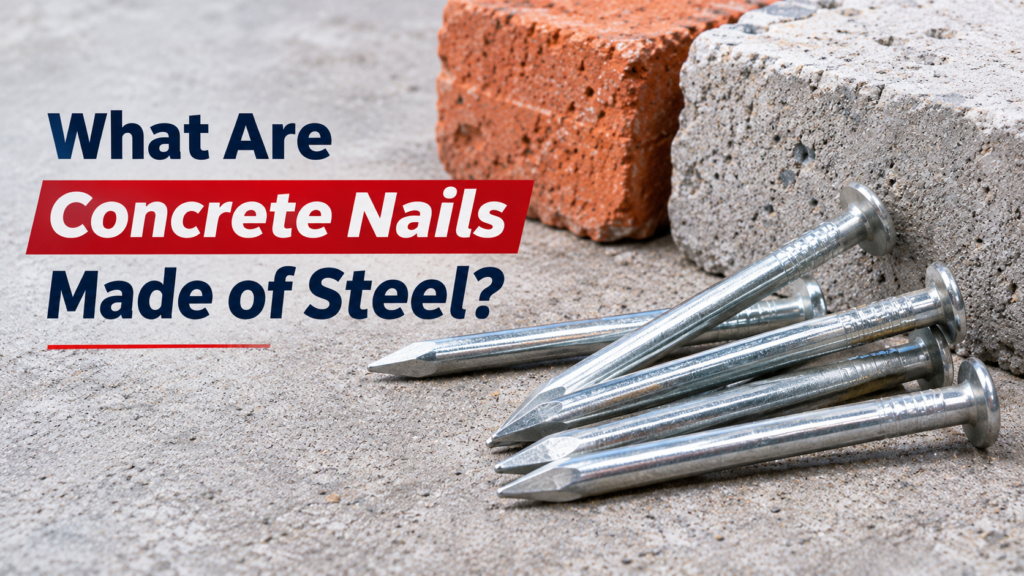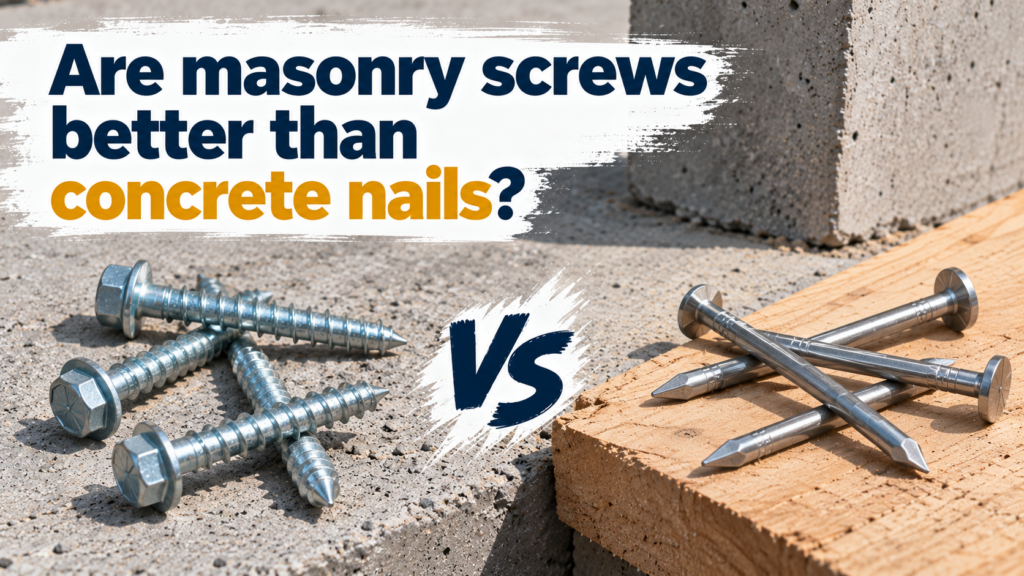
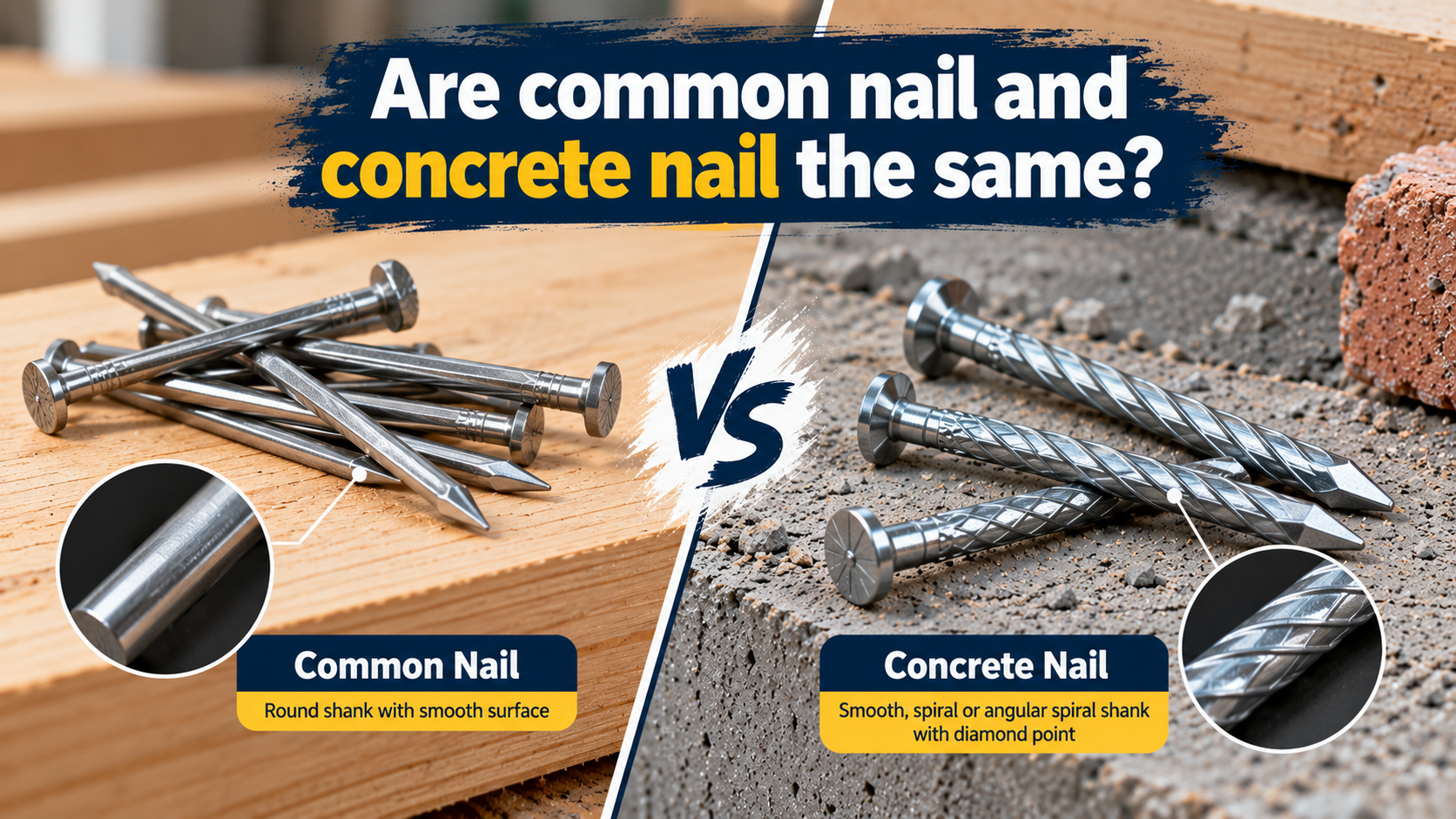
Common nail and concrete nail confusion can lead buyers to choose the wrong fastener, compare unfair quotations, or stock products that do not match customer demand. I see this often when importers ask whether similar sizes mean similar use. The solution is simple: compare the nail by application, base material, specification, and purchasing purpose.
No, common nail and concrete nail are not the same. A common nail is generally used for general fastening, especially wood and softer materials, while a concrete nail is selected for harder base materials such as concrete or masonry.1 Similar length or diameter does not make them interchangeable because material, hardness, shank design, point, finish, and intended use can differ.2
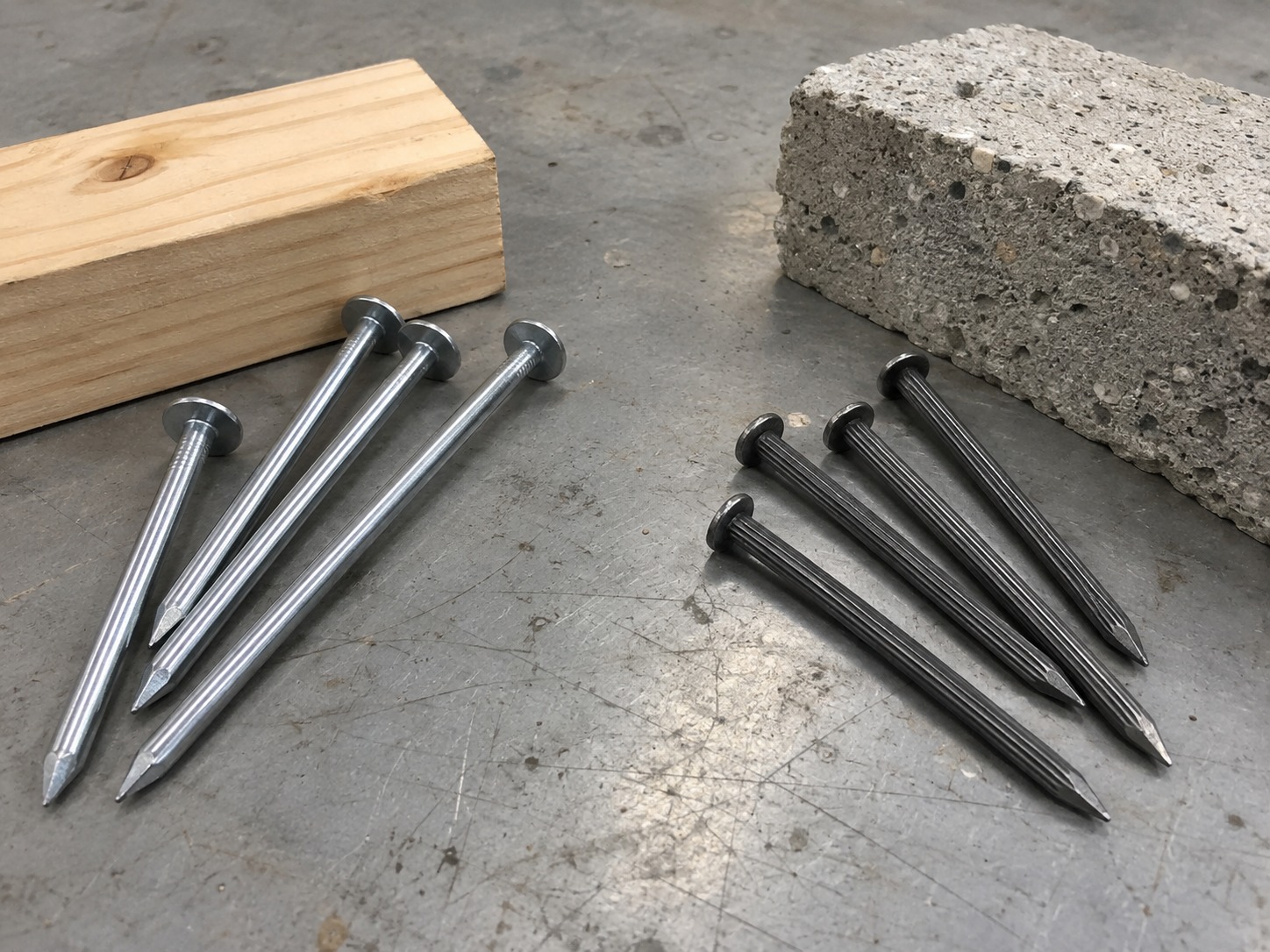
I write from the supplier side, so I focus less on theory and more on purchase decisions. If a buyer sends me only “2 inch nail,” I cannot quote responsibly. I need to know whether the inquiry is for wood fastening, masonry work, retail packing, bulk resale, or a specific market requirement.
Why are common nail and concrete nail different products?
Common nail and concrete nail may look similar at first glance, and that creates the problem. A buyer may assume both are basic steel nails, then feel frustrated when prices, packing, or supplier answers differ. I usually solve this by asking one first question: what material will the nail be used in?
Common nail and concrete nail are different because they are selected for different base materials and purchasing purposes. A common nail is typically associated with general fastening, often in wood or softer substrates.3 A concrete nail is selected when the buyer needs a nail intended for harder base materials such as concrete or masonry.4
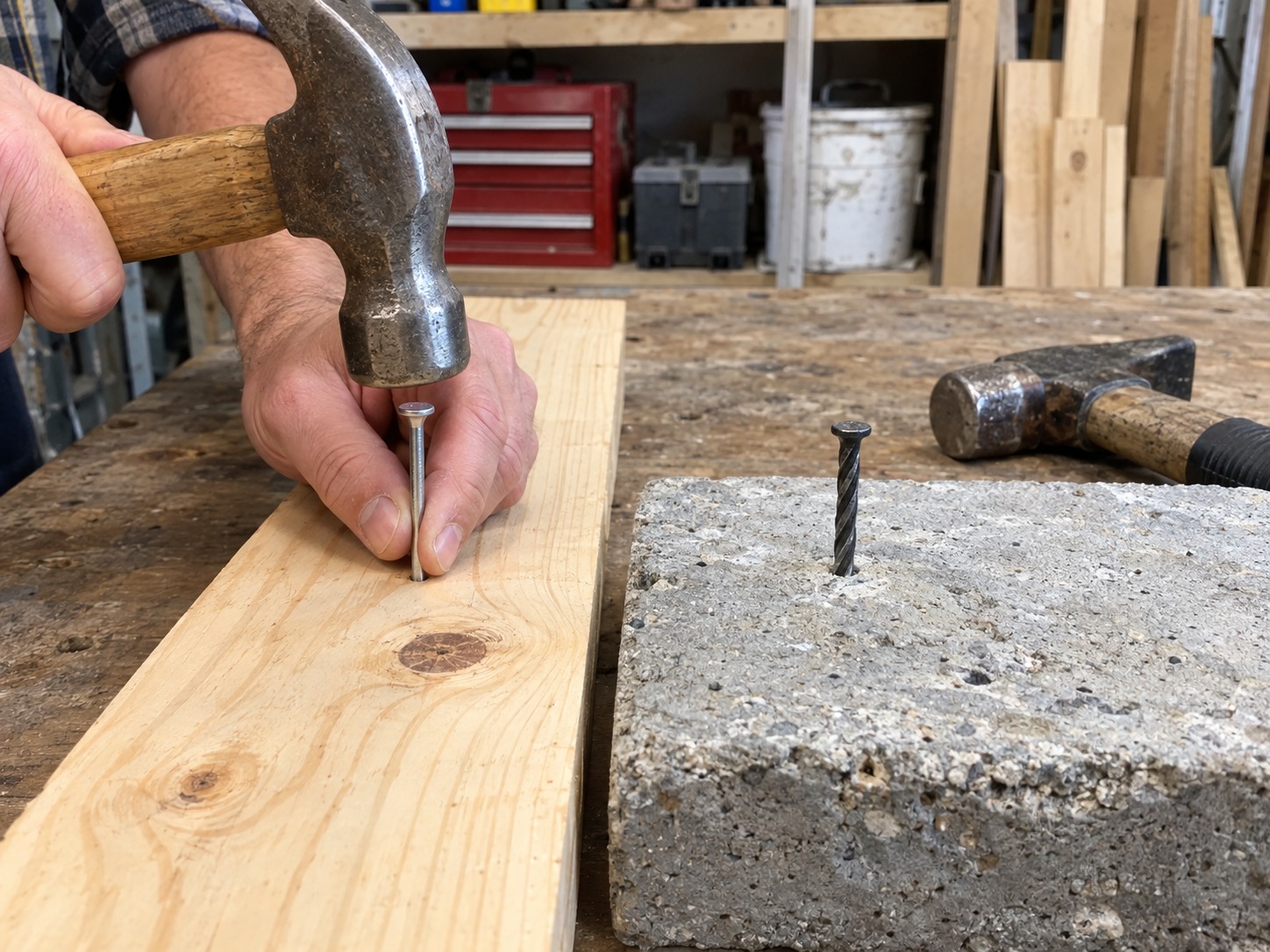
The key difference is not the name only
In international trade, product names can create misunderstanding. Many buyers use “common nail” to mean “normal nail” or “ordinary nail.” However, in procurement communication, I treat common nail as a product category, not just a casual description.5
That difference matters because a quotation must match a real product. If one supplier quotes a common nail and another quotes a concrete nail, the two offers may not be comparable. The buyer may think one factory is cheaper, but the product itself may be different.
How I explain the difference to buyers
When I receive an inquiry, I usually separate the discussion into four questions:
-
What is the base material?
Is the nail used in wood, soft material, concrete, masonry, or another substrate? -
What is the application?
Is it for general fastening, construction resale, hardware store shelves, or a specific project supply? -
What is the product category?
Does the buyer need common nail, concrete nail, roofing nail, black steel nail, lost head nail, or another type? -
What is the specification?
What length, wire diameter, head type, surface treatment, packing, and quantity are required?
A simple procurement comparison
| Evaluation point | Common nail | Concrete nail |
|---|---|---|
| General purchasing idea | General fastening nail category | Nail selected for harder base materials |
| Typical base material | Wood or softer materials | Concrete, masonry, or harder materials |
| Main buyer risk | Treating “common” as a loose word | Assuming any hard nail is suitable |
| Quotation issue | Name may be too vague | Specification may need careful confirmation |
| Stocking logic | Broad retail or general use demand | More application-specific demand |
I avoid making engineering promises because real performance depends on the application, installation method, material condition, and local practice.6 A qualified professional should evaluate application-specific requirements, especially where safety, load, or construction standards are involved.
For buyers, the important point is practical: do not buy by appearance alone. Two nails with similar length can behave differently because they may be made for different purposes. A common nail and concrete nail decision should begin with use, not only size.
Can common nail and concrete nail be interchangeable if the size is the same?
Common nail and concrete nail are often confused because buyers compare length and diameter first. That seems logical, but it can create purchasing mistakes. A nail with the same size may still have different material characteristics, surface finish, point shape, shank design, and intended base material.7
No, common nail and concrete nail should not be treated as interchangeable only because the size looks the same. Length and diameter are only part of the specification. Buyers should also confirm the nail type, material, hardness expectations, shank style, point, surface treatment, packing, and intended substrate.
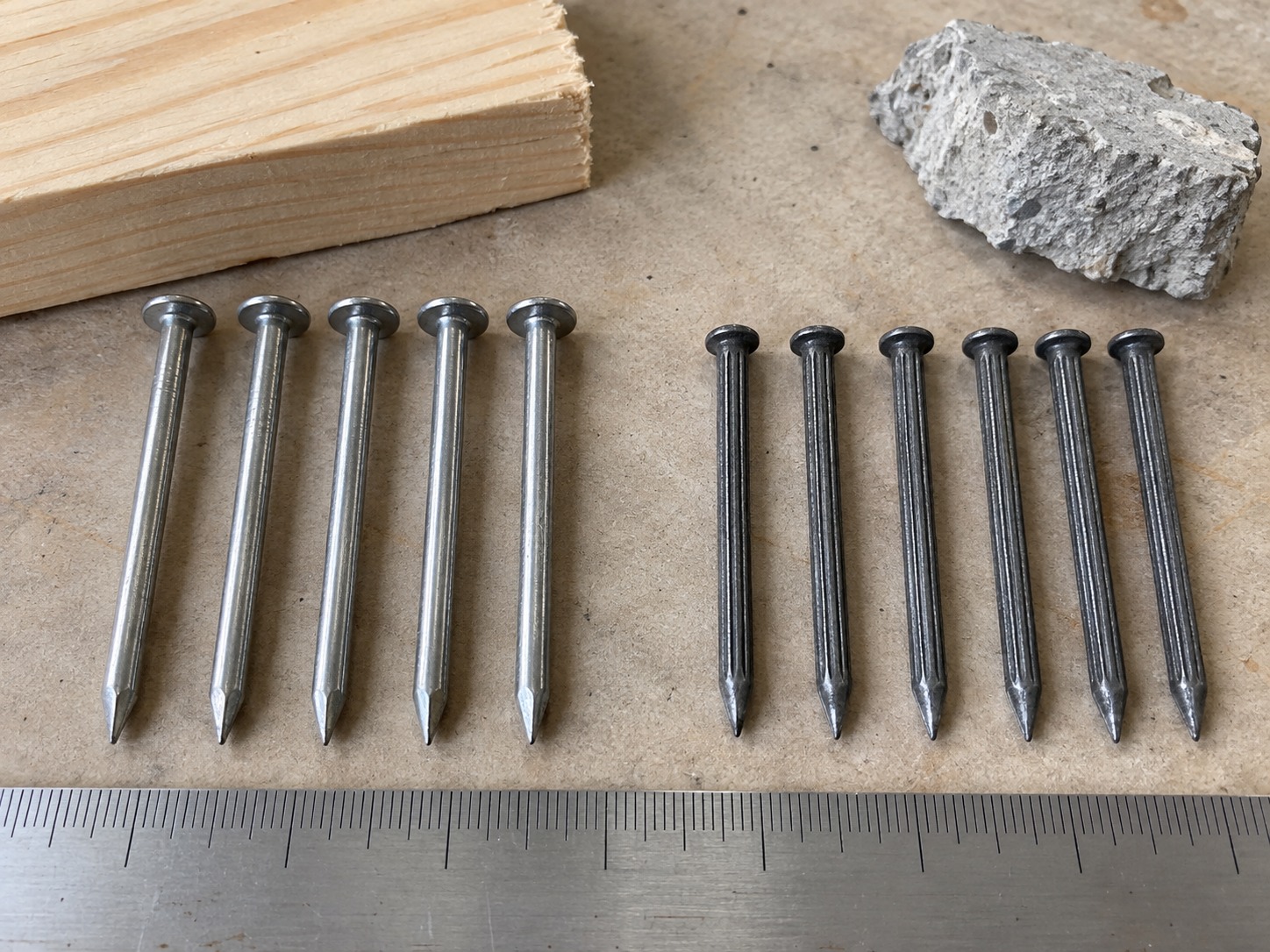
“Same size” is not the same as “same product”
I often receive messages like, “Can you quote 2 inch nails?” My answer is always careful because “2 inch” describes only length. It does not tell me whether the buyer wants common nails, concrete nails, roofing nails, or another nail type.
A buyer may compare two offers like this:
| Supplier | Product name | Size | Price impression |
|---|---|---|---|
| Supplier A | Common nail | 2 inch | Lower |
| Supplier B | Concrete nail | 2 inch | Higher |
| Buyer reaction | “Why is B expensive?” | Same size | Possible misunderstanding |
The problem is not only price. The product category may be different. If the buyer uses the lower quote as a benchmark, the purchasing decision becomes inaccurate.
What can differ beyond length?
Even when two nails have similar dimensions, several details can change the product:
-
Base material suitability
The intended substrate may be wood, masonry, concrete, or another surface. -
Material and hardness expectation
Different nail types may be produced with different performance expectations. I avoid claiming exact hardness unless it is verified for the specific order. -
Shank design
The shank may be smooth, fluted, or designed differently depending on the nail type.8 -
Point design
The point affects how the nail is intended to enter a material.9 -
Head style
Head shape can affect how the nail is used, packed, and recognized by the market. -
Surface treatment
Polished, galvanized, black, or other finishes may change cost and market demand. -
Packing method
Bulk cartons, small boxes, branded packaging, and retail-ready packing all change the quotation.
Buyer lesson from the supplier side
When I explain this to importers, I usually say:
“Please do not send only the size. Send the nail type and usage first. Then the size becomes meaningful.”
This approach protects both sides. The buyer receives a more accurate quotation, and the supplier avoids quoting the wrong product. It also helps hardware retailers avoid slow-moving stock. If a local market asks for concrete nail, stocking common nail in the same size may not satisfy that demand.
So, common nail and concrete nail should be evaluated as separate product categories. Size is important, but it is not enough. A correct purchase needs both product identity and technical specification.
How should buyers compare quotations for common nail and concrete nail?
Common nail and concrete nail quotations can look confusing when buyers compare only the unit price. A lower price may seem attractive, but it may hide a different nail type, thinner specification, different packing, or a different finish. I try to help buyers compare quotations on the same basis.
Buyers should compare common nail and concrete nail quotations by confirming product type, size, quantity, surface treatment, packing, FOB terms, and application. A quote is only meaningful when both suppliers are quoting the same product specification and commercial terms. Price alone is not a reliable comparison.

Why a cheap quote may not be cheaper
In nail purchasing, the price is usually built from several elements:
- Product category
- Wire diameter and length
- Material and production requirement
- Surface finish
- Packing method
- Order quantity
- Shipping and trade terms
- Branding or OEM/ODM requirements
At Dingzhou Baist, I normally quote by product + specification + quantity + packing method, usually under FOB terms. That method helps avoid confusion. If a buyer asks for “common nail, 2 inch, 5 tons, bulk carton packing,” I can quote much more clearly than if the buyer only says “send nail price.”
A more reliable quotation comparison table
| Quotation item | What buyer should confirm | Why it matters |
|---|---|---|
| Product name | Common nail or concrete nail | Prevents category mismatch |
| Size | Length and wire diameter | Affects weight, cost, and market fit |
| Quantity | Tons, cartons, or containers | Affects production planning and price |
| Packing | Bulk, small box, OEM brand, carton | Strong influence on cost |
| [Surface treatment | Polished, galvanized, black, etc. | Affects cost and market preference](https://itwconstruction.ca/blog/enhanced-corrosion-resistance-the-hot-dipped-galvanized-coating-on-paslode-nails-offers-extended-protection-against-rust-ensuring-your-construction-remains-strong-and-secure-even-in-challenging-cond/)[^10] |
| Trade term | [FOB or other term | Controls what is included in price](https://www.trade.gov/know-your-incoterms)[^11] |
| Application | Wood, masonry, retail resale, project | Helps supplier recommend correct category |
The commercial risk of vague names
The phrase “common nail” can create a language problem. Some buyers use it as a general phrase for any ordinary nail. Some suppliers may understand it as a specific nail category. This mismatch can lead to a wrong quote.
For example, a buyer may send:
- “Common nail for concrete”
- “Concrete common nail”
- “Normal steel nail”
- “Hard nail”
- “2 inch building nail”
I do not like to guess in these situations. I usually ask for a photo, target use, local market name, and preferred specification. If the buyer has an existing sample, I recommend sending clear pictures or requesting a physical sample comparison.
How I recommend comparing supplier offers
Before choosing the lowest price, I suggest buyers ask each supplier to confirm:
- Is the quote for common nail or concrete nail?
- What is the exact size?
- What is the packing?
- What is the total weight or carton count?
- What surface finish is included?
- Is the price FOB?
- What is the estimated production lead time?
- Can samples be provided for quality checking?
Our usual MOQ is 5 tons or 200 boxes, and we support trial orders when the specification is clear. Samples can be provided for quality checking, usually with a basic sample fee that may be discussed for return in a formal order. I mention this not as a sales push, but because sample checking is a practical way to reduce procurement risk.
A fair comparison is not “which supplier is cheapest?” A fair comparison is “which supplier quoted the same product under the same conditions?” That is the better question for common nail and concrete nail procurement.
What specifications should I confirm before ordering common nail and concrete nail?
Common nail and concrete nail orders can go wrong when the buyer assumes the supplier understands the local market name. I have seen inquiries where the buyer knows the nail in their market, but the English product name is unclear. The safe path is to confirm specifications before production.
Before ordering common nail and concrete nail, buyers should confirm intended use, base material, nail type, size, quantity, surface treatment, packing, branding requirements, and delivery expectations. A sample or reference photo can also help the supplier verify the product category before quoting or manufacturing.
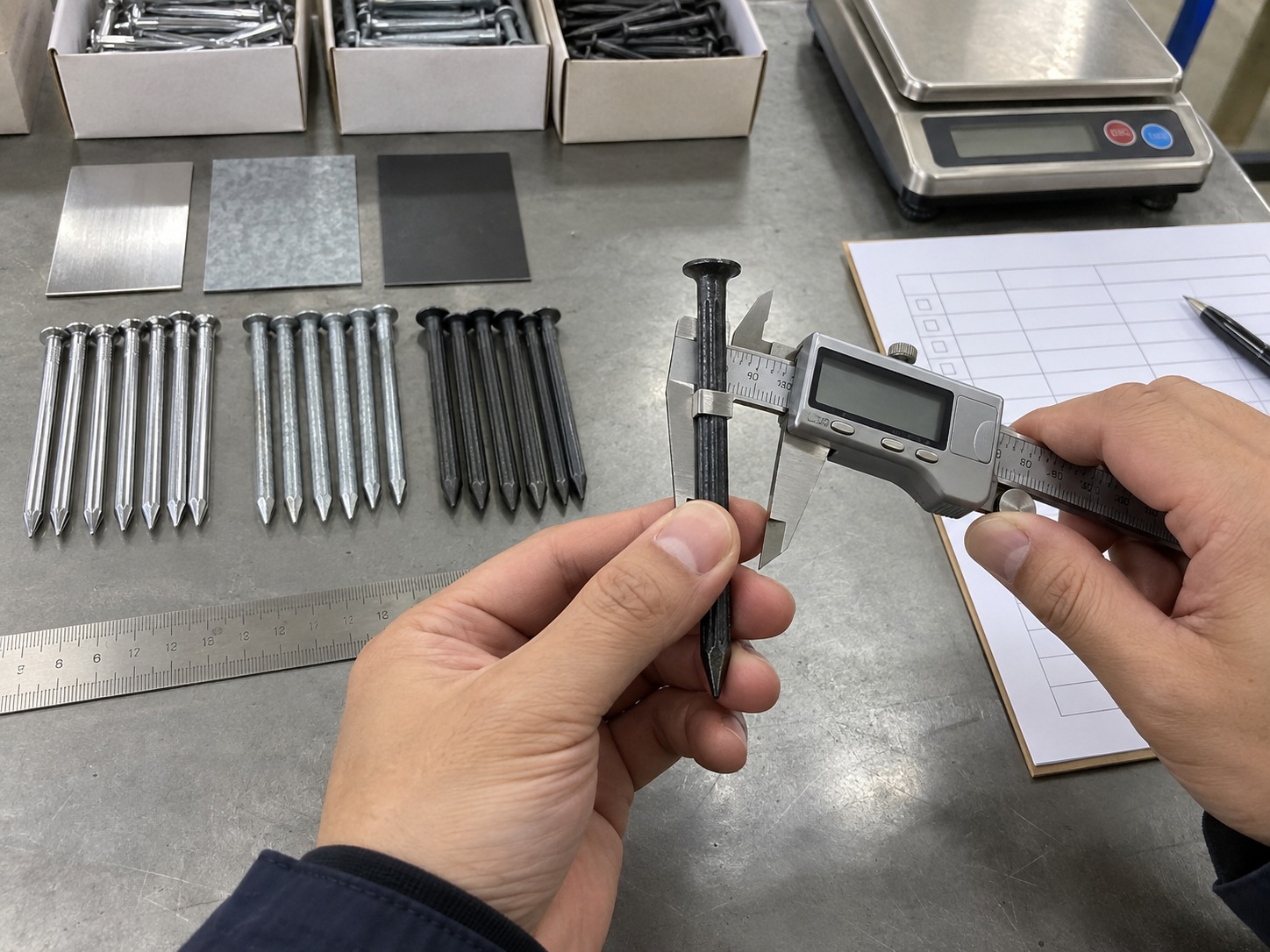
My basic inquiry checklist
When I prepare a quotation, I prefer a clear inquiry like this:
- Intended use: general fastening, wood, concrete, masonry, retail resale, or project supply
- Base material: wood, concrete, block, brick, or other material
- Nail type: common nail, concrete nail, roofing nail, black steel nail, lost head nail, etc.
- Size: length and wire diameter
- Surface treatment: polished, galvanized, black, or other finish
- Quantity: tons, cartons, or container load
- Packing: bulk carton, small box, retail box, OEM brand, or private label
- Market requirement: local name, customer preference, or reference sample
- Trade term: FOB quotation details
- Delivery expectation: normal lead time or urgent schedule
Why each specification matters
The base material tells me whether the buyer is selecting the right product family.10 The size helps calculate weight and cost. The packing affects labor, carton use, printing, palletizing, and container loading. The finish influences cost and market acceptance. Quantity affects whether a trial order, LCL shipment, or FCL shipment makes sense.
For our factory, normal delivery is often 15–25 days, depending on order quantity and production schedule. We support sea freight, including FCL and LCL shipments. These details matter because a buyer may need fast replenishment for hardware stores or scheduled supply for distributors.
Product and packing customization
For B2B buyers, customization is often part of the purchase decision. We support OEM/ODM, including:
- Product specification adjustment
- Packing design
- Brand logo
- Carton marks
- Retail box requirements
However, customization should follow product confirmation. I prefer not to print a buyer’s brand on packaging until both sides confirm the nail type and specification. A wrong product in beautiful packaging is still a wrong product.
Recommended inquiry format
A clear message saves time. Buyers can use this format:
| Inquiry item | Example |
|---|---|
| Product | Concrete nail |
| Application | For masonry/concrete market resale |
| Size | 2 inch, wire diameter to be confirmed |
| Finish | Black or galvanized, please quote both |
| Quantity | 5 tons trial order |
| Packing | 1 kg box, 20 boxes per carton, OEM logo |
| Trade term | FOB |
| Destination market | Middle East / Africa / Southeast Asia / South America |
This format lets a supplier respond with fewer assumptions. It also helps buyers compare several suppliers fairly. If a buyer is unsure whether they need common nail and concrete nail categories, I recommend sending a reference photo and explaining the use. That small step prevents many quotation mistakes.
How should retailers stock common nail and concrete nail for resale?
Common nail and concrete nail stocking can be difficult because retailers must match local demand, not only supplier availability. If a store stocks the wrong nail category, customers may reject it even if the size is familiar. I always suggest that retailers separate general-use demand from masonry-related demand.
Retailers should stock common nail and concrete nail based on customer use, local construction habits, popular sizes, packaging preference, and price level. Common nails usually serve broader general fastening demand, while concrete nails serve more specific hard-material applications. Retailers should avoid replacing one category with the other without market confirmation.
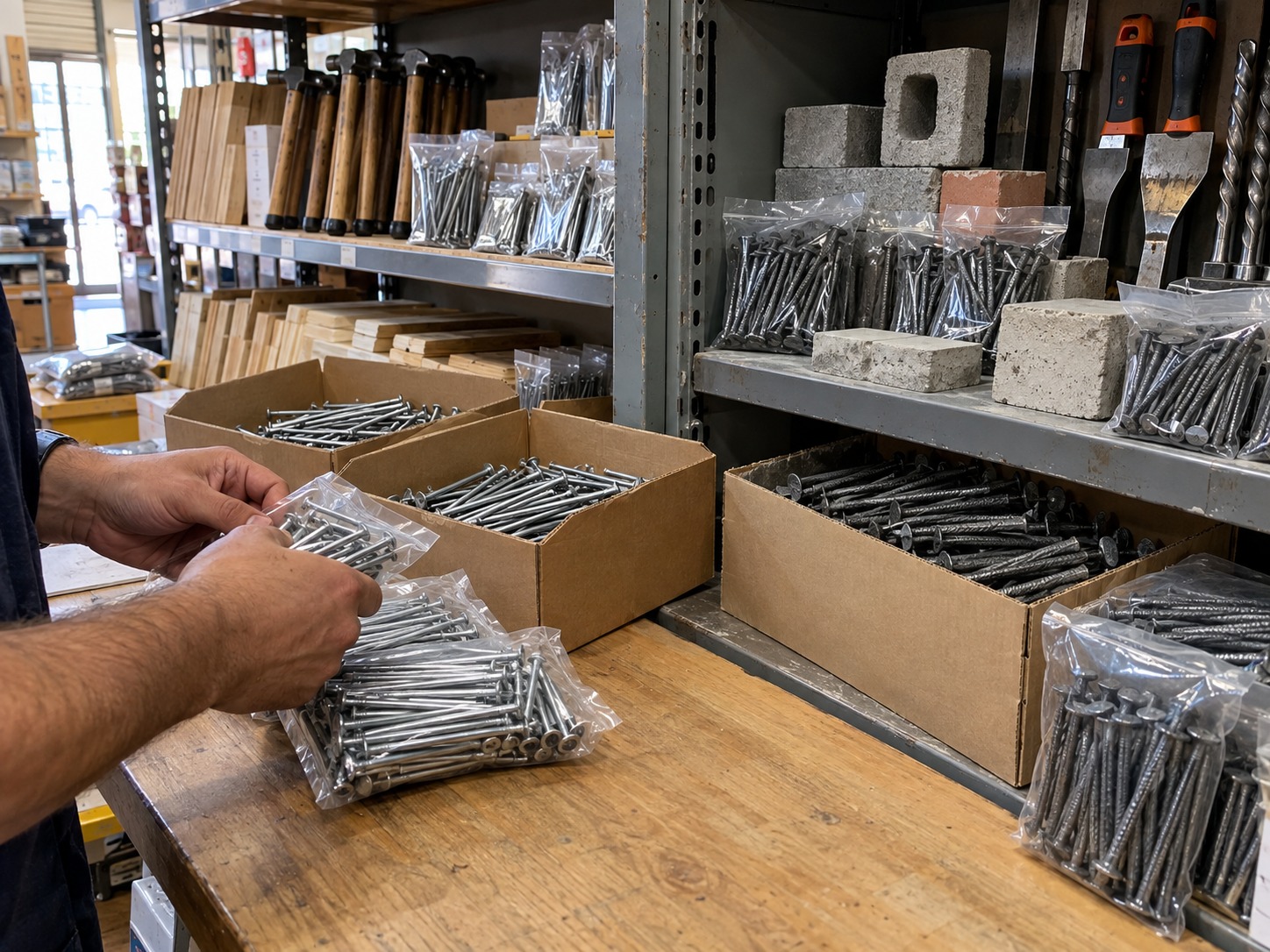
Start with customer language
Retail buyers often know what their local customers ask for. The challenge is matching that local name to the export product name. A customer may ask for “ordinary nail,” “steel nail,” “cement nail,” “building nail,” or another local term. The retailer needs to translate that demand into a clear purchase specification.
I suggest retailers collect:
- Local product names
- Popular sizes
- Common packing weights
- Preferred finish
- Fast-moving carton quantities
- Competitor samples
- Customer complaints about previous stock
This information helps a manufacturer quote the right product. It also reduces the risk of buying a container of slow-moving inventory.
Stocking logic by product type
| Stocking factor | Common nail | Concrete nail |
|---|---|---|
| Demand type | Wider general fastening demand | More application-specific demand |
| Customer question | “Do you have normal nails?” | “Do you have nails for concrete/masonry?” |
| Size planning | Based on common retail sizes | Based on local construction use |
| Packing strategy | Bulk and small box options | Often needs clear product labeling |
| Substitution risk | May be misused if sold too broadly | May be overbought if demand is narrow |
Trial orders reduce risk
For new buyers, I like trial orders because they test the market before larger purchasing. Our business supports trial orders, and our MOQ is usually 5 tons or 200 boxes. For retailers in the Middle East, Africa, Southeast Asia, and South America, this can be a practical starting point before moving to larger FCL shipments.
A trial order can test:
- Whether the product name matches local demand
- Whether the size range sells well
- Whether packing is suitable for store shelves
- Whether customers prefer a certain finish
- Whether the price level fits the retail channel
Do not let price control stocking alone
Retail stocking is not only about buying the cheapest nail. It is about buying the correct nail that customers recognize and trust. If a retailer sells to contractors, small shops, and end users, the product label and packing can be as important as the nail itself.
For example, if customers ask for concrete nails and the retailer stocks common nails in similar sizes, the store may face returns or complaints. If customers need general fastening nails and the store only stocks more application-specific products, the price may be less competitive.
The best stocking choice comes from a simple rule: stock by customer use first, then optimize price and packing. That rule helps retailers avoid confusing common nail and concrete nail inventory.
Frequently Asked Questions
Is “common nail” just another way to say ordinary nail?
Not always. In casual conversation, some buyers use “common nail” to mean an ordinary nail. In purchasing, I treat common nail as a product category. Buyers should confirm the exact nail type, size, finish, packing, and application instead of relying on loose names.
Can I send a photo instead of full specifications?
Yes, a photo is helpful, especially when the English name is unclear. However, I still recommend adding size, quantity, packing, surface treatment, and intended use. A photo helps identify the product, but full specifications help create an accurate quotation.
Why are concrete nails sometimes quoted higher than common nails?
The price may differ because the product category, material expectation, production process, finish, packing, or market requirement may differ. Buyers should not compare only length and diameter. They should confirm whether both suppliers are quoting the same nail type and specification.
What information should I send to get a fast quotation?
I suggest sending product type, intended use, base material, size, quantity, surface treatment, packing method, branding needs, and trade term. For example: “Concrete nail, 2 inch, 5 tons, black finish, small box packing, FOB quotation.”
Can common nails replace concrete nails?
I do not recommend treating common nails as direct replacements for concrete nails. The correct choice depends on the base material and application. Buyers should confirm the product category and ask a qualified professional for application-specific decisions where performance or safety matters.
Conclusion
Common nail and concrete nail are not the same, even when their size looks similar. I always advise buyers to start with the base material, application, product type, specification, quantity, finish, and packing before comparing prices. This approach prevents wrong quotations and poor stocking decisions. If you are sourcing nails for import, resale, or retail supply, send your inquiry checklist, photos, or sample details to Dingzhou Baist at [email protected] or WhatsApp +8618331061136 for a clear FOB quotation.
-
"Nail (fastener)", https://en.wikipedia.org/wiki/Nail_(fastener). A reference defining common nails as general-purpose nails used mainly in wood and masonry or concrete nails as fasteners intended for concrete, brick, or similar substrates would support the article’s distinction between the two product categories. Evidence role: definition; source type: encyclopedia. Supports: A neutral source should define common nails as general-purpose wood fasteners and concrete or masonry nails as fasteners intended for harder mineral substrates.. Scope note: Such a source would support the usual classification, not prove suitability for every individual nail sold under those names. ↩
-
"Threaded-nail Fasteners", https://digitalcommons.georgefox.edu/cgi/viewcontent.cgi?referer=&httpsredir=1&article=1039&context=mece_fac. Engineering literature on mechanical fasteners indicates that nail performance is influenced by geometry, material properties, surface condition, and the receiving substrate, which supports the article’s warning that equal nominal size alone does not establish interchangeability. Evidence role: mechanism; source type: paper. Supports: A source should explain that fastener behavior depends on dimensions as well as material, head, point, shank geometry, coating, and substrate interaction.. Scope note: The source would provide a general mechanical rationale rather than a direct comparison of every commercial common nail and concrete nail specification. ↩
-
"Withdrawal capacity of plain, annular shank and helical shank nail …", https://composites.umaine.edu/publication/withdrawal-capacity-of-plain-annular-shank-and-helical-shank-nail-fasteners-inspruce-pine-fir-lumber/. A construction reference describing common nails as general-purpose nails commonly used in wood framing or other wood fastening would substantiate the article’s classification of common nails. Evidence role: definition; source type: education. Supports: A construction education source should describe common nails as standard nails used for general wood fastening or framing applications.. Scope note: The reference would describe typical use and would not exclude specialized uses in particular markets. ↩
-
"Luxshiny 515pcs Galvanized Steel Masonry Nails Set 30mm, 40mm …", https://reframedarchives.sandbox.library.columbia.edu/listing/luxshiny-515pcs-galvanized-steel-masonry-nails-set-30mm-40mm?srsltid=231364735. A neutral construction source defining masonry or concrete nails as fasteners for concrete, brick, or similar masonry substrates would support the article’s description of their intended base materials. Evidence role: definition; source type: education. Supports: A source should define concrete or masonry nails as nails designed for driving into concrete, brick, mortar, or masonry materials.. Scope note: The source would support intended use at the category level, not confirm the performance of a specific manufacturer’s concrete nail. ↩
-
"Nail (fastener)", https://en.wikipedia.org/wiki/Nail_(fastener). A standards-based or construction glossary entry identifying the common nail as a named nail type would support the article’s statement that the term can function as a product category in procurement. Evidence role: definition; source type: institution. Supports: A standards or construction terminology source should show that common nail is a named fastener type or classification.. Scope note: The source would clarify terminology but would not resolve all regional naming practices in international trade. ↩
-
"Wood Handbook–Chapter 7–Fastenings – US Forest Service …", https://www.fpl.fs.usda.gov/documnts/fplgtr/fplgtr113/ch07.pdf. Research and engineering guidance on mechanical fasteners generally treats connection performance as dependent on fastener properties, installation, substrate characteristics, and service conditions, supporting the article’s caution against universal performance claims. Evidence role: mechanism; source type: research. Supports: A source should explain that fastener performance is affected by installation method, substrate properties, and service conditions.. Scope note: This would provide general engineering context rather than a product-specific test result for common nails or concrete nails. ↩
-
"Nails may look simple, but their head shape, shank design …", https://www.facebook.com/100090508983109/posts/types-of-nails-their-usesnails-may-look-simple-but-their-head-shape-shank-design/1060812160279074/. A fastener specification source that classifies nails by dimensions, material, head, point, shank form, and coating would support the article’s claim that nominal size alone does not define the product. Evidence role: general_support; source type: institution. Supports: A fastener standard or technical reference should show that nail specifications include variables beyond length, such as material, head, point, shank, and finish.. Scope note: The source would support specification variables generally and may not address every local trade name used for nails. ↩
-
"Types of nail and screw shanks and collations", http://bandceagle.com/shanks.php. A technical fastener reference describing smooth and fluted nail shanks as recognized shank forms would support the article’s statement that shank design may vary by nail type. Evidence role: definition; source type: institution. Supports: A standards or technical reference should identify smooth, fluted, or otherwise formed shanks as recognized nail design variants.. Scope note: The citation would document the existence of these shank forms, not determine which shank is required for a specific job. ↩
-
"Wood: Mechanical Fasteners", https://research.fs.usda.gov/download/treesearch/23845.pdf. Engineering literature on nailed connections and fastener geometry indicates that point form influences penetration behavior and interaction with the receiving material, supporting the article’s note on point design. Evidence role: mechanism; source type: paper. Supports: A source should explain that point geometry affects penetration, driving behavior, or splitting tendency in the receiving material.. Scope note: The evidence would explain the general mechanism rather than validate a particular point design for all substrates. ↩
-
"How to Select the Right Fasteners? Things you Must Know …", https://scalar.lehigh.edu/iblog/how-to-select-the-right-fasteners-things-you-must-know-before-choosing-fasteners–intact360-fasten. Construction fastener guidance that treats the receiving substrate as a primary factor in fastener selection would support the article’s claim that base material determines the appropriate product family. Evidence role: expert_consensus; source type: education. Supports: A construction or engineering source should state that fastener choice depends on the receiving material or substrate.. Scope note: The source would provide general selection guidance and would not replace project-specific engineering judgment. ↩