
Wood-to-Concrete Fixing Application
Galvanized Concrete Nails for Wood-to-Concrete Fixing
Select concrete nails according to the wood thickness, concrete condition, fixing purpose, nail specification and project environment. This page helps importers, wholesalers and construction-material buyers prepare a clear sourcing requirement.
Quick Answer
What Should Buyers Consider When Fixing Wood to Concrete?
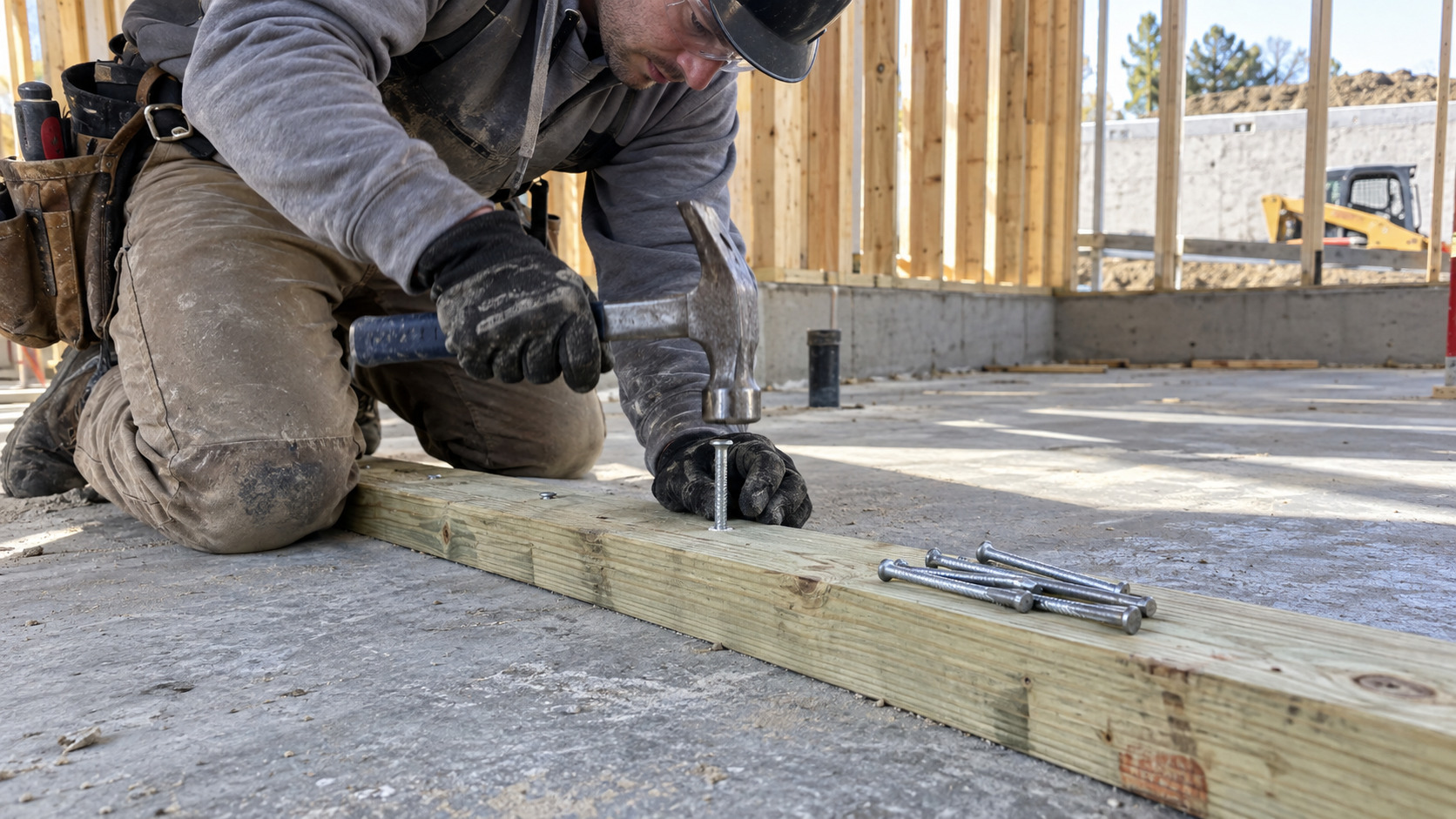
Wood-to-concrete fixing requires a nail that can pass through the wood and engage with a suitable concrete surface. The key purchasing factors are wood thickness, concrete condition, nail length, diameter, head type, shank style, surface finish and required fixing load.
Galvanized concrete nails may be selected when surface protection and finish consistency are important, especially in humid, outdoor or general construction environments. The correct specification should be confirmed through sample testing before a larger order.
What Determines Wood-to-Concrete Fixing Performance?
The nail is only one part of the fixing system. Buyers should evaluate the wood, the concrete and the installation conditions together.
Wood Thickness
The wood thickness affects the required nail length and the amount of nail available to enter the concrete.
Concrete Condition
New, old, cracked, dense, rough or damaged concrete can produce different fixing results.
Fixing Purpose
Light strips, boards, clips and non-structural components have different requirements from structural connections.
Installation Method
Manual hammering, pre-drilling and specialized tools may require different nail specifications.
Buyer Selection Guide
How to Prepare a Wood-to-Concrete Nail Requirement
-
1
Describe the wood component
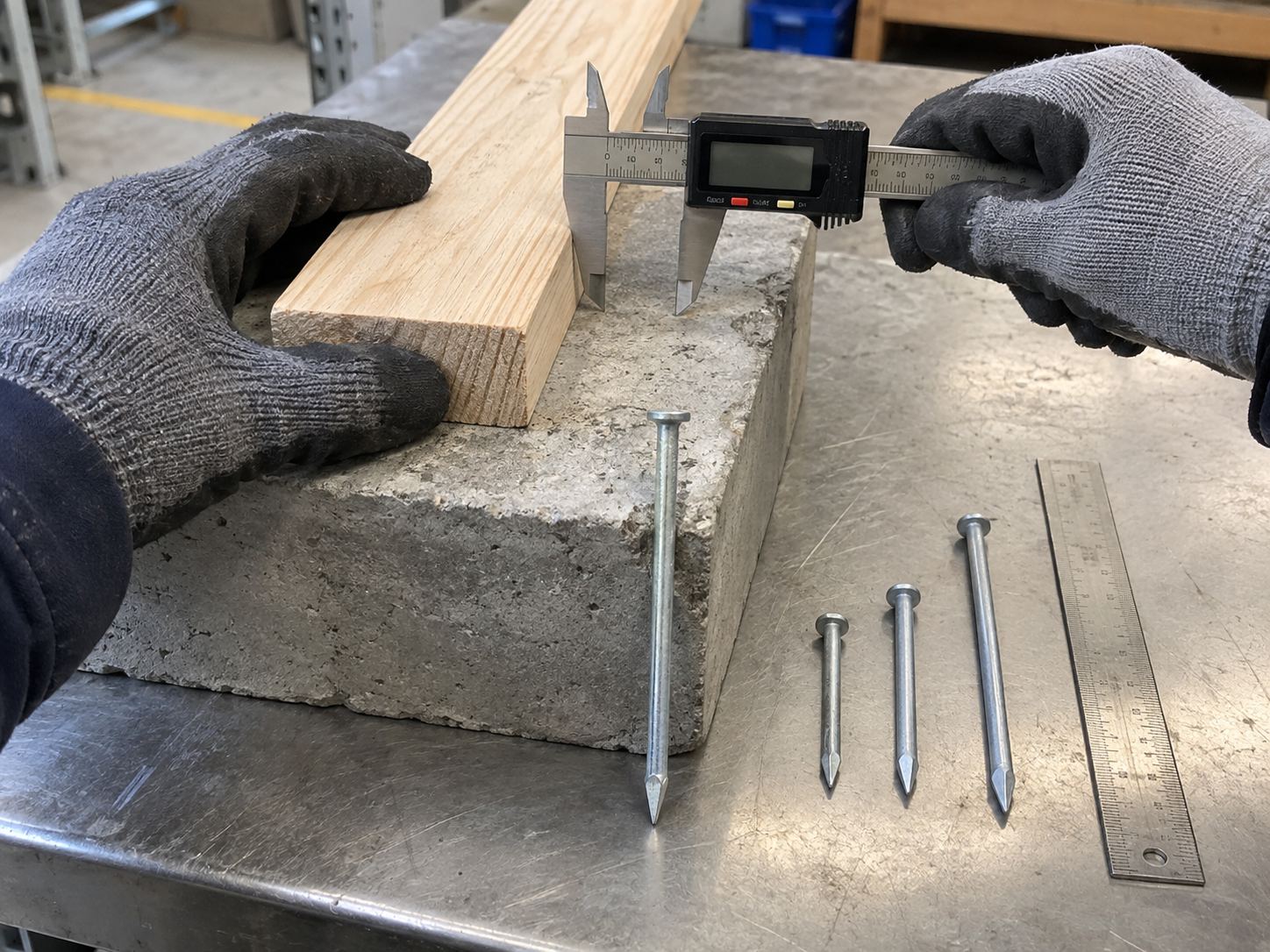
Provide the wood type, thickness, width and whether the material is a strip, board, batten, frame or base plate.
-
2
Identify the concrete condition
State whether the base is a concrete wall, floor, slab, block or another cement-based surface.
-
3
Confirm the fixing purpose
Explain whether the application is for a light strip, board, clip, frame or another non-structural component.
-
4
Request sample confirmation
Test nail straightness, point condition, finish, installation behavior and basic holding performance before bulk purchasing.
Typical Wood-to-Concrete Fixing Applications
These application examples are intended for product discussions. Final suitability depends on the actual wood, concrete, load and installation method.
Wood Strips and Battens
For fixing suitable wood strips, battens or light framing components to concrete surfaces.
Light Wood Boards
For selected non-structural board and panel fixing where the wood thickness and concrete condition are confirmed.
Cable and Pipe Supports
For light wood-backed clips, supports and installation accessories used on suitable concrete surfaces.
Renovation and Maintenance
For selected repair and maintenance work where samples can be checked on the actual concrete base.
Wood-to-Concrete Fixing Specification Checklist
Provide the following information when requesting a quotation or sample.
| Item | What to Confirm | Why It Matters |
|---|---|---|
| Wood thickness | Thickness and type of wood being fixed. | Helps determine the required nail length and fixing arrangement. |
| Concrete base | Wall, floor, slab, block or other cement-based surface. | Concrete density and condition affect installation performance. |
| Nail length and diameter | Buyer-required dimensions or an existing reference sample. | Different wood thicknesses and applications require different specifications. |
| Head and shank | Flat, countersunk or customized head; smooth, fluted or grooved shank. | Affects installation behavior, appearance and holding requirements. |
| Surface finish | Galvanized or another confirmed finish requirement. | The finish should match the environment and buyer’s product positioning. |
| Packing and quantity | Bulk, carton, small box, private label, quantity and destination port. | Required for accurate FOB pricing and export order planning. |
B2B Supply Support
Prepare the Product for Your Market
Dingzhou Best supports importers, wholesalers, hardware distributors and private-label buyers with specification confirmation, sample checking and export packing options.
MOQ
Usual MOQ is 5 tons or 200 cartons, subject to the confirmed product and packaging requirements.
Samples
Samples can be provided for quality testing. A basic sample fee may apply and can be discussed for return or deduction in a formal order.
OEM / ODM
Customize product specifications, packaging, brand logos, labels and carton marks according to the confirmed order.
Lead Time
Normal lead time is 15–25 days, adjusted according to specification, quantity, packing and production arrangement.
For an accurate FOB quotation, send the wood thickness, concrete base, nail specification, quantity, packaging requirement and destination port when available.
When a Nail-Only Fixing May Not Be Suitable
Concrete nails should not be presented as a universal solution for every wood-to-concrete connection. Request additional technical evaluation when the application involves:
- Structural wood frames or load-bearing connections
- Heavy shelves, machinery or suspended loads
- Cracked, weak or deteriorated concrete
- High vibration or repeated dynamic loading
- Applications requiring removable fasteners
- Projects requiring engineered anchors or local code approval
Wood-to-Concrete Fixing FAQ
Common questions from importers, distributors and construction-material buyers.
Can concrete nails be used to fix wood to concrete?
They can be considered for suitable light-duty and non-structural applications when the wood thickness, concrete condition and nail specification are properly matched.
What nail length should be used for wood-to-concrete fixing?
The required length depends on the wood thickness, the concrete condition and the required fixing depth. Buyers should provide the wood thickness and application details instead of selecting by length alone.
Why choose galvanized concrete nails for wood-to-concrete fixing?
A galvanized finish may be selected when surface protection and finish consistency are important in humid, outdoor or general construction environments.
Do you provide samples before bulk orders?
Yes. Samples can be arranged for quality and specification checking. A basic sample fee may apply and can be discussed for return or deduction in a formal order.
What information is needed for an FOB quotation?
Send the wood thickness, concrete base, nail length and diameter, head and shank requirements, quantity, packaging method, logo requirements and destination port when available.
Need Concrete Nails for Wood-to-Concrete Fixing?
Send your wood thickness, concrete base, nail specification, quantity, packaging requirement and destination port. Dingzhou Best can help confirm the product direction, sample requirements and FOB quotation details.
MOQ: 5 tons or 200 cartons · Lead time: usually 15–25 days · FCL and LCL sea freight supported