
01
Quotation Gaps
Prevent suppliers from quoting different specifications, weights or packing under the same “price per ton.”
Compare more than price per ton. Use specifications, actual weight, packaging, samples, loading plans and delivery control to protect your resale margin.
*Final lead time and MOQ depend on specification, quantity and packing requirements.
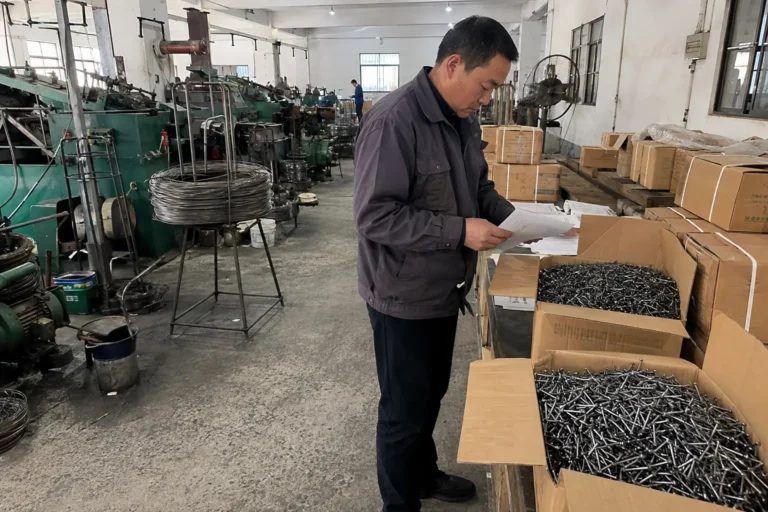
A reliable common nail supplier can confirm nail specifications, actual weight, packing, carton details, MOQ, FOB logic, samples, loading quantity and delivery time before production. If those details remain vague, the lowest quotation is not yet a comparable offer.
See What to ComparePrevent suppliers from quoting different specifications, weights or packing under the same “price per ton.”
Protect carton strength, accepted market weight and OEM presentation during sea transport and warehouse handling.
Use samples and trial orders to test specification accuracy, packing execution and communication before scaling up.
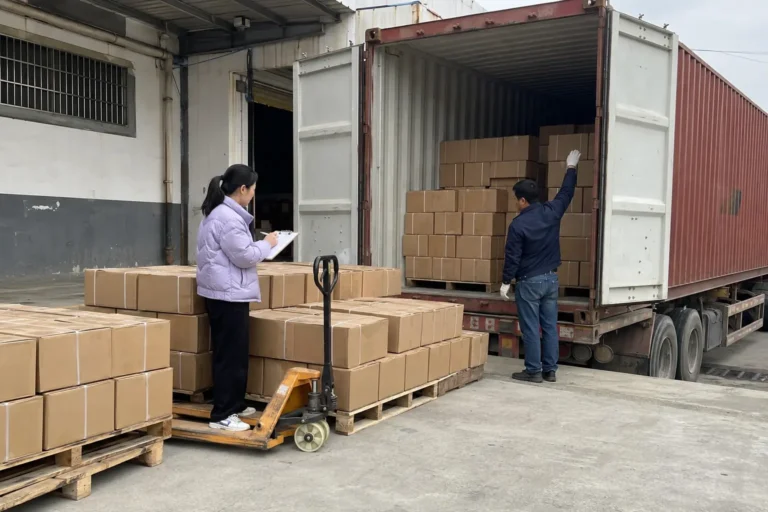
Common nails are sold by size, weight, packing and local market habit. If one condition changes, your resale margin changes with it.
| Quotation Item | Why It Matters | Buyer Risk If Unclear |
|---|---|---|
| Nail size | Affects material use and market demand | Wrong product for resale |
| Net weight | Defines actual product value | Lower resale profit |
| Carton packing | Affects handling and acceptance | Damage or complaints |
| FOB port | Changes landed-cost calculation | Wrong freight basis |
| Loading quantity | Spreads freight across cartons | Higher unit cost |
| Delivery time | Supports stock planning | Missed selling season |
A clear inquiry produces a quotation you can compare and shows whether the supplier can follow commercial details.
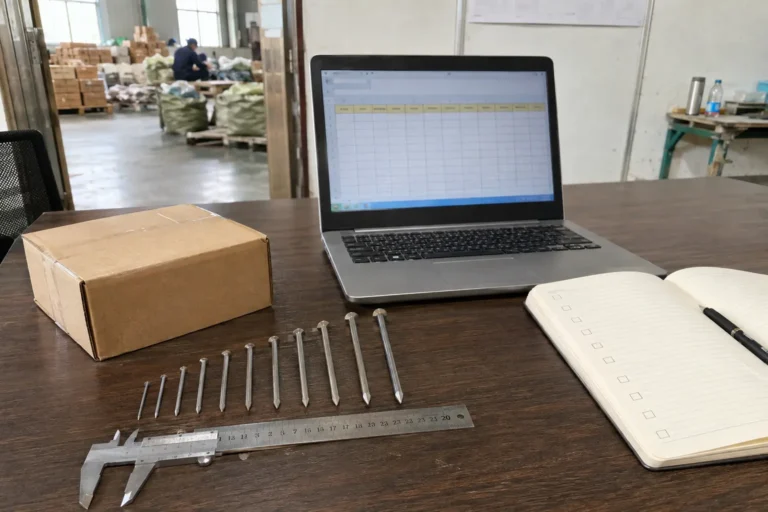
“Hello, I need common nails for the [market] wholesale market. Please quote FOB price for [quantity], sizes [size 1] and [size 2], packed in [packing] with/without our logo. Confirm carton weight, MOQ, loading quantity, sample cost and delivery time.”
Send Inquiry by Email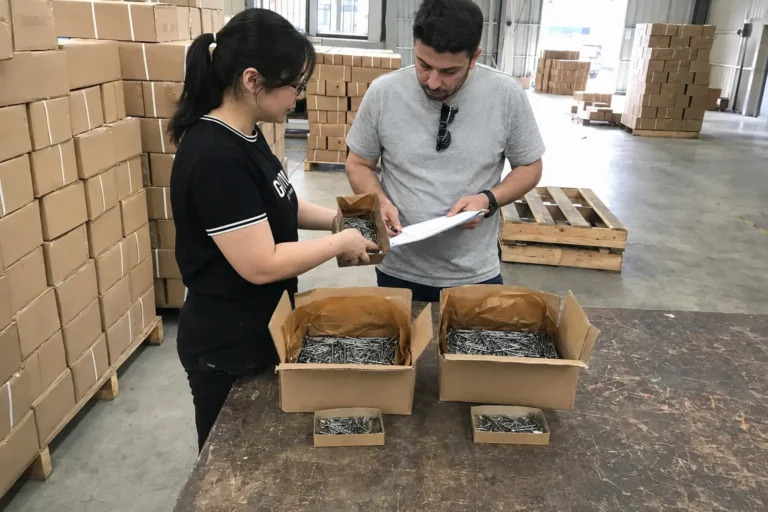
A sample checks more than the nail. It tests whether the supplier understood your specification and can reproduce it in packing and production.
Factory identity is useful, but it does not prove that your exact packing, weight and delivery requirements will be controlled.
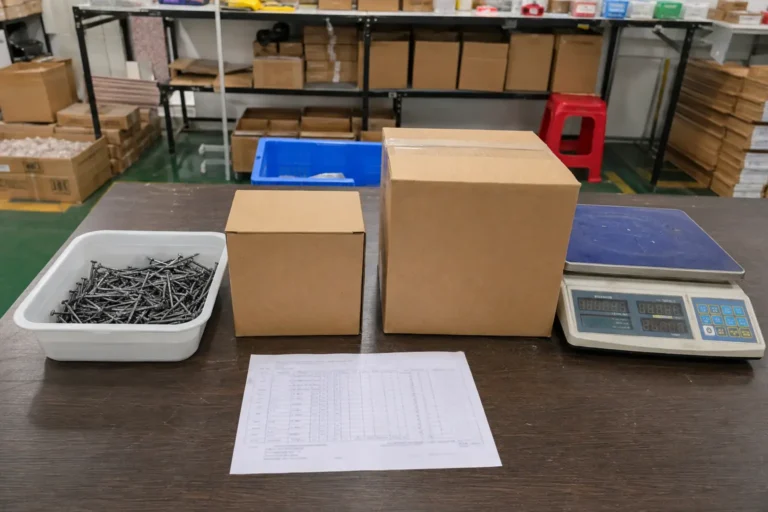
The answer should state the quantity basis and packing conditions.
Expect a clear artwork, approval, printing and cost process.
It should be linked to quantity and the production schedule.
The estimate should change with carton and container type.
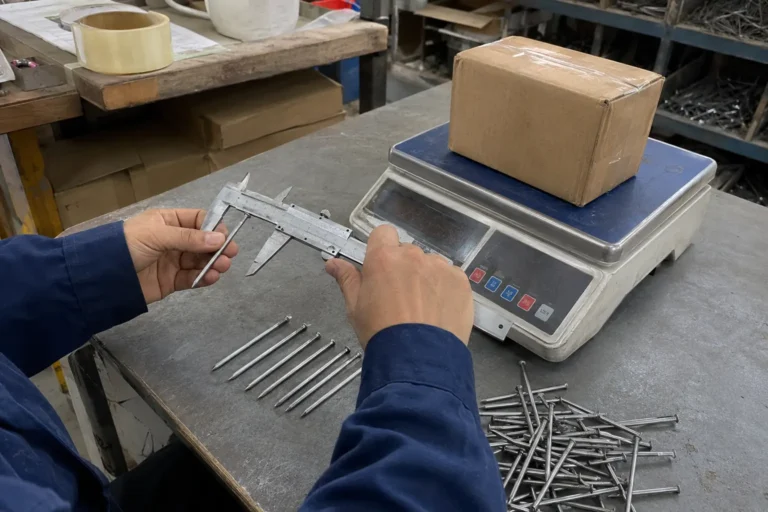
FOB prices are comparable only when product, packing, quantity and port are based on the same conditions.
Product + specification + quantity + packing + carton weight + port + loading estimate
| Item | Supplier A | Supplier B | Supplier C |
|---|---|---|---|
| Nail size | 2 inch | 2 inch | 2 inch |
| Quantity | 5 tons | 5 tons | 5 tons |
| Carton net weight | 25 kg | 20 kg | Not stated |
| Packing | OEM carton | Plain carton | Not stated |
| Delivery | 15–25 days | 25–30 days | Not stated |
| Loading estimate | Stated | Unclear | Unclear |
One good shipment is useful. The real test is whether size, weight, packing and delivery rhythm stay consistent across repeat orders.
Specifications stay recorded. Size, packing, logo and carton details do not depend on memory.
Changes are confirmed early. Material, artwork and schedule updates reach the buyer before production.
Communication continues. Updates remain clear after deposit and before shipment.
The supplier understands resale. Carton strength, weight and branding reflect your market.
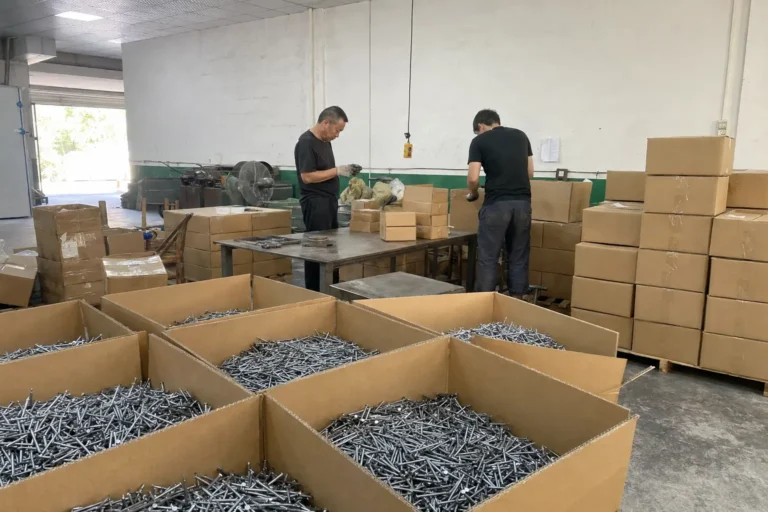
MOQ depends on the specification and packing method. Confirm the exact basis before comparing prices, especially for OEM cartons or trial orders.
Yes. Confirm artwork, carton weight, logo position, product marking, language and approval timing before production.
No. Compare identical specifications, net weight, packing strength, loading estimate, FOB port and delivery terms first.
Samples are useful for a new supplier or OEM order because they verify nail size, finish, packing and communication accuracy.
A typical range is 15–25 days, adjusted for order volume, packing and the confirmed production schedule.
Include specification, quantity, packing, carton weight, destination port and OEM requirements. We will confirm the applicable MOQ, sample process, loading estimate and delivery time.